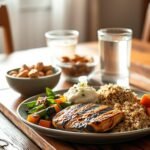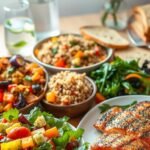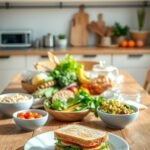
Healthy Dinner Recipes for Two: Simple & Nutritious
Surprising fact: nearly half of couples say cooking at home improves their food choices and saves time—yet many still overcook and waste food.
This Website contains affiliate links. That means I may earn a small commission if you purchase through my links, at no extra cost to you.
This guide curates the top healthy dinner ideas designed for two people so you make just enough and keep big flavor. You’ll find quick seafood picks like broiled cod with high protein, plant-forward bowls built on quinoa and beans, and light comfort meals that cut calories without skimping on taste.
Each recipe balances protein and fiber to make a satisfying meal without lots of leftovers. Sections cover seafood, veg-forward salads, one-pan weeknight winners, and lighter comfort classics. Time-saving swaps, pantry staples, and trusted nutrition notes help you plan and scale at home.
Key Takeaways
- Cook just what you need: scaled ideas that limit waste.
- Focus on protein and fiber for filling, balanced plates.
- Simple swaps and pantry staples speed prep and save time.
- Flavor-forward sauces keep meals bright without extra calories.
- Treat cooking as a shared activity—easy ways to connect at home.
What “healthy dinner recipes for two” means right now
When you plan plates for a pair, aim for meals that are satisfying, easy to scale, and kind to your time and budget. That way, every recipe gives clear portions, steady protein, and plenty of fiber without piling on leftovers.
Modern meal planning leans on flexible frameworks—bowls, salads, and quick sautés—that let you swap ingredients based on what’s in the fridge. Pick recipes that share staples like quinoa, beans, or grains so you get variety without extra shopping trips.
- Scale smart: when halving larger recipes, start checking doneness at about 75% of the listed cook time to avoid overcooking.
- Flavor without excess: use citrus, herbs, spices, and umami to cut back on sodium and added sugar.
- Plan by energy: choose quick wins on busy nights and slower, more involved meals when you have time.
Success looks like a sustainable way to eat that fits your budget and schedule. Small touches—pickled veggies, a zesty dressing, or fresh herbs—make simple dishes feel special and keep mealtime joyful for couples and small families.
How to scale recipes for two without losing flavor
Scaling down a recipe is more than halving numbers. It’s a practical way to keep portions right while preserving texture and taste. Use a plan: write new amounts before you start and pick cookware that suits the smaller batch.
Smart conversions: when to halve and when to eyeball
Divide straightforward ingredients by two when a recipe serves four. Measure and note the new amounts on the recipe card so next time is faster.
Exceptions: liquids for sautéing, spices, and oil often need less than half. Start conservative, then add more while tasting.
Timing tweaks: start checking doneness at about 75%
Smaller batches cook faster. Set a timer to check at roughly 75% of the original time to keep protein juicy and veggies tender-crisp.
Use a small pan to protect sear and reduce evaporation. Keep a tasting spoon handy and season in layers—acid or citrus brightens before adding extra salt or oil.
| Issue | Action | Why it matters |
|---|---|---|
| Fractional amounts | Use a kitchen scale or conversion app | Ensures accuracy for baking and sauces |
| Sauté liquids & spices | Add less, adjust to taste | Prevents over-seasoning and soggy texture |
| Cook time | Check at 75% of original | Keeps protein tender and avoids dryness |
| Batch size | Use smaller cookware | Maintains sear and proper evaporation |
Tip: jot down any tweaks beside the recipe so your next meal is consistent. This simple way of scaling helps keep protein, fiber, and flavor balanced when cooking for people who share a plate.
Grocery planning for two: save time, reduce waste, eat better
Plan a shopping list that stops waste and speeds weeknight prep. Pick 3–4 recipes that share core ingredients so each grocery run pays off. A quick weekly huddle helps you agree on meals and avoid impulse buys.
Batch-cook staples like quinoa, rice, and beans on Sunday and store them in clear containers. Label each container with the date and the intended recipe so nothing gets forgotten in the back of the fridge.
Simple habits that change shopping
- Shop to your calendar: list exact servings you’ll eat together to cut food waste.
- Choose multi-use produce such as cabbage that works in slaws, sautés, and salads.
- Keep cross-over add-ons like whole-grain bread, tortillas, or pitas on hand to stretch meals.
- Use similar spice profiles across the week to save time and avoid buying specialty jars.
- Label containers with dates and intended recipe names to stay organized at home.
“Deciding in advance how many shared meals you’ll eat prevents overbuying and saves time.”
Small systems—a swap list, starred winning recipes, and prepped components—turn busy evenings into quick assembly nights. This approach gives variety without extra trips to the store and keeps every dinner satisfying.
Top high-protein, high-fiber dinner ideas for couples
Build a short rotation of meals that hit protein and fiber targets while staying quick and flavorful. These picks scale cleanly and suit busy weeknight plans.

Chicken fajitas night with peppers and onions
Big flavors, smart portions: grilled chicken, sautéed peppers, and onions make a simple recipe with about 28g protein per fajita. Add black beans to boost fiber and keep it filling.
Chicken quinoa bowls with balsamic dressing
This bowl is a balanced recipe—lean chicken, quinoa, and vegetables. Expect roughly 42g protein and 6g fiber per serving. Batch-cook quinoa to speed prep.
Hearty beef and barley soup made lighter
A lighter beef and barley recipe yields about 14g protein per cup and reheats well. Pair with crusty whole-grain bread for extra staying power.
Broiled or baked fish for quick protein
Keep fish night simple: broiled cod is about 27g protein per fillet and cooks fast. Use spice blends like chili-lime or garlic-cumin to add lots of flavor without extra salt.
- Weeknight tip: scale portions—two fillets or two tortillas per person—so plating is quick.
- Top plates with salsa, cilantro, or lime to finish each recipe bright and fresh.
Veg-forward bowls and salads with big flavor
Vibrant bowls and composed salads bring big flavor without long prep times. Center your evening plate around a grain base, greens, and a bold dressing so the meal comes together in minutes.
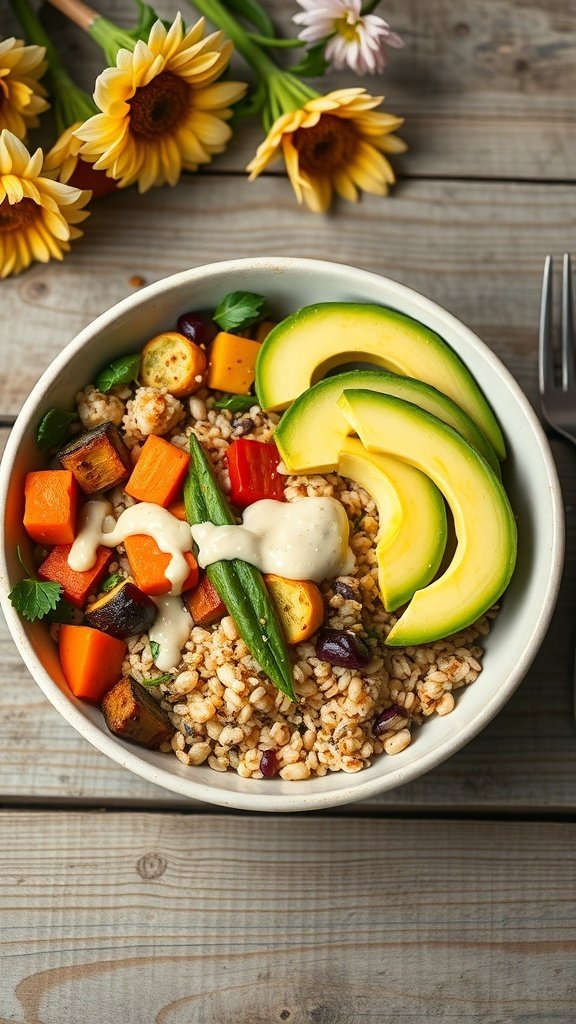
Warm Fiesta Salad Bowl: toss purple cabbage, corn, kale, and beans with avocado. Finish with a quick lime vinaigrette for bright contrast and steady fiber.
Banh Mi Bowl: layer crispy tofu and quick-pickled carrots and cucumbers over rice. A light sriracha “mayo” adds tangy heat and lots of sauce-driven flavor.
Salmon Spinach Salad: seared salmon on baby spinach with balsamic brightness. This fast plate is about 265 calories and ~18g protein per serving—plenty to keep you satisfied.
Asian Chicken Salad: mix shredded chicken, crunchy veggies, herbs, and a citrusy dressing. Use quinoa or brown rice as the grain to boost protein and fiber.
- Keep a jar of pickled veg on hand for instant wow.
- Layer textures—creamy, crisp, chewy—to make every bite interesting.
- Batch dressings on Sunday so assembled bowls stay enticing all week.
Seafood suppers that come together in minutes
Seafood nights can be the quickest way to plate something bright and protein-rich. Pick a simple plan and keep staples like frozen fillets and a lemon on hand. These options top the list when you want fast, flavorful meals that scale cleanly.

Broiled cod with lemon-herb finish
Choose broiled cod on a busy night—light, flaky, and fast. A fillet runs about 168 calories and ~27g of protein. Finish with lemon, parsley, and a quick herb zest to boost flavor.
Foil-packet salmon with olive oil and herbs
Seal salmon with olive oil, thyme, and sliced lemon. Bake in foil for tender results and minimal cleanup. One fillet is roughly 274 calories and about 24g protein. This simple recipe comes together minutes and stays juicy.
Shrimp and scallops tropical salad
Grill shrimp and scallops, then toss with greens, mango, nuts, and a citrus sauce. Expect about 413 calories, ~19g protein, and 5g fiber per salad. Use a quick stovetop sear for speed and add microgreens at the end.
- Quick tip: scale seafood—two fillets or a half-pound shellfish is ideal for couples.
- Serve with a whole-grain side or fruit salsa and finish with a squeeze of lemon for bright contrast.
One-pan & skillet dinners for easy weeknights
When the evening is short, a single skillet can deliver sear, sauce, and veggies with almost no fuss. These pans let you brown protein, wilt greens, and finish with a quick pan sauce in minutes.
Goat cheese chicken skillet with garden veggies
Simple and creamy: Sear chicken breasts, add cherry tomatoes, zucchini, and spinach, then dollop goat cheese to melt into a silky finish.
This quick recipe shines on weeknight rotations and keeps cleanup minimal.
Orange beef stir-fry with peppers over rice
Make an orange beef stir-fry that cooks fast and sings with citrus and soy.
At about 390 calories per serving and roughly 26g protein, it pairs well with 1/2 cup rice to round the plate.
Skillet pork medallions with spice-forward sauce
Sear pork medallions until golden, deglaze with stock and a splash of citrus, then stir in a spice-forward sauce.
Three ounces cooked is about 220 calories and ~25g protein—easy to scale and elegant enough to serve family-style.
- Pro tip: use batch-cooked rice or quinoa to shave prep time.
- Stir-fry in small batches so veggies stay crisp-tender and proteins remain juicy.
- Build layers: brown, deglaze, swirl in sauce, then toss veggies back to coat for max flavor.
“One-pan meals mean less mess and more time to enjoy what you cooked.”
Flavor-packed vegetarian and plant-based meals
Bold sauces and crisp vegetables turn simple plant proteins into standout weeknight plates. These dishes deliver takeout-style satisfaction with short cook times and big taste.
Sticky tofu with bok choy and red pepper: press extra-firm tofu, pan-sear, then toss in a sweet-savory glaze so the exterior caramelizes while greens stay crisp. This quick recipe feels indulgent but stays light on cleanup.
Sticky tofu with bok choy and red pepper
Miso radish and chickpea tacos: layer pickled radish, roasted chickpeas, and miso crema in sturdy whole-grain tortillas. The mix of textures delivers serious fiber and umami without heavy sauces.
Miso radish and chickpea tacos
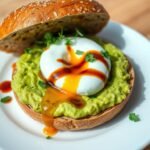
HATS sandwiches (hummus, avocado, tomato, shallot): assemble hummus and avocado on toasted bread, add tomato and thinly sliced shallot. One sandwich runs about 278 calories with ~11g protein and ~9g fiber, an easy plant-based win.
- Lean on spice blends, miso, vinegar, and citrus to layer flavors.
- Batch-cook chickpeas and roast extra vegetables to reuse in bowls or a quick salad.
- Finish with toasted seeds or nuts and adjust heat with chili crisp or sriracha.
| Dish | Protein (g) | Fiber (g) | Cook time |
|---|---|---|---|
| Sticky tofu w/ bok choy | 18 | 6 | 20 min |
| Miso radish & chickpea tacos | 14 | 8 | 25 min |
| HATS sandwich | 11 | 9 | 10 min |
Comfort-food classics made healthier for two
Comfort food stays comforting when portions are modest and the pot is packed with produce. Keep the mood of a classic but add more vegetables and lean cuts so the plate feels lighter and more satisfying.
Chicken cacciatore loaded with vegetables
Simple and veggie-forward: simmer chicken with tomatoes, bell peppers, mushrooms, and herbs until the sauce is jammy and bright. One serving runs about 517 calories and delivers solid protein and a generous serving of vegetables.
Beef Burgundy lightened up over whole-grain noodles
Use leaner beef, a controlled splash of stock and wine, and longer, gentler simmering. Serve about 1½ cups (≈376 calories) over whole-grain noodles to add fiber and keep the classic sauce feel without heaviness.
- Load vegetables and use modest portions to lighten classics.
- Swap salt-heavy mixes for garlic, fresh herbs, and warm spices.
- Portion from the start so braises don’t become excess leftovers.
- Add a slice of warm whole-grain bread for dipping and a crisp side salad to balance texture.
- Make ahead: chill, skim fat, and reheat gently so flavors meld and the sauce thickens naturally.
“A little planning keeps rich classics cozy and manageable on busy nights.”
Pizza night at home: nutritious pies for two
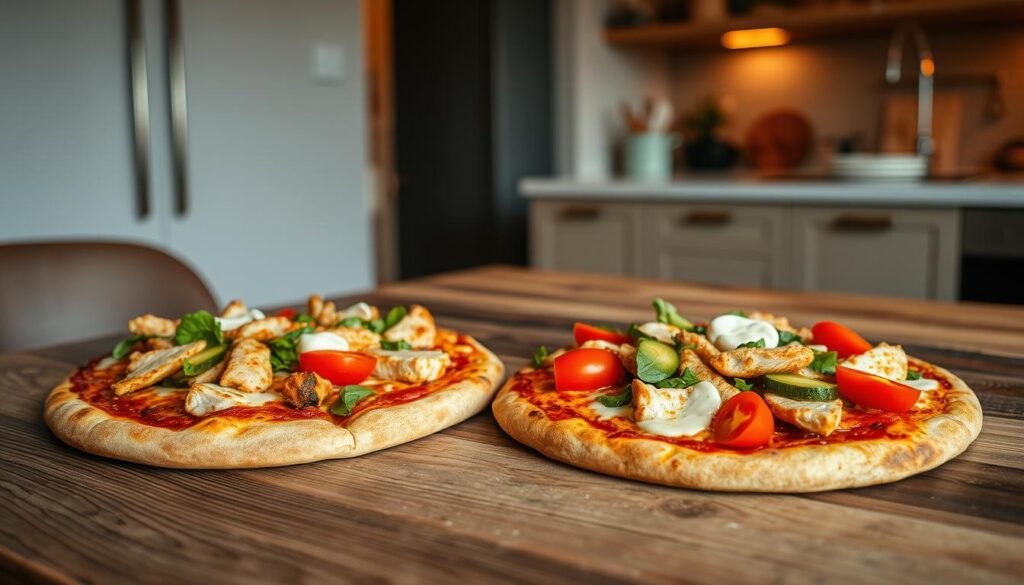
Turn pizza night into a guided experiment: crisp whole-grain bases, bold toppings, and tidy portions make it simple to enjoy a fun meal without waste. Use a preheated stone or sheet pan to get a great crust in a standard oven.
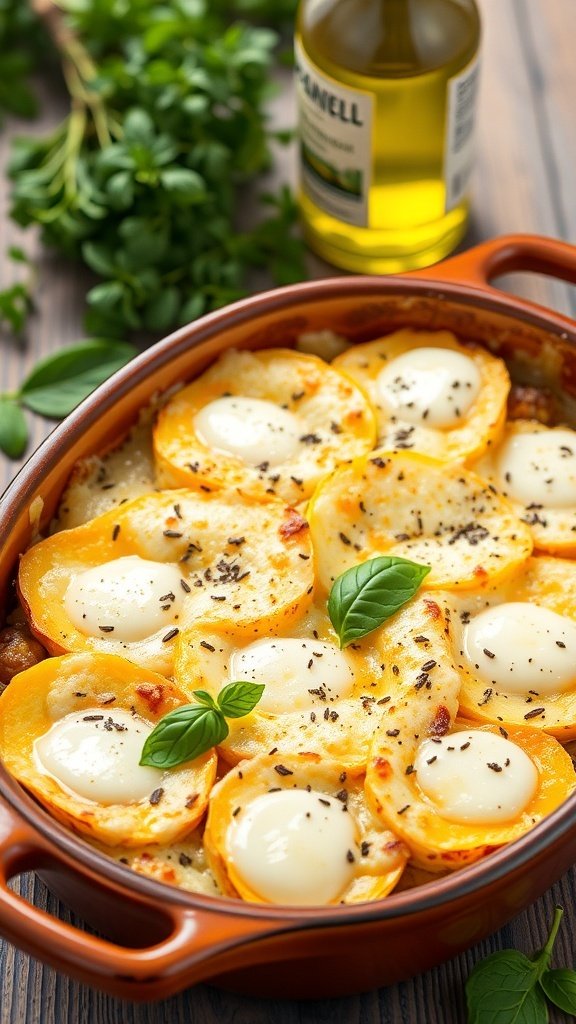
Mushroom “mozzarella” pizza with herbs
Build deep umami: layer sautéed mushrooms with a light spread of crushed tomatoes and a soft, melting cheese substitute. Finish with torn basil and oregano to add bright herbs and aroma.
This recipe leans on texture and savory notes to deliver big flavor without heavy grease.
Tandoori-inspired chicken pita pizzas with yogurt sauce
Use shredded tandoori chicken on personal pitas. Top with sliced onion, peppers, and a tangy yogurt-herb sauce.
Each mini pizza runs about 380 calories and gives roughly 29g protein. Serve with a lemony side salad to round the plate.
- Pile on veggies—mushrooms, peppers, onions, spinach—for lots of texture and color.
- Keep portions perfect with personal pitas or one medium pie split evenly.
- Stir quick sauces: crushed tomatoes with garlic or a yogurt-herb blend for a bright finish.
- Let dough rest at room temp for easier stretching and better oven spring.
Soup and salad combos that satisfy
A light soup alongside a crisp salad makes a meal that feels both cozy and bright. This pairing hits warm comfort and fresh texture with little fuss.
Lemony mushroom-orzo soup with a simple side salad
Lemony Mushroom-Orzo Soup serves a balanced bowl at about 191 calories per cup. Lemon lifts the earthy mushrooms without needing heavy cream.
Add shredded chicken, white beans, or tofu cubes to boost protein and keep the bowl filling. Simmer in a smaller saucepan to preserve texture when you scale the quantities down.
Asian cucumber salad for a cool, crunchy pairing
The Asian cucumber salad is crisp and low-calorie—roughly 34 calories per ¾ cup. It adds a cool contrast and bright flavor to the warm soup.
Prepare extra dressing on Sunday to speed midweek prep. Store soup separately from the greens so both keep their best texture.
- Serve with warm whole-grain bread to make the combo hearty enough for dinner or a cozy lunch.
- Keep ingredients simple—mushrooms, orzo, lemon, herbs—so prep and cleanup stay minimal.
- Garnish with chopped parsley or chives for a fresh finish.
| Item | Calories | Role |
|---|---|---|
| Lemony Mushroom-Orzo Soup (per cup) | 191 | Warm, savory base |
| Asian Cucumber Salad (¾ cup) | 34 | Cool, crunchy side |
| Whole-grain Bread (1 slice) | 80–110 | Optional to add fiber and satiety |
“Pair a light soup with a fresh salad for a balanced, comfort-forward meal that still feels crisp and modern.”
Healthy dinner recipes for two: the ultimate listicle roundup
Here’s a compact list of top picks that make evening meals simple, flavorful, and easy to scale. Use it when you want a quick plan that balances taste and portion control.
At-a-glance categories: seafood (broiled cod, foil-packet salmon), one-pan meals (goat cheese chicken skillet, orange beef stir-fry), salads & bowls (Fiesta salad, Salmon Spinach Salad), vegetarian (sticky tofu, HATS sandwich), and lightened comfort classics (chicken cacciatore, Beef Burgundy).
Each entry notes approximate protein and fiber highlights so you can match choices to goals. Look for the scale-smart tags—these recipes adapt cook time and pan size when the yield is halved.
- Browse a curated, at-a-glance list of the best picks purpose-built for couples and small households.
- Spot smart sides and quick sauces that round plates without extra shopping or fuss.
- Note overlapping pantry items to simplify grocery runs for your family schedule.
- Plan three nights in minutes: one seafood, one bowl, and one skillet classic that repeat well.
Bookmark a favorite recipe, then repeat it next week to cut decisions and keep meals enjoyable. Use this roundup as a fast source of dinner ideas two people can cook together or share with friends.
Quick sauces and dressings that boost flavor with minimal oil
A bright dressing can turn simple grains and greens into a memorable plate in minutes. These fast finishes add zest without heavy fats and come together in under five minutes.
Zesty lime vinaigrette for salads and grain bowls
Simple to mix: whisk fresh lime juice, a touch of olive oil, dijon, minced garlic, salt, and a pinch of sugar.
This vinaigrette pairs especially well with fiesta-style salad bowls and warm grains. Toss warm grains with the dressing so they soak up extra flavor before you add protein and veggies.
Light sriracha “mayo” for tacos, bowls, and sandwiches
Stir plain yogurt with sriracha, lemon, and a little honey for creamy heat. It mimics mayo but keeps oil modest and adds tang.
Use as a quick spread, a drizzle over bowls, or a thin sauce for grilled proteins. It doubles as a marinade if you need to speed weeknight prep.
- Core ingredients: citrus, mustard, yogurt, tahini—keep these on hand.
- Make double batches to save time across multiple meals.
- Balance acid and salt; a touch of maple or sugar rounds bright edges.
- Store in small jars and shake before serving to recombine.
| Dressing | Main fat | Best use | Prep time |
|---|---|---|---|
| Lime Vinaigrette | Olive oil | Salad, grain bowls | 3 min |
| Light Sriracha “Mayo” | Yogurt (low oil) | Tacos, bowls, sandwiches | 2 min |
| Tahini Citrus Drizzle | Tahini (sesame) | Roasted veggies, bowls | 4 min |
Pantry and fridge staples for fast, healthy dinners
A few reliable staples let you turn a few minutes into a full, balanced plate. Keep a compact set of ingredients that work across soups, bowls, and skillets so weeknight cooking is simple.
Stock the basics: canned beans, brown rice, and crushed tomatoes anchor soups, stews, and quick sauces.
- Keep whole-grain bread, tortillas, or pitas for fast pizzas, toasts, and sandwiches.
- Assemble a small spice rack—garlic powder, paprika, cumin, chili, and oregano—and add fresh or dried herbs.
- Store olive oil and a neutral oil; use citrus and vinegar to lift flavors with less fat.
- Prep grains ahead and freeze portions of broth and veggies for instant building blocks.
- Choose versatile proteins: eggs, canned tuna or salmon, tofu, and chicken thighs.
- Wash and chop produce once, keep yogurt for dressings, and rotate staples so nothing gets forgotten.
“A pared pantry helps you finish cooking fast and enjoy more meals at home.”
Budget-friendly tips for couples cooking at home
Stretch your grocery dollars without losing flavor by planning meals that share core ingredients. This is an easy way to save time and reduce waste while keeping plates exciting.
Batch-cook grains and beans and freeze portions so a future weeknight meal is ready in minutes. Buy family packs of proteins, divide into portions, and label bags with the recipe name and date.
Choose versatile recipes that reuse items—rice, beans, eggs, and seasonal produce—so your list stays short and practical. Repurpose stale bread into toasts, croutons, or crumbs to squeeze more value from each loaf.
Make leftover bowls a ritual: clear the fridge, pair cooked grains or beans with greens and a simple sauce, and you have a fast plate with minimal effort.
| Tip | Why it saves | Quick action |
|---|---|---|
| Batch-cook rice & beans | Cuts prep time midweek | Freeze portions in labeled bags |
| Portion & freeze proteins | Prevents spoilage and impulse buys | Buy family packs, divide for meals |
| Repurpose bread | Eliminates waste | Make toasts, croutons, breadcrumbs |
| Track top value recipe | Speeds planning and shopping | Keep a short list of favorites |
“Small systems—batching, freezing, and shared-ingredient menus—cut cost and stress.”
Nutrition spotlight: fiber, protein, and colorful veggies
Aim to pair a solid source of protein with a high-fiber side at every evening plate to stay full and keep energy steady. This simple plan supports muscle maintenance and digestion while making meals feel complete.
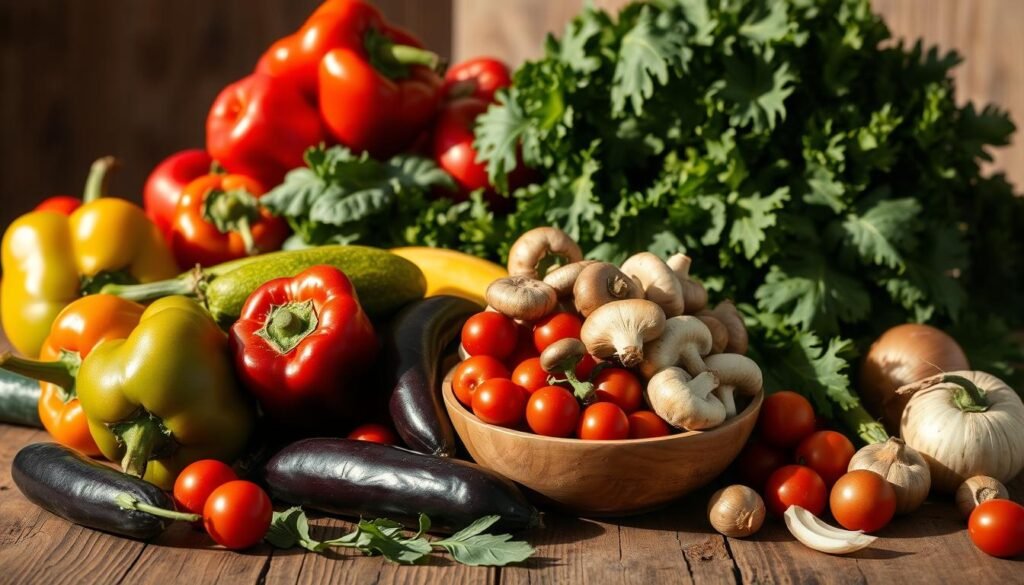
Build half the plate with colorful vegetables—think tomatoes, carrots, peppers, and leafy greens—so you get a broad range of micronutrients and bright flavors. Add legumes or beans to boost fiber, and keep a lean protein close by to meet satiety needs.
Include a whole grain like quinoa or brown rice as a textured base to round out bowls and salad bowls. Combining plant and animal proteins works well: try beans with fish or tofu with eggs to balance taste and nutrition.
- Focus on fiber and protein at each meal to stay fuller longer.
- Keep seasonings simple—herbs, citrus, and spice blends—to lift natural flavors without extra calories.
- Use salads as mains or sides to add crunch and easy customization.
“Small, consistent upgrades add up to a big nutrition win.”
These tips make it easy to turn short prep time into nutrient-dense plates. Try one small change each week and watch your meals improve.
Conclusion
End with a simple rule: pick a few repeatable recipes that balance protein and fiber and save you time.
Use bright sauces, fresh herbs, and a splash of olive oil to make vegetables like tomatoes, peppers, and cabbage taste vibrant. Lean on grains, rice, and a crisp salad to add texture and satiety.
Celebrate comfort made lighter by keeping portions modest and adding lots of vegetables. A small pantry of bread, canned beans, and quick proteins unlocks plenty of fast ideas while cutting waste and cost.
Try this week: one bowl, one seafood plate, and one comfort classic. These swaps protect flavor and texture when you scale, and they make great lunch leftovers too.
FAQ
What does "healthy dinner recipes for two" mean right now?
It means composed meals built around lean protein, fiber-rich grains or legumes, plenty of vegetables, and flavor from herbs and spices rather than excess oil or salt. Portioning targets two people and emphasizes balance — protein, produce, and whole grains — so meals feel satisfying without waste.
How do I scale a recipe down to serve two without losing flavor?
Halve most ingredient amounts, but keep aromatic ingredients (garlic, ginger, citrus zest) at about 60–75% of the original to preserve punch. For sauces, reduce by volume but taste and adjust seasoning. When baking or roasting, keep cooking time similar but start checking doneness at about 75% of the original time.
When is it better to eyeball conversions instead of halving exactly?
Eyeball when working with spices, fresh herbs, and aromatics — they don’t scale linearly. Also use judgment for robust ingredients like chili flakes or strong cheeses. For grains, beans, and liquids, do the math to keep texture consistent.
What are smart grocery-planning strategies for two people?
Plan three to four meals per week that share staples such as quinoa, beans, and rice. Buy loose produce you can use across recipes, and pick flexible proteins that freeze well. Use a simple shopping list grouped by fridge, pantry, and frozen items to reduce waste and save time.
Which protein- and fiber-rich meal ideas work well for couples?
Try chicken fajitas with peppers and onions, chicken quinoa bowls with a balsamic dressing, lightened beef and barley soup, or broiled fish paired with a grain and greens. These combine lean protein with beans, whole grains, or veggies to boost fiber and satiety.
What makes veg-forward bowls and salads satisfying without heavy dressings?
Layer textures and flavors: roasted vegetables, crunchy raw cabbage or carrots, a creamy element like avocado or hummus, and a bright, low-oil dressing such as lemon-tahini or balsamic vinaigrette. Toss warm grains with cool greens for contrast.
How fast can seafood suppers come together?
Many fish and shellfish cook in 6–12 minutes. Broiled cod or foil-packet salmon needs minimal hands-on time. Pair with a quick pan of greens or pre-cooked quinoa and you have a plate ready in 15–20 minutes.
Are one-pan or skillet dinners truly better for weeknights?
Yes. One-pan meals cut cleanup and concentrate flavor. Dishes like a goat cheese chicken skillet with garden veggies or an orange beef stir-fry let you build layers of taste while keeping prep and washing to a minimum.
What plant-based meals deliver protein and flavor for two?
Choose combos like sticky tofu with bok choy and red pepper, miso radish and chickpea tacos, or hearty HATS sandwiches (hummus, avocado, tomato, shallot). Include legumes, tofu, or tempeh with whole grains to meet protein needs.
How can classic comfort dishes be lightened for two people?
Swap heavy sauces for tomato-based versions, use leaner cuts, add extra vegetables, and serve over whole-grain pasta or farro. For example, chicken cacciatore can be packed with peppers and mushrooms, and beef Burgundy can be served over whole-grain noodles with reduced butter.
What are quick sauce and dressing ideas that use minimal oil?
Make a zesty lime vinaigrette with lime juice, a touch of olive oil, Dijon, and honey. For creamier warmth, blend yogurt with lemon and herbs. A light sriracha “mayo” combines Greek yogurt, sriracha, and a splash of rice vinegar for tacos and bowls.
Which pantry and fridge staples should couples keep on hand?
Stock canned beans, brown rice or quinoa, whole-grain pasta, canned tomatoes, olive oil, vinegars, dried herbs, garlic, onions, lemons, and a few frozen vegetables. These let you assemble balanced meals quickly with fresh produce or a protein choice.
Any budget-friendly tips for two people cooking at home?
Buy whole chickens, use cheaper cuts like pork shoulder or chuck and braise them, purchase seasonal vegetables, and batch-cook grains and beans to repurpose across meals. Freeze portioned leftovers to save money and time.
What should I focus on nutritionally for meals that satisfy two people?
Aim for a mix of lean protein, fiber-rich carbohydrates (beans, whole grains, vegetables), and colorful produce for vitamins and antioxidants. This combination supports fullness and steady energy while keeping meals flavorful.