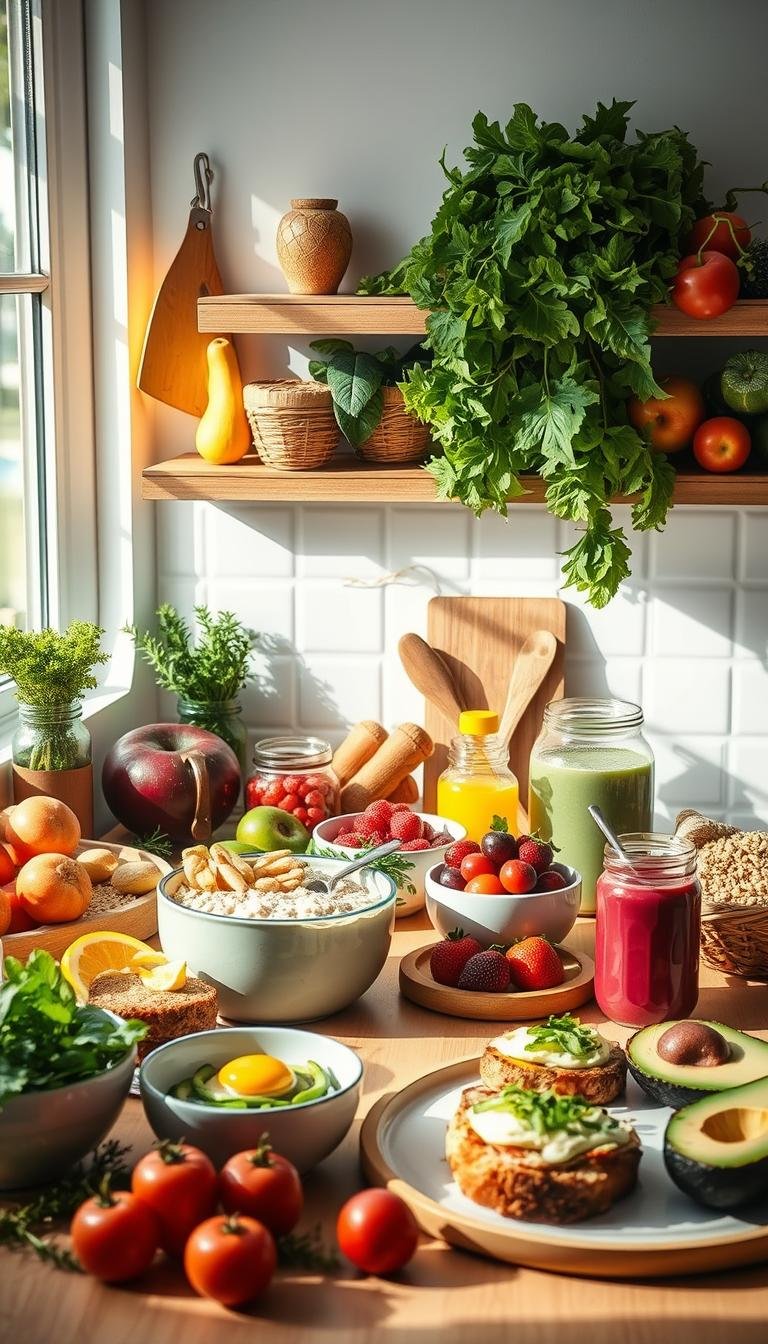
Clean Eating Breakfasts: Quick & Nutritious Ideas
Here’s a wake-up call: the Dietary Guidelines for Americans report that more than 70% of adults exceed recommended limits for added sugars and sodium—before noon for many. Clean Eating Breakfasts flip that script with simple, nutrient-dense breakfast choices that fuel energy and focus without the crash.
This Website contains affiliate links. That means I may earn a small commission if you purchase through my links, at no extra cost to you.
Built on whole foods breakfast staples—eggs, oats, Greek yogurt, berries, spinach, and avocado—this guide leans on the 2020–2025 Dietary Guidelines for Americans and American Heart Association advice. We keep added sugars low, favor intact grains, and choose unsweetened dairy or plant-based options. The result is a lineup of healthy breakfast ideas that fit real life in the United States.
Research in The American Journal of Clinical Nutrition shows that higher-protein, fiber-rich meals can curb snacking and support steady energy. Expect balanced morning meals with smart portions and quick breakfast recipes that use U.S.-accessible ingredients. You’ll get label-reading tips, time-saving prep moves, and versatile templates for oat bowls, egg dishes, plant-forward plates, and low-sugar smoothies—crafted for American breakfast health.
Whether you cook once for the week or need ideas in five minutes, these nutrient-dense breakfast plans help you shop on a budget and please the whole table. From on-the-go jars to skillet scrambles, every choice supports cleaner, balanced morning meals without fuss.
Key Takeaways
- Focus on whole foods breakfast staples like eggs, oats, Greek yogurt, berries, and greens.
- Keep added sugars in check, aligning with American Heart Association limits.
- Prioritize protein, fiber, and healthy fats for steady energy and fewer cravings.
- Use quick breakfast recipes and simple prep to save time on busy mornings.
- Choose nutrient-dense breakfast options that work for both budget and family needs.
- Read labels to avoid refined grains, excess sodium, and hidden sweeteners.
- Build balanced morning meals with flexible templates for bowls, scrambles, and smoothies.
Why Clean Eating Matters for Your Morning Routine
A clean, whole foods breakfast sets the tone for steady morning energy. Starting the day with minimally processed foods helps your body keep fuel stable, so you feel clear and ready to work. Simple choices at 7 a.m. can shape how you move, think, and eat for the rest of the day.
The benefits of whole, minimally processed foods
Build breakfast around intact grains, fruits, vegetables, nuts, seeds, and quality proteins. These choices pack fiber and key nutrients that steady digestion and curb blood sugar spikes. A whole foods breakfast also supports focus and cognition by offering slow, even fuel.
Pair steel-cut oats with almonds, or eggs with sautéed spinach and tomatoes. Such minimally processed foods deliver lasting morning energy without a crash. You eat less by volume yet feel satisfied longer.
How breakfast choices affect energy, mood, and focus
Meals high in protein and fiber help your brain stay alert. That means better focus and cognition through the first half of the day. When you skip these anchors, it is easier to fade before lunch.
Watch the balance of carbs and fat. A bowl built on intact grains plus yogurt or tofu slows absorption and reduces blood sugar spikes. You enjoy steadier mood, fewer jitters, and more reliable attention.
Common pitfalls to avoid in the morning
Many breakfast pitfalls come from refined carbs and drinks with added sugar. Sweetened cereals, frosted pastries, and syrupy coffee orders can push a quick rush, then a slump. The result: cravings, clock-watching hunger, and stalled productivity.
- Skip ultra-sweet options that hide 25–40 g added sugar.
- Do not forget protein; include eggs, Greek yogurt, or tofu to prevent early cravings.
- Choose minimally processed foods over packaged items to reduce sodium and additives.
- Plan ahead with fruit, oats, and nuts to avoid impulse buys on the way to work.
How to Build a Balanced Breakfast Plate
A balanced breakfast plate sets the tone for steady energy. Aim for clear macronutrient balance, pairing whole foods with smart portion sizes. Think simple, repeatable choices that allow healthy swaps and clean eating makeovers without losing flavor.
Protein, fiber, and healthy fats for steady energy
Build around protein fiber fats in the morning. Many dietitians suggest about 15–30 g protein, 8–12 g fiber, and 10–20 g healthy fats to support satiety and even blood sugar.
- Two eggs with sautéed spinach and sliced avocado.
- Greek yogurt, 3/4–1 cup, topped with chia seeds and fresh berries.
- Steel-cut oats finished with walnuts and hemp hearts.
These combos keep macronutrient balance in check and make it easy to rotate flavors day to day.
Portion guidance for active and sedentary days
Use a simple plate model: roughly 1/4 protein, 1/4 whole grains, and 1/2 fruits or vegetables. Adjust portion sizes based on your plans.
- Training days: add about 1/2 cup cooked whole grains and prioritize hydration.
- Sedentary days: emphasize nonstarchy vegetables and keep protein steady.
Small tweaks protect energy without overdoing calories, while maintaining macronutrient balance that fits your schedule.
Smart swaps to clean up favorite breakfasts
Choose healthy swaps that deliver flavor and fiber. Start with clean eating makeovers that are easy to stick with.
- Trade sweetened granola for toasted oats with nuts and cinnamon.
- Swap a white bagel for sprouted whole grain bread like Food For Life Ezekiel.
- Use natural almond or peanut butter instead of flavored spreads.
- Pick plain Greek yogurt and sweeten with fruit, vanilla, or cinnamon.
- Build a breakfast burrito with whole-wheat tortillas, black beans, and sautéed peppers instead of bacon-heavy versions.
- Brew coffee and add a splash of milk or oat milk plus cinnamon rather than sugary syrups.
With these upgrades, your balanced breakfast plate stays craveable while keeping portion sizes and macronutrient balance on track.
Time-Saving Prep Tips for Busy Weekdays
Set aside one hour on Sunday for a focused meal prep breakfast. Aim for batch cooking that covers several days: roast sweet potatoes, peppers, and mushrooms; hard-boil eggs; and cook quinoa or farro. Cool foods quickly in shallow containers and store in airtight jars. Label everything with the date and follow a simple FIFO rotation.
Build make-ahead breakfasts that reheat fast. Assemble breakfast burritos with eggs or tofu, beans, and sautéed veggies for a freezer-friendly breakfast. Wrap each one, freeze, then warm in a skillet or oven so the tortilla stays crisp. Freeze whole-grain waffles or pancakes between parchment sheets and pop them straight into the toaster.
Keep a few grab-and-go choices ready. Portion overnight oats with chia in Mason jars. Stack smoothie packs with spinach, berries, and flax; add milk or water and blend. Pack Greek yogurt boxes with nuts and fresh fruit for a steady, balanced bite.
Use smart shortcuts to save minutes on busy mornings. Choose prewashed greens, rinse canned beans to cut sodium, and pull rotisserie chicken for savory bowls. These moves make batch cooking smoother and keep flavors fresh without extra effort.
Pro tip: Set a standing reminder to check fridge temps and space cooled meals by type—grains together, proteins together, produce together—for faster assembly.
| Prep Idea | How to Store | Morning Use | Why It Works |
|---|---|---|---|
| Overnight oats with chia | Jars, 3–5 days refrigerated | Top with fruit and nuts; grab-and-go | Fast fiber and steady energy without cooking |
| Freezer burritos (eggs or tofu, beans, veg) | Wrapped individually, up to 3 months frozen | Reheat in skillet or oven | Freezer-friendly breakfast with protein and carbs |
| Batch-roasted vegetables | Airtight containers, 3–5 days refrigerated | Reheat and pair with eggs or grains | Speeds assembly and adds color and micronutrients |
| Cooked quinoa or farro | Portioned containers, 3–5 days refrigerated | Warm bowls or cold salads | Reliable base for make-ahead breakfasts |
| Smoothie packs (spinach, berries, flax) | Freezer bags, labeled by date | Add liquid and blend | Zero chop time; consistent texture and flavor |
| Whole-grain waffles or pancakes | Frozen between parchment sheets | Toast from frozen | Quick crisp finish and kid-friendly grab-and-go |
Distribute the work: one pan for vegetables, one pot for grains, and a dozen eggs simmering while jars of overnight oats set. With this simple rhythm, meal prep breakfast becomes a weekly habit that supports clean, calm mornings.
Keep portions visible with clear containers and set a top shelf for ready-to-eat items. This small reset makes batch cooking pay off all week and keeps make-ahead breakfasts front and center.
Clean Eating Breakfasts
A clean start sets the tone for the day. Think simple meals built from a whole ingredients list, steady protein, and bright produce. With smart label reading and a few pantry staples, breakfast can be fast, filling, and free of clutter like artificial additives and excess sugar.
Core principles that define a clean breakfast
Choose intact grains, lean or plant proteins, and colorful fruits and vegetables. Keep flavors real with spices and citrus, not syrups. Prioritize no added sugar and short labels to honor clean breakfast principles without losing taste.
Use fats that support satiety, such as extra-virgin olive oil or avocado. Pick dairy or alternatives that are unsweetened. Aim for fiber and protein so energy lasts through the morning.
Ingredient checklist to keep in your pantry and fridge
- Grains: rolled or steel-cut oats, quinoa, brown rice, farro
- Proteins: eggs, tofu, tempeh, canned chickpeas, black beans (low-sodium)
- Seeds and nuts: chia, flax, hemp, almonds, walnuts, pecans
- Spreads and oils: natural nut butters (nuts, salt), extra-virgin olive oil, avocado oil
- Dairy or alternatives: plain Greek yogurt, Skyr, cottage cheese, unsweetened almond or soy milk
- Produce: fresh or frozen berries, bananas, apples, citrus, leafy greens
- Flavor boosters: cinnamon, turmeric, pure vanilla extract
- Breads: 100% whole-grain bread or tortillas
Stocking these pantry staples makes clean choices easy. You get variety, speed, and a reliable whole ingredients list for quick builds on busy mornings.
Sugars and additives to watch for on labels
Practice label reading on cereals, yogurts, and milks. Look for 0 g added sugars and skip high-fructose corn syrup. If you prefer fewer artificial additives, avoid aspartame and acesulfame potassium, and go easy on thickeners like carrageenan if you are sensitive.
Scan sodium when relevant; “low sodium” means 140 mg or less per serving. Favor products with a short, clear whole ingredients list so your breakfast stays focused on no added sugar and clean breakfast principles from the first bite.
High-Protein Breakfast Ideas Without Processed Powders
A clean, high-protein breakfast can be fast, fresh, and satisfying with no protein powder. Build around whole foods that deliver steady energy and real flavor. Use simple spices, colorful produce, and smart add-ons for balance.
Egg-based options with vegetables
Try easy egg recipes that cook in minutes. A veggie omelet with spinach, tomatoes, and mushrooms in olive oil feels light yet hearty. A stovetop frittata with roasted peppers and onions works for meal prep, while shakshuka-style eggs simmer in a bright tomato-pepper sauce.
For grab-and-go, bake egg muffins with broccoli and cheddar. Pair any of these with sprouted-grain toast or a mixed greens side salad for fiber and crunch.
Greek yogurt and cottage cheese pairings
For a quick Greek yogurt breakfast, top with berries, chia seeds, and a pinch of cinnamon. Or go savory with cherry tomatoes, cucumbers, extra-virgin olive oil, and za’atar. Choose low-fat or whole-milk styles based on taste and satiety.
Cottage cheese bowls are creamy and versatile. Blend cottage cheese with banana and peanut butter for a spoonable bowl, or keep it simple with sliced apples and crushed walnuts. Both options deliver a high-protein breakfast that needs no protein powder.
Legume and tofu scrambles for plant-based protein
A tofu scramble with turmeric, nutritional yeast, onions, and kale is fast and bold. Season with smoked paprika, cumin, and garlic for depth. Serve with avocado and cherry tomatoes for color and healthy fats.
For more plant-based protein, mash chickpeas with lemon and tahini on whole-grain toast. A black bean and sweet potato skillet topped with pico de gallo adds fiber and heat, while a tempeh breakfast hash with Brussels sprouts brings crunch and rich flavor.
| Idea | Key Ingredients | Why It Works | Flavor Boost |
|---|---|---|---|
| Veggie Omelet | Eggs, spinach, tomatoes, mushrooms, olive oil | Fast egg recipes with complete protein and fiber-rich veggies | Black pepper, sea salt |
| Shakshuka-Style Eggs | Eggs, tomato-pepper sauce, onions, garlic | Warm, saucy base for a high-protein breakfast | Smoked paprika, cumin |
| Greek Yogurt Breakfast | Greek yogurt, berries, chia, cinnamon | Thick texture and steady energy with no protein powder | Orange zest, vanilla |
| Cottage Cheese Bowls | Cottage cheese, banana, peanut butter or tomatoes, cucumbers | Sweet or savory options with calcium and satiating fats | Za’atar, olive oil |
| Tofu Scramble | Firm tofu, turmeric, nutritional yeast, onions, kale | Plant-based protein with a fluffy, egg-like texture | Garlic, chili flakes |
| Chickpea Toast | Chickpeas, lemon, tahini, whole-grain bread | Fiber and protein for long-lasting fullness | Parsley, cumin |
| Black Bean Skillet | Black beans, sweet potato, pico de gallo | Hearty, colorful mix for clean morning fuel | Lime, cilantro |
| Tempeh Hash | Tempeh, Brussels sprouts, onions | Fermented plant-based protein with satisfying bite | Mustard, apple cider vinegar |
Grain Bowls and Whole Grains for Lasting Fuel
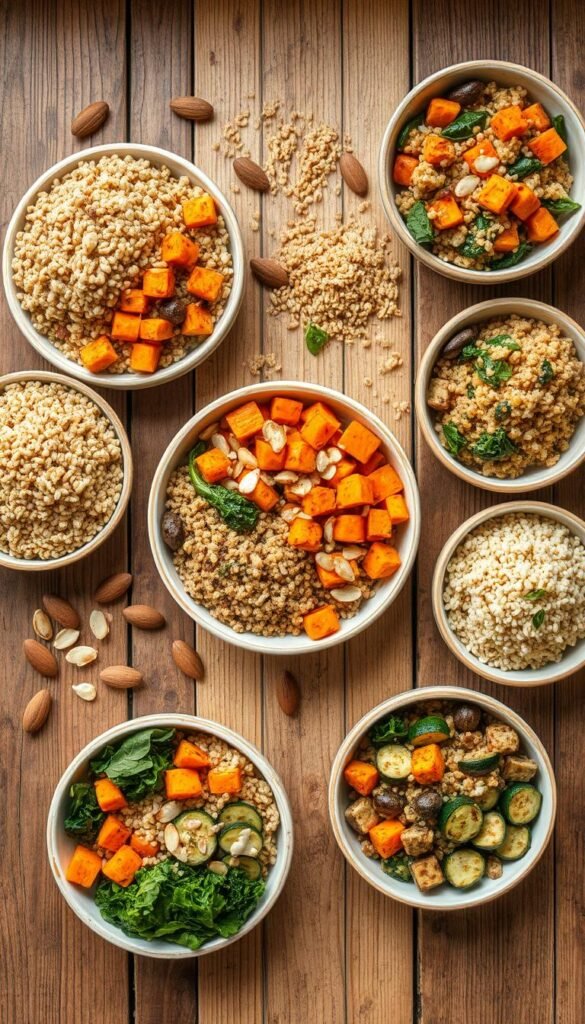
Start your morning with a whole grain breakfast that powers steady energy. These bowls are simple to prep, easy to personalize, and perfect for a fiber breakfast that keeps you full.
Overnight oats with no added sugar
For overnight oats, stir rolled oats with chia seeds, cinnamon, and unsweetened milk. Grate an apple or mash a banana for gentle sweetness and more fiber. Finish with walnuts and blueberries for crunch and color.
This take on overnight oats offers beta-glucan for heart health and satiety. Prep several jars on Sunday so breakfast is ready in seconds.
Quinoa, brown rice, and farro breakfast bowls
Build a quinoa bowl, brown rice bowl, or farro breakfast with 1/2 to 1 cup cooked grain. Add sautéed greens and roasted vegetables. Top with a soft-boiled egg or beans and a drizzle of olive oil or tahini.
For a savory kick, fold in kimchi or sliced avocado. This mix layers protein, healthy fats, and complex carbs for a balanced fiber breakfast.
Gluten-free whole grain options
If you prefer gluten-free grains, try millet, buckwheat, amaranth, or certified gluten-free oats. Season with citrus, herbs, and warm spices to keep sodium low while boosting flavor.
Pair these grains with pumpkin seeds, hemp hearts, or almonds for extra minerals and protein. Rotate your whole grain breakfast to keep taste and texture fresh.
Vegetable-Forward Breakfasts That Satisfy
A veggie breakfast can be bold, crisp, and filling without leaning on heavy starches. Build plates around nonstarchy vegetables to boost fiber and minerals while keeping energy steady. Think bright greens, juicy tomatoes, and briny accents that wake up your palate.
Start with a breakfast salad: arugula, cucumbers, cherry tomatoes, Kalamata olives, and chickpeas tossed with extra-virgin olive oil and lemon. Add a soft-boiled egg or a scoop of fresh ricotta for protein. A pinch of sea salt and cracked pepper ties it together.
Try avocado toast upgrades on hearty whole-grain bread. Layer smashed avocado with thin radishes, pumpkin seeds, and a dash of everything bagel seasoning. For a twist, add a swipe of tahini and a squeeze of lime to balance the richness.
For warm, savory breakfast ideas, roast at 400–425°F to caramelize edges. A sheet pan of broccoli, peppers, zucchini, and red onion pairs well with a poached egg. Finish with lemon zest or a splash of red wine vinegar to brighten each bite.
Sweet potato “toast” offers sturdy slices for toppings. Bake until tender, then crown with cottage cheese, chives, and a sprinkle of za’atar. The result is creamy, crisp, and deeply satisfying.
A Mediterranean diet breakfast fits the morning rhythm. Use olive oil, walnuts or almonds, and legumes with herbs like herbes de Provence. Add fermented vegetables, such as sauerkraut or kimchi, for tang and gut-friendly benefits.
Pro tip: Keep a spice trio—za’atar, smoked paprika, and herbes de Provence—on the counter. A quick shake turns simple produce into a cafe-worthy plate.
Low-Sugar Smoothies and Smoothie Bowls
Build low-sugar smoothies that still taste bright and full. Keep flavors clean, keep textures lush, and keep portions smart so your morning fuel lasts. The ideas below work for smoothie bowls or sippable blends.
Choosing fruit portions wisely
Use portioned fruit to manage carbs. Aim for about 1 cup of berries, kiwi, or a mix, and add only 1/2 banana for body. This balance supports a no added sugar smoothie while keeping flavor fresh.
Favor fiber-rich picks like raspberries or blackberries. Their tart edge pops with a little lemon, and the fiber helps slow the rise in blood sugar.
Adding greens, seeds, and healthy fats
Fold in greens in smoothies such as baby spinach, kale, or even frozen cauliflower rice for volume without extra sugar. These blend smooth and stay mild.
For staying power, stir in chia flax hemp at 1–2 tablespoons total. Add 1–2 tablespoons almond or peanut butter, or 1/4 avocado, to boost creamy feel and help your body absorb fat‑soluble nutrients.
Blending tips for creamy texture without sweeteners
Start with frozen fruit and minimal liquid for thickness. Choose unsweetened dairy or plant milk, then add Greek yogurt or silken tofu to raise protein.
For creamy smoothie tips, add a spoon of oats, a pinch of cinnamon, or a splash of vanilla extract. These lift sweetness and texture in smoothie bowls and keep the blend a true no added sugar smoothie.
Clean Breakfasts for Weight Management
A smart weight management breakfast leans on high-water, high-fiber ingredients and steady protein. This approach supports calorie control without feeling deprived and helps maintain satiety through the morning.
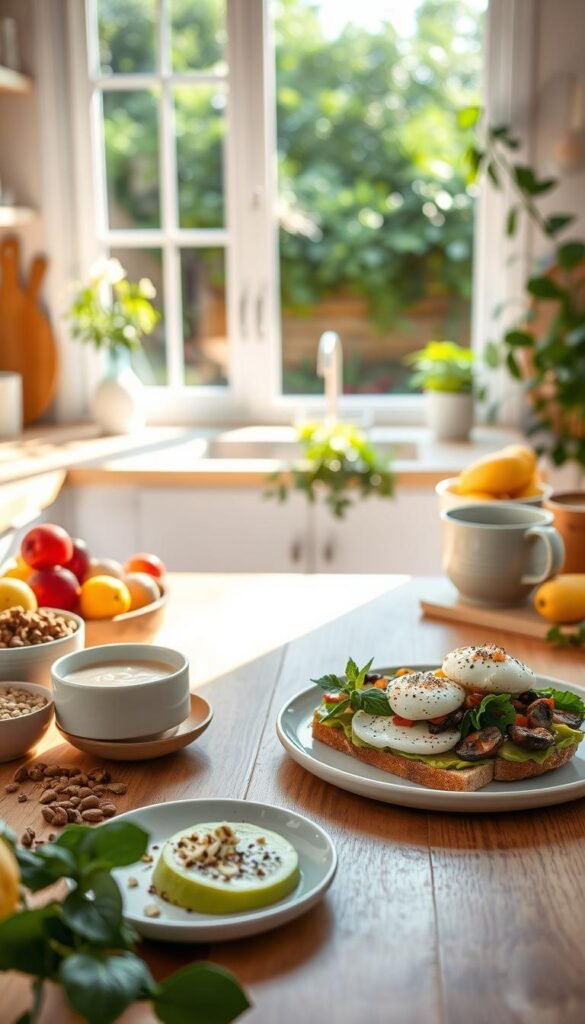
Volume-eating with fiber-rich foods
Build a high-fiber breakfast with low-calorie dense foods like berries, leafy greens, tomatoes, and zucchini. Try oatmeal with grated zucchini, a veggie scramble with spinach and mushrooms, or Greek yogurt piled with raspberries and chia.
These picks boost volume and water content, so you feel full on fewer calories. Aim for 8–12 grams of fiber to pair with protein for stronger satiety.
Balancing calories with satiety
Combine 20–30 grams of protein with fiber for lasting fullness. Options include tofu scramble with black beans and salsa, Greek yogurt with almonds and chia, or oat bran with a spoon of peanut butter.
Use portion control to fine-tune calorie control. Choose low-calorie dense foods first, then add healthy fats in measured amounts to round out flavor and balance.
Mindful eating strategies in the morning
Practice mindful eating by sitting down, silencing devices, and taking 10–15 minutes to chew and notice flavors. Start with a protein-forward plate to curb pastry impulses on the go.
Scan for hidden sugars in creamers and juices, and check in with hunger cues on a 1–10 scale before seconds. This gentle routine helps align choices with satiety and supports a consistent weight management breakfast.
Family-Friendly Breakfasts Kids Will Love
Turn busy mornings into wins with a kid-friendly breakfast that balances taste and nutrition. These ideas work for school morning meals and help with picky eaters without extra sugar or stress.
Make-ahead muffins with hidden veggies
Bake healthy muffins using whole-wheat pastry flour or oat flour. Stir in grated zucchini or carrots, mashed banana or applesauce, a light splash of maple syrup, and a handful of blueberries or mini dark chocolate chips (70% cocoa or higher).
Cool, freeze, and thaw overnight for fast school morning meals. Serve warm with peanut butter or cottage cheese for protein that keeps kids full.
DIY yogurt parfait bar
Set out plain Greek yogurt, fresh fruit, and a homemade low-sugar granola made from oats, nuts, cinnamon, and lightly toasted coconut. A simple yogurt parfait bar lets kids build their bowls and boosts buy-in.
Swap in sunflower seeds or sunflower seed butter for nut-free settings. Offer water or milk to round out this kid-friendly breakfast and support hydration.
Whole-grain pancakes with fruit compote
Whisk a 100% whole-grain batter with white whole wheat or buckwheat, and add ground flax for omega-3s. These whole-grain pancakes pair well with warm berry compote simmered with lemon and cinnamon instead of syrup.
Plate with eggs, cottage cheese, or a spoon of peanut butter for steady energy. This combo satisfies picky eaters while keeping sugar in check.
Dairy-Free and Plant-Based Morning Options
Start simple and satisfying. For a vegan breakfast that still feels hearty, build around plant-based protein and fresh produce. Choose soy milk fortified with calcium and vitamin D per NIH guidance, or pea-protein options, and check labels for 0 g added sugar. If you prefer almond milk unsweetened, balance it with seeds or nuts for better staying power.
Try chia pudding mixed with almond milk unsweetened and a handful of berries. Add ground flax or chia for omega-3s. Another fast dairy-free breakfast is an oat bowl topped with hemp hearts and sliced banana. These pairings keep sugars in check while lifting fiber and plant-based protein.
Crave a hot plate? Sauté vegetables, then fold them into a tofu or chickpea flour omelet. Pan-seared tempeh with avocado and white bean toast offers a savory crunch and extra protein. For a cool option, spoon dairy-free yogurt—like unsweetened coconut or almond—into a bowl and finish with walnuts and seasonal fruit.
Round out nutrients with smart staples. Keep soy milk fortified for 7–10 grams of protein per cup, and rotate in dairy-free yogurt for gut-friendly cultures. Use iodized salt at home and sprinkle nori flakes lightly for iodine. Include ground flax, chia, and walnuts to support omega-3 balance in a dairy-free breakfast.
| Breakfast Idea | Key Ingredients | Why It Works |
|---|---|---|
| Chia Pudding | Almond milk unsweetened, chia, berries | Fiber and omega-3s with steady energy and low added sugar |
| Tofu Omelet | Tofu, spinach, peppers, onions | High plant-based protein and veggies for volume and micronutrients |
| Tempeh Avocado Toast | Tempeh, whole-grain bread, avocado | Savory protein plus healthy fats for longer satiety |
| Oat Bowl | Oats, soy milk fortified, hemp hearts | Complex carbs with complete amino acid support |
| Parfait | Dairy-free yogurt, walnuts, seasonal fruit | Probiotics, crunch, and natural sweetness without added sugar |
Mind key nutrients on plant-based mornings. Keep B12 on your radar with fortified foods or a supplement recommended by a registered dietitian. For iodine, rely on iodized salt and small amounts of seaweed. Blend these habits with balanced plates built from tofu, tempeh, grains, and soy milk fortified to keep your routine simple, clean, and satisfying.
On-the-Go Breakfasts You Can Pack
A smart portable breakfast keeps pace with a busy morning. Plan for a commuter breakfast that holds up in a bag, stays safe at or below 40°F, and tastes good without loads of sugar. Small swaps and tidy builds make clean eating simple on the move.
Jar salads and layered parfaits
Mason jar meals shine when layers protect texture. For a yogurt parfait, start with plain Greek yogurt, add berries, then nuts or seeds on top so they stay crisp. Cap with a dusting of cinnamon for warmth.
Prefer savory? Build a breakfast salad with quinoa, cherry tomatoes, cucumbers, Kalamata olives, and feta or chickpeas. Keep dressings or juicy items in a small container until serving. Store sealed jars at 40°F or below to maintain peak quality.
Handheld wraps with eggs or tofu
Breakfast wraps travel well, especially when pressed. Use whole-wheat or sprouted tortillas and tuck in scrambled eggs, black beans, sautéed peppers and onions, and fresh spinach for a hearty egg wrap. Press in a panini maker to reduce crumbs and improve grip.
For a plant-forward twist, a tofu wrap packed with the same veggies and spices delivers solid protein without heaviness. If you want fewer carbs, wrap fillings in sturdy collard greens and roll tightly for a clean, commuter breakfast.
Energy bites with nuts and seeds
Energy bites offer compact fuel with no utensils. Mix rolled oats, natural peanut or almond butter, ground flax, chia, chopped dates, and a few dark chocolate pieces. Roll into bite-size rounds and refrigerate until firm.
Portion 2–3 bites, roughly 150–250 calories depending on size and needs. Pair with black coffee or unsweetened tea to round out a balanced, portable breakfast that fits even the tightest schedule.
Seasonal Clean Eating Breakfast Ideas
Let your seasonal breakfast follow the calendar. Buy what’s ripe at a farmers market and lean on seasonal produce USA for peak flavor and value. Small shifts by month keep mornings fresh without extra work.
Spring and summer produce highlights
Build bowls and bakes around spring summer fruit like strawberries, blueberries, peaches, and nectarines. Try a berry chia pudding or a peach cottage cheese bowl with mint. Add tomatoes, zucchini, corn, and herbs to a tomato-basil egg bake or zucchini oat muffins.
Choose U.S.-grown picks in season for better texture and price. These bright flavors make a seasonal breakfast feel simple and satisfying.
Fall spices and winter citrus pairings
As days cool, lean on apples, pears, pumpkin, squash, sweet potatoes, and cranberries. Warm up oats with apple-cinnamon or stir pumpkin pie spice into oatmeal. A roasted sweet potato hash with eggs turns into a hearty start with classic fall spices.
When it’s cold, brighten plates with winter citrus like grapefruit and oranges. Try citrus yogurt bowls with pistachios for pop and crunch. The blend of tart fruit and spice keeps a seasonal breakfast lively.
Shopping and storage tips for freshness
Pick firm, deeply colored fruit and rotate produce so the ripest gets used first. Keep berries unwashed in a breathable container, and store herbs in a jar of water in the fridge. Leafy greens last longer with paper towels to absorb moisture; freeze excess fruit for smoothies.
These storage tips reduce waste and stretch your budget at the farmers market. They also protect delicate textures across seasonal produce USA.
| Season | Star Produce | Breakfast Idea | Flavor Boost | Quick Storage Tips |
|---|---|---|---|---|
| Spring | Strawberries, tomatoes, herbs | Berry chia pudding; tomato-basil egg bake | Fresh mint, basil | Berries unwashed, ventilated; herbs in water |
| Summer | Blueberries, peaches, zucchini, corn | Peach cottage cheese bowl; zucchini oat muffins | Lemon zest, toasted nuts | Refrigerate ripe fruit; cool muffins before storing |
| Fall | Apples, pears, pumpkin, squash | Apple-cinnamon steel-cut oats; pumpkin oatmeal | Fall spices: cinnamon, nutmeg, clove | Keep apples chilled; dry pumpkin puree in sealed jar |
| Winter | Sweet potatoes, cranberries, winter citrus | Sweet potato hash with eggs; citrus yogurt bowls | Winter citrus segments, pistachios | Store potatoes in a cool, dark spot; refrigerate citrus |
Budget-Friendly Clean Eating Strategies
Budget clean eating starts with a plan. Draft a simple weekly menu and cross-use ingredients to keep costs low. One bag of spinach can fill omelets, smoothies, and grain bowls. A pot of black beans can anchor wraps, scrambles, and toast toppers for an affordable breakfast.
Lean on bulk buying for oats, rice, and beans, and reach for frozen fruits and vegetables. They’re often priced better than fresh and help with food waste reduction. Choose store brands from Costco, Walmart Great Value, Kroger, or Target Good & Gather for steady savings on staples.
Batch-cook once, portion in containers, and label dates. Freeze ripe bananas and berries for smoothies. Save clean vegetable scraps to simmer a quick broth. Turn roasted veggies and leftover grains into breakfast hashes for cheap healthy meals.
Use loyalty apps and coupons from major grocers, and consider warehouse clubs for nuts, seeds, and olive oil. For SNAP-friendly foods, prioritize oats, eggs, peanut butter, dried beans, and frozen produce; these build balanced plates without straining the budget.
| Smart Buy | Why It Saves | Breakfast Uses | Waste-Smart Tip |
|---|---|---|---|
| Rolled Oats (bulk buying, store brands) | Low cost per serving; long shelf life | Overnight oats, baked oatmeal, blender pancakes for an affordable breakfast | Keep dry; portion into jars to prevent food waste reduction issues |
| Frozen Berries & Spinach | Cheaper than fresh off-season; minimal spoilage | Smoothies, oatmeal toppers, egg scrambles | Use by the cup; reseal to avoid freezer burn |
| Dried Beans & Brown Rice | Pennies per ounce when bought in bulk buying | Bean-and-egg wraps, savory bowls, breakfast hashes | Cook big, freeze flat in bags for cheap healthy meals |
| Eggs (SNAP-friendly foods) | High protein at a low price | Veggie omelets, hard-boiled grab-and-go, frittatas | Boil a dozen; date shells to guide food waste reduction |
| Peanut Butter (store brands) | Value protein and healthy fats | Toast with banana, oatmeal swirl, smoothie booster | Stir and refrigerate to extend freshness |
| Greek Yogurt (plain, store brands) | Better unit price in large tubs | Parfaits with oats, savory bowls with cucumbers and herbs | Spoon into single-serve cups to curb overuse |
Conclusion
Clean eating takeaways for morning nutrition are simple: build breakfasts around whole foods with adequate protein, fiber, and healthy fats, while keeping added sugars and additives low. This approach aligns with the Dietary Guidelines for Americans and supports a steady breakfast routine. With simple recipes and smart choices, you set the tone for sustained energy, clear focus, and lasting healthy habits.
Make it practical. Plan one short weekly prep session, stock a clean pantry with oats, eggs, beans, nuts, seeds, olive oil, and frozen produce, and read labels to spot added sugars and excess sodium. Tailor portions to your activity level—more for training days, a bit less for rest days. These clean eating takeaways keep morning nutrition realistic and repeatable.
Try this action plan for the week: one high-protein option (eggs with spinach or Greek yogurt with berries), one whole-grain bowl (steel-cut oats or quinoa), one low-sugar smoothie (leafy greens, berries, chia, and unsweetened almond milk), and one on-the-go wrap (whole-grain tortilla with eggs or tofu). Rotate, then adapt to the season and your needs—dairy-free or gluten-free included—so your breakfast routine never stalls.
Small steps add up. Choose simple recipes, prep what you can, and stay consistent. Morning nutrition built on whole foods delivers sustained energy and supports healthy habits that last beyond breakfast.