High Protein Meal Ideas for Healthy Eating Boost
Here’s a surprise: adults who eat higher-protein meals report feeling fuller for up to 33% longer, according to research in the American Journal of Clinical Nutrition. That extra satiety can help curb snacking, steady energy, and support weight goals. This guide turns that science into real-life High Protein Meal Ideas you can use today.
This Website contains affiliate links. That means I may earn a small commission if you purchase through my links, at no extra cost to you.
The Dietary Guidelines for Americans 2020–2025 recommend dietary patterns built on lean proteins, vegetables, fruits, whole grains, and healthy fats. We follow that lead with protein-rich meals that fit a busy U.S. lifestyle. You’ll find energy-boosting recipes and simple meal planning moves that favor balanced nutrition over strict rules.
Harvard T.H. Chan School of Public Health encourages choosing fish, poultry, beans, and nuts over red and processed meats for better long-term health. In this article, we blend that advice with a high-protein diet approach you can tailor to goals like weight loss, muscle gain, or low-carb eating. Expect smart swaps, quick prep ideas, and clear portion cues.
From grab-and-go breakfasts to family dinners, these protein-rich meals work with tools you already use, including the air fryer and Instant Pot. We’ll also show you how to read labels, spot hidden sugars and sodium, and pick clean protein powders and bars. The result: High Protein Meal Ideas that make healthy eating simple, tasty, and sustainable.
Key Takeaways
- Higher-protein meals can boost fullness, steady energy, and support weight management.
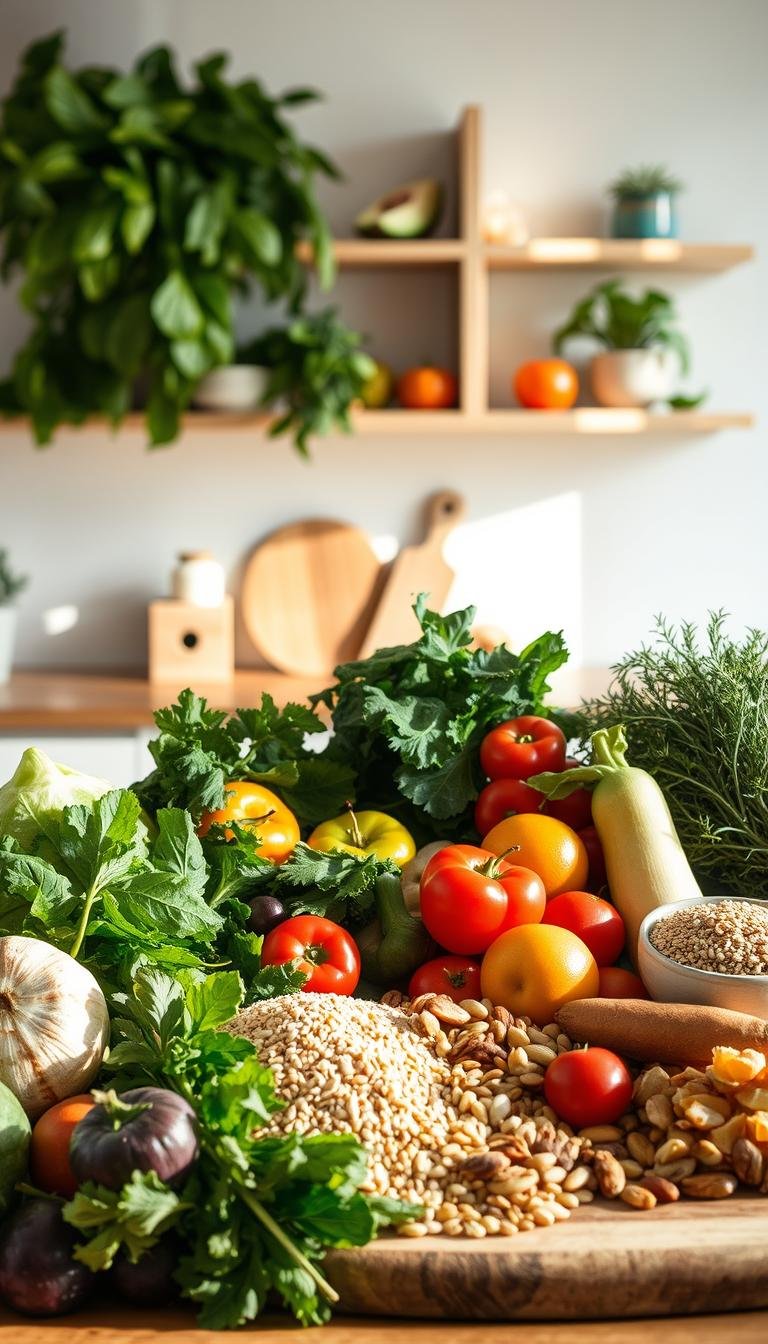
- Build plates around lean proteins, produce, whole grains, and healthy fats for balanced nutrition.
- Favor fish, poultry, beans, and nuts over red and processed meats for better long-term health.
- Use meal planning to prep energy-boosting recipes that fit a high-protein diet and busy schedules.
- Leverage air fryers and Instant Pots for faster protein-rich meals at home.
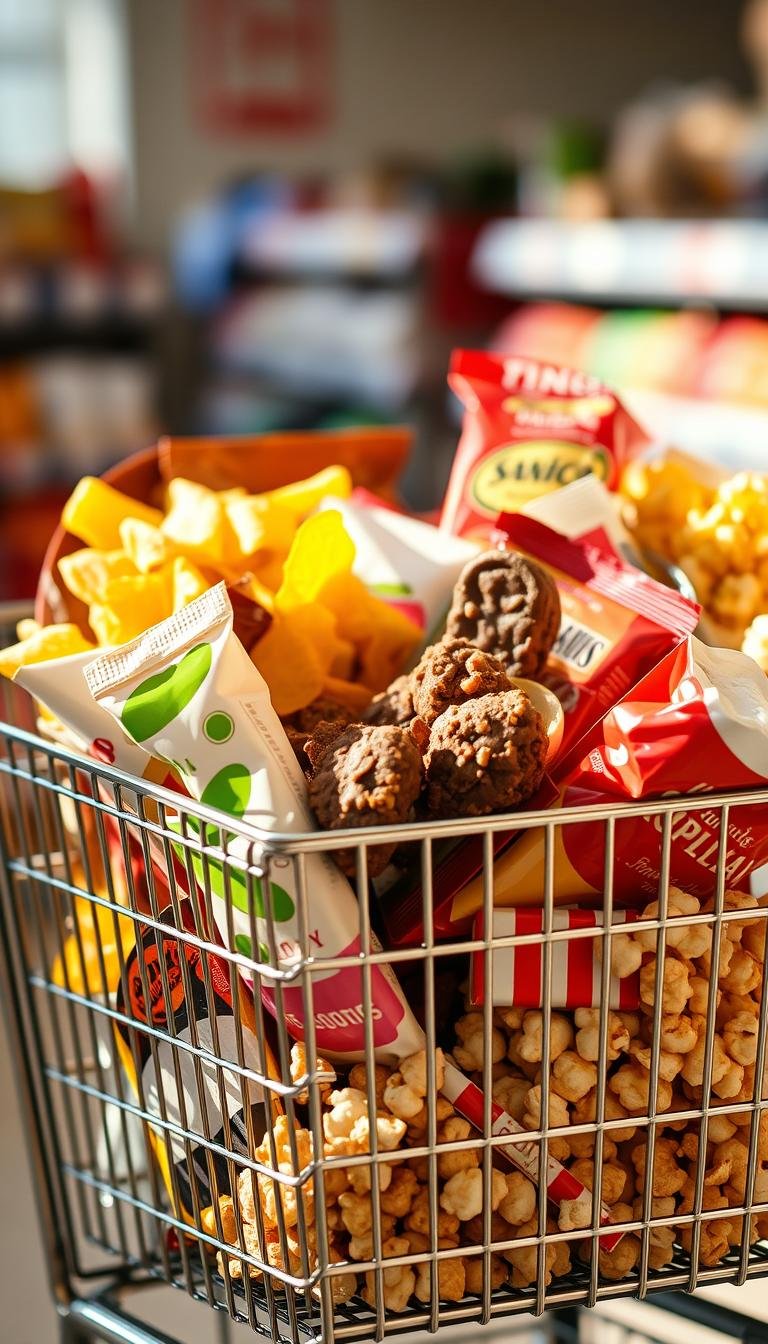
- Read labels to check protein per serving and avoid added sugars, excess sodium, and fillers.
- Tailor portions to your goals, whether weight loss, muscle gain, or low-carb meal planning.
Why Protein Matters for a Healthy, Energized Lifestyle
Protein benefits touch every part of daily life. Your body uses amino acids to build tissue, make enzymes, and support immune cells. The right intake helps muscle maintenance, keeps metabolism steady, and steadies appetite through satiety hormones.
How Protein Supports Muscle, Metabolism, and Satiety
Muscles remodel all day, and protein supplies the amino acids needed for that work. A dose rich in leucine helps signal muscle building. This supports muscle maintenance during busy weeks or after workouts.
Higher-protein meals can nudge metabolism by increasing the thermic effect of food. They also help manage hunger by influencing satiety hormones like GLP-1, PYY, and ghrelin. That steady signal supports consistent energy.
Daily Protein Targets for Active and Sedentary Adults
The protein RDA sets a floor, not a personal goal for everyone. A practical range uses protein per pound or per kilogram to fine-tune intake. Spread protein across 3–5 meals to keep muscle maintenance and energy on track.
- Sedentary adults: 0.8–1.0 g/kg per day (about 0.36–0.45 g per pound)
- Recreationally active: 1.2–1.6 g/kg per day (about 0.55–0.73 g per pound)
- Strength, power, or fat loss phases: 1.6–2.2 g/kg per day (about 0.73–1.0 g per pound)
Aim for 20–40 g per meal, adjusting for body size and training load. This approach balances metabolism, appetite, and recovery.
Quality vs. Quantity: Complete and Complementary Proteins
Quantity matters, but quality counts too. Complete proteins supply all essential amino acids, while smart combos of plant foods can cover gaps. Tools like PDCAAS and DIAAS help compare digestibility and amino acid profiles.
| Source | Type | Quality Notes | Complementary Ideas |
|---|---|---|---|
| Eggs (Eggland’s Best), Milk Whey (Optimum Nutrition) | Complete proteins | High PDCAAS and DIAAS; rich in leucine for muscle maintenance | Pair with oats or fruit for carbs post-workout |
| Greek yogurt (Chobani), Skyr (Siggi’s) | Complete proteins | Strong digestibility; supports satiety hormones and metabolism | Add nuts and berries for extra fiber and healthy fats |
| Chicken, Turkey, Salmon (Wild Alaska), Tuna (Starkist) | Complete proteins | All essential amino acids; salmon adds omega-3s | Serve with quinoa and veggies for a balanced plate |
| Soy foods (Tofu, Tempeh; brands like House Foods) | Complete proteins | High-quality amino acids; versatile for meals | Combine with brown rice and greens for minerals |
| Beans and Rice (Goya beans, Lundberg rice) | Complementary | Individually lower DIAAS; together form a full amino acid profile | Add avocado and salsa for flavor and micronutrients |
| Chickpeas + Whole-Wheat Pita (Cava hummus, Dave’s Killer Bread) | Complementary | Improves overall PDCAAS when combined | Top with tahini and veggies for extra fiber |
| Peanut Butter (Smucker’s Natural) + Oatmeal (Quaker) | Complementary | Blends amino acids to support muscle maintenance | Stir in chia or ground flax for extra texture |
Choose a mix of animal and plant sources for iron, zinc, vitamin B12, and omega-3s, while limiting processed meats. This balanced approach maximizes protein benefits without missing key nutrients.
High Protein Breakfasts to Start Your Day Strong
A high-protein breakfast steadies energy and curbs mid-morning hunger. Use simple staples you already love, and build in fiber and protein to keep meals balanced and satisfying. The ideas below mix quick prep with great flavor, so you can eat well even on busy mornings.
Greek Yogurt Parfaits with Fiber-Rich Toppings
Start with strained Greek yogurt for about 15–20 grams of protein per 6–7 ounces. These Greek yogurt recipes shine with berries, chia seeds, ground flax, and a sprinkle of high-fiber granola. Add almonds or walnuts for crunch and healthy fats, and finish with cinnamon or a light drizzle of honey.
This combo blends fiber and protein to support fullness and gut health. Try layering in a jar for grab-and-go meals that stay creamy and fresh.
Egg-Based Skillets and Veggie Omelets
Eggs offer about 6–7 grams of protein each, and adding egg whites boosts volume with fewer calories. Sauté spinach, bell peppers, mushrooms, onions, and tomatoes in olive oil, then fold into a skillet or try new omelet ideas. A small crumble of feta or goat cheese adds tang and extra protein.
For more staying power, include Canadian bacon, smoked salmon, or turkey sausage. Serve with whole-grain toast for a balanced plate rich in fiber and protein.
High-Protein Overnight Oats and Chia Pudding
Raise overnight oats protein by using dairy milk, ultra-filtered milk like Fairlife, or soy milk. Stir in whey, casein, or pea protein to hit 25–35 grams per jar, and sweeten with mashed banana or berries. A spoon of peanut butter or skyr adds creaminess and extra protein.
For chia pudding protein, mix chia seeds with milk and a pinch of vanilla, then chill until thick. Top with raspberries, toasted coconut, and cacao nibs for a satisfying crunch.
Protein Pancakes and Waffles with Smart Toppings
Build protein pancakes with oat flour, eggs, and cottage cheese or Greek yogurt in the batter. Cook in a nonstick pan or waffle iron until golden. Keep portions light yet filling with skyr, warmed berries, or a thin layer of nut butter.
Choose sugar-free syrup or cinnamon instead of heavy pours. This approach keeps calories in check while delivering fiber and protein for an energized morning.
- Quick add-ins: chia seeds, ground flax, hemp hearts
- Protein boosts: Greek yogurt, skyr, egg whites, protein powder
- Flavor swaps: cinnamon, vanilla, lemon zest, cocoa
Quick High Protein Lunch Ideas for Busy Days
A high-protein lunch should be fast, fresh, and easy to pack. Build simple mixes that hold up in a lunchbox and keep you full through the afternoon. Think grain bowls protein, high-protein salads, and wraps with chicken you can grab and go for work or school.
Grain Bowls with Chicken, Tofu, or Salmon
Start with quinoa, farro, brown rice, or cauliflower rice. Add 4–6 ounces of grilled chicken breast, roasted tofu, or canned Alaska sockeye for salmon bowls. This mix lands about 25–40 grams of protein and tastes great hot or cold.
Layer on crunchy veggies, herbs, and avocado. Finish with tahini–lemon or a Greek yogurt–herb drizzle. These meal-prep lunches stack well in bento boxes, so your tofu lunch or salmon bowls stay tidy and fresh.
High-Protein Salads with Legumes and Seeds
Build a base of leafy greens and toss in chickpeas, lentils, or edamame. One cup of cooked lentils brings about 18 grams of protein. Add pumpkin seeds or hemp seeds for extra crunch and even more bite.
Top with feta or shaved Parmesan, or choose dairy-free crumbles if you prefer. A light vinaigrette keeps high-protein salads bright. Pack in a Mason jar for leak-free meal-prep lunches that hold their texture.
Wraps and Pitas with Lean Proteins
Use whole-wheat or low-carb wraps and fill with turkey breast, rotisserie chicken, or tuna made from skipjack. For a plant-forward spin, add baked falafel with crisp greens and tomatoes.
Spread hummus, tuck in sliced veggies and pickled onions, then finish with mustard, salsa, or yogurt tzatziki. These wraps with chicken and tuna roll tight, travel well, and deliver steady grain bowls protein energy without a mess for a high-protein lunch.
High Protein Dinners the Whole Family Will Love
Weeknight wins can be simple, tasty, and balanced. Build family dinners protein first, then layer produce and smart carbs. Aim for 25–40 grams per plate with formats kids know and love.
Lean into easy high-protein dinners like sheet pan dinners with chicken thighs, Brussels sprouts, and sweet potatoes. For kid-friendly protein meals, try taco night with lean ground turkey or black beans, plus whole-grain tortillas and salsa. Keep sauces bright without excess sugar: marinara, chimichurri, salsa verde, or a spoon of pesto.
Seafood fits the rotation, too. Bake or air fry salmon, cod, or shrimp with a spice rub, then offer sides everyone can customize. Think rice or quinoa, roasted veggies, and a quick salad with olive oil and lemon.
On busy nights, slow cooker protein recipes save the plan. Shred chicken for bowls, simmer pork tenderloin until pull-apart, or make a hearty lentil stew. Leftovers turn into tomorrow’s lunch in minutes.
Flavor without the fuss keeps stress low and plates full. Stir-fry flank steak with broccoli in a skillet, finish with a yogurt-based sauce, and serve with brown rice. Most recipes land in 20–30 minutes, so the table fills fast.
| Dinner Idea | Protein Source | Approx. Protein | Smart Sauce | Customizable Sides | Time Saver |
|---|---|---|---|---|---|
| Sheet Pan Trio | Chicken thighs | 30–35 g per serving | Pesto (1 tbsp) or chimichurri | Roasted Brussels sprouts, sweet potatoes | One-pan sheet pan dinners |
| Skillet Stir-Fry | Flank steak | 30–40 g per serving | Low-sodium soy, ginger, garlic | Broccoli, brown rice or quinoa | 20-minute stovetop |
| Taco Night | Lean ground turkey or black beans | 25–30 g per serving | Salsa verde or tomato-based marinara | Whole-grain tortillas, lettuce, avocado | Batch-cook fillings |
| Crispy Fish | Salmon, cod, or shrimp | 25–35 g per serving | Lemon yogurt sauce | Quinoa, roasted carrots, mixed greens | Air fryer or quick bake |
| Comfort Stew | Lentils or shredded chicken | 25–30 g per serving | Herbed tomato base | Side salad, crusty whole-grain bread | Slow cooker protein recipes |
Mix and match to keep family dinners protein forward and fun. Rotate these easy high-protein dinners through the week, and let kids pick toppings so every plate feels personal.
With a few pantry staples and a plan, kid-friendly protein meals stay budget-smart, satisfying, and fast. You get flavor, resilience for leftovers, and less stress at mealtime.
High Protein Meal Ideas
Build macro-friendly meals that fit real life. Use the balanced plate method to keep energy steady, manage hunger, and simplify choices. Focus on smart protein portions and portion sizes that match your goals and activity.
Balanced Plate Formula: Protein, Produce, and Complex Carbs
Fill half your plate with non-starchy vegetables like spinach, broccoli, peppers, or mushrooms. Add a quarter lean protein—aim for 4–6 oz cooked meat or 3/4–1 cup beans to keep protein portions consistent. Use the last quarter for complex carbs such as quinoa, brown rice, potatoes, or whole grains.
Round it out with healthy fats like extra-virgin olive oil, avocado, or nuts. This layout makes macro-friendly meals easy to build and keeps portion sizes clear at a glance.
Mix-and-Match Proteins, Sauces, and Sides
Create mix-and-match meals with simple swaps. Choose a protein, pair a bold sauce, and add a fiber-rich side to hit flavor and balance in minutes.
| Protein | Sauce | Side | Why It Works |
|---|---|---|---|
| Chicken breast | Chimichurri | Quinoa | Bright herbs lift lean meat; whole grain adds steady carbs and fiber. |
| Salmon | Tahini-lemon | Roasted carrots | Omega-3s plus creamy sesame; sweet veg balances citrus and fat. |
| Shrimp | Tomato-basil | Cauliflower rice | Light, fast-cooking pair keeps calories in check with big flavor. |
| Extra-firm tofu | Peanut-lime | Sautéed greens | Plant protein with zesty sauce; greens add iron and volume. |
| Turkey | Harissa yogurt | Brown rice | Spiced tang adds moisture; whole grain supports training days. |
| Lean beef sirloin | Chimichurri | Roasted potatoes | Iron-rich steak with hearty carbs for active schedules. |
| Eggs | Tomato-basil | Sautéed greens | Quick, budget-friendly complete protein with high micronutrients. |
| Tempeh | Peanut-lime | Quinoa | Fermented soy adds texture; nutty grains boost satisfaction. |
Portion Guidance for Different Goals
Set protein portions to your needs, then scale carbs and fats to activity. For weight loss, aim for 1.6–2.2 g/kg/day and target 20–35 g per meal with high-satiety foods. For maintenance, 1.0–1.6 g/kg/day keeps muscle steady while allowing flexible portion sizes.
For muscle gain, use 1.6–2.2 g/kg/day with a calorie surplus and try 0.3–0.4 g/kg protein per meal. Keep fiber at 25–38 g/day to support digestion and fullness. This approach keeps macro-friendly meals on track without constant weighing.
Lean Animal Proteins: Chicken, Turkey, Fish, and Eggs
Build your plate around lean protein sources that keep meals light yet satisfying. Choose skinless chicken breast, turkey breast, pork tenderloin, and 90–96% lean beef. These cuts support everyday energy while leaving room for produce and whole grains. For balanced poultry recipes, aim for simple methods like roasting, grilling, or poaching.
Heart-Healthy Seafood Rotations
Aim for at least 8 ounces per week of varied fish to tap into seafood omega-3 benefits. Rotate salmon, sardines, trout, and mackerel for EPA and DHA. Alternate with cod, tilapia, and shrimp when you want leaner picks without losing flavor.
Pair fish with citrus, herbs, and olive oil for fast weeknight meals. Keep a few frozen fillets on hand so your plan never stalls.
Flavorful Marinades and Rubs Without Extra Sugar
Boost taste with sugar-free marinades built from olive oil, lemon or lime, garlic, ginger, and reduced-sodium tamari or soy sauce. Dijon mustard and vinegar add zip without syrupy glaze. Read labels and skip corn syrup or dextrose.
Try bold spice rubs like smoked paprika, cumin, coriander, and chili powder on chicken, turkey, and fish. These blends make poultry recipes pop while staying light.
Egg-Based Dishes for Any Meal
Eggs deliver about 6 grams of protein each plus choline, making egg nutrition a smart daily pick. Whip up veggie-packed frittatas, shakshuka, or an egg fried cauliflower rice for quick fuel. Scrambles work for breakfast, lunch, or dinner.
Round out the plate with whole-grain toast or roasted potatoes for a balanced bite that complements your lean protein sources.
| Protein | Best Uses | Flavor Boosters | Why It Fits |
|---|---|---|---|
| Skinless Chicken Breast | Grilled cutlets, sheet-pan dinners | Spice rubs, lemon, garlic | Versatile, high protein, low saturated fat for poultry recipes |
| Turkey Breast | Roasts, sliced meal prep | Sage, thyme, black pepper | Lean, mild taste pairs with sugar-free marinades |
| Salmon | Oven-baked, pan-seared | Dill, citrus, olive oil | Rich in seafood omega-3 for heart support |
| Cod | Tacos, quick broil | Paprika, cumin, lime | Lean, mild option to vary seafood nights |
| Eggs | Frittatas, shakshuka, scrambles | Tomato, spinach, scallions | Convenient egg nutrition with protein and choline |
Plant-Based Protein Powerhouses
Build satisfying meals with plant-based protein that delivers strength, flavor, and value. Rotate soy staples, hearty legumes, and crunchy toppers to keep your menu fresh while meeting your goals.
Tofu, Tempeh, and Edamame Basics
Firm tofu offers about 10 g per 3.5 oz. Press it, then try tofu recipes that use tamari, garlic, and sesame oil. Pan-sear or air fry for crisp edges and a golden bite.
Tempeh brings 18–20 g per 3.5 oz with a nutty taste. Steam first to mellow the flavor, then use a bold tempeh marinade. Sear slices for bowls, tacos, or stir-fries.
Cooked edamame gives roughly 17 g per cup. Use edamame protein in salads, grain bowls, or as a quick snack with sea salt and lime.
Beans, Lentils, and Peas for Budget-Friendly Protein
Keep your pantry stocked with beans and lentils. One cup cooked lentils has about 18 g, black beans 15 g, and chickpeas 14 g. They pack fiber, iron, and folate.
Simmer them into chili, dal, and soups. Build burrito bowls with salsa and avocado. Try chickpea pasta for a simple swap that boosts protein.
Nuts, Seeds, and Nut Butters for Added Crunch
Nuts and seeds add protein and healthy fats. Peanuts offer ~7 g per ounce; almonds and pistachios about 6 g. Hemp seeds provide ~10 g per 3 tbsp; pumpkin seeds about 7 g per ounce.
Stir peanut or almond butter into smoothies or sauces. Sprinkle hemp or pumpkin seeds over yogurt, salads, or roasted veggies for texture.
Combining Plant Proteins for Complete Amino Profiles
Use complementary proteins across the day to cover every essential amino acid. Classic pairs include rice with beans, hummus with whole-wheat pita, and peanut butter with oatmeal.
Mix soy options with grains and vegetables for balance. Fortified soy milk, soy yogurt, and pea milk add extra plant-based protein at breakfast or as a snack.
High Protein Meal Prep Tips for the Week
Set a simple food prep schedule that fits your week. Start with batch cooking: choose two to three proteins like chicken breast, baked tofu, or lean ground turkey; two grains such as quinoa and brown rice; and three to four vegetables like roasted broccoli, peppers, and sweet potatoes. Portion everything in reusable containers so your meal prep protein is ready to mix and match.
Keep it safe and fresh. For storage safety, chill cooked foods within two hours, keep the fridge at 40°F or below, and reheat to 165°F. Most cooked meats last 3–4 days in the fridge. Label dates and rotate with FIFO so nothing gets lost in the back.
Create fast flavor with Greek yogurt sauces, salsa, or tahini. Plan freezer-friendly meals by freezing flat in zipper bags, vacuum sealing for longer quality, and pre-portioning proteins into 4–6 ounce packs. Add backup items like canned tuna, rotisserie chicken, or pre-cooked lentils for busy nights.
Build themes to beat boredom. Try Mediterranean with lemon, olive oil, and herbs; Tex-Mex with salsa and cumin; or Asian-inspired with ginger, sesame, and scallions. Keep a steady food prep schedule so the system becomes effortless week after week.
| Prep Step | What to Do | Portion & Tools | Storage Safety | Freezer-Friendly Meals |
|---|---|---|---|---|
| Proteins | Roast chicken breast, bake tofu, brown lean turkey | 4–6 oz portions in reusable containers | Refrigerate within 2 hours; use in 3–4 days | Freeze flat or vacuum seal for up to 3 months |
| Grains | Cook quinoa and brown rice in batches | 1/2–1 cup per meal in stackable containers | Chill quickly; store at 40°F or below | Freeze in labeled bags; reheat with a splash of water |
| Vegetables | Roast broccoli, peppers, sweet potatoes | 1–2 cups per meal; keep crisp in shallow containers | Cool before sealing to prevent condensation | Par-roast, cool, then freeze on a sheet tray first |
| Sauces & Extras | Mix Greek yogurt sauce, tahini dressing, fresh salsa | Small lidded jars; portion 2–3 tbsp | Store 3–4 days; keep lids tight | Freeze pesto or sauces in ice cube trays |
| Backups | Canned tuna, rotisserie chicken, pre-cooked lentils | Single-serve packs for quick meal prep protein | Check dates; rotate stock FIFO | Shred chicken and freeze in 1-cup portions |
| Flavor Themes | Mediterranean, Tex-Mex, Asian-inspired | Spice blends in labeled shakers | Keep dry and away from heat | Freeze marinated proteins for ready-to-cook dinners |
With smart batch cooking, mindful storage safety, and a steady food prep schedule, you’ll have balanced, freezer-friendly meals ready to go—no last-minute scramble, just choices that work.
Protein-Packed Snacks That Keep You Full
Smart snacking can curb cravings and keep energy steady between meals. Aim for 20–30 grams of protein per snack, and reach for high-protein snacks that are easy to prep, pack, and enjoy anywhere.
Greek Yogurt, Cottage Cheese, and Skyr
Choose plain Greek yogurt or skyr for a creamy base with solid skyr protein. A 3/4–1 cup serving delivers about 15–20 grams. Stir in berries, cinnamon, or a dusting of cocoa for a sweet lift.
For savory cottage cheese recipes, use low-sodium cottage cheese topped with cherry tomatoes and everything bagel seasoning. It packs about 14 grams per 1/2 cup and pairs well with cucumbers or whole-grain crackers.
Jerky, Tuna Packets, and Roasted Chickpeas
On busy days, stash a tuna pouch in your bag. Most packs offer 14–17 grams of protein. Salmon packets work too. Check labels for sodium and opt for lower-mercury options.
When you want something chewy, pick beef jerky or turkey biltong with less than 6 grams of sugar per serving. For a crunchy plant bite, roasted chickpeas bring about 6 grams per 1/2 cup, plus fiber. Season with paprika, garlic, or ranch spices.
Protein Smoothies and Shakes with Add-Ins
Blend whey, casein, or pea protein with milk or soy milk, frozen berries, and a handful of spinach for balanced protein smoothie ideas. Add chia or flax for omega-3s and texture.
For extra creaminess, spoon in Greek yogurt or a bit of oats. Powdered peanut butter adds nutty flavor with fewer calories. Adjust liquid and ice until thick and cold, then sip and go.
| Snack | Approx. Protein | Smart Add-Ins | Notes |
|---|---|---|---|
| Greek yogurt or skyr | 15–20 g (3/4–1 cup) | Berries, cinnamon, cocoa | Choose plain to limit sugar; great base for high-protein snacks |
| Cottage cheese | ~14 g (1/2 cup) | Cherry tomatoes, everything bagel seasoning | Look for low-sodium; versatile for cottage cheese recipes |
| Tuna pouch | 14–17 g (single-serve) | Lemon, pepper, olive oil | Portable; check sodium and choose lower-mercury varieties |
| Beef jerky or biltong | 9–15 g (1 oz) | Pair with sliced apples | Pick options under 6 g sugar per serving; watch sodium |
| Roasted chickpeas | ~6 g (1/2 cup) | Paprika, garlic, ranch spices | Crunchy fiber boost; great for meal prep |
| Protein smoothie | 20–30 g (per shake) | Chia, flax, powdered peanut butter, oats | Use whey, casein, or pea; balanced protein smoothie ideas for on-the-go |
Low-Carb and Keto-Friendly Protein Options
Build keto protein meals around clean, low-carb protein and add smart fats to stay in range. Focus on whole cuts and minimal processing, then season well and keep electrolytes in check with sea salt, broth, and magnesium- and potassium-rich choices.
Fatty Fish, Eggs, and Beef Cuts That Fit Macros
Salmon, sardines, and mackerel make fatty fish keto standouts with omega-3s and steady energy. Choose ribeye, New York strip, or 85–90% ground beef for flavor and satiety, and keep portions aligned with goals.
Eggs on keto work any time of day. Scramble in butter, fry in ghee, or poach and top with garlic butter for rich taste without carbs.
Low-Carb Veggies to Pair with Protein
Pile on non-starchy vegetables like spinach, kale, zucchini, asparagus, broccoli, cauliflower, mushrooms, and bell peppers. They add fiber and volume to low-carb protein plates.
Use cauliflower rice, zucchini zoodles, or roasted broccoli as bases for keto protein meals. Finish with olive oil, avocado, or a pat of butter for balance.
Simple Sauces and Butters for Flavor
Boost flavor fast with butter sauces such as garlic butter or lemon-dill ghee. Pesto, chimichurri with olive oil, and avocado oil mayo aioli offer bold taste while keeping carbs low.
Season generously and mind electrolytes: add sea salt to meats, sip broth, and include avocado and nuts to round out macros.
| Protein or Pairing | Why It Fits Low Carb | Easy Serving Idea | Flavor Boost |
|---|---|---|---|
| Salmon | High in fat and low-carb protein with omega-3s | Pan-sear and plate over cauliflower rice | Garlic butter with lemon zest |
| Ribeye Steak | Marbled fat supports ketosis and fullness | Grill and slice over arugula | Chimichurri with olive oil |
| Eggs | Complete protein for keto protein meals | Soft-scramble with mushrooms and spinach | Butter sauces or pesto |
| Sardines | Fatty fish keto option with minerals | Top zucchini noodles for a quick bowl | Aioli made with avocado oil mayo |
| 85–90% Ground Beef | Flexible, satisfying low-carb protein | Form patties and serve over sautéed kale | Lemon-dill ghee and sea salt |
| Non-Starchy Vegetables | Fiber and volume without spiking carbs | Roast broccoli, cauliflower, and peppers | Olive oil, sea salt, and cracked pepper |
High Protein Meals for Weight Loss
Protein for weight loss works best when each meal lands around 25–35 grams and pairs with fiber and protein sides. This combo supports steady energy and helps preserve lean mass. Keep sauces light, sip water often, and favor high satiety foods that slow hunger.
Build calorie deficit meals with colorful produce, whole grains, and smart fats. Use portion control: plate meals in the kitchen, choose smaller plates, and track your protein target before you start eating. Pre-commit to snacks so surprises don’t derail your plan.
- Turkey chili with beans and tomatoes for lean protein recipes that fill you up.
- Grilled chicken, roasted vegetables, and quinoa for fiber and protein in one bowl.
- Seared tofu with cauliflower rice stir-fry and snap peas as high satiety foods.
- Shrimp fajita bowls with peppers, onions, and salsa for bright, low-sugar flavor.
- Greek yogurt with berries and chia as a quick option for protein for weight loss.
Keep calorie deficit meals simple: season with lemon, garlic, or chili flakes instead of sugary glazes. Skip liquid calories and choose unsweetened coffee or tea. Aim for early dinners when you can, and guard sleep to support appetite cues.
| Meal Idea | Protein Focus | High-Fiber Pairing | Portion Control Tip |
|---|---|---|---|
| Turkey Chili with Beans | Ground turkey, kidney beans | Diced tomatoes, onions, bell peppers | Ladle 1 cup per serving; add side salad if still hungry |
| Grilled Chicken Bowl | Chicken breast | Quinoa, broccoli, carrots | Fill half the plate with vegetables before adding grains |
| Tofu Stir-Fry | Extra-firm tofu | Cauliflower rice, snap peas | Measure tofu by the palm; cook with minimal oil |
| Shrimp Fajita Bowl | Shrimp | Peppers, onions, black beans | Use 2 fists of vegetables; limit tortillas to one |
| Greek Yogurt Bowl | Plain Greek yogurt | Berries, chia seeds | Choose single-serve cups; top, don’t mix, sweeteners |
Batch-cook lean protein recipes on Sunday and portion into clear containers. Rotate flavors with spice blends from McCormick, Cholula hot sauce, or a squeeze of fresh lime. This makes protein for weight loss convenient and supports steady habits.
For snacks, think fiber and protein: cottage cheese with pineapple, roasted chickpeas, or a small handful of almonds. Log intake with MyFitnessPal or Cronometer to nudge portion control and keep your plan realistic.
As hunger ebbs, choose high satiety foods first, then add starch as needed. This gentle order helps keep calorie deficit meals on track without feeling strict.
Budget-Friendly High Protein Cooking Strategies
Stretch your dollar without skimping on protein. Build a plan around cheap high-protein meals, smart shopping habits, and simple flavor moves. A little freezer prep and savvy pantry stocking keeps weeknights fast and satisfying.
Buying in Bulk and Using the Freezer Smartly
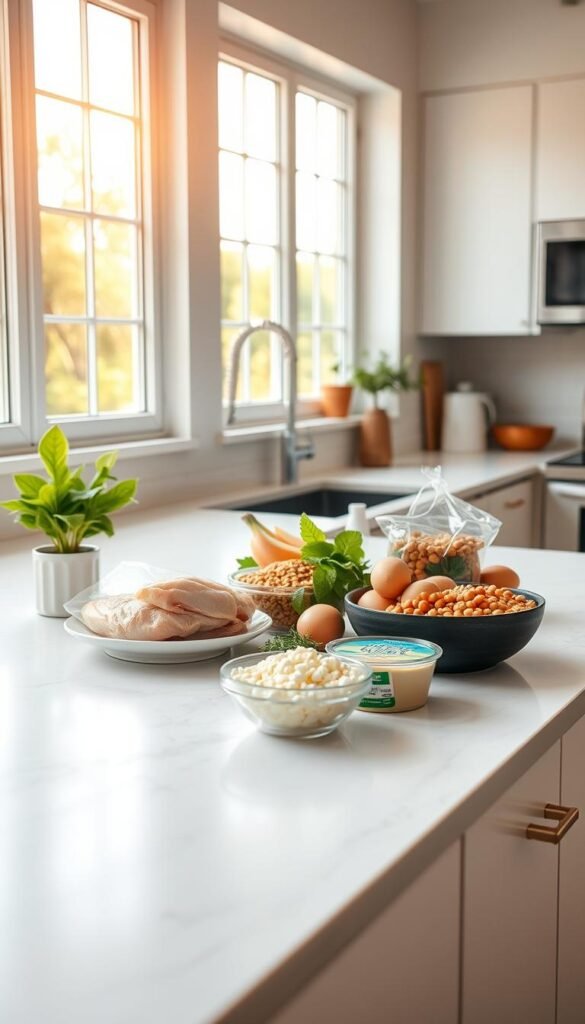
Lean on warehouse clubs like Costco and Sam’s Club for bulk buying meat. Choose family packs of chicken thighs, drumsticks, ground turkey, or pork tenderloin. Portion into meal-size bags, label, and freeze for easy rotation.
Cook dried beans and lentils in a pressure cooker for low-cost protein. Freeze in flat bags so they thaw fast and stack well. Add cooked rice or quinoa to your freezer prep to build cheap high-protein meals in minutes.
Canned and Frozen Protein Staples
Stock canned tuna, salmon, chicken breast, black beans, chickpeas, and lentils for instant protein. Rinse canned beans to cut sodium. Keep frozen chicken, edamame, shrimp, and mixed vegetables on hand for quick skillet dinners.
Shelf-stable tofu and a carton of eggs make fast, reliable backups. With these staples, you can whip up bowls, wraps, or stir-fries that taste fresh and travel well.
Affordable Seasonings for Big Flavor
Build a spice cabinet that works with a tight spice blends budget. Onion and garlic powder, cumin, chili powder, smoked paprika, Italian seasoning, curry powder, Chinese five-spice, and reduced-sodium bouillon go a long way.
Mix DIY taco and Cajun blends to avoid added sugar. Finish meals with vinegar or citrus to brighten flavors. These tricks turn frozen chicken or canned tuna into tasty, cheap high-protein meals without extra cost.
| Strategy | What to Buy | Action Step | Quick Meal Example | Budget Boost |
|---|---|---|---|---|
| Bulk + Freeze | Chicken thighs, ground turkey, pork tenderloin | Portion, label dates, marinate before freezing | Turkey skillet with frozen veggies and rice | bulk buying meat lowers cost per serving |
| Pantry Proteins | canned tuna, salmon, chicken, black beans, chickpeas | Rinse beans; keep pull-top cans ready | Tuna bean salad with lemon and herbs | cheap high-protein meals from shelf staples |
| Freezer Staples | frozen chicken, edamame, shrimp, mixed vegetables | Freeze grains and cooked legumes flat | Shrimp stir-fry with edamame and brown rice | freezer prep cuts waste and time |
| Speedy Cook | Dried beans, lentils, quinoa | Pressure cook, portion, freeze | Lentil bowls with roasted veg and yogurt | Batching reduces utility and ingredient costs |
| Flavor on a Dime | spice blends budget picks, bouillon, vinegar, citrus | DIY taco and Cajun mixes; finish with acid | Five-spice chicken with citrus slaw | Small amounts transform low-cost proteins |
High Protein Recipes for Muscle Gain and Recovery
Dial in muscle gain meals with simple timing and smart recipes. Pair recovery nutrition with steady hydration to get more from every session. Keep choices light before training and generous after, so you hit both energy and repair.
Pre-Workout Fuel with Easily Digestible Protein
Aim for a pre-workout snack 1–2 hours before training. Go for 20–30 grams of easy protein plus moderate carbs. Keep fats and dense fiber low to avoid stomach stress.
- Greek yogurt with a ripe banana and a drizzle of honey.
- Whey shake blended with oats and a few berries.
- Turkey on rice cakes with a thin spread of mustard.
These picks steady energy without slowing you down. They set up strong lifts and support later post-workout protein needs.
Post-Workout Meals Rich in Protein and Carbs
Within 1–3 hours after training, focus on post-workout protein and carbohydrates for recovery. This window helps restore glycogen and kick-starts muscle repair.
- Seared salmon, jasmine rice, and asparagus with lemon.
- Chicken burrito bowl with black beans, cilantro-lime rice, salsa, and avocado.
- Tofu stir-fry with jasmine rice, snap peas, and ginger-garlic sauce.
- Low-fat chocolate milk for a quick, portable option.
Keep portions aligned to your size and session load. These muscle gain meals are simple to prep and easy to repeat on busy weeks.
Hydration and Electrolytes to Support Performance
Weigh before and after workouts and replace about 16–24 ounces of fluid per pound lost. Add electrolytes to support nerve function and muscle firing.
- Sports drinks or sodium-rich broth during long or hot sessions.
- Bananas, potatoes, and yogurt for potassium and magnesium.
- Creatine monohydrate, 3–5 g daily, pairs well with recovery nutrition.
Match fluids to sweat rate, and sip consistently through the day. Smart hydration plus steady electrolytes makes hard training feel smoother and more repeatable.
Gluten-Free and Dairy-Free High Protein Swaps
Build meals around whole cuts of meat, poultry, fish, and eggs for reliable gluten-free protein. Pair with quinoa, buckwheat, or amaranth, and check marinades for wheat, barley, or malt. If you use oats, choose certified gluten-free. These basics keep flavor high and make allergen-friendly meals easy to plan.
For dairy-free protein at breakfast, try fortified soy milk or soy yogurt, which match dairy in protein. Pea protein milk like Ripple offers about 8 grams per cup. Swap whey or casein powders for pea, soy, or brown rice proteins. Use avocado, tahini, or olive oil to add creamy texture without lactose.
Lactose-free choices include lactose-free milk and lactose-free Greek yogurt. Aged cheeses such as Parmesan or cheddar tend to be very low in lactose, yet still add protein and depth. Always scan labels on processed foods for whey, casein, or milk solids to keep meals clean and simple.
When you need soy-free options, lean on eggs, chicken, canned tuna or salmon, and legumes like lentils and chickpeas. For a paleo-friendly protein plate, focus on steak, turkey, wild-caught fish, and eggs with roasted veggies. These swaps keep variety high while supporting allergen-friendly meals for the whole family.
Quick tip: Roast extra chicken and cook a pot of quinoa on Sunday. You’ll have gluten-free protein ready for salads, bowls, and wraps all week, and fast, dairy-free protein for smoothies and snacks.
| Goal | Smart Swap | Protein Highlight | Label Check |
|---|---|---|---|
| gluten-free protein | Grilled chicken with quinoa | Complete amino profile from chicken; quinoa adds extra | Avoid marinades with wheat, barley, or malt |
| dairy-free protein | Fortified soy yogurt with berries | Comparable protein to dairy yogurt | Confirm added vitamin D and B12; no milk solids |
| lactose-free | Lactose-free Greek yogurt parfait | High protein with easy digestion | Look for “lactose-free” and live cultures |
| soy-free options | Egg scramble with smoked salmon | Rich in protein and omega-3 fats | Check smoked fish for gluten-containing seasonings |
| paleo-friendly protein | Seared steak with roasted veggies | High-quality animal protein | Use simple rubs; skip sugary sauces |
| allergen-friendly meals | Turkey chili with beans | Hearty protein from turkey and legumes | Verify broth and spices are gluten-free |
Keep a short list of trusted brands for pea protein milk, canned salmon, and certified gluten-free grains. Rotate meals across meat, fish, eggs, and legumes to balance taste and cost. With a few core swaps, weeknight cooking stays fast, flavorful, and flexible.
High Protein Air Fryer and Instant Pot Ideas
Weeknights feel easier with smart tools that deliver tender meats, golden tofu, and hearty legumes fast. These air fryer protein recipes and Instant Pot high protein staples help you meal prep without losing flavor or texture.
Crispy Air Fryer Chicken and Tofu
For juicy chicken, toss thighs or breast strips with olive oil, paprika, garlic powder, and salt. Air fry at 380–400°F for 12–18 minutes, flipping once. Rest a few minutes to lock in juices. Serve over greens or rice for a fast protein bowl.
For a crispy tofu air fryer win, press extra-firm tofu, cube, and coat with cornstarch, tamari, and spices. Cook at 375–400°F for 12–16 minutes, shaking halfway, until edges snap. These bites slide into wraps, noodle bowls, or salads.
Instant Pot Beans, Lentils, and Pulled Meats
Use the sauté mode for onions and garlic, then add water or broth. For pressure cooker beans, cook black beans on high for about 30–35 minutes with a natural release. Lentils need 8–12 minutes; season after cooking to keep skins tender.
For pulled chicken, go 10–12 minutes on high pressure with quick release. Pork shoulder turns fork-tender in 60–80 minutes; let it rest in the juices. These Instant Pot high protein bases take on any sauce or spice blend you like.
Time-Saving Batch Cooking Methods
Lean on batch cooking tips: double recipes and portion into freezer-safe containers. Keep proteins plain, then rotate sauces like BBQ, teriyaki, or chimichurri across the week. Sunday prep of spice rubs and dressings speeds up busy nights.
Build variety with the same core items. Pair air fryer chicken with slaw today, then toss tomorrow’s leftovers with roasted veggies. Stir pressure cooker beans into chili, grain bowls, and tacos to stretch both budget and time.
| Protein Base | Method & Temp/Time | Key Seasoning | Quick Serving Ideas |
|---|---|---|---|
| Chicken Thighs/Breast | Air fryer, 380–400°F, 12–18 min | Olive oil, paprika, garlic powder, salt | Grain bowls, chopped salads, tacos |
| Extra-Firm Tofu | Air fryer, 375–400°F, 12–16 min | Cornstarch, tamari, chili flakes | Stir-fries, wraps, noodle bowls |
| Black Beans (Dried) | Instant Pot, high 30–35 min + natural release | Bay leaf, cumin, onion, garlic | Chili, burritos, veggie bowls |
| Brown/Green Lentils | Instant Pot, high 8–12 min | Smoked paprika, thyme, pepper | Soups, salads, sloppy joes |
| Pulled Chicken | Instant Pot, high 10–12 min + quick release | Salt, pepper, onion powder | Sandwiches, quesadillas, lettuce cups |
| Pork Shoulder | Instant Pot, high 60–80 min + natural release | Garlic, oregano, cumin | Rice bowls, tacos, stuffed sweet potatoes |
Blend these ideas into your weekly plan to keep air fryer protein recipes and pressure cooker beans on hand. With steady batch cooking tips, you’ll spin one cook into many meals and keep Instant Pot high protein choices ready for any craving.
How to Read Labels for Protein Quality and Additives
Smart shopping starts with clear nutrition label tips. Scan the top of the panel for serving size, then compare calories and grams of protein. This quick check helps you judge density and spot sneaky changes in packaging.
To gauge quality fast, estimate the share of calories that come from protein. Multiply grams of protein by four, then divide by total calories. A higher share signals better value for your goals.
Protein per Serving vs. Serving Size
Brands often tout big numbers for protein per serving, yet the serving may be tiny. Always ask: how much food gives me that protein?
Compare products by protein per 100 calories. This normalizes portions and keeps choices fair across shakes, bars, and yogurts.
- Check serving size first, then protein grams.
- Use protein calories/total calories to judge density.
- Beware “two servings per bottle” on drinks.
Spotting Added Sugars, Sodium, and Fillers
Scan the ingredient list for added sugars like sucrose, dextrose, corn syrup, and brown rice syrup. Keep sweeteners in check to protect your macro balance.
For deli meats and jerky, apply practical sodium limits: aim for under 600 mg per serving and minimal sugar. Look for “no nitrites or nitrates added,” noting that celery powder still means it’s processed.
- Flag food additives such as maltodextrin and artificial colors.
- Choose products with fewer, recognizable ingredients.
- Watch total percent Daily Value; over 20% sodium per serving is high.
Choosing Clean Protein Powders and Bars
Seek a clean protein powder with short ingredient lists and third-party testing. NSF Certified for Sport and Informed Choice help confirm purity and label accuracy.
Match the type to your needs: whey isolate for higher protein and lower lactose, casein for slower digestion, and soy or pea for plant-based options.
- Bars should deliver at least 15 g protein and no more than 8 g added sugar.
- Limit sugar alcohols if you’re sensitive to bloating.
- Prioritize flavor and texture you’ll stick with, not just numbers.
| Product Type | Quick Check | Better Benchmark | Watch Outs |
|---|---|---|---|
| Powders (Whey, Casein, Soy, Pea) | 20–30 g protein per scoop | Third-party tested; high protein per 100 calories | Excess sweeteners, heavy food additives, unlabeled blends |
| Bars | ≥15 g protein per bar | ≤8 g added sugars; fiber 3–8 g; simple ingredients | Sugar alcohols, artificial colors, high saturated fat |
| Jerky & Deli Meats | 10–15 g protein per serving | Sodium limits: ≤600 mg; “no nitrites or nitrates added” | Hidden sugars, >20% DV sodium, fillers like maltodextrin |
| Ready-to-Drink Shakes | 20–30 g protein per serving | Protein calories/total calories ≥40% | Multiple servings per bottle, syrups, artificial flavors |
Conclusion
A strong finish starts with clarity. The summary high-protein meals in this guide show how steady protein planning supports energy, satiety, and a leaner body over time, as reported by Harvard T.H. Chan School of Public Health and the International Society of Sports Nutrition. Use a simple plate model: one-quarter protein, half vegetables, one-quarter complex carbs, plus healthy fats. Choose minimally processed foods and read labels so quality stays high and sodium and added sugars stay low.
Build a healthy eating plan that fits real life. Mix lean chicken, turkey, fish, eggs, tofu, tempeh, beans, and lentils. Rotate salmon, sardines, or trout for omega-3s. Keep snacks like Greek yogurt, cottage cheese, skyr, and roasted chickpeas on hand. With smart meal prep success strategies, you can stock the freezer, pre-cook grains, and batch-cook proteins to save time on busy weeks.
Goals will differ, but the framework holds. For weight loss, fill the plate with produce and lean protein, then add fiber-rich carbs. For muscle gain, raise total protein and include post-workout carbs. For low-carb or allergen-friendly needs, use eggs, seafood, beef, tofu, or beans with low-starch vegetables and clean sauces. This is sustainable nutrition made practical for the United States, with accessible ingredients and time-saving methods that keep meals satisfying.
Start small, then repeat what works. Plan two dinners, prep one grain, and roast a tray of vegetables. Track how you feel and adjust portions to meet your targets. With steady protein planning and a flexible routine, you’ll have a healthy eating plan that lasts—and a kitchen set up for long-term meal prep success.