There’s something undeniably charming about vintage cake designs that modern minimalist styles simply can’t replicate. The intricate piping, delicate colors, and ornate decorations transport us to a bygone era of elegance and craftsmanship. Whether you’re planning a special celebration or simply want to elevate your baking skills, mastering vintage cake design techniques allows you to create edible works of art that captivate both the eye and the palate. In this guide, we’ll explore the rich history, essential techniques, and beautiful aesthetics that define classic cake artistry.
This Website contains affiliate links. That means I may earn a small commission if you purchase through my links, at no extra cost to you.
The Rich History of Vintage Cake Design
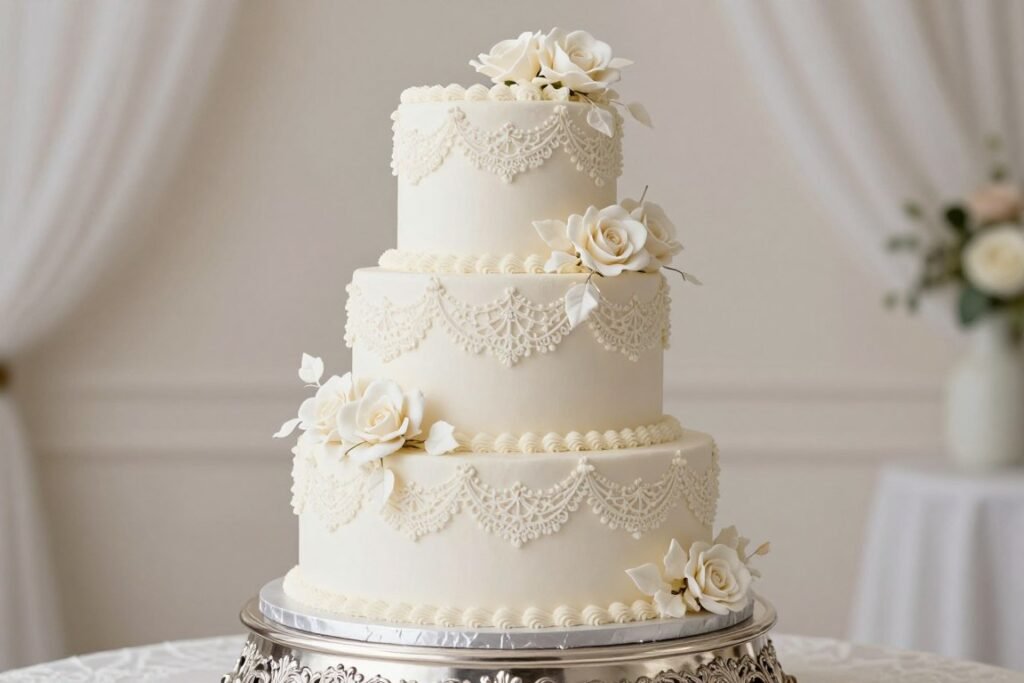
Victorian-era cake designs featured elaborate royal icing decorations and intricate piping work
Vintage cake design isn’t simply one style but encompasses several distinct periods, each with its own characteristic elements. Understanding these historical contexts helps bakers create more authentic vintage-inspired creations.
Victorian Era (1837-1901): The Birth of Decorative Cake Art
The Victorian period marked the beginning of elaborate cake decoration as we know it today. Royal icing, a hard-drying mixture of egg whites and sugar, became the medium of choice for creating intricate piped designs. Victorian cakes often featured:
Elaborate piped lacework and scrolls
Tiered designs for special occasions
Ornate sugar flowers and leaves
Delicate stringwork connecting tiers
Architectural elements like columns and arches
Edwardian Period (1901-1910): Refined Elegance
The Edwardian era brought a slightly more restrained but equally beautiful approach to cake decoration:
Pastel color palettes (pale pinks, mint greens, butter yellows)
More naturalistic sugar flowers
Pearled borders and embellishments
Delicate brush embroidery techniques
Art Deco Period (1920s-1930s): Geometric Glamour
The Roaring Twenties and Art Deco movement brought bold new elements to cake design:
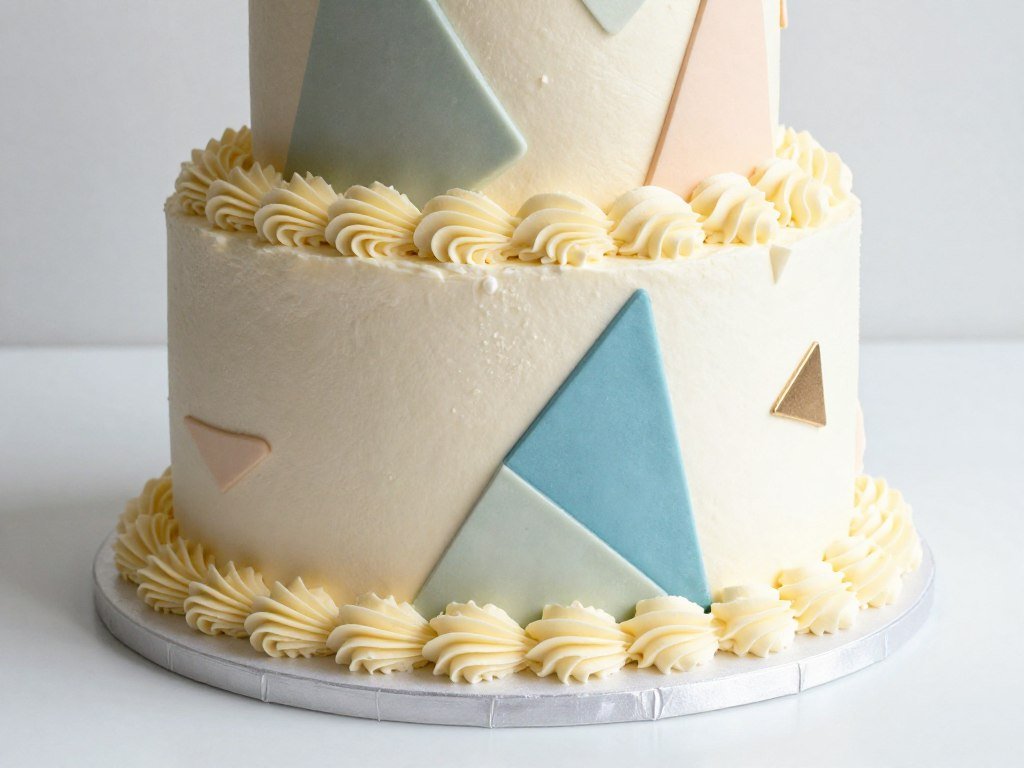
Geometric patterns and bold lines
Metallic accents (gold and silver)
Fan and feather motifs
Contrasting color schemes
Stylized floral elements
Mid-Century (1940s-1960s): Charming Simplicity
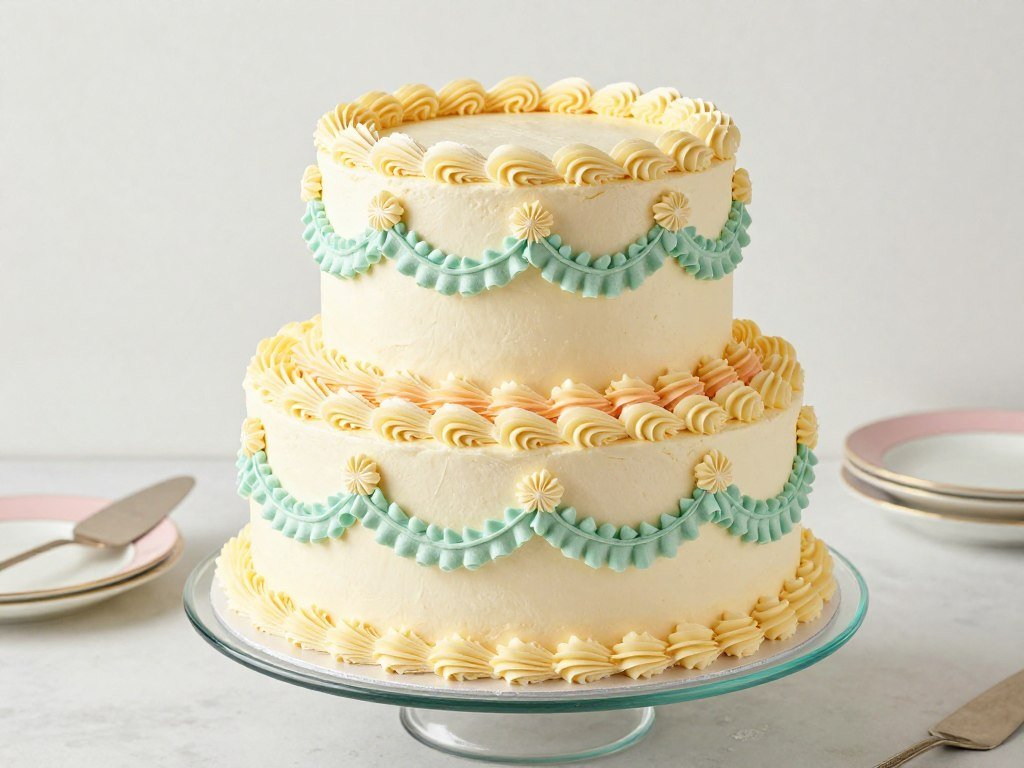
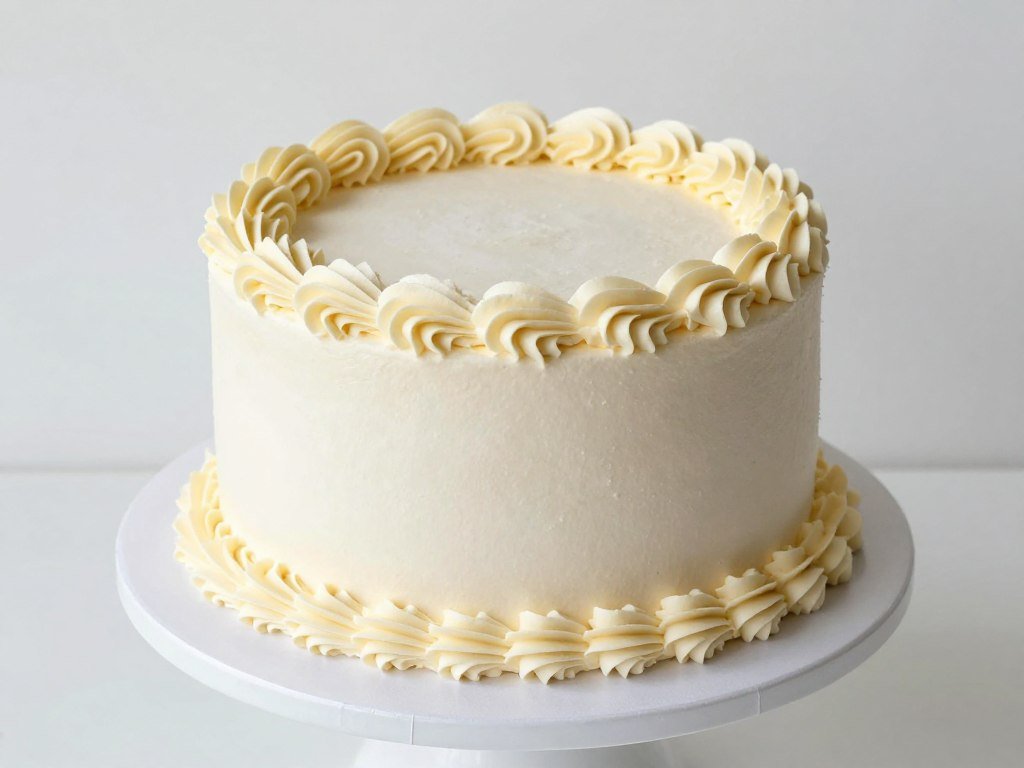
Mid-century cakes often featured buttercream rosettes, shell borders, and pastel colors
The post-war era saw the rise of buttercream as a popular medium for cake decoration:
Buttercream rosettes and swags
Classic shell borders
Basketweave patterns
Pastel color schemes
Piped message designs
Essential Tools for Vintage Cake Design
Creating authentic vintage cake designs requires the right tools. Explore quality piping tips, cake stands, and other essentials to achieve professional results.
The hallmark of vintage cake design lies in its decorative techniques. Mastering these fundamental methods will allow you to create authentic vintage-inspired cakes for any occasion.
Classic Buttercream Piping
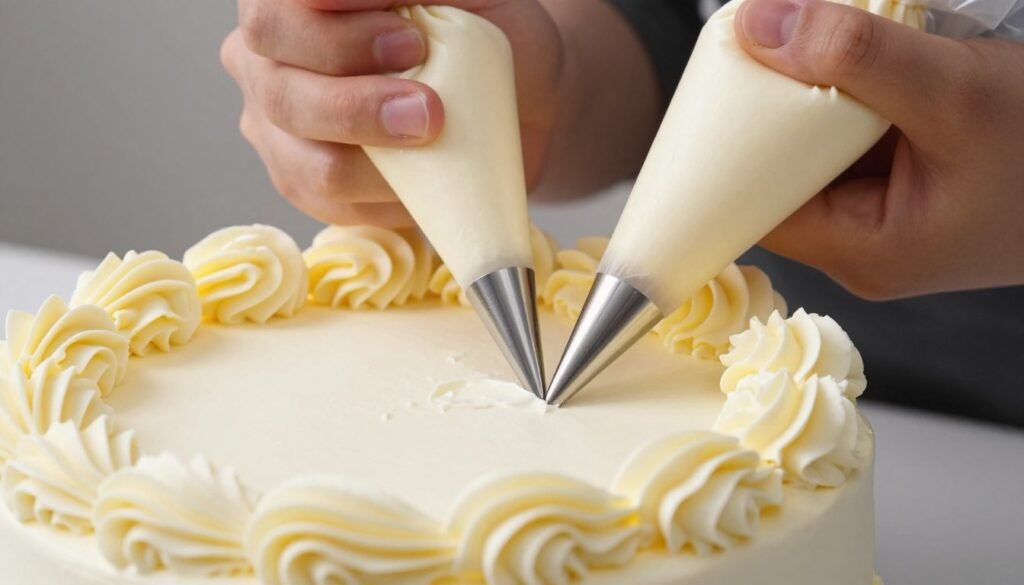
Buttercream piping forms the foundation of many vintage cake designs. The medium consistency of buttercream makes it perfect for creating dimensional decorations that hold their shape while remaining deliciously edible.
Shell Borders
The shell border is perhaps the most iconic element of vintage cake design. Created using star tips (like Wilton 1M or 4B), this technique involves applying pressure to the piping bag while pulling away to create a fan-like shape with a tail.
Rosettes and Swags
Rosettes add beautiful dimension to vintage cakes. Using a star tip, pipe in a spiral motion from the center outward. Swags create elegant draping effects between focal points and are achieved by piping curved lines with varying pressure.
Basketweave
This technique creates the appearance of woven strips, adding wonderful texture to cake sides. Using a basket weave tip (like Wilton 47), pipe vertical and horizontal lines that overlap to create the woven effect.
Professional Piping Tips Set
Quality piping tips are essential for creating detailed vintage designs. A comprehensive set will allow you to achieve everything from delicate lacework to bold borders.
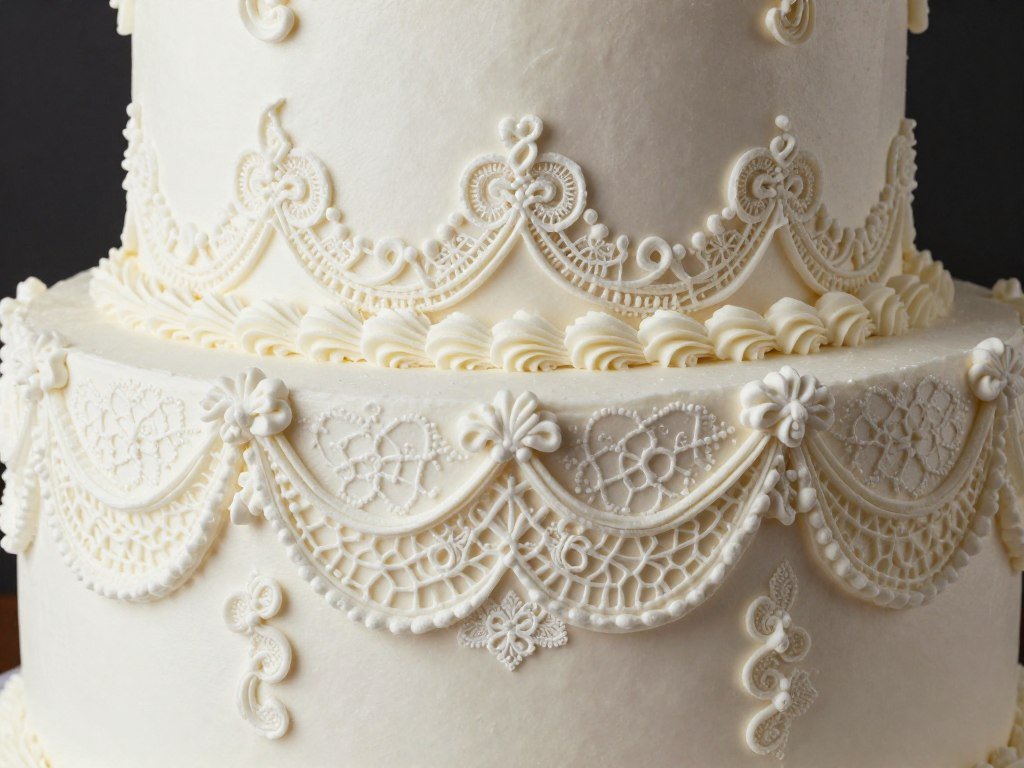
Royal icing allows for incredibly detailed lacework and stringwork decorations
Royal icing dries hard, making it perfect for creating delicate, long-lasting decorations that were the hallmark of Victorian and Edwardian cake design.
Stringwork
This technique creates delicate suspended strings between tiers or around a single tier. Using a very small round tip (like Wilton 1 or 2), pipe thin lines of royal icing, allowing them to harden into gravity-defying decorations.
Brush Embroidery
This technique creates the appearance of delicate embroidered fabric. Pipe outlines with royal icing, then use a damp brush to pull the icing inward, creating a soft, fabric-like texture.
Lambeth Method
Developed in the early 20th century, this technique involves building up layers of royal icing to create dimensional designs with incredible depth and intricacy.
Authentic Vintage Color Palettes
Authentic vintage color schemes help create period-appropriate cake designs
Color plays a crucial role in creating authentic vintage cake designs. Each era had its characteristic palette that reflected broader design trends of the time.
Victorian
White on white (for wedding cakes)
Silver and pearl accents
Muted pastels
Rich burgundies and purples
Art Deco
Black and gold
Silver and midnight blue
Emerald green
Coral and turquoise
Mid-Century
Mint green
Butter yellow
Dusty rose
Powder blue
Food Coloring for Authentic Vintage Hues
Achieve period-accurate colors with quality food coloring gels that allow for precise mixing and muted vintage tones.
Beyond piping techniques, vintage cakes often incorporate specific decorative elements that instantly evoke a sense of nostalgia and period authenticity.
Sugar Flowers
Handcrafted sugar flowers add elegance and dimension to vintage cake designs
Sugar flowers have adorned cakes for centuries, with each era favoring different blooms and styles:
Victorian: Highly stylized roses, lilies, and ferns
Edwardian: More naturalistic roses, carnations, and forget-me-nots
Mid-Century: Simplified roses, daisies, and sweet peas
Pearls and Dragées
These small edible balls add elegant accents to vintage designs:
Sugar pearls for delicate borders
Silver dragées for Victorian and Art Deco designs
Gold dragées for opulent special occasion cakes
Lace and Filigree
Lace effects create undeniably vintage appeal:
Piped royal icing lace for Victorian designs
Modern edible lace for easier application
Brush embroidery for subtle lace-like effects
Vintage-Inspired Cake Stands
Display your vintage cake creation on a period-appropriate stand to complete the aesthetic. Glass, ceramic, and metal stands with ornate details enhance the presentation.
Expand your knowledge and skills with these valuable resources:
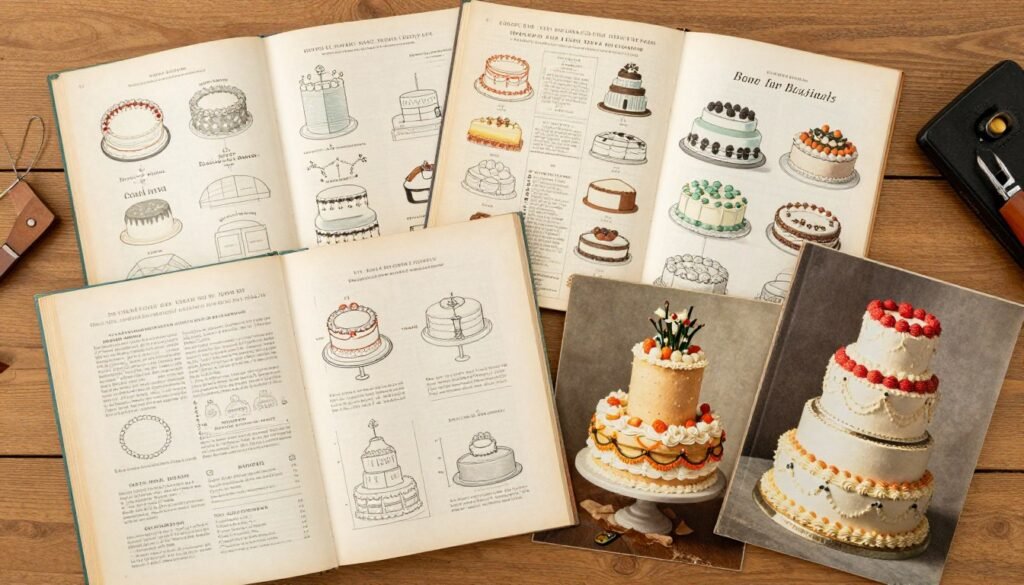
Historical cake decorating books (many are available as reprints)
Online courses specializing in vintage techniques
Social media accounts and blogs dedicated to vintage baking
Local cake decorating classes that teach traditional methods
Embracing the Timeless Beauty of Vintage Cake Design
Vintage cake design continues to inspire bakers with its timeless elegance and artistry
The art of vintage cake design connects us to a rich baking heritage while allowing for personal creativity and expression. Whether you’re recreating an authentic Victorian masterpiece or incorporating vintage elements into a contemporary design, these timeless techniques add elegance and charm to any celebration.
As you begin your journey into vintage cake design, remember that mastery comes with practice. Start with simple techniques, build your skills gradually, and don’t be afraid to put your own spin on historical styles. With the right tools, techniques, and inspiration, you’ll be creating stunning vintage-inspired cakes that captivate both the eye and the imagination.
Start Your Vintage Cake Design Journey
Gather the essential tools and begin creating your own vintage cake masterpieces.
The 13th birthday marks a significant milestone in a young person’s life—the official entry into the teenage years. At the heart of this celebration sits the birthday cake, a sweet symbol of this important transition. Finding the perfect 13th birthday cake that balances childhood nostalgia with emerging teenage tastes can be challenging, but it’s also…
Turning 16 is a major milestone that deserves to be celebrated in style! Your 16th birthday outfit should reflect your personality while making you feel confident and special. Whether you’re planning a glamorous party, an intimate dinner, or a casual celebration with friends, finding the perfect birthday look is an essential part of making your…
Your 30th birthday marks a significant milestone that deserves to be celebrated in style. The perfect 30th birthday outfit not only makes you look amazing but also sets the tone for your entire celebration. Whether you’re planning an elegant dinner, a wild night out, or a casual gathering with close friends, your outfit should reflect…
When someone we love passes away, their birthday can become a day filled with both cherished memories and profound sadness. The tradition of wishing a “happy birthday in heaven” allows us to maintain our connection with them, acknowledging that while they may no longer be physically present, their spirit and influence remain alive in our…
One in three hosts say the dessert becomes the most photographed item at a party, and that single shot often defines the whole event.This Website contains affiliate links. That means I may earn a small commission if you purchase through my links, at no extra cost to you. What makes a confection feel couture is…
Turning 25 is a significant milestone that deserves a cake as special as the occasion. Whether you’re planning your own celebration or organizing a surprise for someone special, the perfect 25th birthday cake can be the centerpiece that makes the day unforgettable. This milestone marks a quarter century of life and often coincides with exciting…