Delicious Energy Balls & Protein Bites
Here’s a surprise: the average American spends more than $200 a year on snack bars, according to retail sales data from NielsenIQ—yet many bars pack added sugars and fillers. Energy Balls & Protein Bites flip that script. These no-bake snacks deliver on-the-go energy and portable protein with clean ingredients you can pronounce.
This Website contains affiliate links. That means I may earn a small commission if you purchase through my links, at no extra cost to you.
This guide shows how to make healthy snacks that fit real life—work, school, travel, and workouts. You’ll learn what these bites are, why they beat many packaged bars from brands like RXBAR, KIND, and CLIF, and how to tailor macros for your goals. We lean on USDA FoodData Central for ingredient nutrition and the American College of Sports Medicine for smart timing around training.
Expect simple methods, budget wins, and flavor you’ll crave. From meal prep snacks to gluten-free snacks and high-protein bites, we focus on whole foods like oats, nut butters, seeds, and dates. The result: clean, fast fuel without the label guesswork.
Key Takeaways
- Make no-bake snacks with whole, clean ingredients for on-the-go energy and portable protein.
- Learn definitions, benefits, and how Energy Balls & Protein Bites differ from packaged bars.
- Use USDA FoodData Central for macros and ACSM guidance to time snacks around workouts.
- Customize flavors and high-protein bites for meal prep snacks and fitness snacks.
- Find gluten-free snacks and low-sugar ideas that fit busy routines.
- Save money and reduce waste compared with many store-bought options.
What Are Energy Balls and Protein Bites
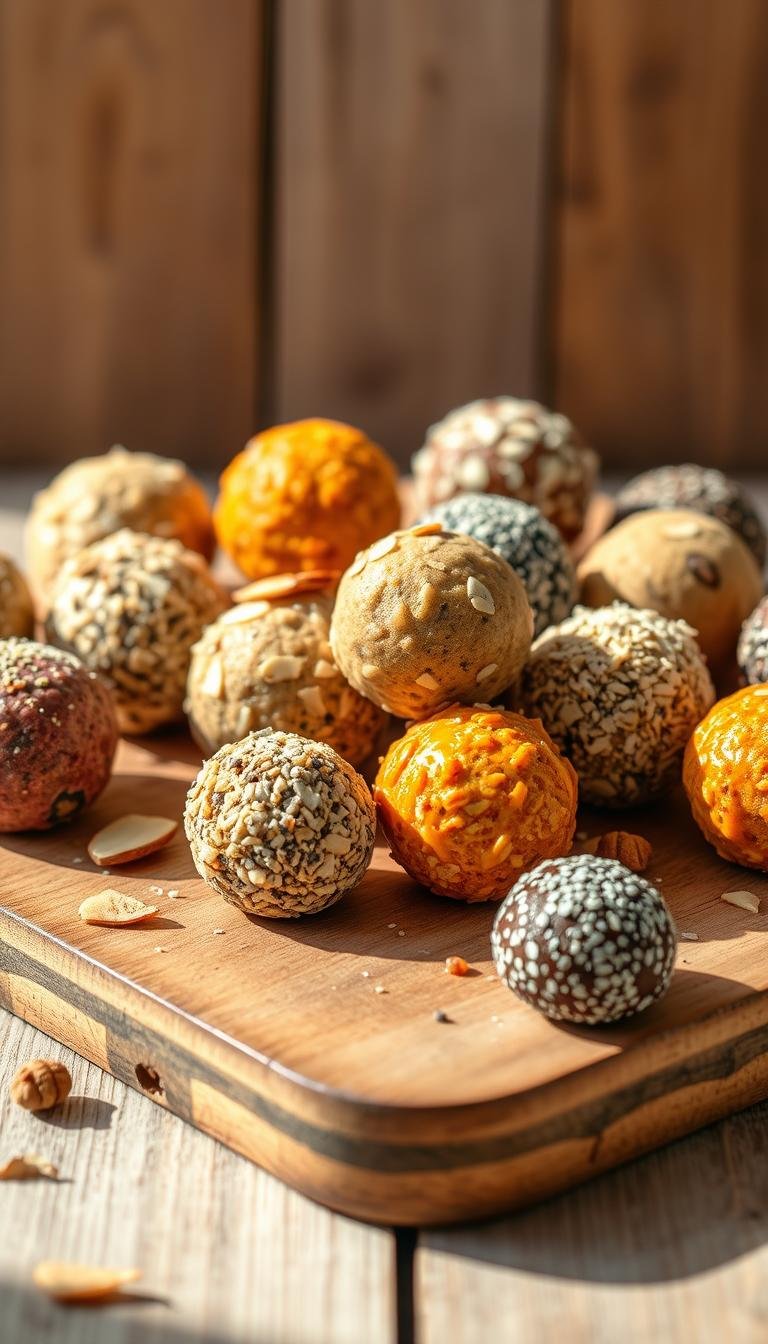
Think of these as tiny, satisfying fuel. They’re rolled to about 1–1.5 inches, come together fast, and travel well. Fans love them as portable snacks for the gym, the office, or the school pickup line. Because they’re easy to scale for healthy meal prep, you can mix a batch in minutes and portion for the week.
At a glance: no-bake energy bites use simple, whole ingredients and give steady energy. With macro-friendly bites, it’s easy to tweak carbs, fats, and protein for your goals without guesswork.
Defining no-bake, bite-sized snacks
Here’s a clear protein balls definition: small, no-bake rounds built from oats or nuts, held together with peanut butter, almond butter, or tahini, plus a sticky sweetener like dates or honey. Many people add whey or pea protein and flavor boosts such as cocoa, cinnamon, or vanilla. The format makes portion control simple—one bite at a time.
How they differ from granola bars and protein bars
The snack ball vs bar debate comes down to process and control. Bites are minimally handled and skip oven time. Many bars rely on syrups and stabilizers to hold shape; bites stick to whole-food binders.
With bites, you can dial in texture and macros on the spot. Smaller pieces reduce calories per serving and make it easier to match fuel to your plan.
| Feature | No-Bake Energy Bites | Granola/Protein Bars |
|---|---|---|
| Prep Method | No bake; mix, roll, chill | Often baked or extruded |
| Ingredients | Oats/nuts, nut or seed butter, dates or honey, optional protein | May include syrups and texture stabilizers |
| Portion Control | 1–1.5 inch bites; easy to scale | Fixed bar size |
| Macro Tuning | Highly customizable, macro-friendly bites | Set by brand formula |
| Use Case | Quick, portable snacks; healthy meal prep | Grab-and-go with less flexibility |
Why they’re popular for busy, active lifestyles
They mix up in under 20 minutes, stash in the fridge, and slip into a bag without mess. Runners, cyclists, and lifters like the steady carbs from oats with a hit of protein for recovery. Parents keep them on hand for after-school bites.
From pre-workout nibble to late-morning holdover, no-bake energy bites fit the day. They’re customizable, macro-friendly bites that work as portable snacks and make healthy meal prep feel effortless.
Health Benefits of These Bite-Sized Snacks
The benefits of energy balls start with smart ingredients: oats, nuts, seeds, and quality protein. Complex carbs and fiber deliver sustained energy that fits gym days and desk days alike. As fiber-rich snacks, they help you feel full without a sugar crash.
Nut butters like peanut and almond provide healthy fats that support satiety and taste. When paired with whey, pea, or collagen, you also get clear protein snack benefits that can help muscle repair after training. Together, these pieces create balanced macros in a small, portable bite.
Oats bring beta-glucan, a soluble fiber linked with heart health, while chia and flax add ALA omega-3s and more fiber. Dates or dried fruit contribute potassium and natural sweetness. Choosing lower-glycemic sweeteners, such as allulose or monk fruit blends, can support blood sugar-friendly snacks for daily routines.
Cocoa powder adds polyphenols, and spices like cinnamon and ginger offer antioxidant punch. For athletes, carbs plus protein back glycogen refills. For busy professionals, the same mix supports steady focus and sustained energy through the afternoon.
Portion-controlled bites make it easier to manage hunger between meals and skip ultra-processed options. With healthy fats and balanced macros, these fiber-rich snacks travel well in a gym bag or lunch box and align with protein snack benefits many people seek.
Key Ingredients for Balanced Nutrition
Smart mix-ins turn simple dough into steady energy. Build your base with healthy fats, slow carbs, and targeted protein, then finish with bright flavors. This balance keeps cacao energy balls and whey protein bites satisfying without a sugar crash.
Healthy fats: nut butters, seeds, and coconut
Choose natural peanut, almond, or cashew for nut butter snacks. Check labels for just nuts and salt. They add creaminess and help you stay full.
Stir in chia and flax seeds for fiber and omega‑3s. Hemp, pumpkin, and sunflower seeds bring crunch and minerals. Unsweetened shredded coconut adds aroma and MCTs that support quick fuel.
Complex carbs: oats, dates, and whole grains
Old‑fashioned oats and dates form the backbone. Rolled oats lock in moisture and deliver beta‑glucan for a pleasing chew. Medjool dates bind the mix and lend potassium with gentle sweetness.
For variety, try quinoa flakes or buckwheat groats in place of some oats. Keep pieces small so bites hold together and taste even.
Protein boosts: whey, plant-based powders, and collagen
To raise protein, blend in whey isolate for smooth texture and quick uptake. For dairy‑free options, reach for vegan protein powder from brands like NOW Sports, Orgain, or Vega. These pair well with oats and dates and mix cleanly.
Collagen peptides, such as Vital Proteins, add extra grams without changing flavor. Since collagen is not a complete protein, combine it with whey or plant sources for a fuller amino profile.
Flavor add-ins: cacao, vanilla, spices, and dried fruit
Unsweetened cacao deepens chocolate notes in cacao energy balls. A splash of pure vanilla and a pinch of sea salt round the sweetness. Cinnamon, cardamom, or pumpkin pie spice add warmth.
Fold in orange or lemon zest, unsweetened dried cherries or apricots, and a few dark chocolate chips at 60–70% cacao. These layers make nut butter snacks and whey protein bites taste bakery‑worthy without a long ingredient list.
- Quick pick: chia and flax seeds + oats and dates + vegan protein powder for a plant‑forward bite.
- High‑protein: whey protein bites with collagen peptides for extra support.
- Chocolate lovers: cacao energy balls with toasted coconut and a dash of sea salt.
How to Make No-Bake Energy Bites at Home
Master a simple no-bake method and you can mix, roll, and chill in minutes. Dial in an energy ball recipe ratio that suits your pantry, then shape them into homemade protein balls for workouts, lunch boxes, or road trips.
Base ratios for perfect texture
Start with 2 parts dry base to 1 part sticky binder, plus 1/4–1/3 part liquid sweetener or moisture. Think rolled oats, protein powder, or ground flax for the dry; peanut butter or date paste for the binder. This energy ball recipe ratio keeps the mix cohesive without crumbling.
For powders, use about 1/2 cup protein per 1.5 cups oats, then add moisture slowly. For date-sweetened bites, blend 1 cup pitted Medjool dates into paste for every 1.5–2 cups dry ingredients. Adjust with a splash of milk or water until the dough squeezes and holds.
Binding and sweetening options
Choose a honey binder for classic chew and shine, or go with maple syrup, agave, or an allulose blend to cut sugar. Nut and seed butters like Justin’s almond butter, Kroger natural peanut butter, tahini, or SunButter make rolling easy and add flavor.
Keep the no-bake method simple: fold in add-ins such as mini chips, toasted coconut, or cinnamon. If using monk fruit–erythritol blends, reduce other liquids so the mix stays thick. The goal is a dough that feels slightly tacky, not wet.
Tips for rolling, chilling, and storing
Chill the bowl for 15–30 minutes before shaping. Use a #40 cookie scoop for uniform 1–1.5 oz portions. Lightly oil your hands or dust them with cocoa to prevent sticking, then roll into firm, even balls.
Refrigerate in an airtight container for up to 1 week, or freeze 2–3 months. Separate layers with parchment and label with the date. Grab-and-go homemade protein balls are ready whenever you are.
Energy Balls & Protein Bites
Think of these bites as flexible fuel you can tune for your day. The choice often comes down to how fast you need energy, your macro targets, and how you handle portion control. Keep an eye on snack calories so each bite fits into balanced snacks without guesswork.
When to choose energy balls vs. protein bites
Pick energy balls before a run, a long hike, or a busy morning. They lean higher in oats and dates, which deliver quick carbs for steady pace. A small dose of nut butter keeps the lift smooth.
Choose protein bites when you want more staying power or recovery after lifting. They tilt toward whey or pea protein, plus nut or seed butter, and use less sweetener. This shift helps you curb snack calories while keeping balanced snacks on plan.
Matching macros to your goals
For everyday nibbling, one ball often lands near 100–150 calories with about 10–18 g carbs, 4–8 g fat, and 3–7 g protein. Protein-focused bites can climb to 7–10 g protein each by adding quality powders and trimming sugars.
Match the mix to your aim. Weight management responds well to higher protein and fiber. Endurance work favors more carbs for pace and focus. Strength training benefits from protein plus some carbs to refill and repair. Track macro targets to keep choices steady across the week.
Portion sizes for adults and kids
Right-size portions help with portion control and total snack calories. Most adults do well with 1–2 balls as a snack or 2–3 after workouts, depending on size and effort. Kids usually need one, especially for school snacks where nut-free rules may apply.
| Choice | Best Timing | Typical Macros per Ball | Portion Guide | Why It Works |
|---|---|---|---|---|
| Energy Balls | Pre-workout, active mornings | 10–18 g carbs, 3–6 g protein, 4–8 g fat | Adults: 1–2 | Kids: 1 | More carbs from oats and dates support quick fuel and balanced snacks. |
| Protein Bites | Post-workout, long meetings, travel | 7–10 g protein, moderate carbs, 5–8 g fat | Adults: 1–2 (2–3 after lifting) | Kids: 1 | Higher protein aids satiety and recovery while managing snack calories. |
| Goal Tuning | Daily planning | Adjust protein-to-carb ratio to meet macro targets | Size balls to 100–150 calories each | Clear ratios support portion control without complex math. |
Quick Flavor Combos for Every Craving
Speed up prep with flavor ideas energy balls that hit sweet, bright, and cozy notes. Mix and match add-ins, then tweak with whey or pea protein and your choice of honey or maple to meet your macros.
Chocolate coconut brings cocoa powder, shredded coconut, almond butter, vanilla, and a few mini dark chocolate chips for classic chocolate coconut bites. For PB lovers, peanut butter jelly balls shine with natural peanut butter, crushed freeze-dried strawberries or raspberries, oats, honey, and a pinch of salt.
Craving citrus? Lemon blueberry bites pop with lemon zest and juice, unsweetened dried blueberries, cashew butter, vanilla, and maple. Cozy fall vibes come from apple pie protein balls with diced dried apples, cinnamon, oats, walnut butter, a touch of maple, and nutmeg.
Go hearty with a trail mix twist: sunflower seed butter, chopped almonds and pumpkin seeds, raisins, and cacao nibs. For sweet-salty depth, try salted caramel date using date paste, tahini, vanilla, and a sprinkle of flaky sea salt.
Channel bakery notes with cinnamon roll: cinnamon, vanilla protein powder, and cashew butter, then roll in coconut flour. Bright and earthy matcha almond pairs culinary matcha, almond butter, coconut, and optional white chocolate chips. For a buzz, espresso crunch blends instant espresso, cacao nibs, peanut butter, oats, and honey.
Pro tip: If the mix feels sticky, add more oats or ground flax. If it’s dry, splash in almond milk. Chill before rolling for neat, sturdy bites that pack well.

High-Protein Recipes for Workouts
Build fast, portable fuel with simple ingredients that hit protein and carbs. These gym snacks mix in minutes, hold their shape, and travel well for practice, class, or the commute. Use them as workout snacks before a lift or as post-workout protein balls to jump-start recovery.
Chocolate peanut butter power bites
Stir 1.5 cups rolled oats, 1/2 cup whey isolate, 1/2 cup natural peanut butter, 1/3 cup honey, 2 tbsp cocoa, 2 tbsp chia seeds, a pinch of salt, and 2–4 tbsp milk. Chill, then roll into about 20 balls. Expect roughly 7–9 g protein each, making them ideal whey protein bites for quick gym snacks.
The chocolate flavor is bold, and the texture is dense yet soft. Pack a couple as workout snacks or save them as post-workout protein balls when you need a fast bite.
Vanilla almond crunch bites
Combine 1.5 cups oats, 1/2 cup vanilla pea protein, 1/2 cup almond butter, 1/4 cup maple syrup, 1/4 cup chopped almonds, 2 tbsp hemp hearts, 1 tsp vanilla, and 1–3 tbsp almond milk. Roll and chill. Each bite offers about 6–8 g protein and a crisp nutty finish.
These are smooth, dairy-free pea protein bites that satisfy without feeling heavy. They double as gym snacks you can keep in the fridge and grab between meetings.
Mocha espresso protein balls
Mix 1.5 cups oats, 1/2 cup whey or soy isolate, 2 tbsp espresso powder dissolved in 2 tbsp hot water, 1/2 cup cashew butter, 1/4 cup honey or allulose, 2 tbsp cocoa, 2 tbsp cacao nibs, and a pinch of salt. Adjust sweetness and roll. The light caffeine kick makes them smart workout snacks before a cardio day.
With a rich mocha note and crunch from nibs, these post-workout protein balls fit a coffee lover’s plan. Rotate them with whey protein bites or pea protein bites to match your training week and keep your set of go-to gym snacks fresh.
Gluten-Free, Dairy-Free, and Vegan Options
Building inclusive bites starts with smart swaps and clear labels. Reach for gluten-free oats, plant proteins, and seed-based binders to craft dairy-free snacks, nut-free energy balls, and vegan protein balls that double as school-safe snacks without losing flavor or texture.
Allergen swaps for nut-free schools
Choose certified nut-free seed butters like sunflower seed butter or tahini. Swap chopped nuts with pumpkin or sunflower seeds for crunch. Verify facility allergen statements, and pack school-safe snacks with a short, clear ingredient list.
Use gluten-free oats to avoid cross-contact, and shape small portions to keep nut-free energy balls easy to track in shared classrooms.
Plant-based proteins that actually taste good
For smooth, mellow flavor, try pea, soy, or rice protein from Orgain, Vega, Nuzest, or NOW Sports. Blend with vanilla, cinnamon, or cocoa to round the edges and boost aroma.
Stir into date paste or seed butter for vegan protein balls that mix well and hold shape. Maple syrup or date syrup stands in for honey, keeping them truly dairy-free snacks and vegan friendly.
How to avoid common binders with gluten or dairy
Skip cookie crumbs and candies that sneak in wheat or whey. Bind with soft dates, tahini, sunflower seed butter, or coconut butter. Pick vegan chocolate chips from Enjoy Life or Hu to keep the mix clean.
Combine gluten-free oats with seeds for structure, then chill to set. The result travels well as school-safe snacks and stays creamy without cream.
| Need | Smart Swap | Why It Works | Flavor Boost |
|---|---|---|---|
| Nut-Free Binder | Sunflower seed butter or tahini | Allergen-aware, creamy texture for nut-free energy balls | Vanilla + cinnamon |
| Gluten-Free Base | Certified gluten-free oats | Safe structure without wheat for school-safe snacks | Cocoa powder |
| Dairy-Free Protein | Pea, soy, or rice protein (Orgain, Vega, Nuzest, NOW Sports) | Complete or complementary amino profile for vegan protein balls | Sea salt + maple syrup |
| No-Whey Binder | Date paste or coconut butter | Holds shape without dairy; adds chew to dairy-free snacks | Espresso powder |
| Chocolate Mix-In | Vegan chips (Enjoy Life, Hu) | Free of milk solids; safe for most classrooms | Orange zest |
Low-Sugar and Keto-Friendly Variations
Build keto energy balls by swapping oats and dates for a blend of almond flour, unsweetened shredded coconut, ground flax, and whey or pea protein. Bind with almond butter or coconut butter for a smooth, rollable dough. A light hand with coconut oil or MCT oil powder adds richness without making it greasy.
For sweet taste without a spike, use a monk fruit sweetener blend with erythritol or try allulose. Reduce liquids to prevent stickiness, then chill the bowl for 15 minutes to test firmness. Stir in cacao nibs, cinnamon, chopped pecans, or extra unsweetened coconut for crunch and balance.
These sugar-free protein bites shine as low-carb snacks for work, travel, or pre-meeting fuel. Aim for almond flour bites that land around 90–130 calories each with about 2–4 grams net carbs, 7–9 grams fat, and 4–7 grams protein, depending on your formula. If you track glucose, allulose is a smart pick due to its minimal impact.
Want extra satiety? Try MCT oil snacks to support quick energy during busy days. Keep portions consistent and store chilled to hold shape. Roll small batches, taste, and adjust texture with a touch more protein powder or nut butter as needed.
| Component | Keto-Friendly Choice | Purpose | Tips |
|---|---|---|---|
| Base | Almond flour + ground flax | Structure and fiber | Sift almond flour for even texture in almond flour bites |
| Binder | Almond butter or coconut butter | Cohesion and creaminess | Add 1 tsp at a time to avoid a greasy mix |
| Sweetener | Monk fruit sweetener blend or allulose | Sweetness without sugar | Reduce other liquids; chill dough to test firmness |
| Fat Boost | MCT oil powder or coconut oil | Satiety and smooth bite | Use sparingly to prevent melting in warm rooms |
| Mix-ins | Cacao nibs, unsweetened coconut, pecans, cinnamon | Flavor and crunch | Fold in after base is mixed for even distribution |
| Macros | 90–130 kcal per ball | Balanced energy | Target 2–4 g net carbs for sugar-free protein bites |
Shape your batch into small, uniform balls for even macros and quick chilling. With these tweaks, keto energy balls become week-ready low-carb snacks you can rely on, whether you prefer mild vanilla notes or rich cocoa with a hint of sea salt.
Meal Prep, Storage, and Food Safety
Keep your routine simple and safe with smart snack meal prep. A stand mixer or food processor speeds the mix, while a cookie scoop gives even portions. Chill the bowl for 15 minutes before rolling to cut stickiness and save time.
Batching tips for weeklong snacks
Scale your base ratios so the dough stays balanced. Use parchment to separate layers in airtight containers from Rubbermaid or OXO. Add labels with the prep date and ingredients to track shelf life protein bites and allergens at a glance.
Quick win: Set up a clean station—scoop, roll, tray, container—to move fast and keep food safety snacks top of mind.
Freezing and thawing without texture loss
Line a sheet pan and pre-freeze the balls for one hour, then freeze energy balls in zip-top freezer bags. Press out air to prevent ice crystals and keep flavors bright for 2–3 months.
Thaw in the fridge overnight, or at room temperature for 15–30 minutes. This reduces condensation, protects coatings, and preserves chew.
Shelf life at room temperature vs. refrigerated
For most date- or honey-based recipes, plan on 5–7 days chilled. Higher-moisture add-ins, like yogurt chips, should be eaten sooner. At room temp, keep them up to 1–2 days in a cool, dry spot away from heat to protect the shelf life protein bites.
Follow USDA basics: wash hands, sanitize surfaces, avoid cross-contact, and use airtight containers. These storage tips keep snack meal prep fresh while putting food safety snacks first.
Best Time to Eat for Energy and Recovery
Dialing in snack timing turns simple bites into smart fuel. Think about the workout ahead, the workday dip, and the miles you travel. Small choices set up a steady energy boost without a crash.
Plan it like training: match pre-workout carbs to intensity, then follow with post-workout protein and fluids. Keep travel snacks ready so routines don’t stall when you’re on the move.
Pre-workout vs. post-workout timing
For sessions under 90 minutes, have a small, carb-forward ball 30–60 minutes before exercise. Go light on fiber and fat to protect your gut. This approach puts pre-workout carbs to work fast for an energy boost.
After training, pair 2–3 protein-rich bites with water and a piece of fruit. Aim to hit roughly 20–30 grams of protein and enough carbs to refill glycogen. That focus on post-workout protein speeds repair while carbs restore what you spent.
Mid-afternoon slump solutions
Beat the dip with a balanced bite: protein plus a touch of fiber. Add water or hot tea to stay sharp. Smart snack timing here prevents the spike-and-crash cycle and keeps focus steady.
Choose flavors that satisfy, like cinnamon-cacao or peanut butter-oat, and keep portions modest. A quick pause to eat can reset energy and mood.
Travel and on-the-go snacking strategies
Pack resealable containers or silicone snack bags for road trips and flights. Pick shelf-stable builds—oats, nut butters, seeds, and cacao nibs instead of chocolate chips. These travel snacks resist heat and hold shape.
TSA allows solid foods in carry-ons, so keep a nut-free version on hand for flights and schools with allergen rules. Consistent snack timing on the road helps maintain an energy boost when schedules shift.
| Goal | What to Eat | When | Why It Works | Pro Tip |
|---|---|---|---|---|
| Pre-Workout | 1–2 small bites with oats, dates, and a touch of honey | 30–60 min before | Pre-workout carbs raise available glucose for an energy boost without gut stress | Keep fat and fiber lower; sip water |
| Post-Workout | 2–3 protein-rich bites plus fruit and water | Within 30–60 min after | Post-workout protein supports muscle repair; carbs replenish glycogen | Target ~20–30 g protein total |
| Afternoon Focus | 1 bite with protein and seeds; unsweetened tea or water | At first signs of fatigue | Steady release curbs cravings and stabilizes energy | Portion control prevents a later crash |
| Travel Days | Shelf-stable bites with cacao nibs; nut-free option | Every 2–3 hours | Predictable snack timing avoids long gaps and keeps mood level | Use silicone bags; confirm TSA rules for solids |
Kid-Friendly and Lunchbox Ideas
Turn snacks into mini wins. These kid snacks work for busy mornings and calm afternoons. Shape lunchbox energy balls into stars or hearts with small cookie cutters for instant excitement and less fuss at the table.
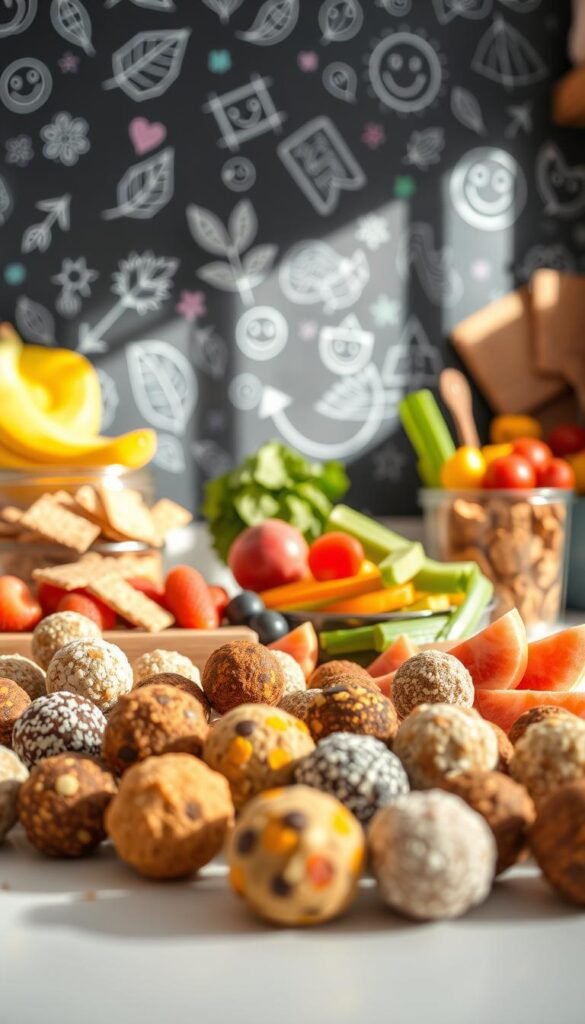
Try oatmeal cookie bites: rolled oats, sunbutter, cinnamon, and mini vegan chocolate chips. For a soft, cozy option, make banana bread bites with oats, mashed ripe banana, ground flax, maple, and vanilla. Want a bright pop? Strawberry shortcake bites blend cashew butter with crushed freeze-dried strawberries and vanilla.
For school-safe bites, swap nut butters with sunbutter or tahini and label each container. Roll any batch in finely crushed freeze-dried fruit “sprinkles” for color without heavy sugar. These fun snack ideas keep textures chewy and light, which helps with picky eater snacks.
Portion smart: for younger kids, serve one 1–1.25-inch ball per snack. Older, active kids may enjoy two. Balance the box by pairing with apple slices, carrot sticks, or yogurt if allowed. Whole grains and seeds add fiber, while sweeteners stay modest.
Invite kids to help with measuring and rolling. Hands-on steps boost pride and reduce pushback. When they choose flavors, lunchbox energy balls feel like their own creation—and that makes kid snacks more likely to get eaten.
- Oatmeal cookie bites: oats, sunbutter, cinnamon, mini vegan chocolate chips.
- Banana bread bites: oats, mashed ripe banana, ground flax, maple, vanilla.
- Strawberry shortcake bites: cashew butter, crushed freeze-dried strawberries, vanilla.
Pack these as school-safe bites with clear labels, and rotate flavors during the week. Small tweaks in mix-ins keep fun snack ideas fresh while supporting steady energy for class and play.
Cost, Convenience, and Buying Guide
Smart snacking starts with value and clarity. Weigh the cost of energy balls, your time, and what fits a busy week. A quick plan narrows the choice between store-bought vs homemade and helps you stock a budget pantry without guesswork.
Homemade vs. store-bought: pros and cons
Homemade bites often run about $0.20–$0.60 each, while many packaged bars land near $1.50–$3.00. That price gap adds up fast across a month.
At home, you control macros, flavors, and freshness. Fewer additives and a shorter ingredient list can be a win. The trade-offs are prep time and a shorter shelf life without preservatives.
Packaged options win on grab-and-go ease. Brands like RXBAR use egg whites, dates, and nuts; KIND leans on nuts and honey; CLIF Builders features soy protein. Compare textures, proteins, and calories to match your routine.
Reading labels for sugars, fibers, and proteins
Make label reading a habit. Scan for added sugar such as syrups or cane sugar, then check fiber content—aim for 3 grams or more per serving when possible. Review protein type and quality: whey or soy are complete; pea plus rice can round out amino acids.
Keep an eye on sodium and oils. Favor nuts, seeds, and oats high on the list. Use the nutrition panel to compare the cost of energy balls by serving, not just by package size.
- Protein quality: whey or soy complete; pea + rice blend for balance.
- Carb details: look for whole grains and minimal added sugar.
- Fiber content: target 3–5 grams to support fullness.
Budget shopping list and pantry staples
Build a budget pantry with old-fashioned oats, natural peanut or almond butter, chia and flax seeds, cocoa powder, vanilla extract, bulk dried fruit, and a reliable protein powder. Buying in bulk at Costco, Sam’s Club, or major online retailers can cut costs.
Store nuts and seeds in the fridge or freezer to protect oils. With these staples on hand, store-bought vs homemade becomes a simple choice based on schedule, cost of energy balls per serving, and taste goals.
| Choice | Price Range (per piece) | Time & Effort | Nutrition Control | Key Watchouts |
|---|---|---|---|---|
| Homemade Bites | $0.20–$0.60 | Short prep, batch-friendly | High control of macros | Shorter shelf life |
| RXBAR | About $2.00–$2.50 | Instant | Egg whites, dates, nuts | Added sugar from dates; dense texture |
| KIND | About $1.50–$2.00 | Instant | Nut-forward, simple ingredients | Honey and syrups add sweetness |
| CLIF Builders | About $2.00–$3.00 | Instant | Soy protein, higher calories | Check added sugar and oils |
Conclusion
This Energy Balls & Protein Bites summary brings it all together: no-bake bites offer balanced nutrition with carbs, healthy fats, and protein in a compact, grab-and-go form. With oats, nut or seed butter, and a trusted protein powder from brands like Bob’s Red Mill or Garden of Life, you can mix a base that fits busy American schedules. These easy healthy snacks adapt to pre-workout fuel, post-workout recovery, and school-safe options with certified gluten-free oats and simple, minimally processed sweeteners.
Simple ratios make make-ahead snacks easy to plan. Roll, chill, and store for the week, then time a bite 30–60 minutes before the gym or within an hour after training for steady fitness fuel. Low-sugar and keto tweaks—like using almond butter, unsweetened coconut, and a zero-calorie sweetener—keep macros on target without losing flavor.
Flavor stays front and center, whether you love chocolate peanut butter, bright lemon with chia, or a coffee kick using espresso powder and cocoa. Thoughtful swaps help with allergies and taste, from sunflower seed butter to collagen or plant-based proteins. With a few pantry staples and smart storage, these easy healthy snacks save money, reduce waste, and support everyday energy.
In short, this Energy Balls & Protein Bites summary shows how small, make-ahead snacks can deliver balanced nutrition and reliable fitness fuel, one satisfying bite at a time.
FAQ
What are energy balls and protein bites?
Energy balls and protein bites are no-bake, bite-sized snacks—about 1 to 1.5 inches—made with oats or nuts, nut or seed butter, and a binder like dates or honey. They’re customizable with protein powder, seeds, and flavor add-ins. Compared with many bars, they’re minimally processed and easy to portion for pre-workout fuel, post-workout recovery, travel, school, or desk snacks.
How are they different from granola bars or protein bars?
Most granola and protein bars are baked or extruded and often include syrups or stabilizers. Energy balls skip baking, use whole-food ingredients, and let you control macros. The smaller size helps manage calories while matching carbs, fats, and protein to your goals.
Why are these snacks popular for busy, active lifestyles?
They take under 20 minutes to make, travel well, and can be tailored to diets like gluten-free, dairy-free, vegan, low-sugar, or keto. They provide steady energy from complex carbohydrates, healthy fats, and protein, aligning with guidance from the American College of Sports Medicine on fueling and recovery.
What are the core ingredients for balanced nutrition?
Start with rolled oats or quinoa flakes for complex carbs and fiber. Add natural peanut, almond, cashew, or sunflower seed butter for healthy fats. Boost protein with whey isolate, pea protein, soy, or collagen peptides. Flavor with cocoa or cacao, vanilla, spices like cinnamon, and unsweetened dried fruit. A pinch of sea salt sharpens taste.
How do I get the right texture without baking?
Use a base ratio of 2 parts dry ingredients to 1 part sticky binder, plus 1/4 to 1/3 part liquid sweetener or moisture. Chill the mixture for 15 to 30 minutes before rolling. If it’s crumbly, add a teaspoon of milk or water at a time. If sticky, add oats, ground flax, or protein powder.
Which sweeteners work best for low-sugar or keto?
Try allulose or monk fruit–erythritol blends. Reduce other liquids to keep structure. For keto, swap oats and dates with almond flour, shredded coconut, ground flax, and protein powder. Add MCT oil powder sparingly for texture and satiety.
What’s the best protein powder to use?
Whey isolate blends smoothly and is fast-digesting. For dairy-free or vegan options, pea, soy, or rice proteins from brands like Orgain, Vega, Nuzest, or NOW Sports taste good when paired with vanilla or cocoa. Collagen peptides, like Vital Proteins, add protein but aren’t complete, so combine with another protein source.
How many should I eat at once?
For adults, enjoy 1 to 2 as a snack or 2 to 3 after workouts, depending on size and energy needs. For kids, 1 smaller ball is usually enough. Always consider school allergen policies and choose nut-free versions when required.
When should I eat them for energy and recovery?
Have a carb-forward ball 30 to 60 minutes pre-workout for fuel. Post-workout, pair 2 to 3 protein-rich bites with fluids—and fruit if needed—to approach 20 to 30 grams of protein and support glycogen replenishment, consistent with ACSM recommendations.
How do I make nut-free or school-safe versions?
Use sunflower seed butter or tahini, swap nuts with pumpkin or sunflower seeds, and pick certified gluten-free oats like Bob’s Red Mill GF Oats when needed. Choose vegan chocolate from Enjoy Life or Hu to avoid dairy. Label ingredients for teachers and administrators.
Are there kid-friendly flavors?
Yes. Try oatmeal cookie (oats, sunbutter, cinnamon, mini vegan chocolate chips), banana bread (oats, ripe banana, flax, vanilla), or strawberry shortcake (cashew butter, crushed freeze-dried strawberries). Roll in finely crushed freeze-dried fruit “sprinkles” for fun.
What quick flavor combos can I try this week?
Chocolate coconut with cocoa and shredded coconut. PB&J with natural peanut butter and crushed freeze-dried berries. Lemon blueberry with zest and dried blueberries. Apple pie with cinnamon and walnut butter. Trail mix with raisins and cacao nibs. Matcha almond, mocha espresso, and salted caramel date are popular too.
Do you have high-protein ideas for workouts?
Chocolate peanut butter power bites with whey isolate, chia, and cocoa deliver about 7 to 9 grams of protein each. Vanilla almond crunch with pea protein and hemp hearts offers 6 to 8 grams. Mocha espresso balls add a caffeine boost for pre-workout focus. Adjust sweetness to taste.
How can I cut added sugar without losing flavor?
Use cocoa powder, vanilla, cinnamon, cardamom, citrus zest, or instant espresso for depth. Add a small pinch of sea salt to make flavors pop. Choose unsweetened dried fruit and dark chocolate chips at 60 to 70 percent cacao.
How long do they last and how should I store them?
Refrigerate in airtight containers for 5 to 7 days, separating layers with parchment. Freeze for 2 to 3 months: pre-freeze on a sheet pan, then bag. Thaw in the fridge overnight or at room temp for 15 to 30 minutes. Keep at room temp for up to 1 to 2 days in a cool, dry spot.
What are smart meal prep tips?
Scale the base ratio, mix with a stand mixer or food processor, and chill before rolling. Use a #40 cookie scoop for uniform 1 to 1.5-ounce portions. Lightly oil your hands or dust with cocoa to prevent sticking. Label containers with prep date.
How do I read labels when buying store-bought options?
Scan for added sugars like syrups, check fiber (aim for 3 grams or more per serving), and confirm protein quality—whey or soy are complete; pea plus rice can complement each other. Compare brands such as RXBAR, KIND, and CLIF Builders to match your macro targets and ingredient preferences.
Are they budget-friendly compared with bars?
Yes. Homemade balls often cost 20 to 60 cents each versus
FAQ
What are energy balls and protein bites?
Energy balls and protein bites are no-bake, bite-sized snacks—about 1 to 1.5 inches—made with oats or nuts, nut or seed butter, and a binder like dates or honey. They’re customizable with protein powder, seeds, and flavor add-ins. Compared with many bars, they’re minimally processed and easy to portion for pre-workout fuel, post-workout recovery, travel, school, or desk snacks.
How are they different from granola bars or protein bars?
Most granola and protein bars are baked or extruded and often include syrups or stabilizers. Energy balls skip baking, use whole-food ingredients, and let you control macros. The smaller size helps manage calories while matching carbs, fats, and protein to your goals.
Why are these snacks popular for busy, active lifestyles?
They take under 20 minutes to make, travel well, and can be tailored to diets like gluten-free, dairy-free, vegan, low-sugar, or keto. They provide steady energy from complex carbohydrates, healthy fats, and protein, aligning with guidance from the American College of Sports Medicine on fueling and recovery.
What are the core ingredients for balanced nutrition?
Start with rolled oats or quinoa flakes for complex carbs and fiber. Add natural peanut, almond, cashew, or sunflower seed butter for healthy fats. Boost protein with whey isolate, pea protein, soy, or collagen peptides. Flavor with cocoa or cacao, vanilla, spices like cinnamon, and unsweetened dried fruit. A pinch of sea salt sharpens taste.
How do I get the right texture without baking?
Use a base ratio of 2 parts dry ingredients to 1 part sticky binder, plus 1/4 to 1/3 part liquid sweetener or moisture. Chill the mixture for 15 to 30 minutes before rolling. If it’s crumbly, add a teaspoon of milk or water at a time. If sticky, add oats, ground flax, or protein powder.
Which sweeteners work best for low-sugar or keto?
Try allulose or monk fruit–erythritol blends. Reduce other liquids to keep structure. For keto, swap oats and dates with almond flour, shredded coconut, ground flax, and protein powder. Add MCT oil powder sparingly for texture and satiety.
What’s the best protein powder to use?
Whey isolate blends smoothly and is fast-digesting. For dairy-free or vegan options, pea, soy, or rice proteins from brands like Orgain, Vega, Nuzest, or NOW Sports taste good when paired with vanilla or cocoa. Collagen peptides, like Vital Proteins, add protein but aren’t complete, so combine with another protein source.
How many should I eat at once?
For adults, enjoy 1 to 2 as a snack or 2 to 3 after workouts, depending on size and energy needs. For kids, 1 smaller ball is usually enough. Always consider school allergen policies and choose nut-free versions when required.
When should I eat them for energy and recovery?
Have a carb-forward ball 30 to 60 minutes pre-workout for fuel. Post-workout, pair 2 to 3 protein-rich bites with fluids—and fruit if needed—to approach 20 to 30 grams of protein and support glycogen replenishment, consistent with ACSM recommendations.
How do I make nut-free or school-safe versions?
Use sunflower seed butter or tahini, swap nuts with pumpkin or sunflower seeds, and pick certified gluten-free oats like Bob’s Red Mill GF Oats when needed. Choose vegan chocolate from Enjoy Life or Hu to avoid dairy. Label ingredients for teachers and administrators.
Are there kid-friendly flavors?
Yes. Try oatmeal cookie (oats, sunbutter, cinnamon, mini vegan chocolate chips), banana bread (oats, ripe banana, flax, vanilla), or strawberry shortcake (cashew butter, crushed freeze-dried strawberries). Roll in finely crushed freeze-dried fruit “sprinkles” for fun.
What quick flavor combos can I try this week?
Chocolate coconut with cocoa and shredded coconut. PB&J with natural peanut butter and crushed freeze-dried berries. Lemon blueberry with zest and dried blueberries. Apple pie with cinnamon and walnut butter. Trail mix with raisins and cacao nibs. Matcha almond, mocha espresso, and salted caramel date are popular too.
Do you have high-protein ideas for workouts?
Chocolate peanut butter power bites with whey isolate, chia, and cocoa deliver about 7 to 9 grams of protein each. Vanilla almond crunch with pea protein and hemp hearts offers 6 to 8 grams. Mocha espresso balls add a caffeine boost for pre-workout focus. Adjust sweetness to taste.
How can I cut added sugar without losing flavor?
Use cocoa powder, vanilla, cinnamon, cardamom, citrus zest, or instant espresso for depth. Add a small pinch of sea salt to make flavors pop. Choose unsweetened dried fruit and dark chocolate chips at 60 to 70 percent cacao.
How long do they last and how should I store them?
Refrigerate in airtight containers for 5 to 7 days, separating layers with parchment. Freeze for 2 to 3 months: pre-freeze on a sheet pan, then bag. Thaw in the fridge overnight or at room temp for 15 to 30 minutes. Keep at room temp for up to 1 to 2 days in a cool, dry spot.
What are smart meal prep tips?
Scale the base ratio, mix with a stand mixer or food processor, and chill before rolling. Use a #40 cookie scoop for uniform 1 to 1.5-ounce portions. Lightly oil your hands or dust with cocoa to prevent sticking. Label containers with prep date.
How do I read labels when buying store-bought options?
Scan for added sugars like syrups, check fiber (aim for 3 grams or more per serving), and confirm protein quality—whey or soy are complete; pea plus rice can complement each other. Compare brands such as RXBAR, KIND, and CLIF Builders to match your macro targets and ingredient preferences.
Are they budget-friendly compared with bars?
Yes. Homemade balls often cost 20 to 60 cents each versus $1.50 to $3.00 for many packaged bars. Stock staples like rolled oats, natural nut or seed butter, chia, flax, cocoa, vanilla, bulk dried fruit, and a reliable protein powder. Buy in bulk at Costco, Sam’s Club, or online to save. Store nuts and seeds chilled for freshness.
Do oats and seeds offer real health benefits?
Rolled oats provide beta-glucan fiber, and the USDA reports about 4 grams of fiber per 1/2 cup dry oats. Chia and flax add ALA omega-3s and more fiber. Together with protein and healthy fats, these ingredients support steady energy, satiety, and heart-smart eating.
Can I make them gluten-free, dairy-free, or vegan?
Absolutely. Choose certified gluten-free oats, dairy-free proteins like pea or soy, and swap honey for maple or date syrup. Use vegan chocolate and confirm allergen statements on packaging to avoid cross-contact.
.50 to .00 for many packaged bars. Stock staples like rolled oats, natural nut or seed butter, chia, flax, cocoa, vanilla, bulk dried fruit, and a reliable protein powder. Buy in bulk at Costco, Sam’s Club, or online to save. Store nuts and seeds chilled for freshness.
Do oats and seeds offer real health benefits?
Rolled oats provide beta-glucan fiber, and the USDA reports about 4 grams of fiber per 1/2 cup dry oats. Chia and flax add ALA omega-3s and more fiber. Together with protein and healthy fats, these ingredients support steady energy, satiety, and heart-smart eating.
Can I make them gluten-free, dairy-free, or vegan?
Absolutely. Choose certified gluten-free oats, dairy-free proteins like pea or soy, and swap honey for maple or date syrup. Use vegan chocolate and confirm allergen statements on packaging to avoid cross-contact.