Healthy Snack Ideas to Fuel Your Day
Surprising fact: Nearly 40% of daily calories in the United States come from snacks, according to federal nutrition surveys. That means what we graze on can make or break our focus and mood. This guide turns that habit into an advantage with Healthy Snack Ideas that keep you energized and satisfied.
This Website contains affiliate links. That means I may earn a small commission if you purchase through my links, at no extra cost to you.
The Dietary Guidelines for Americans 2020–2025 encourage nutrient-dense choices. Think produce, whole grains, legumes, nuts, seeds, and dairy or fortified dairy alternatives. With smart snacking, you get fiber, protein, and healthy fats—not a blood sugar crash.
The CDC notes that balanced, nutritious snacks can manage hunger and support steady energy when paired with movement and mindful portions. Harvard T.H. Chan School of Public Health adds that combining protein and fiber helps slow digestion and improve satiety. That’s the foundation for energizing snacks that work at home, on commutes, or at your desk.
In this long-form guide, you’ll find snack ideas for energy, practical recipes, and shopping strategies that fit real life. From the best snacks for work to quick ideas for school and travel, these nutritious snacks make smart snacking simple—and enjoyable.
Key Takeaways
- Build energizing snacks with fiber, protein, and healthy fats to avoid energy crashes.
- Choose nutrient-dense foods as recommended by the Dietary Guidelines for Americans 2020–2025.
- Use smart snacking to bridge meals, support focus, and manage appetite.
- Combine simple, real ingredients like fruit, yogurt, nuts, legumes, and whole grains.
- Plan ahead with portable options for commutes, travel, and the best snacks for work.
- Balance portions to match your activity level for steady, all-day energy.
Why Smart Snacking Boosts Energy and Focus
Smart choices between meals keep your body and brain steady. When you reach for sustained energy snacks that pair carbs with protein or healthy fats, you support blood sugar balance and reduce dips that sap attention. This approach also builds satiety, so you stay full longer and avoid mindless grazing.
Low glycemic index snacks help release energy at a slow, even pace. That steadiness can aid cognitive performance by preventing swings that make it hard to think clearly. Simple pairings—like an apple with almond butter, Greek yogurt with berries and chia, or whole-grain crackers with tuna—act as practical focus foods for busy days.
Keep an eye on ingredients. Ultra-processed picks high in added sugars or refined starches can spike and crash energy. Choose fiber-forward items such as oats, nuts, seeds, and legumes to promote blood sugar balance and lasting satiety throughout the afternoon.
Do not forget hydration. Water, unsweetened tea, or sparkling water supports cognitive performance, and even mild dehydration can cloud focus. Combine a drink with glycemic index snacks to round out sustained energy snacks that function as reliable focus foods.
Healthy Snack Ideas
Small choices shape steady energy. Build balanced snacks with a mix of protein fiber fat so you stay full and focused. Keep an eye on portion sizes and snack timing to avoid dips in energy.
Balanced macronutrients for sustained energy
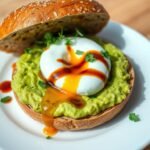
Think simple combos that follow USDA-style guidance: complex carbs plus lean protein and healthy fats. Try whole-grain toast with avocado and turkey, an apple with two tablespoons of peanut or almond butter, plain Greek yogurt with berries and chia seeds, or cottage cheese with cherry tomatoes and an olive oil drizzle. These are balanced snacks that pair protein fiber fat for better satiety.
Portion control and timing between meals
Match portion sizes to your day. Aim for nuts at one ounce, hummus at two to three tablespoons, cheese at one ounce, whole-grain crackers at six to eight pieces, and yogurt at three-fourths to one cup. Space meals and snacks by about three to four hours. Pick 150–300 calories if meals are far apart or pre-workout; choose 100–150 calories when meals are close for smarter snack timing.
Quick mix-and-match snack formulas
Use fast snack formulas to reduce guesswork:
- Fruit + Protein/Fat: Banana with peanut butter; grapes with cheese.
- Veg + Dip: Baby carrots with hummus; cucumbers with tzatziki.
- Whole Grain + Protein: Oatmeal cup with walnuts; whole-grain crackers with tuna.
- Dairy/Alt + Fiber Topping: Greek yogurt with chia; soy yogurt with flax.
- Legume + Spice: Roasted chickpeas with paprika; edamame with sea salt.
These patterns reinforce balanced snacks by pairing protein fiber fat in each bite.
Smart shopping tips for snack readiness
Build a grocery list for snacks that streamlines prep and supports portion sizes. Stock tuna or salmon pouches, roasted chickpeas, and nut or seed butter. Add portable produce like apples, clementines, grapes, baby carrots, and snap peas. Include Greek yogurt, kefir, or soy yogurt, plus whole grains such as oatmeal cups, popcorn kernels, and whole-grain crackers.
Read labels to guide snack timing and quality: look for at least 3 grams of fiber per serving, about 5–15 grams of protein, and minimal added sugars, ideally under 6–8 grams per serving. Keep these staples visible so your snack formulas are always within reach.
High-Protein Snacks for Lasting Satisfaction
High-protein snacks steady energy and boost satiety between meals. Aim for options that pack solid grams per serving and add fiber or healthy fats for a longer lift.
Quick tip: Keep two to three grab-and-go choices prepped so you can rotate flavors and textures through the week.
Greek yogurt parfaits with berries and nuts
Greek yogurt protein ranges from 12–20 grams in 2/3–1 cup, depending on brands like Chobani, Fage, or Siggi’s. Layer with blueberries or strawberries, a tablespoon of chopped walnuts or almonds, and a sprinkle of chia or flax. This mix delivers crunch, antioxidants, and fiber for steady satiety.
Hard-boiled eggs with everything seasoning
Each egg gives about 6 grams of protein, making an easy eggs snack that travels well. Boil a batch, then shake on everything bagel seasoning, smoked paprika, or chili-lime. Pair with cherry tomatoes or sliced cucumber for hydration and extra bite.
Cottage cheese with pineapple or tomatoes
A cottage cheese snack offers 12–15 grams of protein per 1/2 cup from brands like Good Culture or Daisy. Go sweet with pineapple and cinnamon, or savory with grape tomatoes, chives, black pepper, and a drizzle of extra-virgin olive oil. The creamy base plus produce adds volume and satiety.
Edamame and roasted chickpeas
Steamed edamame brings about 8–11 grams of plant protein per 1/2 cup shelled. For crunch, roasted chickpeas from Biena—or chickpea puffs from Hippeas as an alternative—add fiber and flavor. Toss with sea salt or chili for a bold, high-protein finish that supports satiety and focus.
| Snack | Approx. Protein | Add-Ons for Flavor | Why It Satisfies |
|---|---|---|---|
| Greek yogurt protein parfait | 12–20 g (2/3–1 cup) | Berries, walnuts or almonds, chia/flax | Protein plus fiber for lasting satiety |
| Hard-boiled eggs snack | 6 g per egg | Everything seasoning, smoked paprika | Portable protein with savory kick |
| Cottage cheese snack | 12–15 g (1/2 cup) | Pineapple and cinnamon or tomatoes and chives | Creamy texture, steady energy |
| Edamame | 8–11 g (1/2 cup shelled) | Sea salt, chili flakes, lemon | Plant protein plus minerals for balance |
| Roasted chickpeas | 5–6 g (1/4 cup) | Garlic, cumin, smoked paprika | Crunch, fiber, and plant protein for satiety |
Low-Sugar, High-Fiber Choices for Steady Energy
Build your snack around texture, crunch, and natural sweetness. Choose low-sugar snacks that feature high-fiber snacks made from whole grains, legumes, and fruit fiber. These low glycemic snacks help steady your energy between meals without a crash.
Focus on fiber types that work together. Soluble fiber from oats, chia, and beans slows digestion, while insoluble fiber from vegetables and whole grains supports a healthy gut. Pair fiber with protein or healthy fats to feel satisfied longer.
Smart picks are simple: a pear or apple with the skin, carrots with hummus, air-popped popcorn, oatmeal with ground flaxseed, or roasted edamame. Keep added sugars low by checking the Nutrition Facts label and aiming for 0–6 grams per snack.
| Snack Idea | Main Fiber Source | Why It’s Low Glycemic | Simple Protein/Fat Pairing | Added Sugars (Target) |
|---|---|---|---|---|
| Apple or pear with skin | Fruit fiber | Skin and pectin slow absorption | Peanut or almond butter | 0–6 g |
| Carrots with hummus | Legumes and vegetables | Chickpeas and veg deliver steady release | Olive oil drizzle | 0–6 g |
| Air-popped popcorn | Whole grains | Volume plus fiber curbs spikes | Sprinkle Parmesan or nutritional yeast | 0–6 g |
| Oatmeal with ground flaxseed | Whole grains and seeds | Beta-glucan supports low glycemic snacks | Greek yogurt or walnuts | 0–6 g |
| Roasted edamame | Legumes | Protein and fiber blunt glucose rise | Pumpkin seeds or a few olives | 0–6 g |
| Whole-grain crispbread with avocado | Whole grains | Fiber plus fats support steady energy | Sea salt and lemon | 0–6 g |
Keep a few go-to combos ready. Mix roasted chickpeas with pistachios, or pair berries rich in fruit fiber with plain kefir. With low-sugar snacks and high-fiber snacks centered on whole grains, legumes, and other low glycemic snacks, you’ll have options that taste great and feel balanced.
On-the-Go Snacks for Busy Days
When the day runs fast, smart choices make it easier to stay fueled. Keep a small kit of portable snacks that you can grab without thinking. Aim for protein, fiber, and a touch of healthy fat so energy lasts through meetings, errands, and long drives.
Portable options that don’t require refrigeration
Build a stash of shelf-stable snacks that hold up in a desk, tote, or glove box. Try almond or pistachio packs, roasted chickpeas, and whole-grain crackers. Single-serve nut butter packets from Justin’s pair well with apples or clementines.
For protein on the move, add tuna or salmon pouches from Wild Planet or Safe Catch. Oatmeal cups are clutch for hotel kettles and early flights, making them ideal travel snacks when hot breakfast is hard to find.
Healthy convenience store picks
When you stop at a gas station, look for convenience store healthy snacks that balance nutrients. Choose unsalted nuts, lower-sodium jerky with no added sugar like EPIC or Country Archer, and fresh fruit. If a fridge is available, grab Greek yogurt cups, string cheese, hard-boiled eggs, or hummus snack packs.
Veggie cups can round out the mix. Pair them with whole-grain crackers for crunch and fiber. These swaps beat candy and keep commuter snacks steady and satisfying.
Snack packing strategies for commutes and travel
Plan ahead so portable snacks are always within reach. Use an insulated lunch bag with ice packs, and choose spill-proof containers. Pre-portion servings to avoid overeating, and keep a backup kit in your car or backpack for true commuter snacks.
For flights, remember TSA rules: solid foods are fine, but nut butters over 3.4 oz count as liquids. Pack a reusable bottle and fill it after security; choose water or unsweetened iced tea to keep travel snacks light and hydrating.
Fresh Fruit and Veggie Combos That Actually Satisfy
Build smarter fruit and veggie snacks by pairing produce with protein and healthy fats. These produce pairings raise satiety, steady energy, and make every bite count. A pinch of everything seasoning, lemon zest, or smoked paprika keeps flavors bright without extra effort.
Apple slices with almond or peanut butter
Crisp apples bring fiber and vitamin C, while almond or peanut butter adds creamy monounsaturated fats. This duo travels well and hits the sweet-salty note. For variety, dust with cinnamon or a hint of sea salt to elevate these fruit and veggie snacks.
Bell pepper strips with hummus or tzatziki
Sweet bell peppers crunch with vitamin C and color. Dip into a hummus snack made with olive oil and tahini for fiber and plant protein. Prefer a cooler vibe? Spoon up tzatziki with Greek yogurt, cucumbers, garlic, and dill for a tangy, refreshing bite.
Grapes and cheese cubes for sweet-savory balance
Juicy grapes deliver quick carbs, while cheese and fruit offer satisfying protein and fat. Choose cheddar or mozzarella and keep cheese to about 1 ounce for balance. Add cracked black pepper or lemon zest for a simple lift.
Celery boats with cottage cheese and chives
Celery brings crunch and hydration, and cottage cheese packs protein and calcium. Fill the stalks, top with fresh chives, and finish with smoked paprika or everything seasoning. This cool combo takes minutes and stays crisp.
| Combo | Key Benefits | Smart Add-Ons | Quick Tip |
|---|---|---|---|
| Apple + almond or peanut butter | Fiber, vitamin C, steady energy | Cinnamon, sea salt | Slice ahead; keep nut butter packets on hand |
| Bell peppers + hummus snack | Vitamin C, fiber, plant protein | Smoked paprika, extra-virgin olive oil drizzle | Choose hummus with tahini for extra creaminess |
| Bell peppers + tzatziki | Protein, probiotics, refreshing crunch | Dill, lemon zest | Use Greek yogurt-based tzatziki for more protein |
| Grapes + cheese and fruit | Fast carbs with protein and fat | Cracked pepper, fresh thyme | Portion cheese to about 1 ounce |
| Celery + cottage cheese and chives | Hydration, protein, calcium | Everything seasoning, smoked paprika | Prep celery boats in advance for grab-and-go |
Crunchy and Salty Fixes Without the Guilt
Craving a salty bite? Build your roster of healthy crunchy snacks that satisfy without piling on sodium. Air-popped popcorn is a standout whole grain. A three-cup serving lands around 100 to 120 calories with 3 to 4 grams of fiber, making popcorn healthy for late afternoons. Add a mist of olive oil spray, a shake of nutritional yeast, or a chili-lime blend for big flavor with little salt.
Reach for seaweed snacks from brands like GimMe or SeaSnax when you want a savory crunch that brings iodine and very few calories. Scan labels to keep an eye on sodium per serving. If you see options under 200 milligrams, they fit well into low-sodium snacks for everyday nibbling.
For baked chips alternatives, consider whole-grain crackers from Mary’s Gone Crackers or Triscuit Thin Crisps. Pair them with a little hummus or cottage cheese. You’ll get more fiber and protein than standard chips, plus a toasty crunch that holds up to dips.
Baked chickpea or lentil snacks deliver plant protein and a roasty snap. Lightly salted almonds, pistachios, or cashews are smart in small portions, and roasted pumpkin seeds bring minerals and texture. Aim for choices with 2 to 3 grams of fiber and 3 to 6 grams of protein per serving to keep cravings in check.
Want a quick lineup to keep at home or the office? Mix single-serve seaweed snacks with mini packs of whole-grain crackers, pre-portioned nuts, and air-popped popcorn. These low-sodium snacks give you a steady rotation of healthy crunchy snacks and baked chips alternatives that feel fun, not restrictive.
Healthy Dips and Spreads to Elevate Simple Snacks
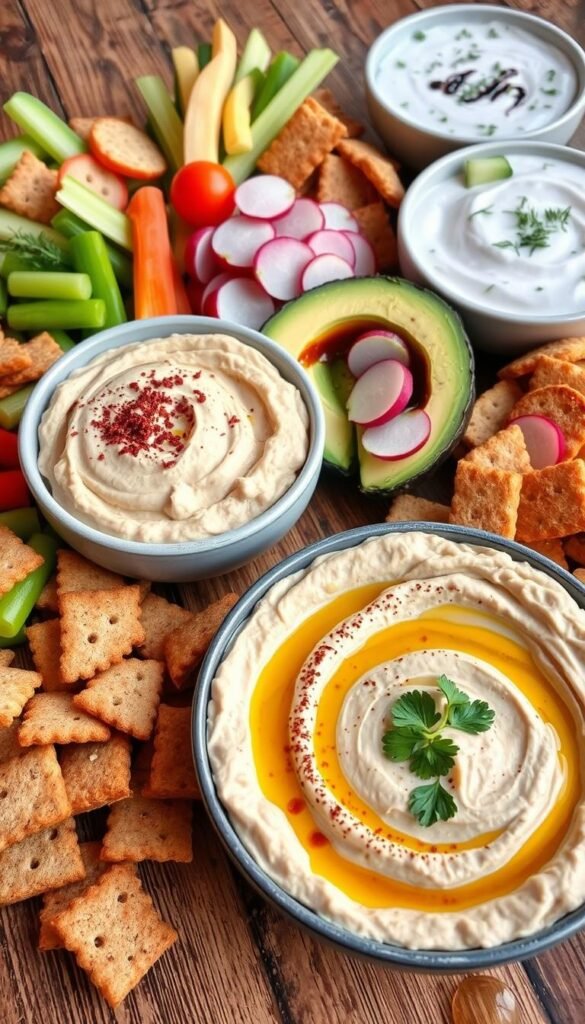
Upgrade sliced veggies, crackers, and pitas with healthy dips that add flavor and real nutrition. Each option below comes together fast, travels well, and turns a quick bite into something you will look forward to.
Protein-packed Greek yogurt ranch
A Greek yogurt dip with ranch vibes delivers creamy texture and extra protein. Stir plain Greek yogurt with dill, chives, garlic powder, onion powder, lemon juice, salt, and pepper. It tastes rich yet has less saturated fat than sour cream.
Serve with cucumbers, cherry tomatoes, and whole-grain pretzels. Keep a sealed jar in the fridge for easy desk snacks.
Classic hummus and flavorful variations
Start with a simple hummus recipe: chickpeas, tahini, lemon, garlic, and olive oil. You get fiber, plant protein, and heart-healthy fats in one smooth scoop.
Try roasted red pepper, beet, or edamame twists. Pair with carrot coins, warm pita, or baked tortilla chips for a satisfying crunch.
Whipped feta with herbs and lemon
Blend whipped feta with a splash of Greek yogurt or olive oil, lemon zest, and oregano or parsley. The result is tangy, velvety, and bold.
Spread on whole-grain pitas or top with cucumbers and cracked pepper. A drizzle of extra-virgin olive oil adds shine and flavor.
Guacamole with veggie dippers
For a fresh guacamole snack, mash avocado with lime, cilantro, red onion, jalapeño, and salt. Avocados bring monounsaturated fats and potassium.
Scoop with bell peppers, jicama, radishes, and carrots. It’s bright, zesty, and ready in minutes.
- Keyword guide: healthy dips, Greek yogurt dip, hummus recipe, whipped feta, guacamole snack
Better-for-You Sweet Treats to Curb Cravings
Sweet cravings can fit into a balanced day with smart swaps. These healthy desserts keep flavor high and sugars in check, turning snack time into a small moment of joy without the crash that follows.
Choose options that add fiber, protein, or good fats. With a few pantry staples and simple steps, you can build low-sugar sweets that feel special and satisfy fast.
Dark chocolate and nut clusters
Reach for a dark chocolate snack using bars from Lindt Excellence 70% or Ghirardelli 72%. Melt, then fold in almonds, walnuts, and pumpkin seeds. Portion with a tablespoon, chill, and enjoy one or two clusters.
This blend offers crunch, balanced fats, and cocoa flavanols. Keep servings to 0.5–1 ounce to stay mindful while still getting that rich snap.
Chia pudding with vanilla and cinnamon
Stir 2 tablespoons chia seeds into milk or an unsweetened dairy alternative, plus vanilla and a pinch of cinnamon. Add a light touch of maple if needed. Let it thicken in the fridge for a creamy chia pudding.
The texture feels luxe while delivering omega-3s and fiber. Top with fresh berries for brightness and an extra layer of low-sugar sweets.
Frozen banana slices with chocolate drizzle
Slice ripe bananas into coins and freeze on a tray. Drizzle a thin stream of melted dark chocolate or dust with cocoa, then add crushed peanuts for a classic sundae vibe.
The result hints at “nice cream” flavors with fewer added sugars. Keep a stash ready for a fast, cold bite on busy afternoons.
Baked cinnamon apples with a dollop of yogurt
Core apples, sprinkle with cinnamon, and add a teaspoon of butter or coconut oil. Bake until tender, then finish with a spoon of plain Greek yogurt for a warm baked apples dessert that tastes nostalgic and cozy.
This simple dish offers fiber and protein with gentle sweetness. It’s a comfort-forward pick that fits neatly among healthy desserts.
| Treat | Main Benefits | Smart Portion | Flavor Boosters |
|---|---|---|---|
| Dark chocolate and nut clusters | Cocoa flavanols, healthy fats, crunch | 1–2 tablespoon-sized clusters | Sea salt flakes, orange zest |
| Chia pudding with vanilla and cinnamon | Omega-3s, ~10g fiber per 2 tbsp seeds | 1/2–3/4 cup | Fresh berries, toasted coconut |
| Frozen banana slices with chocolate drizzle | Fast energy, portionable bites | 6–8 coins | Crushed peanuts, cocoa dusting |
| Baked cinnamon apples with a dollop of yogurt | Warm spice, fiber, added protein | 1 medium apple with 2 tbsp yogurt | Nutmeg, chopped pecans |
With these ideas, you can rotate a dark chocolate snack, a creamy chia pudding, frozen banana coins, or a cozy baked apples dessert to keep healthy desserts exciting and sustainable.
Gluten-Free and Dairy-Free Snack Options
Smart swaps make it easy to reach for gluten-free snacks and dairy-free snacks without losing flavor or crunch. Try certified gluten-free whole-grain crackers like Simple Mills Almond Flour Crackers or Mary’s Gone Crackers. Pair them with hummus, guacamole, or tahini for a filling bite that also fits allergen-friendly snacks.
For quick fiber and protein, keep roasted chickpeas, edamame, and rice cakes on hand. Popcorn, fresh fruit, and veggie sticks with dips are simple wins. Oat cups labeled gluten-free work well for busy mornings and fit celiac-friendly snacks when certification is clear.
Need protein without dairy? Choose nut or seed butters, jerky that lists no whey or casein, and soy or pea-protein yogurts from Silk, Kite Hill, or Ripple. These picks help round out lactose-free snacks while keeping sugars in check.
Label check: scan for hidden gluten such as malt or barley, and for dairy words like whey and casein. If you manage celiac disease, lean on certified gluten-free labels; for lactose intolerance, many do well with Greek yogurt or lactose-free milk like Lactaid. Fortified plant milks and almonds support calcium and vitamin D when skipping dairy.
Mix-and-match ideas:
- Mary’s Gone Crackers with hummus and cucumber slices for crisp, celiac-friendly snacks.
- Rice cakes topped with almond butter and banana for allergen-friendly snacks that travel well.
- Popcorn with a pinch of sea salt plus roasted chickpeas for protein-rich, lactose-free snacks.
- Silk or Ripple yogurt with berries and chia for creamy dairy-free snacks that still satisfy.
Meal Prep Snack Boxes for the Workweek
Set yourself up for stress-free days with simple snack meal prep. Build bento snack boxes that balance protein, produce, whole grains, and a creamy dip. Aim for 250–350 calories so these make-ahead snacks bridge the gap between meals and travel well as office snacks.
Pro tip: Keep portions tidy and colorful to boost appetite appeal. A small crunch, a fresh bite, and a savory dip make every break feel planned, not rushed.
Bento-style protein, produce, and dip combos
- Protein: hard-boiled eggs, turkey roll-ups, or tofu cubes.
- Produce: grapes, berries, carrot sticks, and snap peas.
- Whole grains: mini pitas or brown rice cakes for a light base.
- Dips: hummus or Greek yogurt ranch in leakproof cups.
These bento snack boxes stay satisfying without feeling heavy. Rotate items to keep snack meal prep fresh across the week.
How to batch-prep and store for freshness
- Wash and cut produce on Sunday; spin or pat dry to prevent sogginess.
- Portion nuts and crackers in airtight cups to protect crunch.
- Cook a pot of hard-boiled eggs and chill promptly.
- Refrigerate perishable items within 2 hours and keep at 40°F or below.
- Use ice packs in insulated bags for commutes, and enjoy within 3–4 days.
Pack dips separately and seal well. This approach keeps make-ahead snacks crisp and commute-ready as office snacks.
Flavor themes: Mediterranean, Southwest, Asian-inspired
- Mediterranean: hummus, olives, cucumbers, cherry tomatoes, feta, and mini pitas.
- Southwest: black bean dip, jicama, mango, pepitas, and mini corn tortillas.
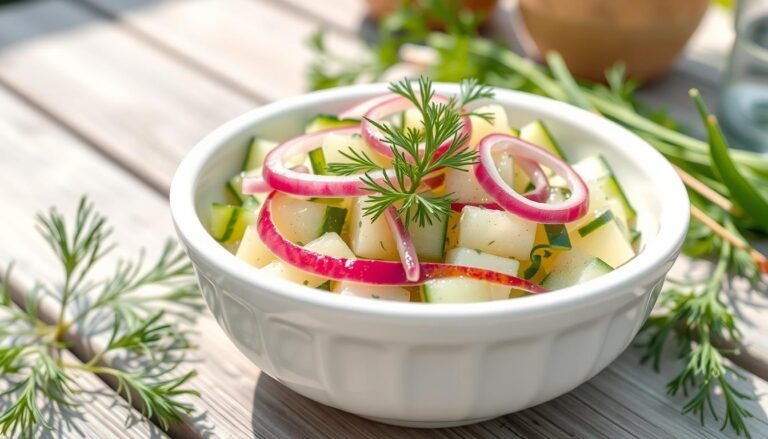
- Asian-inspired: edamame, seaweed snacks, cucumber salad with rice vinegar, and sesame crackers.
Rotate these themed snack boxes to avoid boredom and match your mood. Each set layers fiber, protein, and crunch for make-ahead snacks that travel well.
| Theme | Core Protein | Produce Focus | Grain/Crunch | Dip/Accent | Calorie Target | Best Use |
|---|---|---|---|---|---|---|
| Mediterranean | Hard-boiled eggs or feta | Cucumbers, cherry tomatoes | Mini pitas | Hummus, olives | 250–350 kcal | Office snacks with fresh bite |
| Southwest | Black bean dip | Jicama, mango | Mini corn tortillas | Pepitas, lime | 250–350 kcal | Midday energy and crunch |
| Asian-inspired | Edamame | Cucumber salad | Sesame crackers | Seaweed snacks | 250–350 kcal | Light, savory office snacks |
With steady snack meal prep, you can mix bento snack boxes into themed snack boxes that feel new all week while staying safe, tasty, and ready to go.
Pre- and Post-Workout Snacks for Performance
Smart fueling can turn a good workout into a great one. Time your pre-workout snack, sip fluids that include electrolytes when needed, and choose recovery snacks that rebuild muscle without weighing you down.
Carb-forward options before exercise
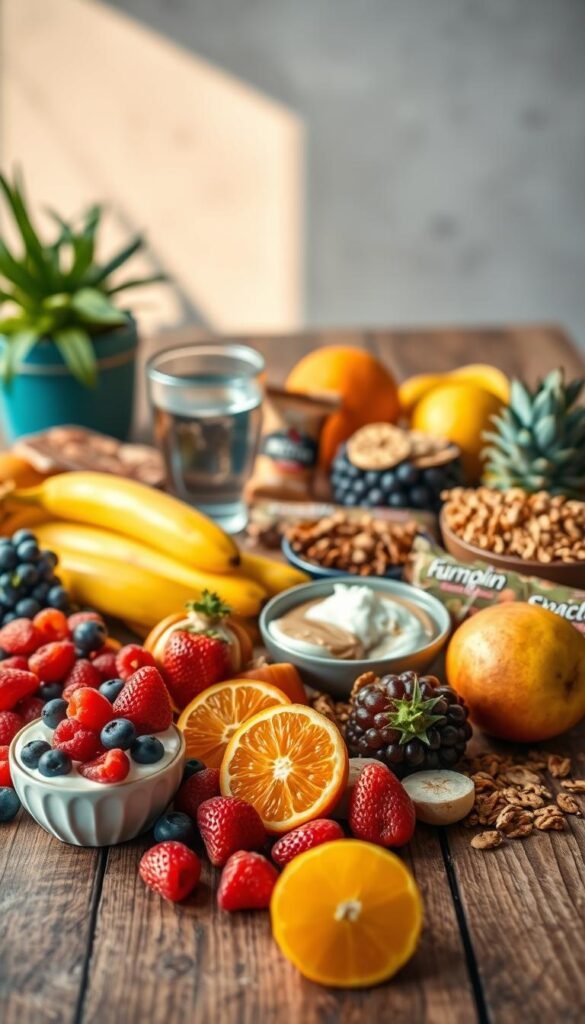
Aim for easy carbs 30–90 minutes before you move. Pick foods that sit light and top off glycogen. Try a ripe banana, toast with honey, or a small granola bar with low fiber to reduce gut stress.
If you train early, keep it simple. A few pretzels, a rice cake with jam, or applesauce can prime energy. This kind of pre-workout snack helps you start strong without a crash.
Protein-plus-carb combos for recovery
Within about an hour after you finish, pair protein with carbs to repair and reload. Greek yogurt with berries, cottage cheese with grapes, or chocolate milk—dairy, lactose-free, or soy—hit the mark.
For a heartier post-workout snack, try tuna on whole-grain crackers or a smoothie with whey or pea protein and frozen berries. These recovery snacks make it easier to meet daily goals while keeping hunger in check.
Hydration and electrolytes to pair with snacks
Drink water according to thirst before, during, and after training. For long or sweaty sessions, include electrolytes. Look for 200–500 mg sodium per serving in sports drinks, electrolyte powders, or add a pinch of salt to coconut water.
Use urine color as a quick guide—pale straw suggests you are on track. Match fluid and sports nutrition snacks to your climate and sweat rate to stay steady from warm-up to cooldown.
| Goal | Snack Idea | Why It Works | When to Use |
|---|---|---|---|
| Quick Energy | Banana or toast with honey | Fast carbs to top off glycogen | 30–60 minutes before |
| Gentle on Stomach | Applesauce pouch or rice cakes | Low fiber to reduce GI distress | 15–45 minutes before |
| Muscle Repair | Greek yogurt with berries | Protein plus carbs for recovery | Within 60 minutes after |
| Portable Recovery | Tuna on whole-grain crackers | Lean protein with steady carbs | Within 60 minutes after |
| Hydration Support | Sports drink or electrolyte powder | 200–500 mg sodium to replace sweat | During long, hot, or intense sessions |
| Dairy-Free Option | Soy chocolate milk or pea protein smoothie | Complete protein with carbs | Within 60 minutes after |
Blend pre-workout snack choices, post-workout snack picks, and sports nutrition snacks with electrolytes to meet your plan, your palate, and your schedule.
Kids’ Snacks That Parents Will Love Too
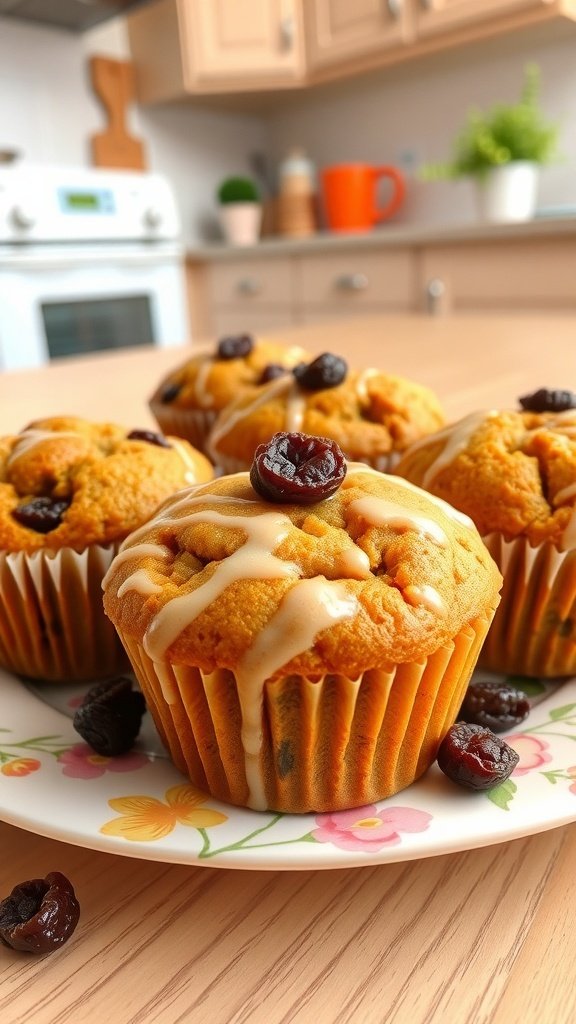
Color, crunch, and simple ingredients win every time. For healthy kids snacks that fit busy routines, build small portions with whole grains, protein, and fresh produce. Mini whole-grain quesadillas with black beans and shredded cheddar offer warm, melty fuel. Lower-sugar yogurt tubes, fruit kabobs, and mini oat-and-banana muffins keep taste buds happy without a sugar spike.
Make school snacks easy to pack and easy to eat. Veggie sticks with hummus travel well, and cheese sticks pair with whole-grain crackers for steady energy. When nut-free rules apply, swap in sunflower seed butter on whole-grain bread, roasted chickpeas, or chilled edamame. These picks also work as reliable lunchbox snacks that don’t come home untouched.
Set up a DIY snack station to win over picky eaters. Stock small containers of cut berries, baby carrots, cucumbers, whole-grain crackers, and dips like hummus or Greek yogurt ranch. Guide choices by aiming for 6 grams of added sugar or less per serving, and pour water or milk to round things out. These family-friendly snacks help kids learn to build their own balanced bites.
Quick combos parents swear by:
- Apple slices with sunflower seed butter and a few pretzels
- Grapes with mozzarella cheese sticks
- Whole-grain pita triangles with hummus and bell pepper strips
- Roasted chickpeas with orange segments
Keep a short list taped to the fridge for fast lunchbox snacks and after-school help. Rotate choices to add variety, and prep once for the week to cut the morning rush. With a few smart staples on hand, school snacks can be both crowd-pleasing and truly nourishing.
Budget-Friendly Snacks Using Pantry Staples
Stretch your grocery dollars with frugal snacking that leans on reliable pantry snacks. These ideas use simple items you likely have on hand and translate into cheap healthy snacks that travel well, support budget meal prep, and favor shelf-stable snacks for less waste.
DIY trail mix with nuts, seeds, and dried fruit
Buy almonds, peanuts, pumpkin seeds, raisins, and a few dark chocolate chips in bulk for frugal snacking. Stir together and portion 1/4 cup per bag to keep costs and calories in check. This mix stores well as shelf-stable snacks and pairs with coffee or tea on busy afternoons.
Whole-grain crackers with tuna or salmon pouches
Pouches of tuna or salmon offer protein and omega-3s at a fair price. Mash with Dijon mustard or Greek yogurt, then top whole-grain crackers for filling pantry snacks. It’s a smart pick for budget meal prep that still tastes fresh and bright.
Popcorn with olive oil and nutritional yeast
Popcorn kernels are a low-cost whole grain and a star in cheap healthy snacks. Pop on the stovetop or in an air popper, drizzle extra-virgin olive oil, and dust with nutritional yeast for a savory, cheesy vibe rich in B vitamins. This is weeknight-friendly frugal snacking you can scale for movie night.
Overnight oats snack cups
Use rolled oats, milk or plant milk, chia seeds, cinnamon, and frozen berries. Portion into jars to anchor your budget meal prep and keep mornings smooth. For more ideas like Healthy Oats, Sprouts Salad, Tasty Pasta, and Healthy Food, explore creative pantry inspiration that fits into shelf-stable snacks and pantry snacks you’ll actually eat.
Mindful Snacking: Portions, Labels, and Timing
Small shifts make mindful eating snacks simple. Read what’s on the package, set portion control before you start, and plan snack timing so energy stays steady. These habits turn quick bites into real fuel.
Reading labels for fiber, protein, and added sugars
Use nutrition labels to screen choices fast. Aim for at least 3 grams of fiber and 5–15 grams of protein per serving. Check added sugar limits and keep them low to protect focus and mood.
Scan ingredients by weight. Whole foods listed first—like whole grain oats, chickpeas, or peanuts—signal better quality. Compare brands such as KIND, RXBAR, or Siggi’s and pick the option with more fiber and less sugar.
Ideal snack timing to prevent energy crashes
Plan a snack 2.5–4 hours after a meal to smooth blood sugar. Add protein—think Greek yogurt, roasted chickpeas, or string cheese—to curb cravings and extend fullness.
Match snack timing to your day. Before a meeting or a workout, pair carbs with protein to stay sharp. After long gaps, choose fiber plus protein to avoid overeating later.
Portion cues and mindful eating practices
Prep portion control before eating. Move snacks into small bowls or baggies so servings are clear. Sit down, slow down, and put your phone away to notice flavor and fullness.
Use a 1–10 hunger scale. Start snacking around 3–4 and stop near 6–7. Sip water first since thirst can feel like hunger, which also supports added sugar limits by reducing impulse grabs.
| Smart Snack | Fiber (g) | Protein (g) | Added Sugars (g) | Portion Cue | Best Snack Timing |
|---|---|---|---|---|---|
| Apple + 2 tbsp peanut butter | 5 | 7 | 0 | 1 small apple, 2 tbsp measured | 3 hours after lunch |
| Greek yogurt (Siggi’s 0% plain) + berries | 4 | 15 | 0 | 1 single-serve cup, 1/2 cup berries | Mid-morning boost |
| Roasted chickpeas (sea salt) | 6 | 6 | 0 | 1/4 cup in a small bowl | Pre-meeting pick-me-up |
| KIND bar (Dark Chocolate Nuts & Sea Salt) | 7 | 6 | 5 | 1 bar only, no second bar | On-the-go between errands |
| Whole grain crackers + string cheese | 3 | 7 | 0 | 6–8 crackers, 1 cheese stick | Late-afternoon bridge |
Conclusion
Small, steady choices add up. Blend fiber-rich carbs with lean protein and healthy fats to build balanced snacks that keep appetite in check and support daily energy. These healthy snack tips make it simple to stay focused between meals while enjoying real flavor and texture.
Set yourself up with smart snacking habits. Use snack planning to stock staples like Greek yogurt, hummus, whole-grain crackers, nut butters, fresh fruit, and crunchy veggies. Prep snack boxes for the workweek, read labels for fiber, protein, and added sugars, and keep portable picks ready for commutes and travel.
Match your day and goals. Choose low-sugar, high-fiber items for steady energy, time snacks between meals to avoid dips, and adjust for workouts with carb-forward or protein-plus-carb options. Offer kid-friendly bites and handle gluten-free or dairy-free needs without fuss. These healthy snack tips help you build balanced snacks that fit real life.
With smart snacking habits and practical snack planning, you’ll enjoy simple, delicious food that powers daily energy and focus. Keep it flexible, keep it tasty, and let small wins guide your routine—one good bite at a time.
FAQ
What makes a snack “healthy” according to the Dietary Guidelines for Americans?
Healthy snacks are nutrient-dense and deliver fiber, protein, and healthy fats with vitamins and minerals. Aim for whole foods like fruit, vegetables, whole grains, legumes, nuts, seeds, Greek yogurt, kefir, or cottage cheese. Keep added sugars and refined grains low to support steady energy and appetite control.
How does smart snacking boost energy and focus during the day?
Pair carbohydrates with protein or healthy fats to slow digestion and stabilize blood sugar. Examples include apple with almond butter, Greek yogurt with berries and chia, or whole-grain crackers with tuna. Hydrate with water, unsweetened tea, or sparkling water since even mild dehydration can affect concentration.
What are some balanced macronutrient snack combos for sustained energy?
Try whole-grain toast with avocado and turkey slices, apple with 2 tablespoons peanut butter, plain Greek yogurt with berries and chia seeds, or cottage cheese with cherry tomatoes and an olive oil drizzle. These combine complex carbs, lean protein, and healthy fats for satiety.
How should I handle portion control and timing between meals?
Space snacks about 2.5–4 hours after meals. Use portions like nuts (1 ounce), hummus (2–3 tablespoons), cheese (1 ounce), whole-grain crackers (about 6–8), and yogurt (3/4–1 cup). Choose 150–300 calories when meals are far apart or pre-workout, and 100–150 calories when meals are close.
What quick mix-and-match formulas can simplify snack decisions?
Use simple frameworks: Fruit + Protein/Fat (banana + peanut butter), Veg + Dip (bell peppers + hummus), Whole Grain + Protein (brown rice cakes + tuna), Dairy/Alt + Fiber Topping (soy yogurt + flax), Legume + Spice (roasted chickpeas + chili-lime).
Which shopping tips keep me snack-ready all week?
Stock shelf-stable proteins like tuna or salmon pouches (Wild Planet, Safe Catch), roasted chickpeas, and nut or seed butter. Add portable produce—apples, clementines, grapes, baby carrots—and fermented dairy or alternatives such as Greek yogurt, kefir, or soy yogurt. Choose whole grains like oatmeal cups, popcorn kernels, and whole-grain crackers. Look for 3+ grams fiber, 5–15 grams protein, and under 6–8 grams added sugars per serving.
What high-protein snacks keep me full longer?
Greek yogurt parfaits with berries, chopped walnuts, and chia deliver 12–20 grams of protein per serving depending on brand like Chobani, Fage, or Siggi’s. Hard-boiled eggs (about 6 grams protein each) work with everything bagel seasoning. Cottage cheese from Good Culture or Daisy offers 12–15 grams per 1/2 cup. Edamame and roasted chickpeas (Biena; Hippeas chickpea puffs as an alternative) add plant protein and fiber.
How do I pick low-sugar, high-fiber snacks for steady energy?
Choose options with 0–6 grams added sugars and at least 3 grams fiber. Think pears or apples with skin, carrots and hummus, air-popped popcorn, oatmeal with ground flaxseed, or roasted edamame. Combine fiber with protein or healthy fats like avocado on whole-grain crispbread to blunt glucose spikes.
What are good on-the-go snacks that don’t need refrigeration?
Pack almonds, pistachios, roasted chickpeas, whole-grain crackers, tuna or salmon pouches, single-serve nut butter packets (Justin’s), apples, clementines, and oatmeal cups for hotel kettles. For travel, use insulated bags with ice packs when carrying perishable items and portion snacks ahead to avoid overeating.
Which convenience store picks are actually healthy?
Look for Greek yogurt cups, fresh fruit, string cheese, hard-boiled eggs, hummus snack packs, unsalted nuts, lower-sodium jerky with no added sugar (EPIC, Country Archer), and veggie cups. Choose waters or unsweetened iced tea for hydration.
What fruit and veggie combos are satisfying, not skimpy?
Pair produce with protein or fat: apple slices with almond or peanut butter, bell pepper strips with hummus or tzatziki, grapes with cheddar or mozzarella cubes, or celery boats with cottage cheese and chives. Add spices like everything seasoning, lemon zest, or smoked paprika for extra flavor.
How can I satisfy crunchy and salty cravings without the guilt?
Air-popped popcorn is a whole grain with 3–4 grams fiber per 3 cups. Season with olive oil spray, nutritional yeast, or chili-lime. Seaweed snacks (GimMe, SeaSnax) offer savory crunch and iodine. Choose whole-grain crackers like Mary’s Gone Crackers or Triscuit Thin Crisps, baked chickpea or lentil snacks, lightly salted nuts, and roasted pumpkin seeds with moderate sodium.
What dips and spreads elevate simple snacks?
Make Greek yogurt ranch with dill, chives, garlic or onion powder, lemon, and salt and pepper for a protein-packed dip. Classic hummus or roasted red pepper, beet, or edamame hummus adds fiber and healthy fats. Whipped feta with herbs and lemon pairs with cucumbers and whole-grain pitas. Guacamole with carrots, jicama, radishes, and bell peppers brings monounsaturated fats and potassium.
Are there better-for-you sweet treats that curb cravings?
Dark chocolate (70% cacao or higher) with almonds or walnuts offers flavanols and balanced fats; keep to 0.5–1 ounce. Chia pudding with vanilla and cinnamon supplies omega-3s and fiber. Try frozen banana slices with a thin dark chocolate drizzle, or baked cinnamon apples topped with a dollop of Greek yogurt.
What are easy gluten-free and dairy-free snack ideas?
For gluten-free, choose certified options like Simple Mills Almond Flour Crackers, Mary’s Gone Crackers, rice cakes, popcorn, roasted chickpeas, produce with guacamole or tahini, and gluten-free oat cups. For dairy-free protein, use hummus, edamame, nut or seed butters, jerky without whey, and soy or pea-protein yogurts from Silk, Kite Hill, or Ripple. Check labels for hidden gluten (malt, barley) and dairy (whey, casein).
How do I prep snack boxes for the workweek without losing freshness?
Build bento-style boxes with protein (hard-boiled eggs, turkey roll-ups, tofu), produce (grapes, berries, carrot sticks, snap peas), whole grains (mini pitas, brown rice cakes), and dips (hummus, yogurt ranch). Refrigerate within 2 hours, store at 40°F or below, and eat within 3–4 days. Use leakproof containers and ice packs for transport.
What flavor themes keep snack boxes interesting?
Try Mediterranean with hummus, olives, cucumbers, cherry tomatoes, and feta. Go Southwest with black bean dip, mini corn tortillas, jicama, mango, and pepitas. Choose Asian-inspired with edamame, seaweed snacks, cucumber salad with rice vinegar, and sesame crackers.
What should I eat before and after a workout?
Before exercise, choose carb-forward snacks 30–90 minutes prior, like a banana, toast with honey, or a small low-fiber granola bar. After workouts, aim for 20–30 grams of protein plus carbs within an hour: Greek yogurt with fruit, cottage cheese with grapes, chocolate milk (or lactose-free or soy chocolate milk), tuna on whole-grain crackers, or a whey or pea-protein smoothie with berries.
How do hydration and electrolytes fit into my snack plan?
Drink water according to thirst throughout the day. For longer or sweat-heavy sessions, include electrolytes with 200–500 mg sodium per serving through sports drinks or powders. Coconut water with a pinch of salt can work in a pinch. Check urine color as a simple guide.
What kid-friendly snack ideas are lower in added sugar?
Serve mini whole-grain quesadillas with beans and cheese, lower-sugar yogurt tubes, fruit kabobs, oat-and-banana mini muffins, and veggie sticks with hummus. For nut-free schools, use sunflower seed butter, roasted chickpeas, edamame, and cheese sticks. Keep added sugars to 6 grams or less per serving and offer water or milk.
How can I make budget-friendly snacks from pantry staples?
Mix DIY trail mix with bulk nuts, seeds, raisins, and a few dark chocolate chips; portion 1/4 cup. Combine canned or pouch tuna or salmon with mustard or Greek yogurt for whole-grain crackers. Popcorn kernels are an inexpensive whole grain—season with extra-virgin olive oil and nutritional yeast. Prep overnight oats with rolled oats, milk or plant milk, chia seeds, cinnamon, and frozen berries.
How do I read labels to pick better snacks?
Look for at least 3 grams fiber and 5–15 grams protein per serving, minimal added sugars, and lower saturated fat. Ingredients appear by weight—prioritize whole foods like whole grain oats, chickpeas, or nuts. The American Heart Association suggests keeping daily added sugars under 24 grams for most women and 36 grams for most men.
What mindful eating tips help prevent overeating snacks?
Portion snacks into small bowls instead of eating from the bag. Sit down without screens, and check hunger and fullness on a 1–10 scale. Plan snacks 2.5–4 hours after meals and drink water first since thirst can feel like hunger.