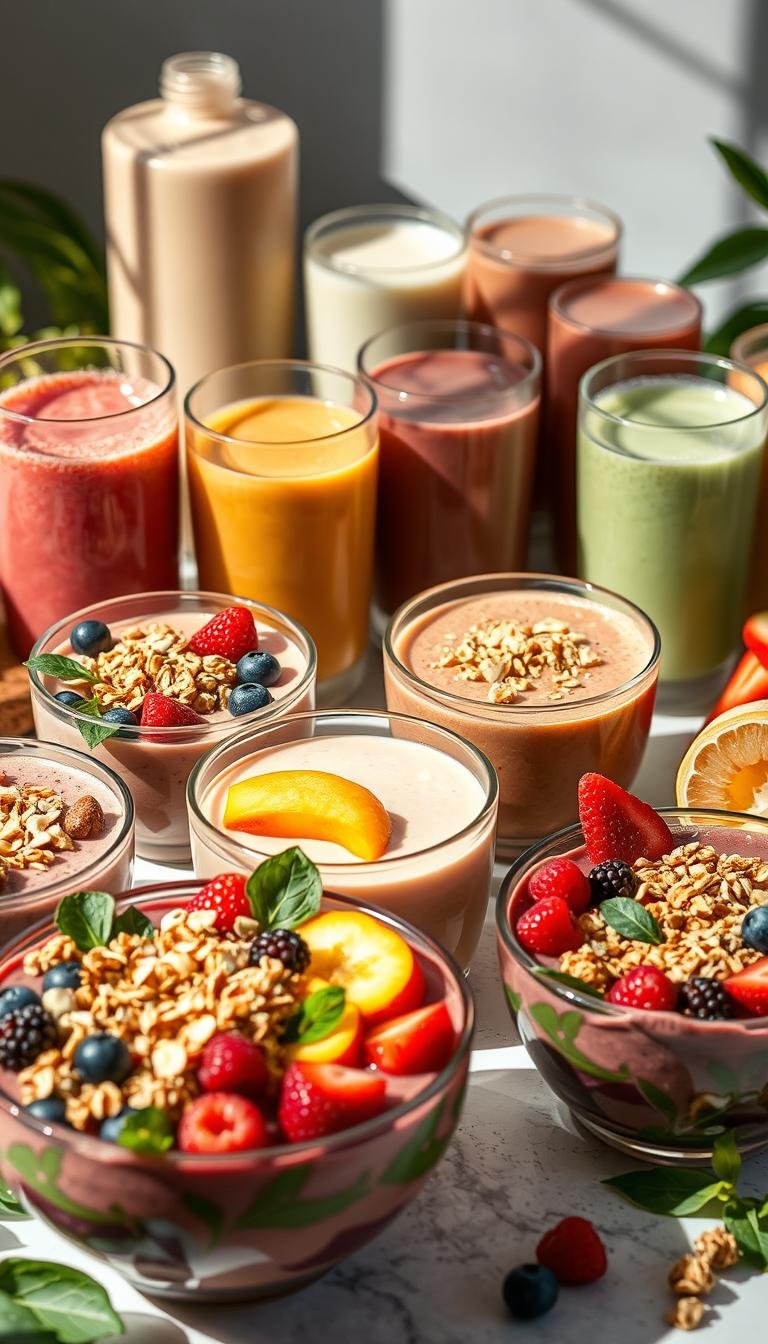
Healthy Smoothie Bowls & Protein Shakes Guide
Here’s a surprise: the average American gets more than 60% of daily calories from ultra-processed foods, yet a single balanced smoothie can deliver 20–40 grams of protein and several servings of produce in one cup. This guide shows how to turn that simple blend into a smart ally for energy, recovery, and fullness.
This Website contains affiliate links. That means I may earn a small commission if you purchase through my links, at no extra cost to you.
Think of this as your practical nutrition guide for Smoothie Bowls & Protein Shakes. We’ll unpack how to craft healthy smoothies and high-protein shakes with the right mix of protein, carbs, and fats. You’ll learn how to use fiber, hydration, and electrolytes to support steady energy and better workouts.
We align with targets supported by the Academy of Nutrition and Dietetics and the American College of Sports Medicine. You’ll see clear ranges for protein per serving, daily fiber goals, and ways to limit added sugars in line with FDA labeling. Every tip is built for U.S. kitchens and real-life schedules.
From breakfast smoothies to post-workout shakes, from meal replacement smoothies to smart smoothie bowl toppings, you’ll get simple steps for balanced smoothies that taste great and fit your fitness nutrition goals. Keep reading for proven methods, seasonal twists, and budget-friendly prep.
Key Takeaways
- Hit 20–40 g protein per serving to support recovery and satiety.
- Pack veggies and fruit for micronutrients while keeping added sugar low.
- Use fiber and healthy fats to steady energy and curb cravings.
- Choose liquids and texture to fit bowls or drinks without excess calories.
- Apply simple swaps and toppings for flavor, crunch, and balance.
- Follow evidence-informed tips suited to busy American kitchens.
- Build breakfast smoothies and post-workout shakes that perform.
What Makes a Smoothie Bowl or Protein Shake Healthy
Healthy blends rely on balanced macros and smart ingredients. Aim for a steady protein-carb-fat ratio that fuels energy without crashes. Choose nutrient-dense smoothies with low-added sugar to keep flavors bright and clean.
Macronutrient balance: protein, carbs, and healthy fats
Most adults do well with 20–30 g of protein, and up to 40 g for bigger builds or heavy training. Pair protein with 25–60 g of complex carbs for lasting energy, then add 10–20 g of healthy fats for satiety. This approach creates a solid protein-carb-fat ratio and supports blood sugar control.
Use Greek yogurt from Chobani or Fage, whey from Optimum Nutrition, or a pea blend like Vega for protein. Carbs can come from oats or frozen berries. For fats, mix in almond butter, avocado, chia, or flax to lock in balanced macros.
Micronutrient density from fruits, veggies, and superfoods
Pack in colorful produce to deliver key micronutrients. Blueberries, strawberries, and cherries bring vitamin C and polyphenols. Spinach, kale, zucchini, and cauliflower add vitamin K, folate, potassium, and magnesium.
Layer superfoods such as spirulina, matcha, cacao, turmeric, and ginger for extra antioxidants. These choices create nutrient-dense smoothies without excess sugar, helping maintain low-added sugar while enhancing flavor.
Fiber for fullness and blood sugar control
Target at least 6–10 g of dietary fiber per serving to support steady energy and appetite. Oats, chia, flax, psyllium, hemp hearts, and berries work well and blend smoothly.
More fiber slows digestion and supports blood sugar control, especially when paired with protein and fats. The mix improves texture, adds creaminess, and helps keep you full longer.
Hydration and electrolyte considerations
Choose base liquids that support hydration in smoothies. Water keeps calories low, while milk or fortified almond milk adds protein, calcium, and vitamin D. Coconut water offers potassium to replenish electrolytes after intense sessions.
In hot weather or long workouts, add a small pinch of salt and a banana to boost sodium and potassium. These additions maintain fluid balance and electrolytes without straying from a low-added sugar approach.
Nutritional Benefits for Energy, Recovery, and Satiety
Smart blends boost steady energy, speed muscle recovery, and support appetite control. A balanced mix also smooths glycemic response for training and daily focus, with endurance nutrition in mind.
Pre- and post-workout advantages
A pre-workout smoothie works best with easy carbs and light protein. Aim for fruit, oats, or honey with 10–20 g protein to prime endurance nutrition without stomach strain.
After training, a post-workout shake with 20–40 g protein and ample carbs helps refill glycogen. This timing supports repair and reduces next-day dips in power.
How protein supports muscle repair
Protein supplies the amino acids your body needs for muscle recovery. Choices rich in leucine—like whey isolate, Greek yogurt, and soy—spark muscle protein synthesis.
Many athletes pair whey from brands such as Optimum Nutrition or Fairlife with a banana or oats. That combo offers fast digestion, steady fuel, and a reliable leucine boost.
Role of antioxidants and anti-inflammatory ingredients
Berries, tart cherry, and cocoa provide antioxidants that help counter exercise stress. Green tea matcha, turmeric with black pepper, and ginger are notable anti-inflammatory foods.
Blend blueberries, tart cherry juice, or a teaspoon of cocoa with kefir or soy milk. This mix supports resilience and keeps sessions productive across a tough week.
Strategies to curb cravings and extend fullness
For satiety, combine 25–35 g protein with 8–12 g fiber and healthy fats. Chia, oats, and avocado slow digestion, while nut butter adds creamy staying power.
Use berries for a gentle glycemic response and sprinkle cinnamon or a dash of vanilla. These touches heighten sweetness, aid appetite control, and keep hunger in check.
Base Liquids and Texture: Finding the Right Consistency
Great blends start with smart liquid choices and careful texture control. Your base shifts flavor, protein, and thickness, and the right ratio turns a sip into a spoonable treat or a clean, drinkable shake.
Milk alternatives vs. dairy: taste, protein, and calories
Compare dairy vs plant milk by what your goal needs. Dairy milk at 2% brings about 8 grams of protein per cup and a creamy, neutral taste. Unsweetened soy milk lands close in protein and blends well with cocoa or berries.
Unsweetened almond milk is light in calories but low in protein, great when you want a thinner shake. Oat milk adds body and a malty note that suits peanut butter and banana. Check labels and choose unsweetened to keep sugars in check.
Using water, coconut water, and cold brew
Plain water keeps calories low but thins fast, so use less when you want a thick smoothie bowl. Coconut water adds potassium and a hint of sweetness that perks up tropical blends after a workout.
A cold brew smoothie offers gentle caffeine and a cocoa-like finish. Pair it with banana, oats, or peanut butter for a morning lift. Start with half cold brew and half milk to balance flavor and texture.
Thickening agents for bowls: frozen fruit, yogurt, avocado
For spoon-ready density, lean on frozen fruit, Greek yogurt, silken tofu, or ripe avocado. These add creaminess without watery ice. A high ratio of frozen bananas or mango creates structure that holds toppings.
To boost protein, use Greek yogurt or tofu. For silky richness, blend avocado with oat milk or soy milk. Pre-soaked oats or chia can also tighten a base without extra sweetness.
Ice vs. frozen produce and blender techniques
Choose frozen produce over ice to avoid dilution and keep flavors bold. If you add ice, pulse it last so you can fine-tune thickness. Small cubes give better texture control than large blocks.
- Start on low to form a vortex; ramp up slowly for smooth flow.
- Use a tamper on thick blends (Vitamix, Blendtec) and add liquid in small splashes.
- Pause to scrape sides and keep ingredients moving toward the blades.
- For a cold brew smoothie, add powders after liquids to prevent clumps.
| Base | Taste & Use | Protein (approx.) | Calories (approx.) | Best Pairings |
|---|---|---|---|---|
| Dairy milk (2%) | Creamy, neutral; great all-purpose | 8 g/cup | 120 kcal/cup | Cocoa, berries, peanut butter |
| Soy milk (unsweetened) | Mild, nutty; close to dairy in protein | 7–8 g/cup | 80–100 kcal/cup | Banana, cinnamon, espresso |
| Almond milk (unsweetened) | Light, subtle; low calorie | 1 g/cup | 30–40 kcal/cup | Greens, pineapple, ginger |
| Oat milk (unsweetened) | Malty, creamy; extra body | 2–4 g/cup | 90–120 kcal/cup | Banana, cocoa, dates |
| Coconut water | Lightly sweet; hydrating | 0–1 g/cup | 45–60 kcal/cup | Mango, lime, mint |
| Water | Neutral; thins texture | 0 g/cup | 0 kcal/cup | High-fiber greens, protein powders |
For reliable results, apply these blender tips: measure liquids first, add soft items next, finish with frozen fruit on top, then blend from low to high. Stop early for a thick smoothie bowl, or add small splashes of almond milk or oat milk for a sippable finish. This approach keeps flavor strong while giving you precise texture control in every pour.
Choosing Protein Sources for Different Goals
Match your shake to your goal. For quick recovery in sports nutrition, fast-digesting options shine. For steady fullness, slower proteins work better. Always check the protein per serving and choose powders with third-party testing such as NSF Certified for Sport or Informed Choice.
Whey, casein, and dairy-based options
Whey isolate absorbs fast and is rich in leucine, making it ideal right after training. Casein protein digests slowly, which helps curb hunger and supports overnight repair. Whole-food dairy picks like Greek yogurt protein, skyr, and cottage cheese add calcium and a creamy texture to bowls and shakes.
If you track macros, compare protein per serving on the label. Many dairy choices deliver 20–30 grams, which suits most recovery needs in sports nutrition.
Plant proteins: pea, soy, hemp, rice, and blends
Plant-based protein powder can be tailored to taste and goals. Pea protein brings a strong lysine profile and blends well with fruit. Soy protein offers a complete amino acid profile and performance data that rivals whey in many studies. Hemp adds a nutty note and omega-3 ALA, while rice protein is gentle on digestion.
Blends of pea protein and rice can improve amino balance and texture. For flavor variety, many athletes rotate soy protein and pea protein across the week.
Collagen, egg white, and whole-food proteins
Collagen peptides support tendons and skin but are low in essential amino acids, so pair them with whey isolate, soy protein, or Greek yogurt protein. Egg white protein is lactose-free, complete, and has a clean taste in smoothies.
Whole-food add-ins such as milk, kefir, tofu, and nut butters raise total protein per serving, though nut butters have a lower protein-to-calorie ratio. Aim for balance so texture, taste, and macros align.
How much protein per serving based on activity level
For most adults, plan 20–30 grams of protein per serving in a shake or bowl. Larger or strength-focused athletes can use 30–40 grams, depending on session length and intensity. Daily needs range from about 0.6–0.8 g/kg for light activity to 1.2–2.0 g/kg for higher training loads.
To personalize intake, consider timing around workouts, total daily targets, and how each choice—casein protein, egg white protein, or plant-based protein powder—fits your sports nutrition plan.
Smoothie Bowls & Protein Shakes
Think about the smoothie bowl vs shake choice as a lifestyle fit. A bowl invites you to slow down and practice mindful eating, while a shake suits quick fuel on the go. Both can be tailored with flavor balancing, portion control, and smart add-ins.
When to choose a bowl versus a drink
Pick a bowl when you want a sit-down meal with higher viscosity and toppings that encourage chewing. It helps appetite cues and mindful eating. Choose a shake before or after training when you want fast digestion and easy sipping.
On busy days, a shake travels well in a Hydro Flask or BlenderBottle. On slower mornings, a bowl shines with texture layering and a calm pace at the table.
Portion sizes and calorie awareness
Portion control keeps calorie density in check. For a meal, aim for 350–600 kcal; for a snack, 150–300 kcal, adjusted to your goals. Bowls with nuts, granola, and nut butter can pass 500–700 kcal fast.
Use measuring spoons for add-ons and pour shakes into a 12–16 oz bottle to avoid creep. This supports low-sugar smoothies and steady energy.
Layering textures: crunchy, creamy, and juicy elements
Texture layering boosts satisfaction without excess volume. Start with a thick base of frozen fruit and Greek yogurt, then add creamy swirls like almond or peanut butter. Finish with crunchy granola, walnuts, or pumpkin seeds, and juicy toppers such as strawberries or pomegranate arils.
Small amounts of bold flavors—cacao nibs or toasted coconut—deliver big impact with modest calorie density. This approach fits both a smoothie bowl vs shake routine.
Balancing sweetness and flavors without excess sugar
Favor low-sugar smoothies by leaning on ripe banana, berries, and spices. Cinnamon, nutmeg, vanilla extract, cocoa powder, and a squeeze of lemon or lime sharpen flavor balancing without syrups.
Blend, taste, and adjust with citrus or salt to round edges. A few drops of vanilla or a dusting of cocoa can fix flat notes while supporting portion control and mindful eating.
| Choice | Best For | Texture Strategy | Target Calories | Low-Sugar Tips |
|---|---|---|---|---|
| Bowl | Sit-down meals, slower pace, mindful eating | Thick base + creamy swirls + crunchy nuts/granola + juicy berries | 350–600 kcal meal; monitor calorie density with toppings | Use ripe fruit, cinnamon, vanilla, cocoa, citrus; keep syrups minimal |
| Shake | Portability, pre/post-workout, quick digestion | Smooth, drinkable blend; light ice for body | 150–300 kcal snack or goal-based meal sizing | Favor berries, unsweetened milk, spices; adjust with lemon or lime |
Low-Sugar and Low-Glycemic Strategies
Keep smoothies steady on blood sugar without losing flavor. Build low-glycemic smoothies that taste bright and feel satisfying. Aim for diabetic-friendly smoothies that favor balance, texture, and smart add-ins for better glycemic control.
Fruit choices with lower impact on blood sugar
Choose berries low GI like strawberries, blueberries, and raspberries. Cherries, kiwi, and green apples also work well. Limit mango and pineapple, or pair small amounts with protein and healthy fats to blunt the rise.
- Start with 1 cup mixed berries, then adjust to taste.
- Add a few slices of green apple for crisp sweetness.
- If using tropical fruit, keep it to 1/3 cup and add extra fiber.
Sweetening with dates, stevia, or monk fruit
When you need more sweetness, practice dates moderation. One to two Medjool dates add fiber and minerals. For fewer carbs, reach for non-nutritive sweeteners like stevia or monk fruit to keep diabetic-friendly smoothies on track.
- Blend one pitted date first, taste, then decide on a second.
- Use a pinch of cinnamon or unsweetened cocoa for perceived sweetness.
- Check plant milks and yogurts for added sugar on the label.
Adding fiber and fat to slow glucose spikes
Turn simple blends into fiber-rich smoothies with chia gel, psyllium, or oat beta-glucans. Combine 20–30 g protein with healthy fats like almond butter, peanut butter, flaxseed, or chia to support glycemic control.
- Stir 1 tablespoon chia into water to form a gel before blending.
- Add 1–2 tablespoons nut or seed butter for staying power.
- Pair with Greek yogurt or a whey, pea, or soy protein scoop for steadier energy.
These small shifts stack up. With thoughtful fruit picks, light sweetness, and a base of fiber and fat, low-glycemic smoothies become everyday staples that feel indulgent yet keep you steady.
High-Protein Meal Replacement Ideas
A smart meal replacement shake can keep energy steady and hunger in check. Aim for a balanced macros smoothie that feels satisfying, blends fast, and travels well for a workday breakfast.
Macros for a balanced meal in a glass or bowl
Target 25–35 g protein, 40–60 g carbs from complex sources, 10–20 g fat, and 8–12 g fiber. Stack Greek yogurt protein or cottage cheese with a clean protein powder like Optimum Nutrition Gold Standard, Momentous, or NOW Sports to hit the protein range.
Layer produce for micronutrients and texture. Keep blends cold and thicker if you plan to spoon them as a bowl. Thin with milk or a dairy-free base when you need a quick sip.
Using oats, chia, and Greek yogurt for staying power
Use oats in smoothies for beta-glucan fiber and slow carbs. Stir 1–2 tablespoons chia into a blend or let it sit for a chia pudding smoothie effect that holds you longer. Greek yogurt protein adds creaminess and calcium without excess sugar.
Example ideas: a chocolate–peanut butter banana meal replacement shake with whey isolate, oats, chia, and a handful of spinach; or a berry bowl featuring pea protein, oats, and almond butter.
Portable prep for busy mornings and workdays
For make-ahead smoothies, build freezer packs with fruit, greens, oats, and seeds. Add liquid and protein powder at blend time. For a grab-and-go workday breakfast, blend the night before, add a squeeze of lemon to green mixes, refrigerate up to 24 hours, and shake before drinking.
Keep bowls thicker to reduce separation, and store in insulated containers if commuting. Add ice or frozen produce at blend time for a colder sip without watering down flavor.
| Recipe Idea | Key Ingredients | Approx. Macros | Fiber Focus | Prep Tip |
|---|---|---|---|---|
| Chocolate PB Banana Shake | Whey isolate, banana, rolled oats, chia, natural peanut butter, spinach, milk | 30 g protein, 55 g carbs, 14 g fat | 10 g from oats + chia | Freeze banana and spinach; add whey at blend time |
| Berry Greek Yogurt Bowl | Greek yogurt, pea protein, mixed berries, rolled oats, almond butter | 35 g protein, 50 g carbs, 16 g fat | 9 g from oats + berries | Blend thick; top with extra berries right before serving |
| Green Citrus Protein Smoothie | Cottage cheese, vanilla protein, pineapple, orange segments, ground flax, spinach, coconut water | 28 g protein, 48 g carbs, 12 g fat | 8 g from flax + greens | Add lemon juice to preserve color; chill in insulated bottle |
| Mocha Oat Energizer | Casein protein, cold brew, rolled oats, cacao powder, chia, unsweetened almond milk | 32 g protein, 45 g carbs, 10 g fat | 9 g from oats + chia | Soak oats 10 minutes for extra-smooth texture |
Keywords integrated: meal replacement shake, balanced macros smoothie, oats in smoothies, chia pudding smoothie, Greek yogurt protein, make-ahead smoothies, workday breakfast.
Greens and Vegetables That Blend Smoothly
Want extra nutrients without a bitter sip? Aim for green smoothies that stay bright, creamy, and clean in taste. Pair tender greens and mild vegetables with fruit, acids, and warm spices to keep the flavor balanced and the texture silky.
Spinach, kale, zucchini, and cauliflower tips
A spinach smoothie blends soft and sweet when matched with banana, mango, or berries. Choose baby leaves for a tender mix and fewer fibrous bits.
A kale smoothie is richer in vitamins K, A, and C. Use lacinato kale, remove stems, and brighten with pineapple or orange to keep it fresh, not grassy.
Try zucchini in smoothies for body and fewer sugars. Peel for a neutral taste. Fresh or frozen pieces thicken a shake without stealing the spotlight.
A cauliflower rice smoothie adds creaminess and fiber while staying low in carbs. Steam florets or riced pieces first, then freeze to tame sulfur notes and speed blending.
Flavor-masking with citrus, herbs, and spices
Flavor masking is simple: add lemon or lime juice for snap, or orange segments for gentle sweetness. Fresh mint or basil cools earthy tones fast.
Ginger or turmeric with a pinch of black pepper brings warmth and cuts bitterness. Cinnamon, vanilla, or cocoa rounds out edges and adds dessert-like depth.
Freezing and steaming techniques for smooth texture
Use frozen veggies for thicker blends and less ice melt. Pack portions flat in freezer bags, then break off what you need for fast, even blending.
Choose steamed veggies for smoothies when working with sturdy greens or cauliflower. Lightly steam, cool, and freeze to soften fibers and deliver a velvety pour.
| Ingredient | Best Prep | Taste Tips | Texture Outcome | Quick Pairings |
|---|---|---|---|---|
| Baby Spinach | Raw or lightly steamed, then frozen | Blend with banana or berries for mild sweetness | Silky, no grit | Banana, mango, vanilla |
| Lacinato Kale | Destem; steam 1–2 minutes; freeze | Brighten with citrus to balance earthiness | Thick, smooth after steaming | Pineapple, lime, ginger |
| Zucchini | Peeled; raw or frozen coins | Neutral base; use herbs for lift | Creamy body, light flavor | Mint, basil, lemon |
| Riced Cauliflower | Steam; cool; freeze in portions | Add cocoa or cinnamon to mellow notes | Dense and creamy | Cocoa, cinnamon, orange |
| Mixed Greens | Rinse; spin dry; freeze flat | Boost with lime and vanilla | Even blend, chilled | Lime, vanilla, mango |
Pro move: Combine frozen veggies with a ripe fruit and a splash of citrus, then add herbs or spices at the end. This sequence sharpens flavor masking and keeps your green smoothies smooth and bright.
Healthy Fats and Toppings That Add Crunch
Layering healthy fats into bowls and shakes builds flavor, texture, and staying power. Aim for small, measured portions so taste and crunch shine without runaway calorie density.
Nut and seed butters for richness
A peanut butter smoothie or a swirl of almond butter adds creaminess and a mellow nut aroma. Choose no-sugar-added jars from trusted brands like Smucker’s Natural or Justin’s to keep the focus on nuts.
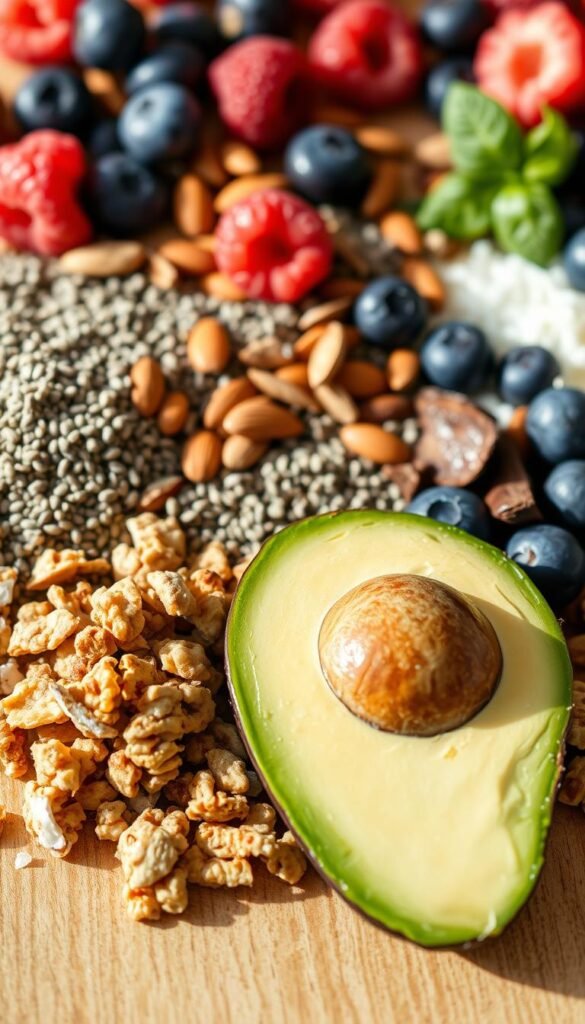
Most nut and seed butters deliver about 8–10 g of fat and 3–4 g of protein per tablespoon. That boost of healthy fats slows digestion and helps fat-soluble vitamins absorb.
Chia, flax, hemp, and pumpkin seeds
Chia seeds thicken when blended and bring about 10 g of fiber per two tablespoons. Ground flaxseed offers lignans and fiber; grind fresh to improve bioavailability.
Hemp hearts add soft crunch with roughly 10 g of protein per three tablespoons and a balanced omega profile. Pumpkin seeds supply magnesium and iron with a toasty snap.
Granola and cacao nibs in moderation
A light granola topping gives a crisp finish and whole-grain depth. Keep it to one or two tablespoons or pick low-sugar blends from brands like KIND or Purely Elizabeth.
Cacao nibs add bold cocoa bite and polyphenols with minimal sugar. Their firm crunch pairs well with banana, berries, or a peanut butter smoothie base.
How toppings affect calories and satiety
Fats increase fullness by slowing gastric emptying, but portions matter. Toasting nuts or seeds boosts aroma so smaller amounts feel satisfying while managing calorie density.
Measure with a teaspoon or a digital scale. A consistent scoop keeps macros steady and helps you repeat results day after day.
| Topping | Key Perks | Suggested Use | Flavor & Texture Notes |
|---|---|---|---|
| Almond butter | Healthy fats, 3–4 g protein/Tbsp | 1 Tbsp blended or drizzled | Roasted nut taste, creamy body |
| Chia seeds | ~10 g fiber/2 Tbsp, omega-3 ALA | 1–2 Tbsp; hydrate for thickness | Gel-like set, mild flavor |
| Flaxseed (ground) | Lignans, fiber; better absorbed ground | 1 Tbsp stirred in post-blend | Nutty, subtle grit if not fully ground |
| Hemp hearts | ~10 g protein/3 Tbsp, omega balance | 1–2 Tbsp sprinkled on top | Soft crunch, buttery finish |
| Pumpkin seeds | Magnesium, iron, satisfying crunch | 1 Tbsp toasted as a topper | Toasty, savory-sweet bite |
| Granola topping | Whole grains, texture contrast | 1–2 Tbsp to cap a bowl | Crisp clusters, lightly sweet |
| Cacao nibs | Polyphenols, minimal sugar | 1 tsp for a cocoa crunch | Bold, bitter-chocolate snap |
Budget-Friendly Shopping and Prep
Stretch your dollar without sacrificing taste or nutrition. Smart buying, smart storage, and a simple system turn budget smoothies into a daily habit. Aim for steady frozen fruit savings, stock reliable Costco smoothie ingredients, and lean on Aldi produce for weeknight wins.
Frozen vs. fresh produce to save money
Frozen fruit and veggies are picked ripe and flash-frozen, which helps lock in nutrients. You also use only what you need, so waste drops and costs fall.
- Compare unit prices on berries, mango, spinach, peas, and mixed fruit at Costco, Sam’s Club, Trader Joe’s, and Aldi.
- Buy seasonal fresh fruit locally, then freeze extras for later freezer packs.
- Keep bulk oats, chia, flax, cocoa, and spices on hand for quick meal prep smoothies.
Buying protein powder smartly
Look at price per 20–30 g of protein, not just the sticker price. Scan ingredient lists for minimal additives and choose flavors you’ll actually use.
- Seek third-party testing such as NSF Certified for Sport or Informed Choice for quality assurance.
- Large tubs of wholesale protein powder can cut costs if you tolerate them well.
- Use coupons and store brands; watch sales on Greek yogurt and milk alternatives to round out Costco smoothie ingredients.
Batch-prepping freezer smoothie packs
Assemble grab-and-blend kits for speed and control. This method supports budget smoothies and consistent quality.
- In reusable silicone bags, add 1–1½ cups frozen fruit or veg, ½ banana or zucchini, 1–2 tablespoons seeds, and spices.
- Label with the date; stash the freezer packs flat for easy stacking.
- At blend time, pour in your liquid, add protein, and go—perfect for meal prep smoothies.
| Item | Smart Buy Tip | Why It Saves | Use Case |
|---|---|---|---|
| Berries (frozen) | Compare unit price at Costco, Aldi, and Trader Joe’s | Lower cost per cup and less waste | Base for bowls with steady frozen fruit savings |
| Spinach or kale | Bulk tubs or frozen bricks | Longer shelf life and easy portioning | Greens boost in budget smoothies |
| Protein powder | Price per 20–30 g protein; third-party tested | Fewer scoops for the same protein | Daily shakes with wholesale protein powder |
| Seeds (chia, flax, hemp) | Buy in bulk; store airtight | Lower unit cost; multi-use | Thickener, fiber, and omega-3s |
| Silicone bags | Reusable, label by date | Less single-use plastic | Pre-portioned freezer packs |
Blend thrift with taste: pick Aldi produce for everyday value, keep a core list of Costco smoothie ingredients, and set aside 15 minutes to build freezer packs. The small routine pays off in faster, cheaper meal prep smoothies all week.
Seasonal Flavor Combos for Year-Round Variety
Let seasonal produce guide your blender. Rotating ingredients keeps nutrients varied and gives your palate fresh flavor combinations. Frozen fruit and veg help you enjoy seasonal smoothies even when items are out of season.
Use this simple rhythm: brighten spring, chill summer, cozy fall, and warm winter. Each wave has its own balance of acidity, sweetness, spice, and texture so your bowl or shake stays satisfying.
Spring greens and citrus blends
Build a spring citrus smoothie with baby spinach, parsley or mint, cucumber, green apple, and a squeeze of lemon or lime. Kefir or coconut water adds light body and tang.
Grate fresh ginger for a clean kick. These flavor combinations cut bitterness while keeping the sip crisp and hydrating.
Summer berry and tropical mixes
For a summer tropical smoothie, blend strawberries, blueberries, blackberries, peaches, watermelon, mango, and pineapple. Lime and fresh basil balance sweetness.
Add whey isolate or pea protein to steady energy on hot days. This approach turns seasonal smoothies into portable fuel for busy mornings.
Fall spices with pumpkin and apple
Create a fall pumpkin spice smoothie with unsweetened pumpkin puree and roasted or steamed apple. Stir in cinnamon, nutmeg, cloves, and vanilla for a pie-like aroma.
Blend with oats and Greek yogurt, then swirl in pecan or almond butter. The result is creamy, steady, and rich in fiber.
Winter citrus, cocoa, and warming add-ins
A winter cocoa smoothie shines with oranges, clementines, cranberries, and cocoa or cacao. If not on interacting meds, grapefruit adds vivid bite.
Cinnamon, turmeric, cardamom, and ginger bring gentle heat. These flavor combinations taste bright yet comforting in colder months.
| Season | Core Produce | Key Accents | Protein & Base | Texture Tips |
|---|---|---|---|---|
| Spring | Spinach, cucumber, green apple, lemon/lime | Parsley or mint, ginger | Kefir or coconut water | Use half frozen apple for chill without ice |
| Summer | Strawberries, blueberries, blackberries, peaches, mango, pineapple, watermelon | Lime, fresh basil | Whey isolate or pea protein, water or almond milk | Freeze berries for a spoonable bowl |
| Fall | Pumpkin puree, apple | Cinnamon, nutmeg, cloves, vanilla | Greek yogurt, oats | Blend nuts or nut butter for a silky finish |
| Winter | Oranges, clementines, cranberries, grapefruit (as appropriate) | Cocoa or cacao, cinnamon, turmeric, cardamom, ginger | Milk or oat milk, collagen optional | Warm the milk slightly for cozy sips |
Keep a freezer stash of berries, mango, pumpkin, and cranberries to make seasonal smoothies anytime. Whether you crave a spring citrus smoothie, a summer tropical smoothie, a fall pumpkin spice smoothie, or a winter cocoa smoothie, thoughtful flavor combinations and smart seasonal produce choices keep your routine vibrant and balanced.
Kid-Friendly and Family-Safe Options
Start with flavors kids know and love. Strawberry-banana, blueberry vanilla, and peanut butter with cocoa make easy kid-friendly smoothies that blend smooth and sip clean. For school-safe nut-free needs, swap in sunflower seed butter or tahini. Choose oat milk or soy milk for dairy-free options and keep safe ingredients top of mind from pantry to blender.
Use hidden veggies that taste mild and blend silky. Spinach, zucchini, and steamed cauliflower disappear under ripe fruit and a touch of vanilla. Keep added sugar low; lean on sweet bananas or a few soft dates. Avoid honey for children under 1 year, following CDC guidance.
For toddler smoothies, aim for a creamy, drinkable texture. Serve small portions and offer a spoon or straw. Picky eater smoothies benefit from extra blending time and cold ingredients, which soften flavors. Limit caffeine and strong spices so family smoothies stay gentle and calm.
Teens in sports may need more protein at practice. Build 20–25 g with whey, soy, or Greek yogurt, and adjust to pediatric guidance. Pack blends in an insulated container and chill so they stay fresh until lunch or pickup.
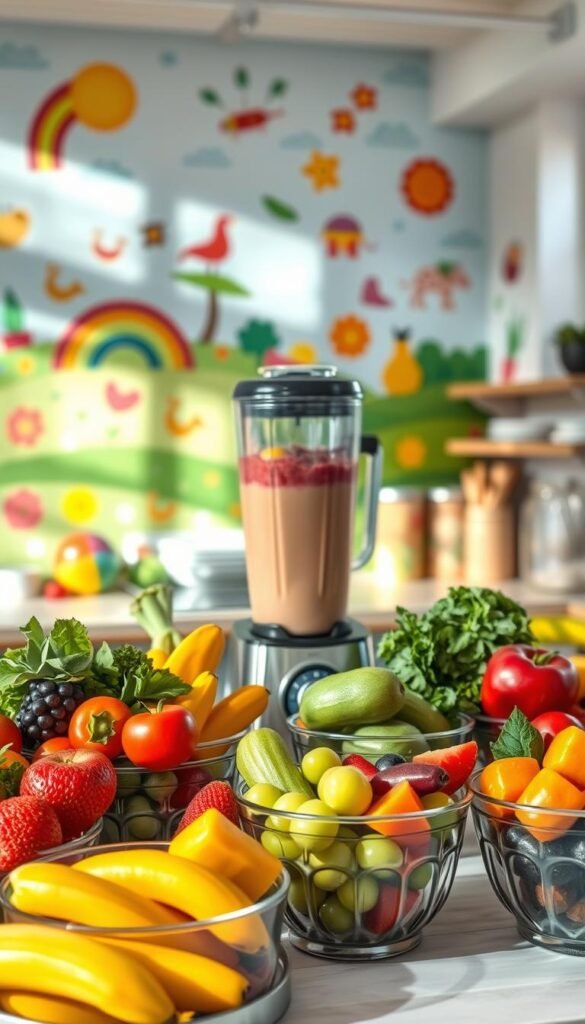
- Strawberry-Banana Smoothie: Strawberries, banana, oat milk, spinach for hidden veggies, ice.
- Blueberry Vanilla Smoothie: Blueberries, vanilla yogurt or soy yogurt, zucchini, soy milk.
- Sunflower Cocoa Smoothie: Sunflower seed butter for school-safe nut-free needs, banana, cocoa powder, dates, oat milk.
- PB-Style Swap: For dairy-free options, combine tahini, banana, cinnamon, and soy milk for creamy toddler smoothies.
Keep toppings playful yet light. Offer sliced fruit, granola, or yogurt chips on bowls and portion modestly. This keeps picky eater smoothies fun without piling on extra calories, while safe ingredients support busy mornings and after-school swings.
| Blend | Main Flavor | Allergy-Safe Swap | Veggie Add-In | Protein Ideas | Best For |
|---|---|---|---|---|---|
| Strawberry-Banana | Fresh, sweet | Oat milk for dairy-free options | Spinach | Greek yogurt or soy protein | Kid-friendly smoothies |
| Blueberry Vanilla | Berry, mellow vanilla | Soy yogurt for dairy-free options | Zucchini | Whey, soy, or hemp protein | Picky eater smoothies |
| Sunflower Cocoa | Chocolatey | Sunflower seed butter for school-safe nut-free | Steamed cauliflower | Pea protein or Greek yogurt | Family smoothies |
| Tahini Banana | Nutty, cinnamon | Tahini keeps it school-safe nut-free | Spinach | Silken tofu or whey | Toddler smoothies |
“If it tastes familiar and feels smooth, kids will drink it.”
Common Mistakes and How to Fix Them
Even well-stocked kitchens run into smoothie mistakes. A little smoothie troubleshooting can save time, money, and flavor. Use these quick fixes to reduce sugar smoothie issues, fix watery smoothie textures, increase protein, and balance flavors without losing that fresh taste.
Too much sugar or fruit overload
Cap fruit at about 1 to 1½ cups. Favor berries and citrus to reduce sugar smoothie spikes. Choose unsweetened almond milk, soy milk, or dairy, and skip sweetened yogurts from brands like Yoplait and Chobani when possible.
Add protein and fat to steady energy: Greek yogurt from Fage, plain kefir, or a scoop of whey isolate. A teaspoon of peanut butter or almond butter also helps balance flavors and keep you full.
Thin or watery texture problems
To fix watery smoothie blends, start by cutting liquid by a quarter. Use frozen fruit or steamed-then-frozen cauliflower or zucchini. Add ice at the end to fine-tune chill without diluting taste.
Thicken with oats, chia seeds, Greek yogurt, or avocado. Begin blending on low, then ramp to high for 20–30 seconds to emulsify. This simple smoothie troubleshooting step creates a creamy finish.
Insufficient protein or fiber balance
Increase protein to reach 20–30 grams: add whey isolate, casein, or plant blends from brands like Optimum Nutrition, Orgain, or Vega. Soy milk and silken tofu also fit well in the base.
Boost fiber to 8–12 grams with chia, ground flax, oats, berries, and leafy greens. The combo helps curb hunger and smooths blood sugar response while supporting a thicker texture.
Flavor clashes and how to rebalance
When bitter greens overpower, add a squeeze of lemon or lime. If it tastes flat, a pinch of salt rounds edges and can balance flavors fast. For sharp notes, a hint of vanilla, cinnamon, or fresh mint adds lift.
Too chalky from protein powder? Blend longer, then add half a banana or a spoon of yogurt. If needed, switch styles—whey isolate is often smoother than some plant powders—another smart move in smoothie troubleshooting.
Blenders, Tools, and Storage
Power matters when you want thick bowls and smooth greens. Many home cooks call a Vitamix the best blender for smoothies because the motor, steel blades, and tamper drive tough blends fast. A Blendtec also excels with fibrous veggies and frozen fruit. If you want value, a Ninja blender handles daily shakes and crushed ice well. For quick single servings, a personal blender like NutriBullet or Ninja Fit gets the job done without fuss.
Control your texture. Use a tamper to keep mixtures moving and a flexible spatula to scrape the sides so nothing goes to waste. Simple meal prep tools—measuring cups, digital scale, and prep bowls—help you repeat wins and keep macros steady.
Choose containers that fit your routine. Smoothie cups are handy on busy mornings. Glass mason jars with airtight lids are great for fridge time. When you need to keep a shake cold, insulated bottles such as Hydro Flask or YETI hold temperature and protect flavor.
Fresh blends keep well for 12–24 hours in the refrigerator. For smarter smoothie storage, fill containers to the brim to limit air, add a squeeze of lemon, and chill right away. If separation happens, a quick shake or re-blend brings it back.
For longer holds, freeze in portions. Silicone trays and freezer-safe jars make it easy to thaw just what you need. Move portions to the fridge the night before, then blend with a splash of liquid in the morning.
Clean-up is simple: rinse right after pouring, then blend warm water with a drop of dish soap, rinse again, and air-dry. Keep a small pantry of add-ins—spices, cocoa, chia, flax, and hemp—near your blender so your meal prep tools and flavors are always within reach.
Conclusion
Healthy Smoothie Bowls & Protein Shakes work best when they are simple, deliberate, and balanced. Aim for 20–30 g of protein, a cup or more of colorful produce, and measured healthy fats with fiber to steady energy and curb hunger. Choose base liquids that match your calorie and protein goals, then use frozen fruit and good blender technique for a thick, creamy finish. This is the core nutrition takeaway for building balanced smoothies you will actually enjoy.
Tailor recipes to your day: quick carbs and electrolytes before a workout, and higher protein with antioxidants after. Keep sugars in check with berries, citrus, or a touch of stevia or monk fruit. For meal prep smoothies, add oats, chia, or Greek yogurt for staying power. Rotate seasonal flavors so variety stays high while effort stays low.
Mind portions, especially toppings like granola, nut butter, and cacao nibs. Adjust acidity, sweetness, and texture with lemon, a pinch of salt, or a few ice cubes until the blend tastes right. Stock a reliable blender, freezer containers, and shaker bottles; read labels and choose third-party-tested proteins from trusted brands such as Optimum Nutrition or Garden of Life for quality. These dietitian-approved tips help you practice healthy smoothie habits that support everyday health, fitness smoothies for performance, and Smoothie Bowls & Protein Shakes that fit real life.
FAQ
What makes a smoothie bowl or protein shake “healthy”?
A healthy build balances macronutrients and micronutrients. Aim for 20–30 g protein (up to 40 g for larger or highly active adults), complex carbs, and 10–20 g healthy fats. Pack in colorful produce for vitamins A, C, K, folate, potassium, and magnesium, plus polyphenols from berries, cacao, turmeric, and ginger. Keep added sugars low by using unsweetened liquids and whole fruit.
How much protein should I include per serving?
Most adults do well with 20–30 g protein per shake or bowl. Strength-focused or larger individuals may choose 30–40 g. Use whey or soy for higher leucine, or Greek yogurt, skyr, pea protein, or egg white protein to hit targets.
What are the best protein sources for different goals?
For fast recovery, whey isolate is highly bioavailable and rich in leucine. For satiety or evening blends, casein or cottage cheese digest slowly. Plant-forward options include soy isolate, pea, and pea-rice blends; hemp adds omega-3 ALA. Collagen supports connective tissue but should be paired with a complete protein.
How do I balance carbs, protein, and fats?
Use a simple template: protein 20–30 g, carbs 25–60 g based on activity, fats 10–20 g. Examples include whey or pea protein, oats or banana for carbs, and chia, flax, avocado, or nut butter for healthy fats.
Which fruits and veggies boost micronutrient density?
Blueberries, strawberries, cherries, spinach, kale, zucchini, and cauliflower add vitamins, minerals, and antioxidants. Superfoods like spirulina, matcha, cacao, turmeric, and ginger raise polyphenol content.
How much fiber should I target in a smoothie or bowl?
Aim for at least 6–10 g per serving to support fullness and glycemic control. Add oats, chia, flax, psyllium, hemp hearts, berries, or riced cauliflower to reach that range.
What should I drink before and after workouts?
Pre-workout, choose easy carbs with 10–20 g protein for steady energy. Post-workout, include 20–40 g high-quality protein and 0.5–1.2 g/kg carbs within two hours to support recovery and glycogen replenishment.
How do antioxidants and anti-inflammatory ingredients help?
Berries, tart cherry, cocoa flavanols, matcha catechins, turmeric (with black pepper), and gingerols may reduce exercise-induced oxidative stress and soreness. They also add flavor without added sugar.
How can I curb cravings and stay fuller longer?
Combine 25–35 g protein, 8–12 g fiber, and 10–15 g fat. Use low-glycemic fruits like berries, add chia or oats for viscosity, and include nut butter or avocado. Cinnamon and vanilla boost sweetness perception.
What base liquid should I use for the right texture and nutrition?
Dairy milk and kefir add complete protein and calcium. Unsweetened soy milk offers comparable protein; almond milk is light in calories; oat milk adds creaminess. Water keeps calories low, coconut water brings potassium, and cold brew adds caffeine and a mocha note.
How do I make a thick smoothie bowl?
Use a high ratio of frozen fruit, Greek yogurt or skyr, silken tofu, or avocado. Add liquids gradually, start blending on low, and use a tamper. Prefer frozen produce over ice to avoid dilution.
Are milk alternatives good for protein?
Unsweetened soy milk provides about 7–8 g protein per cup, similar to dairy milk. Almond and many oat milks are lower in protein; check labels and choose unsweetened versions to limit added sugar.
When should I choose a bowl versus a drink?
Pick a bowl for a sit-down meal with crunchy toppings and mindful eating. Choose a shake for portability and faster digestion, especially pre- or post-workout.
How do I manage portion sizes and calories?
For meals, aim for 350–600 kcal; for snacks, 150–300 kcal. Measure caloric toppings like nut butter and granola, and cap fruit at about 1–1½ cups.
How can I balance sweetness without adding sugar?
Rely on ripe fruit, spices like cinnamon and nutmeg, vanilla extract, cocoa powder, and a squeeze of citrus. Use small amounts of dates, stevia, or monk fruit as needed.
What fruits are lower glycemic for stable blood sugar?
Choose strawberries, blueberries, raspberries, cherries, kiwi, and green apples. Balance tropical fruits such as mango or pineapple with protein and fiber to moderate the impact.
How do fiber and fat help control glucose spikes?
Viscous fibers from chia, psyllium, and oats slow digestion, while fats from flax, nut butter, or avocado reduce peak glucose by slowing gastric emptying.
What are smart meal-replacement macros?
Build around 25–35 g protein, 40–60 g carbs, 10–20 g fat, and 8–12 g fiber. Combine Greek yogurt or cottage cheese with protein powder, oats, chia or flax, and colorful produce.
How can I prep smoothies for busy mornings?
Batch freezer packs with fruit, greens, oats, seeds, and spices. Add liquid and protein powder when blending. For grab-and-go, blend the night before and store cold in an insulated bottle.
Which greens and vegetables blend smoothly?
Baby spinach is mild and blends invisibly. Lacinato kale works if destemmed and balanced with citrus. Zucchini and steamed-then-frozen cauliflower add body with minimal flavor.
How do I mask strong vegetal flavors?
Add lemon or lime, orange segments, fresh mint or basil, ginger, turmeric with black pepper, cinnamon, vanilla, or cocoa. A pinch of salt can round bitterness.
What healthy fats and crunchy toppings should I use?
Peanut, almond, or cashew butter add richness. Chia, flax, hemp hearts, and pumpkin seeds bring fiber, protein, magnesium, and omega-3s. Use granola and cacao nibs in measured portions.
How do toppings affect calories and fullness?
Toppings add up quickly. Measure 1–2 tablespoons for dense items. Fats increase satiety and help absorb fat-soluble vitamins A, D, E, and K.
How can I save money on smoothie ingredients?
Buy frozen produce in bulk at Costco, Sam’s Club, Trader Joe’s, or Aldi. Choose seasonal fresh fruit and freeze extras. Keep staples like oats, chia, flax, and cocoa in bulk containers.
What should I look for when buying protein powder?
Compare cost per 20–30 g protein, choose minimal-ingredient formulas, and look for third-party testing such as NSF Certified for Sport or Informed Choice. Select flavors you’ll use often.
What are great seasonal flavor ideas?
Spring: greens with citrus and mint. Summer: berries, peach, or mango with lime and basil. Fall: pumpkin, apple, cinnamon, and vanilla with oats. Winter: oranges, cranberries, cocoa, ginger, and cardamom.
How can I make kid-friendly, allergy-aware blends?
Use familiar flavors like strawberry-banana or peanut butter and cocoa. Hide veggies with spinach, zucchini, or steamed cauliflower. For nut-free, swap sunflower seed butter or tahini and use oat or soy milk. Avoid honey for children under 1 year.
What are common smoothie mistakes and easy fixes?
Too much sugar? Cap fruit and choose unsweetened liquids. Watery texture? Reduce liquid and add frozen produce, oats, chia, or Greek yogurt. Low protein or fiber? Add a measured scoop of protein, yogurt, tofu, chia, flax, or oats.
How do I fix flavor clashes or chalky texture?
Use acidity (lemon, lime), a pinch of salt, or a touch of sweetness (half a date, stevia) to rebalance. Blend longer, add banana or yogurt, or try a different protein type like whey isolate or a smoother pea blend.
What blender and storage options work best?
High-performance blenders like Vitamix or Blendtec handle thick bowls; midrange options like Ninja and personal units like NutriBullet are convenient. Store in glass mason jars, Hydro Flask, YETI, or BPA-free shaker bottles. Keep cold and fill to the brim to reduce oxidation.
How long do smoothies keep, and can I freeze them?
Most smoothies hold 12–24 hours refrigerated. For longer storage, freeze in silicone trays or freezer-safe jars and thaw overnight. Re-blend if separation occurs and add lemon juice to help preserve color.