High Fiber Foods: Boost Your Health
Only about 1 in 10 Americans meets the recommended intake for dietary fiber, with most adults averaging roughly 15 grams per day, according to the Dietary Guidelines for Americans 2020–2025. That shortfall matters: a fiber-rich diet is linked to better gut health, steadier blood sugar, and a lower risk of heart disease.
This Website contains affiliate links. That means I may earn a small commission if you purchase through my links, at no extra cost to you.
This guide makes High Fiber Foods simple to use in everyday life. You will learn what counts as dietary fiber, how to increase fiber intake without discomfort, and which choices fit the American diet, from oatmeal and berries to beans, whole grains, nuts, and seeds. We focus on healthy eating you can sustain, not quick fixes.
The Centers for Disease Control and Prevention notes fiber benefits like improved digestion, heart support, and greater satiety. Research from the National Institutes of Health and the American Heart Association links higher fiber to reduced risks of cardiovascular disease, type 2 diabetes, diverticular disease, and colorectal cancer. Small steps—like swapping white bread for 100% whole wheat or adding lentils to soup—can deliver outsized gains.
Ready to build a plate that works as hard as you do? Let’s start with practical choices that fit your budget and schedule, so a fiber-rich diet becomes a daily habit you actually enjoy.
Key Takeaways
- Most Americans fall short on dietary fiber; aim for 22–38 grams per day based on age and sex.
- High Fiber Foods support gut health, heart health, blood sugar control, and fullness.
- Start slow to increase fiber intake and drink water to stay comfortable.
- Prioritize whole foods: fruits, vegetables, whole grains, legumes, nuts, and seeds.
- Simple swaps in the American diet make healthy eating easier and more affordable.
- Consistent fiber benefits build over time, improving energy and long-term wellness.
What Is Dietary Fiber and Why It Matters for Your Health
Dietary fiber is the part of plant foods your body cannot digest, yet it shapes digestive health in powerful ways. A smart mix of soluble fiber and insoluble fiber supports stool regularity, helps with constipation relief, and feeds helpful gut microbes through prebiotics. Most Americans get about 15 grams a day, far below the fiber RDA and Adequate Intake targets.
Focus on variety. Oats, apples, beans, whole wheat, nuts, seeds, and greens each offer distinct fibers that work together. This blend helps manage cholesterol, blood sugar, and comfort in the gut.
Soluble vs. Insoluble Fiber Explained
Soluble fiber dissolves in water to form a gentle gel. Beta-glucan from oats and barley, pectin in apples and citrus, and inulin in chicory root, onions, and garlic can slow glucose absorption and support LDL reduction when part of a heart-smart diet. The AHA fiber recommendations and the FDA health claim highlight oat and barley beta-glucan for this role.
Insoluble fiber does not dissolve. It adds bulk, draws water into the stool, and speeds transit. You will find it in whole wheat, bran, brown rice, quinoa, nuts, seeds, and vegetables like carrots, cauliflower, and leafy greens. Together, soluble fiber and insoluble fiber create a balanced texture for daily meals.
How Fiber Supports Digestion and Gut Health
Insoluble fiber encourages stool regularity by increasing bulk and water content. That shift supports constipation relief and comfort during routine bathroom habits.
Many soluble fibers act as prebiotics. They feed microbes such as Bifidobacterium, which produce short-chain fatty acids that help the colon lining and influence immune signals. This fermentation lowers colonic pH and strengthens the gut barrier, reinforcing digestive health over time.
- Bulk and hydration from insoluble fiber aid smooth transit.
- Fermentable fibers serve as prebiotics that nourish beneficial bacteria.
- SCFAs support mucosal integrity and balanced gut function.
Recommended Daily Intake for Adults in the U.S.
The Institute of Medicine sets Adequate Intake targets many people miss. Women 19–50 years should aim for 25 g/day; men 19–50 years for 38 g/day. Women 51+ should target 21 g/day; men 51+ should aim for 30 g/day. These values align with the fiber RDA framework used in nutrition planning.
Increase fiber gradually and drink more water to reduce gas and cramping. Favor whole foods to capture a broad spectrum of fibers and plant compounds, consistent with AHA fiber recommendations for overall heart and digestive health.
High Fiber Foods
Build your plate with the best high fiber foods that taste great and keep you full. Use real, whole ingredients you can find at any U.S. supermarket. Aim for choices that list clear fiber grams per serving and fit your routine.
Pro tip: Keep a mix of legumes, whole grains, fruits, vegetables, nuts, and seeds on hand. This supports macronutrient balance and steady energy.
Top Whole Food Sources to Add Today
Legumes and berries lead the pack for fiber and flavor. Combine a cup of lentils or black beans with greens, or top yogurt with raspberries for a fast boost.
- Lentils or split peas: about 15–16 g per cooked cup
- Black beans: about 15 g; chickpeas: about 12 g
- Oats: about 4 g per 1/2 cup dry; barley: about 6 g; bulgur: about 8 g
- Quinoa: about 5 g; brown rice: about 3.5 g per cooked cup
- Raspberries or blackberries: about 8 g per cup
- Pears with skin: about 5–6 g; apples with skin: about 4–5 g; oranges: about 3–4 g each
- Avocado: about 10 g per fruit (about 5 g per half)
- Broccoli: about 5 g per cup; Brussels sprouts: about 4 g; sweet potato with skin: about 4 g
- Chia seeds: about 10 g per 2 Tbsp; ground flaxseed: about 4 g per 2 Tbsp
- Almonds: about 3.5 g per ounce; pistachios: about 3 g per ounce
| Food | Typical Serving | Approx. Fiber Grams per Serving | Easy Use |
|---|---|---|---|
| Lentils (cooked) | 1 cup | 15–16 | Stir into soups or curry |
| Black beans (cooked) | 1 cup | ~15 | Add to tacos or salads |
| Oats (rolled/steel-cut) | 1/2 cup dry | ~4 | Make oatmeal or overnight oats |
| Bulgur (cooked) | 1 cup | ~8 | Toss into grain bowls |
| Raspberries | 1 cup | ~8 | Top yogurt or smoothies |
| Pear with skin | 1 medium | ~5–6 | Slice into salads |
| Avocado | 1/2 fruit | ~5 | Smash on whole-grain toast |
| Chia seeds | 2 Tbsp | ~10 | Stir into yogurt or pudding |
How to Read Nutrition Labels for Fiber
Flip to the Nutrition Facts label and scan under Total Carbohydrate for Dietary Fiber. A serving with 5 g or more is considered high. The Daily Value is 28 g; 20% DV equals about 5.6 g. Check fiber grams per serving and compare across brands.
Read the ingredient list: look for “100% whole wheat,” “whole oats,” or other whole grains first. Use the whole-grain stamp from the Whole Grains Council as a quick cue, but still verify the grams of fiber and the ingredient order. Be cautious with snacks that add inulin or chicory fiber without whole-food sources.
Balancing Fiber with Protein, Healthy Fats, and Hydration
Pair fiber with protein from eggs, Greek yogurt, tofu, chicken, fish, or legumes to support macronutrient balance and satiety. Add healthy fats like olive oil, nuts, seeds, or avocado to help absorb fat-soluble nutrients.
Hydration and fiber go hand in hand. Aim for pale yellow urine. General guidance suggests about 11.5 cups of fluids daily for women and about 15.5 cups for men, including all beverages and water-rich foods. Adjust for heat, altitude, and training needs.
Benefits of a High-Fiber Diet for Heart Health
A high-fiber plate supports cholesterol reduction and LDL lowering through simple daily choices. Soluble fibers trap bile acids, which helps the liver pull more LDL from the blood. This gentle shift affects overall cardiovascular risk without drastic changes to your routine.
Research cited in AHA recommendations links higher fiber intake with fewer heart events. Each small bump—about 7 grams per day—tracks with stronger outcomes. That pattern aligns with long-term habits, not quick fixes.
Start with beta-glucan oats or barley at breakfast. About 3 grams of beta-glucan per day can support LDL lowering by 5–10% when paired with a diet low in saturated fat. This approach also helps steady appetite and supports weight control.
Whole grains bring more than fiber. Minerals like magnesium and potassium, plus plant antioxidants, aid blood pressure balance. That is why nutrition scientists often connect whole grains and heart health with better vessel function and improved insulin response.
Patterns such as DASH and the Mediterranean style bundle these benefits. They favor beans, vegetables, nuts, and intact grains, which may ease inflammation and improve lipid profiles. Over time, that can support lower cardiovascular risk.
Use practical steps to meet 25–38 grams of fiber each day:
- Breakfast: beta-glucan oats with berries.
- Lunch: Lentil or chickpea salad for extra fiber and steady energy.
- Dinner: Vegetables with barley or brown rice to reinforce cholesterol reduction goals.
Keep sodium and saturated fat in check to complement fiber’s role. Pair these choices with movement and regular checkups for a comprehensive plan that aligns with AHA recommendations.
Fiber for Weight Management and Satiety
High fiber meals help with appetite control by adding bulk and slowing digestion. This boosts satiety with fewer calories, a core idea in volumetrics and low-calorie density eating. Many people notice steadier energy and easier weight loss when fiber rises across the day.
Viscous fibers such as psyllium, beta-glucan in oats, and pectin in apples thicken in the gut. They delay gastric emptying and support hormones like GLP-1 and peptide YY. Fermentable fibers feed gut microbes, forming short-chain fatty acids that may aid appetite signals.
How Fiber Reduces Hunger and Cravings
When fiber expands with water, the stomach stretches. That gentle distension sends “I’m full” cues that shape appetite control. The meal empties more slowly, so you feel satisfied longer and cravings fade.
After eating, viscous fibers can blunt glucose and insulin spikes. The smoother curve supports GLP-1 release, which reinforces satiety and can lower snack urges. Over time, this pattern supports weight loss without strict rules.
Low-Calorie, High-Fiber Meal Ideas
Build plates with low-calorie density foods like broth-based soups, leafy salads, berries, and citrus. Pair whole grains and legumes with produce, and sip water to amplify fiber’s gel-forming effect.
- Breakfast: Overnight oats with chia, raspberries, and almonds (about 350 kcal; 12–14 g fiber). Steady satiety with beta-glucan and seeds.
- Lunch: Lentil-vegetable soup plus a side salad (about 400 kcal; 18–20 g fiber). A volumetrics win that supports appetite control.
- Dinner: Barley and roasted vegetable bowl with chickpeas and tahini-lemon sauce (about 550 kcal; 20+ g fiber). Balanced, filling, and supportive of weight loss goals.
- Snacks: Apple with peanut butter; carrot sticks with hummus; air-popped popcorn (3 cups ~3.5 g fiber). Simple swaps with low-calorie density.
Keep portions generous with vegetables and pulses, then round out with intact grains. This pattern keeps satiety high, GLP-1 signals steady, and daily choices easier to maintain.
Best High-Fiber Fruits for Everyday Eating
Fresh fruit makes it easy to boost daily fiber in fruit while keeping meals bright and simple. Look for varieties rich in pectin and berry fiber, and lean on practical portion sizes that fit your routine. Whole fruit supports added sugar avoidance better than juice and helps steady energy across the day.
Berries, Apples, Pears, and Citrus
Raspberries and blackberries deliver standout berry fiber at about 8 grams per cup. Blueberries and strawberries follow with around 3 to 4 grams per cup. Fold them into yogurt, oats, or a spinach salad for color and crunch.
Keep the apple skin on to capture more fiber in fruit and the natural pectin. A medium apple offers about 4 to 5 grams. Pear fiber is similar or higher at 5 to 6 grams per fruit, and the soft texture is great for quick snacks.
Citrus fruits add hydration and brightness. Oranges provide about 3 to 4 grams each, while half a grapefruit gives 2 to 3 grams. Use citrus segments in grain bowls or chopped into salsa to boost flavor and soluble fiber.
For variety, add a medium banana at roughly 3 grams or a sliced kiwi at 2 to 3 grams. Avocado counts too; one fruit has close to 10 grams plus healthy fats that help you feel satisfied.
Serving Tips and Portion Guidance
- Choose whole fruit over juice for added sugar avoidance and more fiber in fruit.
- Freeze mixed berries to cut waste and cost; they blend well into smoothies or thaw fast for cereal.
- Leave apple skin and pear skin on, and toss citrus segments over quinoa, farro, or brown rice.
- Pair fruit with Greek yogurt, nut butter, or cheddar for steady energy and better fullness.
Aim for at least two cups of fruit per day, spacing servings across meals and snacks. Match portion sizes to your activity and carb needs, especially if you track blood sugar. A simple plan: one cup of berries at breakfast, an apple with skin at lunch, and citrus segments or a pear in the afternoon.
Vegetables Packed with Fiber and Micronutrients
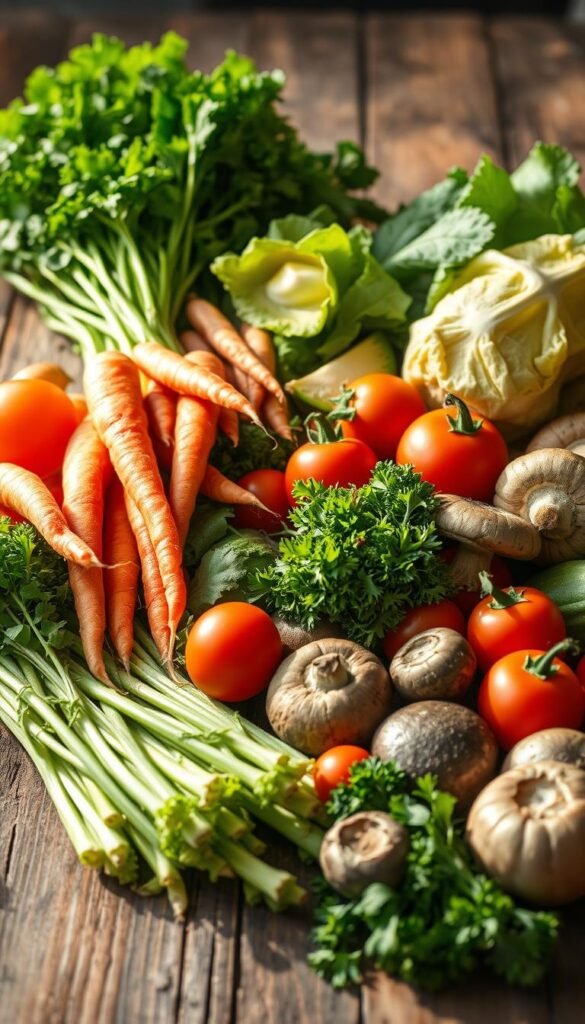
Build your plate around high-fiber vegetables to raise daily intake and add color. Mix cruciferous vegetables, leafy greens, and root vegetables to cover diverse fibers and key phytonutrients. Aim for at least 2.5 cups per day, using both raw and cooked options that fit your meals.
Cruciferous picks like broccoli, Brussels sprouts, and cauliflower deliver glucosinolates and vitamin C. Leafy greens such as spinach, kale, and collard greens provide folate, vitamin K, and magnesium. Orange root vegetables and sweet potatoes add beta-carotene, making this group a powerhouse of vitamin-rich produce.
Keep choices mostly non-starchy vegetables for volume and balanced calories. Roast Brussels sprouts and broccoli with olive oil, steam artichokes until tender, and bake sweet potatoes with the skins on. Stir spinach into soups, add kale to grain bowls, and finish with lemon for a bright lift.
| Vegetable | Type | Approx. Fiber (per serving) | Standout Micronutrients | Simple Cooking Idea |
|---|---|---|---|---|
| Artichoke (medium) | Non-starchy vegetables | ~7 g | Vitamin C, folate | Steam and serve with lemon and olive oil |
| Broccoli (1 cup) | Cruciferous vegetables | ~5 g | Vitamin C, glucosinolates | Roast with garlic and olive oil |
| Brussels sprouts (1 cup) | Cruciferous vegetables | ~4 g | Vitamin K, vitamin C | Roast until crisp and finish with balsamic |
| Cauliflower (1 cup) | Cruciferous vegetables | ~3 g | Vitamin C, choline | Char on a sheet pan with paprika |
| Carrots (1 cup) | Root vegetables | ~3.5 g | Beta-carotene, vitamin A | Roast sticks with thyme |
| Beets (1 cup) | Root vegetables | ~3–4 g | Folate, potassium | Roast and slice over salads |
| Sweet potato (medium, skin on) | Root vegetables | ~4 g | Beta-carotene, vitamin C | Bake and top with Greek yogurt |
| Green peas (1 cup) | Non-starchy vegetables | ~8 g | Vitamin K, manganese | Simmer into soups or sauté with mint |
| Collard greens (1 cup, cooked) | Leafy greens | ~5 g | Vitamin K, calcium | Braise with olive oil and garlic |
| Spinach (1 cup, cooked) | Leafy greens | ~4 g | Folate, magnesium | Fold into pasta or eggs |
| Kale (1 cup, cooked) | Leafy greens | ~2.6 g | Vitamin K, vitamin C | Massage with lemon and olive oil |
Pro tip: Rotate high-fiber vegetables across the week to capture different fiber types and phytochemicals. Combine cruciferous vegetables, leafy greens, and root vegetables in bowls, soups, and sheet-pan dinners to keep meals varied and rich in vitamin-rich produce.
Whole Grains That Deliver Steady Energy and Fiber
Choose whole grains that keep you fueled and satisfied. When grains stay as intact grains, they bring bran, germ, and endosperm to the plate. That means more steady energy, more flavor, and fibers like beta-glucan and resistant starch that support heart and gut health.
Oats, Quinoa, Barley, and Brown Rice
Old-fashioned oats supply about 4 grams of fiber per cooked cup and a standout called beta-glucan. This gel-forming fiber helps trap cholesterol in the gut. Try warm oats in the morning or bake them into snack bars.
Quinoa brings roughly 5 grams of fiber per cup plus complete protein and magnesium. It cooks fast and pairs well with roasted vegetables or grilled chicken for simple bowls.
Barley offers about 6 grams per cup. Look for hulled barley for even more barley fiber and a chewier bite. Like oats, barley is rich in beta-glucan and works well in soups and grain salads.
Brown rice gives about 3.5 grams per cup and delivers minerals like manganese and B vitamins. Cool cooked rice, then reheat for meals to increase resistant starch. That tweak can improve post-meal glucose response.
Choosing True Whole-Grain Products
To spot real whole grains, scan the ingredient list for the word “whole” first: whole wheat, whole oats, or whole rye. Be mindful of refined vs whole wording and terms like “multigrain” or “stone-ground” that can mislead. A dark color alone may come from caramel coloring.
Use the Whole Grains Council’s whole grain stamp as a quick cue. The 100% version means every grain is whole. With the 50% or Basic stamp, still check fiber grams and watch added sugars or sodium. Compare labels to find higher brown rice fiber, barley fiber, and fewer sweeteners.
Cook once, eat twice. Batch-cook quinoa, oats, and barley for the week. Cool and chill rice or whole-wheat pasta to boost resistant starch, then reheat gently. Pair grains with beans and colorful produce for complementary amino acids and even more fiber.
| Grain (cooked cup) | Approx. Fiber (g) | Notable Nutrients | Standout Fiber Type | Easy Uses |
|---|---|---|---|---|
| Oats | ~4 | Iron, zinc | beta-glucan | Hot cereal, energy bars |
| Quinoa | ~5 | Complete protein, magnesium | Mixed soluble/insoluble | Bowls, salads |
| Pearled Barley | ~6 | Selenium, niacin | beta-glucan; barley fiber | Soups, pilafs |
| Bulgur | ~8 | Manganese, folate | Insoluble-rich | Tabbouleh, quick sides |
| Brown Rice | ~3.5 | Manganese, B vitamins | brown rice fiber; resistant starch (when cooled) | Stir-fries, grain bowls |
| Whole-Wheat Pasta | ~6–7 | Protein, iron | Resistant starch (when cooled) | Pasta salads, hearty mains |
Legumes and Pulses: Fiber-Rich Powerhouses
Legumes earn their place on any high-fiber list. A cooked cup can deliver impressive numbers while packing plant protein, iron, folate, potassium, and polyphenols. They help support steady energy, heart health, and glycemic control, making them a smart add to everyday meals.
Beans, Lentils, and Chickpeas
Count on beans fiber, lentils fiber, and chickpeas fiber to raise your daily intake fast. USDA data shows lentils at about 15–16 g per cooked cup, black beans near 15 g, kidney beans around 11–13 g, pinto beans close to 15 g, navy beans up to 19 g, chickpeas about 12 g, and split peas near 16 g.
These foods offer affordable protein for busy weeks. Use them in hummus, bean salads, lentil soups, chili, tacos, grain bowls, and pasta e fagioli. The mix of fiber and protein supports satiety with simple, familiar flavors.
Strategies to Improve Digestibility
Some people feel gassy due to raffinose-family oligosaccharides. Reduce them by soaking beans 8–12 hours, discarding the soaking water, and cooking in fresh water. Start with smaller portions and increase slowly to let your gut adapt.
Pressure cooking further breaks down oligosaccharides for gentler meals. Add kombu while cooking for an extra lift. If using canned beans, rinse well to lower sodium and some oligosaccharides without losing taste or texture.
Budget-Friendly Pantry Staples
Canned beans are quick and budget-wise. Choose no-salt-added options from brands like Eden Foods or low-sodium lines from Goya, or rinse standard cans to cut sodium by up to 40%. This keeps meals fast while preserving beans fiber benefits.
Dried beans in bulk stretch a dollar and deliver affordable protein for families. Cook large batches with pressure cooking, then freeze in portions. Keep lentils fiber and chickpeas fiber on hand to spin into soup, salad, or a last-minute bowl any night of the week.
Nuts, Seeds, and High-Fiber Snacks
Crunchy, portable, and satisfying, nuts and seeds make smart snack ideas that help you hit your fiber goals. Chia seeds stand out with impressive fiber in a tiny spoonful, while ground flaxseed brings omega-3 ALA and lignans that pair well with fruit or yogurt. Almond fiber supports texture in baking and adds a mild, nutty taste to quick snacks.
Air-popped popcorn offers volume for few calories, and a light mist of olive oil with sea salt or smoked paprika keeps it simple. For variety on the go, build a trail mix with roasted almonds, pistachios, walnuts, and a few dark chocolate chips. If you use psyllium in smoothies or oats, start with a small amount and drink water to keep things comfortable.
Pro tip: Choose minimally processed options that deliver at least 3–5 grams of fiber per serving, and scan labels for added sugars and excess sodium.
- Greek yogurt parfait with berries and ground flaxseed
- Apple slices with almond butter for natural almond fiber
- Veggies with tahini dip and a sprinkle of chia seeds
- Chia pudding with unsweetened almond milk and cinnamon
- Whole-grain crackers with hummus and crushed walnuts
- Air-popped popcorn seasoned with chili-lime
| Snack or Ingredient | Typical Serving | Approx. Fiber | Notable Perks | Easy Use Case |
|---|---|---|---|---|
| Chia seeds | 2 Tbsp | ~10 g | Gel-forming fiber; omega-3 ALA | Stir into oatmeal or make chia pudding |
| Ground flaxseed | 2 Tbsp | ~4 g | ALA omega-3s; lignans | Blend into smoothies or yogurt |
| Almonds | 1 oz | ~3.5 g | Protein; vitamin E | Add to trail mix with dried cherries |
| Pistachios | 1 oz | ~3 g | Plant protein; potassium | Shell-on mindful snacking |
| Walnuts | 1 oz | ~2 g | Omega-3 ALA; rich flavor | Top salads and grain bowls |
| Pecans | 1 oz | ~3 g | Healthy fats; buttery taste | Crush over baked sweet potato |
| Popcorn, air-popped | 3 cups | ~3.5 g | High volume; whole grain | Season with garlic powder and pepper |
| Psyllium husk | 1 tsp | ~2 g | Soluble fiber; thickens | Whisk into oats or batter |
Mix and match these snack ideas through the week. Rotate chia seeds, ground flaxseed, and psyllium to balance texture and fiber types, and keep popcorn or a homemade trail mix on hand for crunch that lasts.
High-Fiber Breakfast, Lunch, and Dinner Ideas
Plan simple fiber recipes that fit busy days. Lean on meal prep to keep high-fiber lunches and healthy dinners ready for work nights and family meals. Aim for 8–12 grams at breakfast and steady fiber at each plate.
Tip: Build plates around oats, legumes, whole grains, produce, and nuts to echo the Mediterranean diet while still hitting 30-minute meals most nights.
Quick Breakfasts with Oats and Fruit
- Overnight oats with chia and blueberries; add a splash of kefir for tang and protein.
- Steel-cut oats topped with banana, walnuts, and cinnamon for long-lasting energy.
- Whole-grain toast with avocado and a soft egg for a savory start.
- Smoothie with spinach, frozen berries, ground flax, and kefir for a drinkable boost.
These picks land fast, travel well, and support the Mediterranean diet pattern. Batch jars on Sunday to streamline meal prep and keep mornings calm.
Hearty Salads, Grain Bowls, and Wraps
- Mixed greens with quinoa, black beans, corn, salsa, and avocado for high-fiber lunches.
- Lentil soup with a warm whole-grain roll; reheat for quick 30-minute meals all week.
- Whole-wheat wrap packed with hummus, roasted vegetables, and arugula.
- Farro salad with chickpeas, tomatoes, cucumbers, and olives dressed with olive oil and lemon.
Double the beans and grains during meal prep so bowls come together in minutes. Keep chopped veggies ready for easy mix-and-match fiber recipes.
Fiber-Forward Dinners the Whole Family Will Love
- Sheet-pan roasted broccoli, carrots, and chickpeas over barley with lemon-herb dressing.
- Whole-wheat pasta with white beans, spinach, and tomato sauce; add a simple side salad.
- Baked sweet potatoes topped with black bean–corn salsa and a spoon of Greek yogurt.
- Salmon or tofu with quinoa pilaf and roasted Brussels sprouts for balanced, healthy dinners.
These dishes scale well for family meals and fit a Mediterranean diet rhythm. Most come together as 30-minute meals, especially if staples are prepped ahead.
| Meal Idea | Key Fiber Sources | Prep Advantage | Why It Works |
|---|---|---|---|
| Overnight Oats with Chia and Berries | Oats, chia, blueberries | Make 3–4 jars during meal prep | 8–12 g at breakfast fuels the morning and supports steady appetite |
| Quinoa–Black Bean Salad Bowl | Quinoa, black beans, greens, corn | Batch-cook grains and beans | High-fiber lunches that pack well for work or school |
| Lentil Soup with Whole-Grain Roll | Lentils, vegetables, whole grains | Use a slow cooker or Instant Pot | Warm, filling option aligned with the Mediterranean diet |
| Whole-Wheat Pasta with Beans and Spinach | Whole-wheat pasta, white beans, spinach | Pantry-friendly 30-minute meals | Family meals that are budget-savvy and satisfying |
| Baked Sweet Potato with Black Bean–Corn Salsa | Sweet potato, beans, corn | Prep salsa ahead | Fiber recipes that offer color, texture, and comfort |
| Salmon or Tofu with Quinoa Pilaf | Quinoa, Brussels sprouts | Roast vegetables on a sheet pan | Healthy dinners with lean protein and hearty fiber |
Make it stick: Batch-cook beans and grains, wash greens, and portion snacks with nuts and fruit. Aim for 8–10 grams of fiber per meal, plus 5–10 grams from snacks, to meet daily goals with ease.
Fiber and Gut Microbiome: Prebiotics and Diversity
Think of your gut as a garden. Prebiotic fiber feeds the helpful microbes that keep it thriving. Inulin and resistant starch reach the colon intact, where bacteria ferment them into short-chain fatty acids like butyrate that support a strong gut lining and calm immune signaling.
Everyday foods make this easy. Chicory root, onions, garlic, leeks, and asparagus are rich in inulin. Slightly green bananas, cooked-and-cooled potatoes or rice, oats, barley, and legumes deliver resistant starch and other fibers. These choices help boost microbiota diversity, which is linked to resilient digestion and steady energy.
Mixing fibers with fermented foods can be a smart pairing. Yogurt with live cultures, kefir, sauerkraut, kimchi, and tempeh supply active microbes that work alongside prebiotic fiber. This duo can enhance production of short-chain fatty acids, including butyrate, for added gut support.
Aim for variety across the week. A colorful plate—grains, beans, fruits, and vegetables—encourages broader microbial communities. Small, steady changes add up: swap white rice for barley, add lentils to soup, or layer oats and apples into breakfast.
| Food | Key Fiber Type | Notable Benefit | Simple Use |
|---|---|---|---|
| Chicory root | Inulin (prebiotic fiber) | Feeds Bifidobacterium and Lactobacillus | Stir roasted chicory coffee into warm milk |
| Onions & garlic | Inulin (prebiotic fiber) | Supports short-chain fatty acids | Sauté as a base for soups and sauces |
| Slightly green bananas | Resistant starch | Promotes butyrate production | Slice into yogurt or blend into smoothies |
| Oats & barley | Beta-glucan, resistant starch | Helps nourish diverse microbes | Cook as hot cereal or add to grain bowls |
| Cooked-and-cooled potatoes | Resistant starch | Enhances microbiota diversity | Chill for salads with olive oil and herbs |
| Legumes | Galacto-oligosaccharides, resistant starch | Increases short-chain fatty acids | Add lentils to chili or chickpeas to salads |
| Apples | Pectin (prebiotic fiber) | Supports butyrate via fermentation | Pair slices with peanut butter or oats |
| Fermented foods | Live cultures (not fiber) | Complement prebiotic fiber for synergy | Top bowls with kimchi or enjoy kefir daily |
Start with one or two swaps per day. Build a rotation of fibers and fermented foods to keep meals interesting and to encourage steady production of short-chain fatty acids, including butyrate, while supporting microbiota diversity over time.
How to Increase Fiber Intake Without Discomfort
Small steps help build fiber tolerance while you prevent bloating. Spread added fiber across meals and sip fluids all day. Aim for steady progress, not a shock to your system.

Gradual Increases and Hydration Tips
Increase fiber by 3–5 grams every few days and check how you feel. Pair each boost with water, tea, or sparkling water. Most adults do well with about 11.5 cups for women and 15.5 cups for men from all beverages and foods, adjusting for heat and exercise.
Distribute fiber at breakfast, lunch, and dinner to avoid overload. A slow ramp helps gas reduction and keeps you on track.
Cooking Methods to Reduce Gas
Kitchen technique matters. Start with gentler legumes like lentils or split peas. Try soaking beans overnight, rinse well, then pressure cook for extra gas reduction.
Choose low-FODMAP vegetables at first, such as zucchini, carrots, and spinach. Peel tough skins and cook produce until tender. Many people also use alpha-galactosidase products like Beano to help break down complex carbs.
When to Consider Fiber Supplements
If food alone falls short, a psyllium supplement can support regularity and may help lower LDL. Wheat dextrin and partially hydrolyzed guar gum are often easy on the gut. For loose stools, methylcellulose is non‑fermentable and may be helpful.
Introduce any product slowly with water to prevent blockage and monitor fiber tolerance. Consult a clinician if you have inflammatory bowel disease, strictures, or take medications that interact with bulking agents.
Smart Grocery Shopping for Fiber in the United States
Use these U.S. grocery tips to fill your cart with fiber-rich staples while keeping costs in check. A few minutes of label reading can turn routine budget shopping into a weekly win for health and value.
Reading Ingredient Lists for Hidden Refined Grains
Scan the ingredient list first. The first word should be a whole grain, like “100% whole wheat flour” or “whole grain oats.” If you see “enriched wheat flour,” it signals refined grain. That is the key in the whole wheat vs enriched flour debate.
Skip terms that mislead, such as “multi-grain” or “wheat bread,” if the first ingredient is not whole. Watch for caramel coloring added to make bread look darker. Aim for at least 3–5 grams of fiber per serving for bread or cereal, and check added sugars and sodium to keep portions smart.
- Cold cereal: choose options with at least 5 g fiber and no more than 8 g added sugar.
- Good examples to compare on the shelf: Food for Life Ezekiel sprouted grain bread, Kashi varieties (check labels), and store-brand shredded wheat.
- Pair high-fiber grains with water-rich foods to stay comfortable as fiber climbs.
Affordable High-Fiber Swaps and Store Brands
Lean on store brands to stretch dollars without losing nutrition. At Aldi and Trader Joe’s, look for whole-grain breads, oats, and canned beans. Costco sells bulk oats, brown rice, and barley that make meal prep fast and low cost.
- Swap meat with dried beans or bulk lentils a few nights a week for protein and fiber.
- Buy frozen vegetables and berries; they cut waste and often cost less per serving.
- Choose popcorn kernels for a simple, high-fiber snack made at home.
- Use weekly circulars and coupons, then plan meals around legumes and whole grains.
- Compare unit prices; store brands at Walmart Great Value and Target Good & Gather often match name-brand quality.
| Item | Fiber Target per Serving | Label Reading Tip | Smart Buy for Budget Shopping | Where to Look |
|---|---|---|---|---|
| Whole-grain bread | 3–5 g | First ingredient “100% whole wheat flour” | Store brands or Ezekiel loaf when on sale | Aldi, Trader Joe’s, Walmart |
| Cold cereal | ≥5 g | ≤8 g added sugar; avoid “multi-grain” if refined | Store-brand shredded wheat | Target Good & Gather, Costco |
| Oats | 4 g (dry 1/2 cup) | Ingredients: “whole grain oats” only | Large bags for unit-price savings | Costco, Sam’s Club |
| Brown rice | 2 g (1/2 cup cooked) | Choose long-grain or short-grain “brown” only | Bulk or store brands | Costco, Aldi |
| Barley | 6 g (1 cup cooked) | Look for hulled or whole barley | Bulk bins when available | Costco, natural sections |
| Beans & lentils | 7–15 g (per cooked cup) | No added sodium for dried; rinse canned | Dried bags for best value | Aldi, Walmart |
| Frozen berries | 3–8 g (per cup) | Fruit only, no added sugar | Large frozen bags | Costco, Trader Joe’s |
| Popcorn kernels | 4 g (3 cups popped) | Plain kernels; season at home | Family-size containers | Target, Costco |
Keep these U.S. grocery tips on your phone and practice label reading each trip. With small swaps, store brands, and a clear eye on whole wheat vs enriched flour, every cart can deliver more fiber for less at Aldi, Trader Joe’s, or Costco.
Conclusion
High Fiber Foods make it easier to support heart health, steady blood sugar, weight control, and digestive wellness. Most adults in the United States fall short of the 25–38 grams a day set by U.S. dietary guidelines, so clear fiber intake goals help. Build meals around fruits, vegetables, legumes, whole grains, nuts, and seeds to mix soluble and insoluble fibers for steady energy and a healthy lifestyle.
Use practical tips that fit real life: read labels for grams of fiber, choose true whole grains like oats, barley, and brown rice, and keep canned beans and frozen produce on hand. Pair fiber with lean protein, healthy fats, and water to feel full and avoid discomfort. Increase portions slowly to let your gut adjust.
Consistency matters. A varied, daily mix of High Fiber Foods feeds a diverse microbiome and supports long-term digestive wellness and heart health. Start small and repeat the wins: oats or chia at breakfast, a bean-based lunch with greens, and a whole-grain dinner with colorful vegetables. With a few steady upgrades each day, you can meet fiber intake goals and keep a healthy lifestyle on track under U.S. dietary guidelines.
Choose what works this week and build from there. Simple steps stack up, meals feel satisfying, and energy stays stable—proof that practical tips and routine make healthy eating doable.
FAQ
What are high fiber foods and why do they matter?
High fiber foods include whole grains, legumes, fruits, vegetables, nuts, and seeds. They support digestion, heart health, blood sugar control, and weight management. The Dietary Guidelines for Americans 2020–2025 call fiber a nutrient of public health concern because most people in the U.S. get only about 15 grams per day, far below the recommended 22–38 grams depending on age and sex.
What’s the difference between soluble and insoluble fiber?
Soluble fiber dissolves in water and forms a gel. It can lower LDL cholesterol and steady blood sugar. Sources include oats and barley (beta-glucan), apples and citrus (pectin), and chicory root, onions, and garlic (inulin, FOS). Insoluble fiber doesn’t dissolve; it adds bulk and supports regularity. Find it in whole wheat, bran, brown rice, quinoa, nuts, seeds, carrots, cauliflower, and leafy greens.
How much fiber do adults in the U.S. need each day?
The Institute of Medicine sets Adequate Intake at 25 g/day for women ages 19–50 and 38 g/day for men ages 19–50. Women 51+ should aim for 21 g/day and men 51+ for 30 g/day. On food labels, the FDA Daily Value is 28 g/day based on a 2,000-calorie diet.
Which foods are the best high-fiber choices to add today?
Try lentils, black beans, chickpeas, and split peas. Add oats, barley, quinoa, bulgur, and brown rice. Choose raspberries, blackberries, pears, apples, oranges, avocado, broccoli, Brussels sprouts, sweet potatoes, chia seeds, flaxseed, almonds, and pistachios. These options deliver both soluble and insoluble fiber plus key micronutrients.
How do I read nutrition labels to find real fiber?
Check Dietary Fiber under Total Carbohydrate. Five grams or more per serving is high. Look for “whole” as the first ingredient, like “100% whole wheat” or “whole oats.” Don’t be fooled by “multi-grain.” The Whole Grains Council’s Whole Grain Stamp helps, but still verify grams of fiber and scan for added inulin or chicory fiber in snacks.
Can fiber help lower cholesterol and support heart health?
Yes. The American Heart Association links higher fiber intake—especially from whole grains—with lower risk of coronary heart disease and stroke. About 3 g/day of oat or barley beta-glucan can reduce LDL by 5–10% when part of a diet low in saturated fat. More whole grains and legumes also support blood pressure and inflammation control.
How does fiber help with weight management and cravings?
Viscous fibers slow gastric emptying and steady blood sugar, which helps you feel full longer. They may boost satiety hormones like GLP-1 and peptide YY. Studies suggest increasing fiber by about 14 g/day can lower calorie intake and support gradual weight loss without strict dieting.
What are some easy, high-fiber meal ideas?
Breakfast: overnight oats with chia, berries, and almonds. Lunch: lentil-vegetable soup with a side salad. Dinner: barley bowl with roasted vegetables and chickpeas. Snacks: apple with peanut butter, carrots with hummus, and air-popped popcorn. Pair fiber with protein and healthy fats for lasting energy.
Which fruits offer the most fiber per serving?
Raspberries and blackberries have about 8 g per cup. Apples and pears with skin provide 4–6 g each. Oranges offer 3–4 g. Blueberries, strawberries, bananas, kiwi, and grapefruit add useful amounts. Avocado, technically a fruit, packs about 10 g per fruit and heart-healthy fats.
What vegetables are especially high in fiber and nutrients?
Artichokes, broccoli, Brussels sprouts, cauliflower, carrots, beets, peas, sweet potatoes with skin, collard greens, spinach, and kale are great picks. Mix raw and cooked vegetables to reach at least 2.5 cups per day and support diverse fiber types and phytochemicals.
Which whole grains deliver steady energy and fiber?
Oats, quinoa, barley, bulgur, brown rice, and whole-wheat pasta are reliable choices. Oats and barley provide beta-glucan for heart health. Choose products listing whole grains first and use the 100% Whole Grain Stamp as a guide while still checking fiber grams per serving.
How can I make beans and lentils easier to digest?
Soak dried beans 8–12 hours, drain, and cook in fresh water. Pressure cooking and adding kombu can help. Rinse canned beans well to lower sodium and some oligosaccharides. Start with small portions, try lentils or split peas first, and increase gradually with plenty of water.
What high-fiber snacks are simple and satisfying?
Air-popped popcorn with spices, Greek yogurt parfaits with berries and ground flaxseed, whole-grain crackers with hummus, apple slices with almond butter, veggie sticks with tahini, and chia pudding. Aim for 3–5 g fiber per snack and watch added sugars and sodium.
How does fiber support gut health and the microbiome?
Fermentable fibers act as prebiotics that feed beneficial bacteria such as Bifidobacterium and Lactobacillus. They produce short-chain fatty acids like butyrate that fuel colon cells, support the gut barrier, and modulate inflammation. Diverse plant foods—around 30 per week—promote microbial diversity.
How can I increase fiber without gas or discomfort?
Add 3–5 g every few days and drink enough fluids so urine stays pale yellow. Cook vegetables until tender and remove tough skins if needed. If sensitive, start with lower-FODMAP options like zucchini, carrots, and spinach. Consider digestive aids such as alpha-galactosidase for bean dishes.
When should I consider a fiber supplement?
If you can’t meet needs with food or have a specific goal, supplements can help. Psyllium supports LDL reduction and regularity. Wheat dextrin and partially hydrolyzed guar gum are often well tolerated. Methylcellulose may help with diarrhea. Introduce slowly with water and consult your healthcare professional if you have GI conditions or take medications.
What are smart grocery strategies for high fiber on a budget?
Read ingredient lists to spot “whole” grains and avoid enriched flour. Buy dried beans, bulk oats, brown rice, and barley. Choose frozen vegetables and berries to cut waste. Store brands at Aldi, Walmart Great Value, and Target Good & Gather offer solid whole-grain and bean options. Popcorn kernels are an inexpensive, high-fiber snack.
How much water should I drink when increasing fiber?
Hydration helps fiber work well. General guidance from the National Academies suggests about 11.5 cups of fluids per day for women and 15.5 cups for men, including all beverages and water-rich foods. Adjust for activity, heat, and individual needs. Aim for clear to pale yellow urine.
Are “multi-grain” or dark breads always high in fiber?
Not always. Color can come from caramel coloring, and “multi-grain” may still be refined. Look for “100% whole wheat” or “whole grain” as the first ingredient and confirm at least 3–5 g of fiber per slice or serving. Check added sugars and sodium, too.
Do oats and barley really lower LDL cholesterol?
Yes. Oat and barley beta-glucan are backed by FDA-authorized health claims. About 3 g/day can reduce LDL by 5–10% when part of a diet low in saturated fat and cholesterol. Consider oatmeal, oat bran, or barley bowls at breakfast to help meet the target.