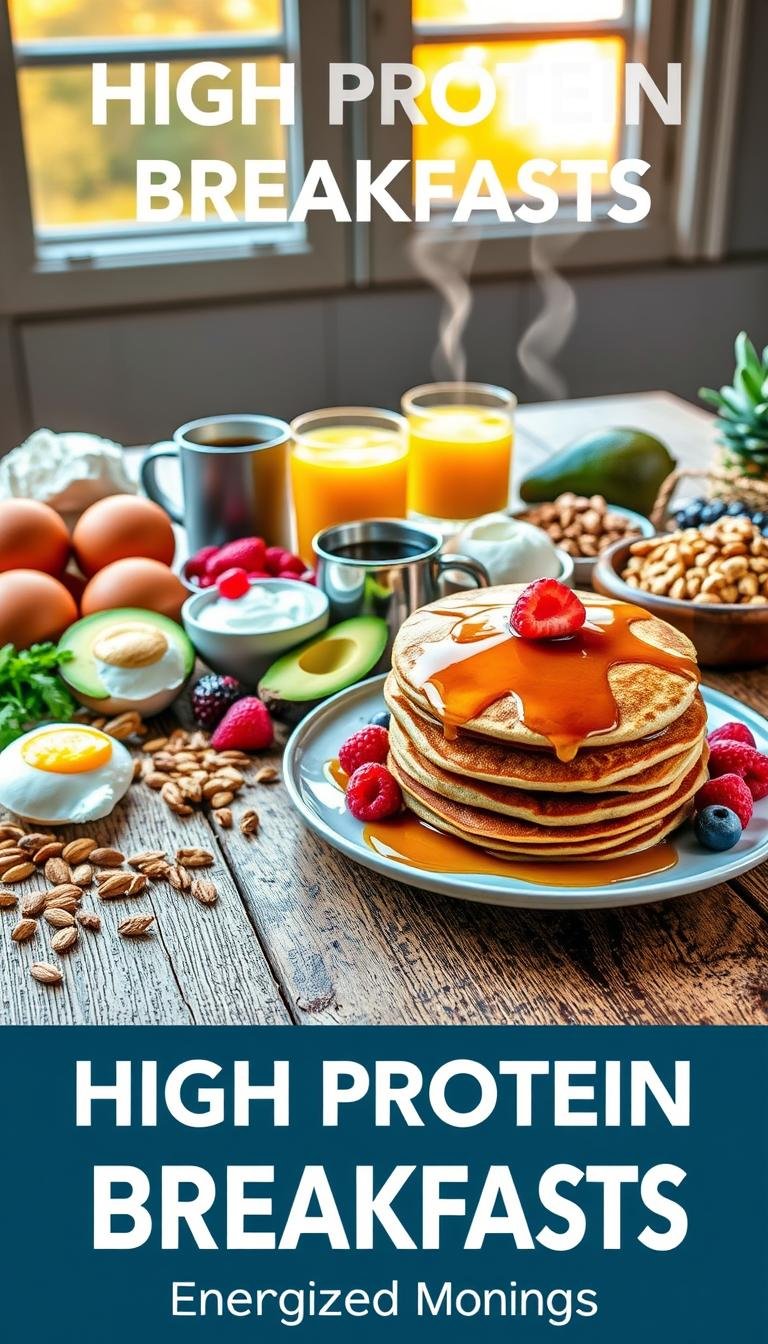
High Protein Breakfasts for Energized Mornings
Only 1 in 10 Americans meets daily vegetable targets, yet a single breakfast with 20–35 grams of protein can shift blood sugar and hunger signals for the rest of the day. That simple change sets the tone for steadier morning energy and better focus.
This Website contains affiliate links. That means I may earn a small commission if you purchase through my links, at no extra cost to you.
High Protein Breakfasts align with United States dietary guidance by pairing nutrient-dense proteins with whole grains, fruit, and vegetables. Studies in the American Journal of Clinical Nutrition and the Journal of Nutrition show that spreading protein across meals boosts muscle protein synthesis and satiety. For many readers, that means moving beyond toast and coffee toward protein-forward meals that work in real life.
This guide turns research into action with practical protein breakfast ideas, high-protein recipes, and smart swaps for a balanced breakfast. We draw on the International Society of Sports Nutrition and the Academy of Nutrition and Dietetics to outline higher targets for active adults and older adults. Expect breakfast nutrition tips, store finds, and make-ahead plans that fit a healthy breakfast routine without blowing your budget.
Key Takeaways
- Aim for 20–35 grams of protein at breakfast to support steady morning energy and appetite control.
- Distribute protein evenly across meals for better muscle maintenance and fullness.
- Build plates around lean proteins, whole grains, fruit, and vegetables to match United States dietary guidance.
- Use protein-forward meals—like eggs, Greek yogurt, and tofu—to power busy mornings.
- Choose high-protein recipes and simple prep to keep a balanced breakfast fast and affordable.
- Active and older adults may benefit from the higher end of the protein range at breakfast.
Why Protein at Breakfast Fuels Better Energy and Focus
Starting the morning with protein delivers steady energy and clear thinking. The mix of amino acids shapes blood sugar control, supports metabolism, and sharpens cognitive performance. These breakfast protein benefits show up fast and tend to last through late morning.
The role of protein in stabilizing blood sugar
Protein slows digestion and evens out the glycemic response when paired with oats, toast, or fruit. This helps with blood sugar control by moderating insulin release and reducing rapid swings.
Add fiber and healthy fats to keep energy smooth. A Greek yogurt bowl with berries and almonds is a simple move that keeps focus steady at work or school.
Amino acids and satiety signals that curb cravings
Dietary protein triggers satiety hormones that tame mid-morning hunger. Signals tied to ghrelin and GLP-1, along with PYY and CCK, help reduce urges to snack and make portions feel satisfying.
Leucine-rich foods, like eggs and whey, bring strong breakfast protein benefits for appetite control. The result is fewer cravings and better choices later in the day.
How protein supports morning muscle recovery and metabolism
After an overnight fast, amino acids jump-start muscle protein synthesis. This supports recovery from training and helps maintain lean tissue that drives metabolism.
Quick options—such as cottage cheese with pineapple or soy milk in a smoothie—provide building blocks for repair. Many people also notice improved cognitive performance when they swap a sugary meal for a balanced, higher-protein start.
| Breakfast Combo | Key Benefit | Why It Works | Real-World Tip |
|---|---|---|---|
| Eggs with avocado and whole-grain toast | Steadier glycemic response | Protein and fat slow carb absorption for blood sugar control | Cook extra hard-boiled eggs for fast weekday plating |
| Greek yogurt with berries and walnuts | Stronger satiety hormones | Amino acids influence ghrelin and GLP-1 to curb cravings | Choose plain yogurt to cut added sugars and boost breakfast protein benefits |
| Whey smoothie with soy milk and banana | Muscle protein synthesis support | Leucine content stimulates repair and supports metabolism | Blend with ice and oats for thicker texture and longer fullness |
| Cottage cheese, pineapple, and chia seeds | Sustained energy and focus | Protein plus fiber improves cognitive performance across the morning | Pre-portion cups the night before for grab-and-go ease |
How Many Grams of Protein You Need in the Morning
Your morning meal sets the tone for strength and focus. A practical breakfast protein target helps you meet your protein per meal needs while keeping macro balance in check. Aim for foods that reach the leucine threshold and suit both active adults and the needs of older adults protein without overthinking portion sizes.
Evidence-based targets for adults and active individuals
The RDA vs optimal debate matters at breakfast. While the baseline is 0.8 g/kg/day, many find 1.2–2.0 g/kg/day more effective, especially for active adults and older adults protein. That translates to about 0.25–0.40 g/kg per sitting, or 20–35 grams protein per meal for most people.
Hitting 2–3 grams of leucine per meal supports muscle protein synthesis. Dairy, whey, eggs, and soy help you meet that leucine threshold early in the day.
Balancing protein with carbs and healthy fats
Macro balance at breakfast keeps energy even. Pair 20–35 grams of protein per meal with 25–45 grams of complex carbs and 10–20 grams of healthy fats. This mix supports steady glucose, sharper thinking, and calmer hunger.
Choose whole foods that deliver fiber and minerals. Oats, whole-grain toast, berries, nuts, seeds, and avocado round out portion sizes without crowding protein per meal goals.
Portion examples to hit 20–35 grams per meal
| Breakfast Build | Approx. Protein | Leucine Support | Macro Balance Tips |
|---|---|---|---|
| 3 eggs + 1 oz cheddar | ~24–28 g | Eggs and cheese help reach the leucine threshold | Add whole-grain toast and avocado for carbs and fats |
| 1 cup nonfat Greek yogurt + 2 tbsp peanut butter | ~30–32 g | Dairy boosts leucine for active adults | Stir in berries and chia for fiber and macro balance |
| 1 scoop whey isolate + 1 cup dairy milk | ~33–35 g | Whey easily meets the leucine threshold | Blend with banana and oats to round portion sizes |
| 1 cup skyr + 1/3 cup granola with nuts and seeds | ~25–30 g | Skyr supports the breakfast protein target | Choose whole-grain granola for complex carbs and healthy fats |
| Tofu scramble (6 oz extra-firm) + 1/4 cup nutritional yeast | ~32 g | Soy helps approach leucine needs for older adults protein | Serve with sautéed veggies and quinoa for macro balance |
Bottom line for planning: keep the breakfast protein target at 20–35 grams, check that leucine threshold, and adjust portion sizes so your carbs and fats support your morning.
High Protein Breakfasts
A smart morning plate sets the pace for the day. Aim for a quick high-protein breakfast that travels well and keeps you on task. These filling breakfast ideas offer sustained energy meals without a long cook time.
Quick options for busy weekdays
Choose 10-minute breakfasts that need little prep. Try Greek yogurt or Icelandic skyr topped with almonds and chia. Cottage cheese with pineapple and hemp hearts hits sweet and salty notes.
Blend a whey protein smoothie with frozen berries and soy or dairy milk. Whole-grain toast with scrambled eggs and smoked salmon is fast and savory. For a portable protein breakfast, pair a Fairlife Core Power, Orgain, or OWYN shake with a banana.
Hearty choices for long-lasting fullness
Build bowls that work as sustained energy meals. Go with eggs and turkey sausage over quinoa and spinach. Stir egg whites into oats and finish with peanut butter for extra staying power.
Cook a tempeh hash with sweet potatoes and onions. Roll an egg white, black bean, and avocado burrito on a whole-grain wrap. Protein pancakes made with whey and cottage cheese also fit these filling breakfast ideas.
Make-ahead ideas to streamline mornings
Lean on meal-prep breakfasts to cut stress. Bake frittata squares and portion for the week. Mix overnight oats with Greek yogurt for a ready-to-eat jar.
Wrap freezer breakfast burritos for grab-and-heat speed. Set chia-protein pudding in the fridge for a creamy cup. Bake oatmeal cups with whey or soy isolate, store airtight, refrigerate 3–4 days, or freeze up to 2–3 months; reheat frittatas and burritos to 165°F for safety.
High-Protein Eggs: Scrambles, Omelets, and Frittatas
Eggs pack efficient protein and cook fast, making them ideal for high-protein egg recipes any morning. Each large egg brings about 6–7 grams of quality protein and a rich dose of leucine to spark muscle repair. Build from this base with smart add-ins and simple omelet ideas that keep flavor high and time low.
https://www.youtube.com/watch?v=Ev9QcU-EmGc
Protein-boosting add-ins: cottage cheese, Greek yogurt, smoked salmon
For extra creaminess and more egg breakfast protein, whisk in a quarter cup of Greek yogurt or fold in cottage cheese eggs before cooking. The texture turns silky and the pan release improves. Top a fluffy scramble with thin slices of smoked salmon for a smoked salmon breakfast that adds omega-3s and a savory edge.
Keep salt in check by seasoning with lemon zest, black pepper, and fresh dill. These additions lift the dish without masking the eggs. For quick omelet ideas, layer in yogurt, then salmon, and finish with chives.
Veggie pairings for fiber and micronutrients
Balance the plate with vegetables that add volume and color. Sauté spinach, mushrooms, bell peppers, onions, broccoli, or tomatoes in a light mist of olive oil. The mix boosts vitamin C, folate, potassium, and antioxidants with few calories.
Fold the veggies into a scramble or tuck them into a wrap for portable, high-protein egg recipes. A handful of arugula on top adds a fresh bite without extra cooking.
Meal-prep frittatas that reheat well
For frittata meal prep, bake a pan with whole eggs, egg whites, and a loaded mix of vegetables. Add lean turkey bacon or chicken sausage for a meaty boost. Cool quickly, slice, and store for grab-and-heat mornings.
Reheat in the microwave for 60–90 seconds or in a 350°F oven for 10–15 minutes. Adjust egg-to-egg white ratios so each slice lands in the 20–30 gram range of egg breakfast protein.
| Dish | Key Proteins | Veggie Pairings | Approx. Protein per Serving | Flavor Tips |
|---|---|---|---|---|
| Silky Scramble | 2 eggs + 1/4 cup Greek yogurt | Spinach, mushrooms | 18–20 g | Finish with dill and lemon |
| Smoked Salmon Omelet | 3 eggs + 2 oz smoked salmon | Tomatoes, chives | 28–30 g | Black pepper and capers |
| Creamy Cottage Cheese Eggs | 2 eggs + 1/4 cup cottage cheese | Bell peppers, onions | 20–22 g | Paprika and parsley |
| Sheet-Pan Frittata | Eggs + egg whites + turkey bacon | Broccoli, peppers | 22–30 g | Garlic powder and Parmesan |
Use these templates to vary textures and flavors through the week. Rotate cottage cheese eggs for creaminess, try smoked salmon breakfast for a luxe option, and rely on frittata meal prep for fast, repeatable wins. With these omelet ideas and high-protein egg recipes, mornings stay simple and satisfying.
Greek Yogurt and Skyr Bowls with Smart Toppings
Build a fast, high-protein base with plain nonfat Greek yogurt or thick Icelandic skyr. These Greek yogurt bowls fit busy mornings, while a skyr breakfast offers a creamy spoonable texture that feels rich without excess sugar. Keep flavors bright and simple so each bite tastes clean and satisfying.
Choosing lower-sugar, higher-protein varieties
Reach for low-sugar yogurt that lists no more than 7–9 grams of sugar per serving. Plain makes the best canvas; add fruit for sweetness and fiber. Strong options include Chobani Nonfat Greek, Fage Total 0%, and Siggi’s Skyr, each known for reliable protein counts and a thick, cultured taste.
Start with 3/4–1 cup of Greek yogurt or 1 cup of skyr. Aim for 25–35 grams of protein by layering smart add-ins or a small scoop of whey or collagen, if desired. Keep healthy yogurt toppings simple to preserve that fresh dairy tang.
Toppings that add protein: nuts, seeds, hemp hearts
Use protein toppings that also bring crunch and minerals. Hemp hearts add 6–7 grams of protein in two tablespoons and blend smoothly into creamy bases. Almonds, walnuts, pumpkin seeds, peanut butter, and high-protein granola raise the count while keeping sugars in check.
- Hemp hearts: 2 tbsp (about 6–7 g protein)
- Almonds: 1 oz (about 6 g)
- Walnuts: 1 oz (about 4 g)
- Pumpkin seeds: 2 tbsp (about 5–6 g)
- Peanut butter: 2 tbsp (about 7–8 g)
- Protein granola: 1/4 cup (brands like KIND or Purely Elizabeth Protein)
Mix textures for a better bite. Pair soft fruit with crisp seeds, or swirl peanut butter for body. These healthy yogurt toppings round out macros and add lasting fullness.
Flavor combos: berry-almond, tropical-coconut, mocha-crunch
Try flavored yogurt ideas that stay focused on whole foods. Berry-almond works well with blueberries, sliced almonds, and a sprinkle of chia. A tropical-coconut spin uses pineapple, toasted coconut, and cashews for a sunny lift.
For something bold, go mocha-crunch. Stir in unsweetened cocoa, a cooled espresso shot, cacao nibs, and a spoon of peanut butter. Each mix fits Greek yogurt bowls or a skyr breakfast and keeps sugars modest while boosting texture and aroma.
| Base Choice | Protein (approx.) | Suggested Add-Ins | Total Protein Target | Why It Works |
|---|---|---|---|---|
| 1 cup Siggi’s Skyr (plain) | 17–20 g | 2 tbsp hemp hearts + 1 oz almonds | 30–33 g | Low-sugar yogurt foundation with nut-and-seed crunch |
| 1 cup Chobani Nonfat Greek (plain) | 15–20 g | 2 tbsp peanut butter + 2 tbsp pumpkin seeds | 27–34 g | Creamy base plus savory, mineral-rich protein toppings |
| 1 cup Fage Total 0% (plain) | 17–20 g | Blueberries + 1/4 cup protein granola | 25–30 g | Fruit sweetness with crunch for balanced flavored yogurt ideas |
Protein Pancakes and Waffles That Actually Satisfy
Light, fluffy stacks can still hit serious macros. Build protein pancakes or protein waffles that hold you through the morning, with mixes that are easy to prep and a few smart swaps for a low-sugar breakfast.
Using whey, casein, or plant protein powders
For smooth batter and complete amino acids, lean on whey protein recipes with whey isolate. Casein thickens the mix, helping casein pancakes brown well and keep you fuller. If you avoid dairy, plant protein baking with soy, pea, or rice blends works and cooks evenly.
- Use 20–30 g protein powder per serving to land near 25–35 g total protein.
- Whisk with milk or soy milk for a pourable batter that crisp-cooks on a hot pan.
- Let the batter rest a minute so bubbles set and edges lift cleanly.
Oat and cottage cheese bases for extra protein
Blend 1/2 cup cottage cheese, 1/2 cup egg whites, 1/2 cup oats, baking powder, and a pinch of salt. This base turns out tender cakes with steady energy. For waffles, add a teaspoon of oil so the grids release and the crust snaps.
Prefer a shortcut? Kodiak Cakes Power Cakes uses whole grains and added protein. Two cakes offer about 14 g; fold in Greek yogurt or an egg to push higher while keeping the texture pancake-soft.
Toppings and syrups that keep sugars in check
Make a low-sugar breakfast without losing flavor. Choose berries, sliced banana, and sugar-free or reduced-sugar syrups from brands like ChocZero or Lakanto. Add fiber-rich toppings—chia seeds, ground flax, or a spoon of almond butter—for balanced bite and longer fullness.
- Aim for no more than 10–12 g added sugar per meal.
- Include 8–10 g fiber with fruit and seeds for steadier glucose.
- Finish protein pancakes or protein waffles with cinnamon or cocoa for depth without extra sugar.
With these moves, whey protein recipes, casein pancakes, and plant protein baking stay simple, taste great, and deliver the macros you planned.
Breakfast Burritos and Wraps with Lean Proteins
Build a fast, portable breakfast that stays satisfying for hours. Focus on breakfast burrito protein, smart carbs, and vegetables. With the right wrap and high-protein fillings, you can keep energy steady on busy mornings.
Choosing tortillas: whole grain, low-carb, or egg wraps
For healthy wraps, reach for 100% whole-wheat or corn tortillas to add fiber and flavor. If you prefer low-carb tortillas, brands like Mission Carb Balance and La Tortilla Factory offer 7–10 g fiber and 4–6 g protein per wrap. Egg white wraps from Egglife bring about 5 g protein with almost no carbs, keeping the focus on breakfast burrito protein.
Fillings: turkey sausage, egg whites, black beans
Stock high-protein fillings that layer well. Scrambled egg whites add about 10–14 g per 1/2–3/4 cup, turkey sausage brings 10–13 g per 2 oz, and black beans contribute 7–8 g per 1/2 cup. Add sautéed peppers, onions, and spinach for volume.
For creaminess without excess saturated fat, use a spoon of Greek yogurt instead of sour cream. Reduced-fat cheese (6–7 g per 1/4 cup), salsa, and avocado round out flavor while keeping a portable breakfast balanced. Aim for 25–35 g of breakfast burrito protein per wrap.
Freezer-friendly assembly and reheating tips
To make freezer burritos that hold up, cool cooked fillings fully to prevent soggy tortillas. Assemble, roll tight, wrap in foil, and stash in freezer bags. Label with the date for easy rotation.
Reheat from frozen in the microwave for 2–3 minutes, flipping halfway, or bake at 350°F for 25–35 minutes. Low-carb tortillas and egg white wraps reheat well when packed snug, keeping healthy wraps intact and the texture of high-protein fillings just right.
High-Protein Oats and Overnight Oats Upgrades
Turn your morning bowl into creamy high-protein oatmeal that actually keeps you full. These simple upgrades work for both stovetop protein oats and make-ahead jars that boost overnight oats protein without added sugar.
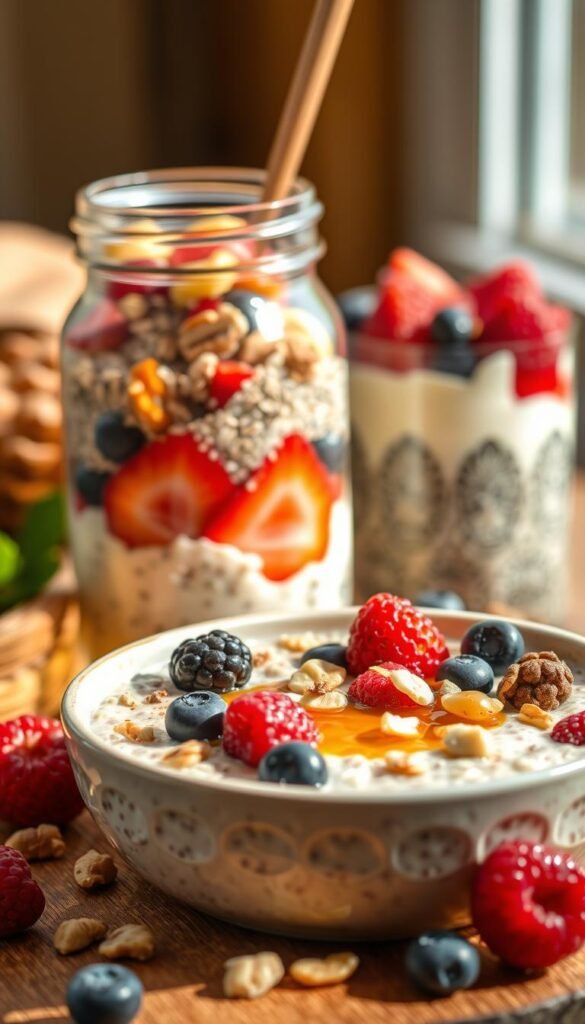
Stir-ins: egg whites, Greek yogurt, cottage cheese
For warm bowls, whisk pasteurized egg whites into hot oats during the last minute to create silky egg white oatmeal. Pull the pot off heat and keep stirring so it stays smooth and fluffy.
For chilled jars, fold 1/2 cup into Greek yogurt oats or use cottage cheese to add body and tang. Both options lift protein while keeping a mild taste and lush texture.
Protein powders that blend well without grit
Whey isolate mixes cleanly in hot or cold bases. Micellar casein sets thicker, which is great for overnight oats protein when you want a pudding-like finish.
Pea or soy isolates are solid dairy-free picks. Use 15–25 g per serving, then drizzle in milk a little at a time until your creamy high-protein oatmeal is smooth.
Texture boosters: chia, flax, and peanut butter
Stir in a spoon of chia oats for extra fiber and a light gel that helps thicken. Add ground flax for a nutty note and omega-3s.
Finish with peanut butter oats for richness and staying power. For an easy jar: combine 1/2 cup oats, 3/4 cup milk, one scoop protein, chia, and a swirl of peanut butter; chill 6–12 hours.
| Upgrade | How to Use | Texture Benefit | Flavor Notes |
|---|---|---|---|
| Egg whites | Whisk into hot oats off heat | Silky, fluffy | Neutral, slightly sweet |
| Greek yogurt | Fold into cooled oats or overnight jars | Creamy, thick | Tangy, fresh |
| Cottage cheese | Blend or stir into cold oats | Rich, custardy | Mild, savory-tang |
| Whey isolate | Mix with milk, then add to oats | Smooth, light | Varies by flavor |
| Casein | Best for overnight mixing | Thick, pudding-like | Subtle, creamy |
| Pea or soy isolate | Blend with liquid first | Stable, dense | Neutral to earthy |
| Chia seeds | 1 tbsp per serving | Gel-thickened | Delicate, nutty |
| Ground flax | 1 tbsp per serving | Hearty, cohesive | Toasty, nutty |
| Peanut butter | Stir or swirl on top | Velvety, rich | Roasted peanut |
Protein Smoothies and Shakes for On-the-Go Mornings
A well-built high-protein smoothie can stand in for a full meal and keep you sharp during an on-the-go breakfast. Use simple, real ingredients, and blend cold for a thick, creamy sip that travels well.
This approach works for a breakfast shake with fruit, greens, and a clean protein base. Add ice or frozen berries to boost volume without extra sugar, and adjust liquid to reach your ideal texture.
Balancing macros for steady energy
Aim for 25–35 grams of protein from powder or Greek yogurt, 30–40 grams of carbs from banana, oats, or berries, and 10–15 grams of fats from almonds, walnuts, or peanut butter. This macro mix helps a fiber-rich smoothie deliver steady fuel and fewer midmorning dips.
For a classic whey smoothie, use a scoop from brands like Optimum Nutrition or Dymatize. If you need a gentler base, try a kefir smoothie with plain kefir plus oats and chia. Both options support a balanced start and pair well with cinnamon or cocoa for flavor.
Best liquid bases: dairy milk, soy milk, kefir
Dairy milk brings about 8 grams of protein per cup and gives a creamy body to any breakfast shake. Unsweetened versions help manage added sugar and keep flavors clean.
Choose soy milk protein when you want a complete plant option; most unsweetened cartons provide 7–8 grams per cup. For tang and live cultures, go with kefir, which often lands between 8–11 grams per cup and blends smoothly with frozen fruit.
Greens and fiber add-ins for fullness
Blend in 1–2 cups of spinach or kale to add micronutrients without overpowering flavor. For long-lasting fullness, add 1–2 tablespoons of chia or ground flax. A teaspoon of psyllium husk can further thicken a fiber-rich smoothie, but start small and increase as needed.
Round out taste and texture with banana or mixed berries, then finish with a pinch of cinnamon for warmth. These small tweaks turn a quick mix into a polished on-the-go breakfast.
| Recipe Idea | Liquid Base | Protein Source | Carbs & Fats | Why It Works |
|---|---|---|---|---|
| Creamy Whey Power | 1 cup dairy milk | 1 scoop whey smoothie powder | 1/2 banana + 1 tbsp peanut butter | Balanced macros for steady energy; thick texture with ice for an easy breakfast shake. |
| Plant Strong Start | 1 cup unsweetened soy milk | soy milk protein + 1/2 cup Greek yogurt | 1/2 cup oats + 1 tbsp chia | Complete plant protein, extra fiber for fullness, and slow-release carbs for an on-the-go breakfast. |
| Kefir Berry Boost | 1 cup plain kefir | 1/2 scoop whey or pea protein | 1 cup mixed berries + 1 tbsp ground flax | Live cultures support gut-friendly choices; frozen fruit adds volume to a fiber-rich smoothie. |
Plant-Based High-Protein Breakfast Ideas
A vegan high-protein breakfast can be fast, hearty, and easy to scale. Build around soy, legumes, and grains, and you’ll get complete plant proteins with steady energy. For extra nutrients, choose calcium- and B12-fortified options that deliver dairy-free breakfast protein without the lactose.
Pro tip: Season well. A pinch of kala namak brings an eggy note to a tofu scramble, while smoked paprika and cumin add depth to a tempeh breakfast hash.
Tofu scrambles, chickpea omelets, and tempeh hash
Press extra-firm tofu and sizzle it with turmeric, onions, peppers, and spinach for a tofu scramble that packs serious protein. A chickpea flour omelet (besan batter with water, garlic, and herbs) turns crisp at the edges and fluffy inside.
For a savory start, pan-sear tempeh cubes with potatoes and kale for a tempeh breakfast hash. Finish with lemon and a drizzle of olive oil.
Leveraging soy milk, edamame, and seitan
Upgrade bowls with soy milk, steamed edamame, and seitan protein to lift totals without extra fuss. These staples slide into oats, smoothies, or toast toppers and make a vegan high-protein breakfast feel simple and satisfying.
Try warm quinoa with soy milk, cinnamon, and edamame on the side, or layer avocado toast with thin seitan slices and tomatoes for savory bite.
Pairing grains and legumes for complete proteins
Mix grains and legumes to round out amino acids and support complete plant proteins. Oats with peanut butter and a spoon of lentils may sound bold, but it works. Quinoa and black beans in a breakfast bowl is another strong move for dairy-free breakfast protein.
Add hemp hearts, tahini, or pumpkin seeds for extra crunch and staying power.
| Breakfast Idea | Key Ingredients | Approx. Protein per Serving | Quick Tips |
|---|---|---|---|
| Tofu Scramble Plate | Extra-firm tofu, turmeric, spinach, peppers | ~24 g from tofu | Use kala namak for eggy flavor; serve with whole-wheat toast |
| Chickpea Flour Omelet | Chickpea flour, water, herbs, onions | ~10–12 g per 1/2 cup flour | Whisk until smooth; cook like a crepe for easy folding |
| Tempeh Breakfast Hash | Tempeh, potatoes, kale, paprika | ~18–20 g from tempeh | Steam tempeh first for tender texture and mellow flavor |
| Soy Milk Oat Bowl | Oats, soy milk, hemp hearts, berries | ~12–15 g (oats + soy milk + seeds) | Stir hemp hearts at the end for nuttiness |
| Seitan Savory Toast | Seitan slices, whole-grain bread, tomato | ~20–25 g from seitan | Quick sear seitan; add mustard or pesto for zing |
| Quinoa & Black Bean Bowl | Quinoa, black beans, avocado, lime | ~14–18 g (combined) | Batch-cook quinoa; finish with tahini for richness |
High-Protein Grab-and-Go Options from the Store
A smart store-bought high-protein breakfast can save your morning and still deliver portable breakfast protein. Keep a few go-tos in your bag, car, or desk so you never skip. With quick label reading, it’s easy to spot skyr cups, jerky, and protein bars that hit solid nutrition targets without excess sugar or salt.
Reading labels: protein, sugar, and fiber benchmarks
Scan Nutrition Facts with a simple checklist. Aim for 15–20 grams of protein or more, no more than 9–12 grams of added sugar, and at least 3–5 grams of fiber when possible. Watch saturated fat so it stays at or below 20% DV per serving, and keep sodium near 500 mg or less for breakfast items.
Use this quick rule for a store-bought high-protein breakfast: high protein, modest sugar, meaningful fiber, and reasonable sodium. That’s how label reading turns fast choices into steady energy.
Best picks: skyr cups, jerky, cottage cheese, protein bars
Look for skyr cups from Siggi’s or Icelandic Provisions, and Greek yogurt from Fage or Chobani. For a cottage cheese snack, single-serve cups from Good Culture or Daisy travel well and pack dense protein. Jerky or biltong from Chomps or Stryve is lean, chewy, and easy to stash.
Ready-to-drink shakes like Fairlife Core Power (26 g), Premier Protein (30 g), or Orgain plant-based (20 g) make a fast, portable breakfast protein. If you prefer protein bars, check RXBAR, ONE, or Quest and confirm the numbers with quick label reading before checkout.
Pairing strategies to reach 25–30 grams fast
- Skyr cup (17–20 g) + 1 oz almonds (~6 g) = about 25–26 g.
- Cottage cheese cup (14–18 g) + turkey jerky (9–10 g) = about 25–28 g.
- Protein shake (20–30 g) + a banana and a small nut pack = 25–30 g.
Keep shelf-stable backups, like jerky and protein bars, alongside nuts or dried fruit. This simple pairing plan turns a store-bought high-protein breakfast into a reliable habit that fits any commute.
Managing Calories and Macros Without Sacrificing Protein
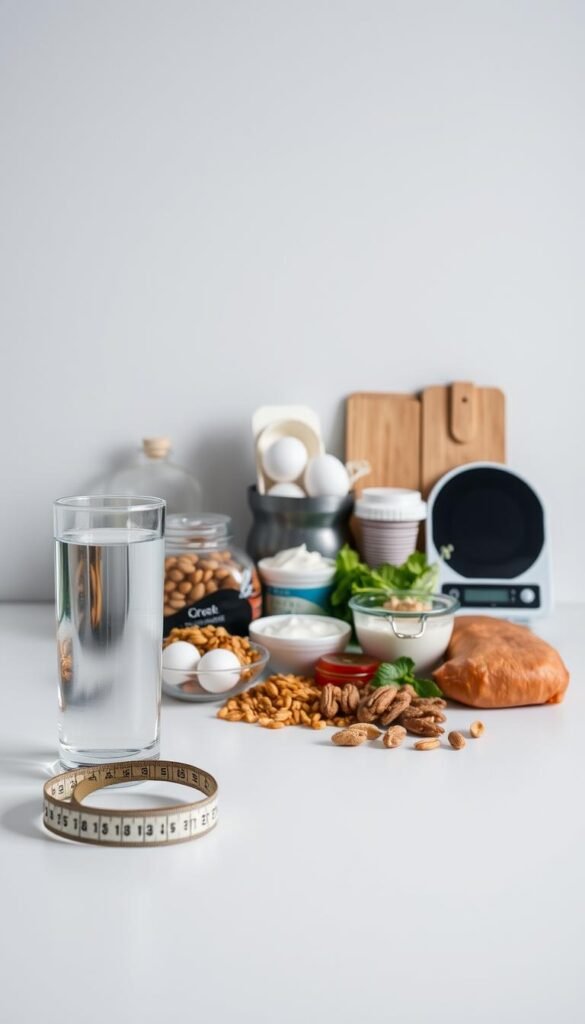
A smart calorie-controlled breakfast starts with macro balance. Keep protein high, trim extra fats, and use fiber-rich produce to add volume. This approach supports a weight management breakfast that still tastes great and keeps you full.
Leaner protein swaps to control fats
Use lean protein swaps to maintain flavor and cut calories. Try egg whites for part of the eggs, and choose turkey bacon or chicken sausage over pork. Go with low-fat cottage cheese or nonfat Greek yogurt. Pick tuna or smoked salmon packed in water, and cook with nonstick pans and a quick spray instead of butter.
These choices preserve protein for a 500-calorie breakfast while limiting saturated fat. The result is better macro balance and improved satiety per bite.
High-volume, low-calorie add-ins for fullness
Build plates with low-calorie high-volume foods. Pile on spinach, mushrooms, peppers, zucchini, and leafy greens. Add berries for color, fiber, and natural sweetness.
This strategy stretches portions without pushing calories. It supports a steady, calorie-controlled breakfast that keeps hunger in check.
Sample 400–500 calorie breakfast templates
- Omelet: 3 egg whites + 1 whole egg with mixed veggies, 1 oz reduced-fat cheddar, and 1 slice whole-grain toast. Strong protein, solid macro balance, and a reliable weight management breakfast.
- Skyr bowl: 1 cup skyr with 1/2 cup berries, 1 tbsp hemp hearts, and 1 tbsp almond butter. Creamy texture, fiber, and enough protein for a 500-calorie breakfast.
- Smoothie: 1 scoop whey isolate, 1 cup soy milk, 1/2 banana, 1 tbsp peanut butter, and a handful of spinach. Balanced carbs and fats with a clean protein base.
- Protein oats: Cook oats with 1/2 scoop whey, stir in 1/2 cup egg whites, and top with 1 tbsp chia seeds. Warm, filling, and ideal for a calorie-controlled breakfast.
Gluten-Free and Dairy-Free High-Protein Breakfast Swaps
A gluten-free high-protein breakfast does not need to feel limited. With smart swaps, you can keep flavor, texture, and strong nutrition. Aim for options that mix complete and complementary sources while staying gentle on the stomach.
Build your plate with balance. Combine fast-digesting picks for quick energy and steady protein that lasts. Rotate choices during the week so breakfasts stay fresh and simple to prep.
Alternative proteins: pea, soy, egg white, collagen
For a dairy-free protein boost, pea protein and soy protein powders deliver about 20–25 grams per scoop and blend well into smoothies or stirred into oats. Egg white powder offers a clean taste and complete amino acids, great for pancakes or quick shakes.
Collagen peptides dissolve fast in coffee or tea, but they are not complete. Pair collagen peptides with pea protein or soy protein to round out the profile. This combo keeps texture smooth and helps hit morning targets.
Gluten-free grains and wraps that hold up
Choose certified gluten-free oats or cooked quinoa as hearty bases for bowls. For portable meals, use GF wraps that resist tearing. Corn tortillas work for tacos, and brown rice cakes make crisp toasts that travel well.
Brands like Siete offer cassava and almond flour tortillas that fold cleanly for burritos. Egglife egg white wraps add structure with extra protein. These options make a gluten-free high-protein breakfast easy to assemble.
Dairy-free yogurts with competitive protein counts
Soy-based cups often lead for dairy-free yogurt protein, with many landing in the 8–15 gram range. Silk Greek Style Coconut made with added protein and Kite Hill Protein lines can reach double digits per serving.
Top with hemp hearts, chia, or a half scoop of pea protein to hit 20–30 grams fast. If you prefer milder flavor, try almond or coconut yogurts fortified for nutrients and blend in soy protein for a thicker, dessert-like bowl.
| Swap | Example Brands | How to Use | Protein Strategy | Breakfast Idea |
|---|---|---|---|---|
| Pea protein | Naked Nutrition, NOW Sports | Blend into smoothies or stir into oats | Combine with collagen peptides for a fuller amino mix | Berry shake with pea protein and banana |
| Soy protein | Bob’s Red Mill, BulkSupplements | Whisk into pancake batter or yogurt bowls | Use with GF wraps to balance carbs and protein | Fluffy soy protein pancakes with maple drizzle |
| GF wraps | Siete (cassava), Egglife (egg white) | Stuff with eggs, beans, or tofu | Pair with dairy-free protein spread or salsa | Breakfast burrito in GF wraps with black beans |
| Dairy-free yogurt protein | Silk Greek Style Coconut, Kite Hill Protein | Serve chilled with seeds and fruit | Boost with pea protein for 20–30 g total | Yogurt parfait with granola and blueberries |
| Collagen peptides | Vital Proteins, Sports Research | Stir into coffee, tea, or smoothies | Add soy protein or egg white powder to complete | Mocha shake with collagen and soy protein |
Meal Prep Strategies for a Week of Protein-Packed Mornings
A smart weekly breakfast plan turns hectic starts into calm, high-protein prep. Focus on simple systems you can repeat, then mix flavors so meals never feel stale. Use clear labels, note protein per serving, and keep food safety storage top of mind.
Set a 60–90 minute block once a week. Batch cook protein, portion staples, and build grab-and-go kits. This breakfast meal prep saves time on busy days and keeps energy steady.
Batch cooking proteins and mix-and-match components
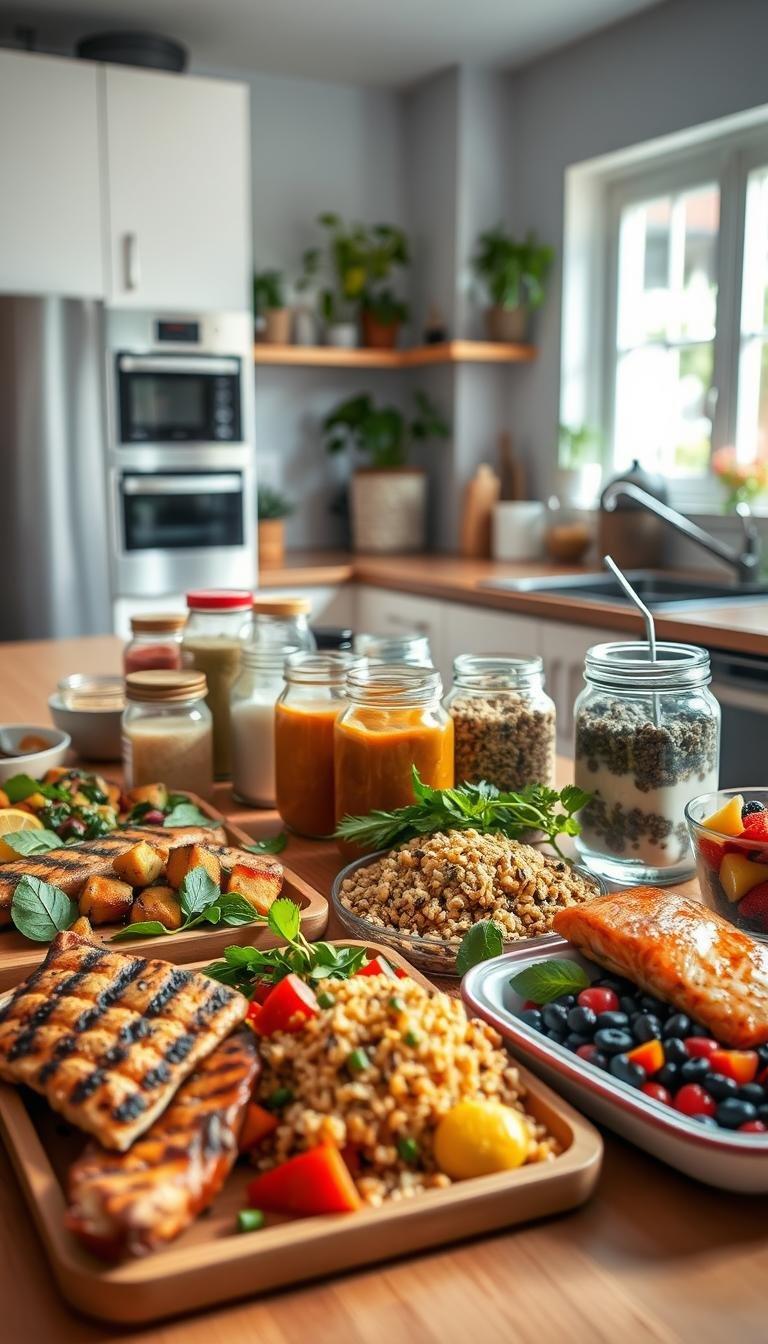
Batch cook protein so you can swap parts all week. Hard-boil 12–18 eggs, bake a sheet-pan frittata, and grill chicken or turkey sausage for 4–6 portions. Portion skyr or Greek yogurt, cook quinoa or steel-cut oats, and set up freezer smoothie packs with measured protein powder.
Pair these with fast sides: berries, banana, or apple; nuts and seeds; and ready greens. This make-ahead breakfast base supports quick wins without losing variety.
- Eggs and frittata: slice for wraps, bowls, or avocado toast.
- Chicken or turkey sausage: fold into burritos or breakfast salads.
- Oats or quinoa: stir in whey, casein, or soy isolate for extra protein.
- Yogurt cups: top with hemp hearts and almonds to reach target grams.
Storage, freezing, and reheating best practices
Move cooked eggs, meats, and frittata to the fridge within two hours and keep at 40°F or below. Eat refrigerated items within 3–4 days. For longer holds, freeze burritos, waffles, and frittata slices for 2–3 months.
Reheat to 165°F for safety and best texture. Use airtight containers, remove air from freezer bags, and label each item with date and protein grams. These food safety storage steps protect quality and make assembly fast.
Sunday prep checklist for five fast breakfasts
This high-protein prep plan builds a full workweek of options in under 90 minutes. Follow the steps, then rotate combos to fit tastes and the weekly breakfast plan.
- Bake one sheet-pan frittata; cut into five portions (~25–30 g each).
- Mix three jars of overnight oats with whey or soy isolate.
- Assemble two freezer burritos with eggs and black beans.
- Portion nuts/seeds and fruit for five quick add-ons.
- Stock ready-to-drink shakes and skyr for backup mornings.
| Prep Item | Portions | Protein per Portion (g) | Storage Method | Use-By | Reheat/Serve Tips |
|---|---|---|---|---|---|
| Sheet-Pan Frittata | 5 slices | 25–30 | Fridge or Freeze | 3–4 days fridge; 2–3 months frozen | Reheat to 165°F; add salsa or arugula |
| Hard-Boiled Eggs | 12–18 eggs | 6–7 each | Fridge | Up to 1 week | Pair 2 eggs with fruit and nuts |
| Grilled Chicken or Turkey Sausage | 4–6 portions | 20–25 | Fridge or Freeze | 3–4 days fridge; 2–3 months frozen | Slice into wraps or breakfast bowls |
| Overnight Oats with Isolate | 3 jars | 20–30 | Fridge | 3–4 days | Stir in berries and peanut butter |
| Skyr/Greek Yogurt Cups | 4–5 cups | 15–20 | Fridge | By printed date | Top with hemp hearts and granola |
| Freezer Smoothie Packs | 4–6 packs | 20–30 | Freeze | Up to 2–3 months | Blend with dairy milk, soy milk, or kefir |
| Freezer Burritos | 2 burritos | 25–30 | Freeze | Up to 2–3 months | Microwave, then crisp in skillet |
With clear labels, a dated rotation, and a balanced mix of textures, this breakfast meal prep makes every morning effortless. Batch cook protein once, follow safe storage, and you’ll always have a make-ahead breakfast ready to go.
Budget-Friendly Ways to Increase Morning Protein
A budget high-protein breakfast does not need special items or big spending. Build around pantry staples, compare unit prices, and use smart pairings that keep you full. These tactics turn cheap protein sources into tasty, repeatable morning wins.
Cost-effective staples: eggs, canned fish, bulk beans
- Eggs offer one of the lowest cost-per-gram of protein and cook fast in scrambles, burritos, or toast toppers.
- For a quick canned tuna breakfast, choose brands like Bumble Bee or Wild Planet; a can delivers about 20–25 grams plus omega-3s.
- Buy bulk beans and lentils to stock burritos, hashes, and breakfast bowls; they freeze well after cooking and stretch multiple meals.
Buying protein powder smart: value per serving
- Compare price by 20–25 gram serving to spot true value protein powder. Larger tubs and warehouse brands like Kirkland Signature often lower costs.
- Whey concentrate usually costs less than isolate; soy and pea powders compete well for plant-based diets.
- Keep flavors simple to use across smoothies, oats, and pancakes without waste.
Stretching protein with oats, veggies, and legumes
- Use oats, roasted potatoes, and sautéed vegetables to create stretch protein meals that are filling and affordable.
- Examples: black bean and egg white breakfast bowl with salsa; cottage cheese on rice cakes with steamed edamame; overnight oats with a half-scoop powder and peanut butter.
- Batch-cook beans and grains on Sunday to speed weekday prep and keep portions steady.
| Option | Main Protein | Add-Ons That Stretch | Approx. Protein (g) | Smart Savings Tip |
|---|---|---|---|---|
| Canned tuna breakfast pita | Canned tuna (Bumble Bee or Wild Planet) | Spinach, tomato, mustard | 25–30 | Buy multi-packs; check unit price per ounce |
| Egg and black bean skillet | Eggs + bulk beans | Onion, peppers, salsa | 22–28 | Cook beans in batches; freeze in 1-cup bags |
| Overnight oats | Half-scoop value protein powder | Oats, peanut butter, chia | 20–25 | Choose larger tubs or Kirkland Signature |
| Cottage cheese rice cakes | Low-fat cottage cheese | Edamame, everything seasoning | 22–26 | Pick store brands; compare price per ounce |
| Bean and egg wrap | Egg whites + bulk beans | Whole-grain tortilla, lettuce | 24–30 | Buy tortillas in value packs and freeze extras |
Conclusion
This High Protein Breakfasts summary brings the guide full circle: aim for 20–35 grams of protein at breakfast to boost satiety, support muscle repair, and promote steady blood sugar. Research reported in the Journal of Nutrition shows that range helps active adults and older adults. Pair protein with complex carbs and healthy fats to build a healthy morning routine that delivers sustained energy without mid-morning crashes.
Choose from eggs, Greek yogurt, skyr, tofu, tempeh, beans, and lean meats, and keep gluten-free and dairy-free swaps on hand. Store picks like skyr cups, cottage cheese, jerky, and ready-to-drink shakes make busy mornings easier. With smart meal prep, such as cooking a batch of frittatas or portioning overnight oats with whey or soy, it becomes simple to stay consistent and aligned with U.S. nutrition guidance.
Balance matters. Add oats, whole-grain toast, or fruit for complex carbs, and include avocado, nuts, or olive oil for fats that round out the plate. Use budget moves like canned salmon, eggs, and bulk legumes to keep costs in check while preserving breakfast protein benefits and sustained energy.
Mix and match ideas from this guide to plan five quick, satisfying plates for the week. Keep portions within the 20–35 gram target, rotate flavors, and lean on meal prep for speed. The result is a practical, flavorful routine that fits U.S. nutrition guidance and supports a healthy morning routine day after day.
FAQ
How much protein should I aim for at breakfast to stay energized?
Most adults do well with 20–35 grams of high-quality protein at breakfast. Research in the Journal of Nutrition and guidance from the International Society of Sports Nutrition show this range supports satiety, stabilizes blood sugar, and maximizes muscle protein synthesis. Active adults and older adults may benefit from the higher end.
Why does protein at breakfast help with blood sugar and focus?
Protein slows gastric emptying and moderates insulin response, which reduces glucose spikes after eating. Studies in Diabetes Care and the American Journal of Clinical Nutrition show that pairing protein with fiber and healthy fats leads to steadier energy and better concentration through the morning.
What are quick high-protein breakfast ideas I can make in under 10 minutes?
Try Greek yogurt or skyr with almonds and chia, cottage cheese with pineapple and hemp hearts, a whey smoothie with frozen berries, whole-grain toast with scrambled eggs, or a ready-to-drink shake like Fairlife Core Power, Premier Protein, Orgain, or OWYN paired with fruit.
How do amino acids curb cravings before lunch?
Protein’s amino acids increase satiety hormones like GLP-1, PYY, and CCK while reducing ghrelin, the hunger hormone. Trials in Obesity and Appetite link higher-protein breakfasts to fewer cravings and less snacking.
What is an evidence-based protein target per meal for active adults?
Aim for roughly 0.25–0.40 g/kg per meal, which for many adults is 20–35 g. Organizations like the Academy of Nutrition and Dietetics and ISSN recommend 1.2–2.0 g/kg/day overall for active and older adults.
How should I balance protein, carbs, and fats at breakfast?
A practical template is 20–35 g protein, 25–45 g complex carbohydrates from oats, whole-grain bread, or fruit, and 10–20 g healthy fats from nuts, seeds, avocado, or olive oil. This balance aligns with the Dietary Guidelines for Americans 2020–2025.
Can you give portion examples that hit 25–35 grams of protein?
Yes. Examples: 3 eggs plus 1 oz cheese; 1 cup nonfat Greek yogurt with 2 tbsp peanut butter; 1 scoop whey isolate with 1 cup dairy milk; 1 cup skyr with high-protein granola and seeds; tofu scramble with 6 oz extra-firm tofu plus 1/4 cup nutritional yeast.
What are hearty high-protein breakfasts that keep me full?
Try egg-and-turkey sausage bowls with quinoa and spinach, protein oats with egg whites and peanut butter, tempeh hash with sweet potatoes, a breakfast burrito with egg whites, black beans, and avocado, or protein pancakes made with whey and cottage cheese.
How can I meal prep breakfast frittatas that reheat well?
Bake a 9×13-inch frittata with 10–12 eggs, 1–2 cups egg whites, vegetables, and lean proteins. Cool quickly, portion, and refrigerate up to 4 days or freeze for 2–3 months. Reheat to 165°F. Adjust egg and egg white ratios to reach 20–30 g protein per slice.
Which Greek yogurt or skyr should I choose for more protein and less sugar?
Look for plain nonfat Greek yogurt (Chobani, Fage Total 0%) with 15–20 g protein and ≤7–9 g sugar per serving, or skyr such as Siggi’s or Icelandic Provisions with 17–20 g protein per cup. Add fruit for natural sweetness.
What toppings boost protein in yogurt bowls?
Add hemp hearts, peanut or almond butter, almonds, walnuts, pumpkin seeds, or a high-protein granola like KIND or Purely Elizabeth Protein. Aim for 25–35 g total by combining skyr with nuts or seeds and, if needed, a scoop of whey or collagen.
How do I make protein pancakes or waffles that are actually filling?
Use 20–30 g of whey isolate, casein, or a soy/pea blend per serving. A cottage cheese–oat batter with egg whites adds complete protein and fiber. Keep sugars low with berries and consider reduced-sugar syrups from ChocZero or Lakanto.
What tortillas and fillings make a high-protein breakfast burrito?
Choose whole-wheat or high-fiber low-carb tortillas like Mission Carb Balance or La Tortilla Factory, or egg white wraps like Egglife. Fill with egg whites, turkey sausage, black beans, reduced-fat cheese, and vegetables. Target 25–35 g protein per burrito.
How can I upgrade oats for more protein without making them gritty?
Stir 1/3–1/2 cup pasteurized egg whites into hot oats near the end, or fold in Greek yogurt or cottage cheese after cooking. For powders, use whey isolate for smoothness or micellar casein for overnight oats. Add chia, flax, and peanut butter for texture and fats.
What’s the best liquid base for a protein smoothie?
Dairy milk, soy milk, or kefir. Dairy milk provides about 8 g protein per cup; soy milk offers 7–8 g and is a complete protein; kefir adds protein plus live cultures. Choose unsweetened versions to keep sugars in check.
Are there satisfying plant-based high-protein breakfasts?
Yes. Try tofu scrambles, chickpea omelets, tempeh hash, edamame toast, or seitan breakfast wraps. Use soy milk, soy yogurt, or pea protein to boost totals. Combine grains and legumes across meals to cover essential amino acids.
What grab-and-go items from the store reach 25–30 grams fast?
Pair a 20–30 g ready-to-drink shake like Fairlife Core Power, Premier Protein, or Orgain with fruit and nuts, or match a skyr cup from Siggi’s or Icelandic Provisions with an almond pack. Cottage cheese cups from Good Culture or Daisy also work with jerky like Chomps or Stryve.
How do I read labels for protein, sugar, and fiber?
Aim for at least 15–20 g protein per item, 3–5 g fiber or more, and no more than 9–12 g added sugar. Keep saturated fat at or below 20% Daily Value and sodium near or under 500 mg when possible for breakfast picks.
How can I manage calories without losing protein?
Choose leaner swaps like egg whites for part of the eggs, turkey bacon or chicken sausage, nonfat Greek yogurt, and low-fat cottage cheese. Use cooking spray, pile on non-starchy vegetables, and keep portions of oats and fruit balanced for energy.
What are some 400–500 calorie breakfast templates with 25–35 g protein?
Options include a veggie omelet with 3 egg whites and 1 whole egg plus reduced-fat cheese and whole-grain toast; 1 cup skyr with berries, hemp hearts, and almond butter; a smoothie with whey isolate, soy milk, banana, peanut butter, and spinach; or protein oats with egg whites and chia.
What are gluten-free and dairy-free ways to get protein at breakfast?
Use pea or soy protein powders, egg white protein, or collagen paired with complete proteins. Build meals with certified gluten-free oats, quinoa, corn tortillas, or Siete tortillas. For dairy-free yogurts, try soy-based or protein-fortified options like Silk Greek Style or Kite Hill Protein and add seeds to reach 20–30 g.
How can I meal prep a week of protein breakfasts safely?
Batch-cook a sheet-pan frittata, hard-boil eggs, portion skyr, prep turkey sausage, cook quinoa or steel-cut oats, and assemble freezer smoothie packs. Refrigerate within 2 hours at 40°F or below, eat within 3–4 days, or freeze for 2–3 months. Reheat to 165°F.
What are budget-friendly ways to raise morning protein?
Rely on eggs, canned tuna, salmon, or sardines from brands like Bumble Bee or Wild Planet, and bulk beans and lentils. Buy larger tubs or store-brand protein powders such as Costco’s Kirkland to cut cost per serving. Stretch meals with oats, vegetables, and legumes.
Which protein sources are richest in leucine for muscle protein synthesis?
Whey, dairy, eggs, and soy are leucine-rich and reliably trigger mTOR signaling for muscle protein synthesis. Include 2–3 grams of leucine per meal by choosing whey isolate, Greek yogurt, skyr, eggs, or soy foods like tofu or edamame.
Are there store-bought high-protein breakfasts for kids or teens?
Yes. Choose lower-sugar Greek yogurt or skyr cups, cottage cheese, or mini shakes with 15–25 g protein and ≤9 g added sugar. Pair with fruit and nuts or whole-grain toast. Balanced protein at breakfast has been linked with improved attention in school-age children.