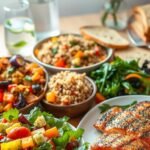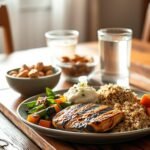
Light & Tasty Salad Recipes for Weight Loss
Surprising fact: The Centers for Disease Control and Prevention reports that fruits and vegetables are low in energy density, which lets you eat larger, satisfying portions with fewer calories. That single principle is the backbone of light salads that taste great and help you manage weight without feeling deprived.
This Website contains affiliate links. That means I may earn a small commission if you purchase through my links, at no extra cost to you.
This guide brings you Salad Recipes for Weight Loss designed for everyday life in the United States. We pair flavor-first ideas with evidence from the Dietary Guidelines for Americans 2020–2025, highlighting vegetables, fruits, legumes, and lean proteins. Expect healthy salad ideas that are easy to prep, budget-savvy, and packed with texture.
Research in The American Journal of Clinical Nutrition links higher fiber intake to better fullness and weight outcomes. Here, you’ll find low-calorie salads that use high-volume greens, lean chicken breast, tuna, or tofu, plus smart fats like extra-virgin olive oil and avocado in modest amounts. We’ll show how to build nutritious salads, choose dressings that brighten flavor, and turn them into weeknight weight loss meals you’ll actually crave.
From seasonal picks at Kroger and Trader Joe’s to pantry wins like Goya chickpeas and StarKist tuna, these easy salad recipes keep cost and convenience in mind. You’ll get step-by-step tips, clear macro targets, and allergen-smart swaps—so your light salads stay fresh, balanced, and bold in taste.
Key Takeaways
- Fruits and veggies are low in energy density, helping you enjoy larger portions with fewer calories.
- Follow the Dietary Guidelines for Americans by prioritizing greens, lean proteins, legumes, and produce.
- High fiber boosts fullness, making low-calorie salads ideal for sustainable weight loss.
- Balance salads with greens, protein, smart fats, and high-fiber carbs for steady energy.
- Use bright acids, herbs, and spices to dial up flavor without adding many calories.
- Shop seasonal and use pantry staples for nutritious salads that fit any budget.
- Prep ingredients ahead to make weight loss meals fast, fresh, and satisfying.
Why Light and Tasty Salads Support Sustainable Weight Loss
Light, flavorful bowls make it easier to eat well day after day. Building meals around low energy density foods helps you enjoy high-volume meals without overshooting calories. This approach supports appetite control while keeping flavors bright and fresh.
Think crisp greens, juicy cucumbers, and ripe tomatoes paired with lean proteins. These choices promote satiety and steady energy, which are key for sustainable weight loss.
Low-Calorie Density and High Volume
Low energy density foods contain more water and fiber per bite. You can fill your plate with high-volume meals and still stay within your goals. A big salad feels generous, which helps appetite control and reduces the urge to snack.
Leafy mixes with cucumbers, tomatoes, and peppers offer crunch and color. Add grilled chicken or tuna from brands like Starkist for protein that reinforces satiety.
Fiber, Satiety, and Blood Sugar Balance
Dietary fiber slows digestion and smooths your glycemic response. When beans, lentils, or quinoa join the bowl, you stay fueled longer. This steadier rise in blood sugar supports appetite control through the afternoon.
Combine spinach, kale, chickpeas, and pumpkin seeds with a light olive oil and lemon dressing. The mix boosts satiety while keeping flavors bright and clean.
Nutrient Density vs. Empty Calories
Nutrient-dense salads pack vitamins and minerals into each calorie. Crucifers like broccoli and kale bring vitamin C, vitamin K, and folate. Colorful peppers, carrots, and herbs add phytonutrients that support overall health.
Pair produce with lean proteins such as Tyson grilled chicken or Bumble Bee tuna and a squeeze of citrus. This balance improves diet quality and aligns with sustainable weight loss goals.
How to Build a Balanced Weight-Loss Salad
This weight-loss salad formula makes balanced salads simple and craveable. Use these salad building tips to mix greens, lean protein, healthy fats, and high-fiber carbohydrates so every bowl tastes great and keeps you full.
Greens and Crucifers as the Base
Start with 2–4 cups of romaine, spinach, arugula, or a spring mix. Add crucifers like kale, shredded Brussels sprouts, or broccoli slaw for bite and nutrients.
This base adds volume, vitamin K, and folate while keeping calories modest. It sets the stage for balanced salads that feel light yet satisfying.
Lean Proteins for Fullness
Target 20–35 grams of lean protein per bowl. Try grilled chicken breast, roasted turkey, canned tuna or salmon in water, shrimp, extra-firm tofu, tempeh, edamame, cottage cheese, hard-boiled eggs, or cooked lentils.
A 3-ounce serving of chicken breast provides about 26 grams of protein, which supports appetite control and steady energy.
Smart Fats for Flavor and Absorption
Add 1–2 small servings of healthy fats to boost taste and help absorb vitamins A, D, E, and K. Use extra-virgin olive oil, avocado, walnuts, almonds, pumpkin seeds, or tahini.
Think 1–2 teaspoons olive oil, 1 tablespoon seeds, or about 1 ounce avocado. These choices round out the weight-loss salad formula without weighing it down.
High-Fiber Carbs to Power Your Day
Include 1/2–1 cup of high-fiber carbohydrates for long-lasting fuel. Good picks are black beans, chickpeas, lentils, quinoa, farro, barley, or roasted sweet potato.
Chickpeas offer roughly 8 grams of fiber per cup cooked, which supports fullness and a steady pace through the afternoon.
Herbs, Acids, and Crunch for Satisfaction
Layer fresh cilantro, parsley, basil, or dill for aroma. Brighten with lemon or lime juice and vinegars like balsamic, red wine, apple cider, or rice.
Add crunch with radishes, cucumbers, or pickled onions. These salad building tips heighten flavor and texture, turning balanced salads into meals you look forward to eating.
Seasonal Produce Guide for Better Flavor and Nutrition
Shop with the calendar, and your salad gets an instant upgrade. Seasonal eating means you bring home fresher, brighter, and better-value finds that turn into peak-season salads. Use simple farmers market tips: taste before you buy, ask growers when it was picked, and choose varieties with a strong scent and firm feel. These habits make fresh salad ingredients shine without heavy dressings.
USDA data and Specialty Crop reports show that seasonal produce often holds more flavor and nutrients at a lower cost. When it’s off-season, frozen options keep quality high and waste low.
Spring Greens and Tender Veg
Look for spinach, arugula, pea shoots, asparagus, radishes, and strawberries. Tender greens taste sweeter and less bitter now, which sets a light base for peak-season salads. Brighten with lemon and dill, then add a small crumble of feta or goat cheese, or a dairy-free swap, to keep balance.
For quick wins, rinse and spin greens the day you buy them. These farmers market tips help you store leaves dry and crisp, so your fresh salad ingredients last all week.
Summer Tomatoes, Cucumbers, and Stone Fruit
Tomatoes—cherry and heirloom—cucumbers, bell peppers, corn, and zucchini pack water and color. Peaches, nectarines, and blueberries bring gentle sweetness that supports seasonal eating without many calories. Toss with basil, mint, olive oil, balsamic, and lemon for lift.
Keep cuts larger to preserve texture in the heat. This simple move turns seasonal produce into juicy bowls that stay satisfying and travel well.
Fall Squash and Hearty Leaves
Butternut and delicata squash, apples, pears, beets, carrots, kale, and Swiss chard rule the basket. Roast squash or beets to coax out sweetness, then balance with a lively acidic dressing. Add toasted pumpkin or sunflower seeds for crunch.
Warm farro or quinoa folds in fiber and staying power. With these fresh salad ingredients, you get color, texture, and comfort in each forkful.
Winter Citrus and Brassicas
Navel oranges, grapefruit, and mandarins add vitamin C and sparkle. Fennel, red cabbage, Brussels sprouts, and cauliflower make bold bases when shaved thin. Miso, tahini, or yogurt-based dressings bring depth without weight.
Shred brassicas for a hearty slaw and finish with citrus segments. This approach keeps seasonal eating vivid while cold-weather produce stays center stage.
| Season | Star Picks | Flavor Boosters | Texture Moves | Quick Farmers Market Tips |
|---|---|---|---|---|
| Spring | Spinach, arugula, pea shoots, asparagus, radishes, strawberries | Lemon, dill, light feta or goat cheese, dairy-free options | Keep greens dry and crisp; slice radishes thin | Buy early; choose crisp stems and fragrant berries |
| Summer | Heirloom and cherry tomatoes, cucumbers, peppers, corn, zucchini, peaches, blueberries | Basil, mint, olive oil, balsamic, lemon | Cut larger chunks to retain juices | Pick tomatoes with a deep scent; avoid refrigerated fruit |
| Fall | Butternut, delicata, apples, pears, beets, carrots, kale, Swiss chard | Vinegar-forward dressings, toasted seeds | Roast squash and beets; massage kale | Choose heavy-for-size squash; look for firm roots |
| Winter | Navel oranges, grapefruit, mandarins, fennel, red cabbage, Brussels sprouts, cauliflower | Miso, tahini, yogurt-based dressings | Shave brassicas thin; segment citrus | Seek tight cabbage heads; pick heavy citrus with thin skin |
Use this guide to plan peak-season salads around what looks and smells best. With steady seasonal eating and a few farmers market tips, your fresh salad ingredients will deliver bold flavor and steady nutrition year-round.
Salad Recipes for Weight Loss
These healthy salad recipes keep flavor high and calories in check. Each bowl leans on produce, lean protein, and smart fats so you stay full without feeling weighed down. Explore ideas you can prep fast and enjoy any day of the week.
Lean Protein-Packed Greek Chopped Salad
Think Greek salad healthy, but built for energy. Chop romaine, cucumber, tomato, red onion, and a few kalamata olives. Add reduced-fat feta or a dairy-free feta, plus grilled chicken breast or chickpeas for protein.
Toss with extra-virgin olive oil, red wine vinegar, oregano, and lemon. Aim for 1–2 teaspoons of oil per serving. With chicken, expect about 350–450 calories, 30–35 grams of protein, and balanced carbs. It works as a chicken salad for weight loss and stays crisp for lunch.
Crunchy Rainbow Slaw with Citrus Vinaigrette
This low-calorie slaw blends red and green cabbage, carrots, bell peppers, scallions, and cilantro. For staying power, add shelled edamame or grilled tofu. The crunch satisfies without extra calories.
Shake up orange and lime juice with rice vinegar, a teaspoon of sesame oil per serving, ginger, and a touch of honey or maple. Expect roughly 250–380 calories with edamame. High fiber and vitamin C make it a standout among healthy salad recipes.
Zesty Southwest Chicken and Corn Salad
Layer mixed greens, grilled chicken, roasted or thawed corn, black beans, cherry tomatoes, red onion, and one-quarter avocado. Brighten with cilantro and a squeeze of lime. It’s bold, fresh, and fast.
Whisk a cumin-lime vinaigrette with 1 teaspoon olive oil and chili powder. You’ll land around 400–500 calories and 30+ grams of protein, ideal as a chicken salad for weight loss. For more variations, explore ideas on healthy salad recipes.
Herbed Lentil and Arugula Power Bowl
Build a hearty base with cooked green or French lentils and peppery arugula. Add cherry tomatoes, cucumbers, shaved fennel, parsley, and dill. The mix hits all the notes: crisp, tender, and bright.
Finish with a spoon of tahini-lemon dressing and optional pumpkin seeds. This lentil salad recipe delivers about 350–450 calories, 18–24 grams of plant protein, and 12+ grams of fiber. It’s a smart way to stay full without the slump.
| Recipe | Main Protein | Estimated Calories | Key Nutrients | Flavor Highlights |
|---|---|---|---|---|
| Greek Chopped | Grilled chicken or chickpeas | 350–450 | 30–35 g protein, balanced carbs | Lemon, oregano, red wine vinegar |
| Rainbow Slaw | Edamame or tofu | 250–380 | High fiber, vitamin C, carotenoids | Orange-lime, ginger, sesame |
| Southwest Chicken & Corn | Grilled chicken | 400–500 | 30+ g protein, fiber from beans | Cumin-lime, chili, cilantro |
| Herbed Lentil & Arugula | Lentils | 350–450 | 18–24 g protein, 12+ g fiber | Tahini-lemon, fresh herbs |
Tip: Keep oil to measured teaspoons, lean into citrus and herbs, and rotate proteins to match your goals.
High-Protein Salad Ideas That Keep You Full
These high-protein salads turn simple produce into protein-packed meals that satisfy. Each bowl uses easy pantry items and fresh greens, with smart fats and bright acids for balance.
Tip: Keep portions steady and flavors bold so every bite feels worth it. A tuna salad healthy option, a vibrant shrimp salad, and a cool cottage cheese bowl cover lunch cravings all week.
Tuna and White Bean Lemon Salad
Use canned light tuna in water guided by FDA/EPA mercury advice, then fold in cannellini beans, celery, red onion, parsley, and capers. Dress with lemon juice and 1 teaspoon olive oil per serving, and serve over baby kale.
This mix lands about 35–40 g protein and around 400 calories, with omega-3s and fiber that help you stay full. It’s a bright, tuna salad healthy staple that fits neatly into protein-packed meals.
Grilled Shrimp over Mixed Greens
Season 4–6 ounces of shrimp with paprika, garlic, and lemon, then grill until just opaque. Add to mixed greens with cherry tomatoes, cucumbers, and a slice of avocado, plus a light vinaigrette.
Shrimp brings roughly 23 g protein per 4 ounces at close to 120 calories. Expect a 350–450 calorie bowl that tastes like a coastal shrimp salad while still hitting your high-protein salads goals.
Cottage Cheese, Tomato, and Cucumber Bowl
Spoon 1 cup low-fat cottage cheese into a bowl and top with grape tomatoes, cucumbers, olives if you like, fresh dill, black pepper, and a light drizzle of balsamic. Add a handful of arugula for peppery bite.
Brands like Good Culture and Daisy deliver about 28 g protein with calcium and possible probiotics. This cottage cheese bowl runs roughly 300–380 calories and rounds out a week of protein-packed meals with clean, cool crunch.
Low-Calorie Dressings That Don’t Skimp on Flavor
Bright, light, and bold—these healthy salad dressings bring big taste with fewer calories. Each option uses pantry staples and simple ratios, so you can whisk and pour in minutes. Keep portions in check, taste as you go, and let fresh herbs and acids do the heavy lifting.
Classic Light Lemon Vinaigrette
This low-calorie vinaigrette leans on a 1:3 oil-to-acid ratio. Whisk 1 teaspoon extra-virgin olive oil with 1 tablespoon lemon juice, a dab of Dijon, minced garlic, salt, and pepper. Expect about 45–60 calories per tablespoon and a clean, citrus snap that flatters greens and roasted veg.
Yogurt-Based Creamy Ranch
For a creamy twist, make yogurt ranch with nonfat or low-fat Greek yogurt from Fage or Chobani, plus buttermilk or unsweetened almond milk. Stir in dill, chives, parsley, garlic powder, onion powder, and a squeeze of lemon. You get 15–30 calories per tablespoon and 2–3 grams of protein, perfect for hearty bowls.
Miso-Ginger Dressing with Rice Vinegar
This miso ginger dressing blends white miso, grated fresh ginger, rice vinegar, a touch of soy sauce or tamari, and water to thin. Add 1/4–1/2 teaspoon sesame oil per serving for aroma without excess fat. It lands around 20–35 calories per tablespoon and layers deep umami over crunchy salads.
Balsamic Shallot Reduction
For a near oil-free option, simmer balsamic vinegar with minced shallots until glossy, then finish with a splash of water. This balsamic reduction packs a sweet-tart punch at about 15–25 calories per tablespoon, so a little goes a long way over tomatoes, chicken, or grilled vegetables.
| Dressing | Key Ingredients | Approx. Calories (per tbsp) | Texture & Flavor Notes | Best Pairings |
|---|---|---|---|---|
| Light Lemon Vinaigrette | Olive oil, lemon juice, Dijon, garlic | 45–60 | Silky, bright, tangy | Arugula, cucumbers, grilled shrimp |
| Yogurt Ranch | Greek yogurt, buttermilk, dill, chives | 15–30 | Creamy, herby, cool | Romaine, carrots, baked potatoes |
| Miso-Ginger | White miso, ginger, rice vinegar, sesame oil | 20–35 | Umami-rich, zesty, aromatic | Cabbage slaw, edamame, salmon |
| Balsamic Shallot Reduction | Balsamic vinegar, shallots, water | 15–25 | Syrupy, sweet-tart, bold | Spinach, strawberries, grilled chicken |
Tip: For healthy salad dressings that stay lively all week, store in sealed jars, shake before serving, and dress right before you eat.
These choices keep flavor front and center while staying light: a low-calorie vinaigrette for zip, yogurt ranch for creaminess, miso ginger dressing for depth, and a balsamic reduction for concentrated sweetness.
Plant-Forward and Vegan Salad Options
These vegan salads lean on bright produce and plant-based protein for steady energy. Each bowl uses simple pantry spices and fresh herbs, keeping flavors bold and portions satisfying. They also work as dairy-free salads for anyone avoiding milk-based ingredients.
Chickpea Shawarma Salad with Tahini
Try a chickpea salad that eats like street food. Roast chickpeas with cumin, coriander, paprika, and turmeric until crisp. Pile over chopped romaine with cucumbers, tomatoes, red onion, and parsley.
Whisk tahini with lemon juice, garlic, a pinch of salt, and water to thin. Drizzle and toss. You’ll land around 400–500 calories, 18–22 grams of plant-based protein, and over 14 grams of fiber.
Quinoa, Kale, and Roasted Veg Mix
This quinoa kale salad starts with massaged kale and fluffy quinoa for a complete protein base. Add roasted broccoli and carrots, then cherry tomatoes for a juicy pop.
Finish with a lemon–olive oil dressing using about 1 teaspoon of oil per serving, and sprinkle pumpkin seeds. Expect 12–18 grams of protein plus minerals like magnesium and vitamin K.
Watermelon, Cucumber, and Mint Medley
For hot days, cube watermelon and toss with sliced cucumber and fresh mint. Squeeze lime, add a pinch of sea salt, and fold in light vegan feta if you like. The result is ultra-hydrating and low in calories.
Pair this bowl with grilled tofu to boost plant-based protein. It complements other dairy-free salads on your menu and brings a crisp contrast to richer vegan salads.
Meal Prep Strategies for Fresh Salads All Week
Weekly salad prep makes healthy eating simple on busy days. A few smart steps keep textures crisp, flavors bright, and food safety on point so each bowl tastes freshly made.
Layering Jars to Keep Ingredients Crisp
Build mason jar salads in this order: dressing first, then firm veggies like carrots, cucumbers, and bell peppers. Add proteins and grains next, and finish by storing greens and herbs on top so leaves stay dry.
Seal and store upright. When it’s time to eat, shake the jar or tip it into a bowl for ideal texture during salad meal prep.
Pre-Cooking Proteins and Grains Safely
For food safety, chill cooked chicken, shrimp, tofu, and grains within two hours and keep them at 40°F or colder. Plan to use them within three to four days during your weekly salad prep.
Portion 4–6 ounces of protein and 1/2–3/4 cup of grains in labeled containers. This speeds assembly and avoids waste in everyday salad meal prep.
Storing Greens and Herbs for Maximum Freshness
Wash and spin dry thoroughly. Line containers with paper towels and use breathable produce boxes for longer life when storing greens. If leaves wilt, revive them in ice water and pat dry.
Keep delicate herbs like cilantro and parsley stems-down in a jar with a little water, loosely covered. Wrap hardy herbs such as rosemary and thyme in a damp towel to support crisp mason jar salads and safe, flavorful weekly salad prep.
Smart Portioning and Calorie Targets
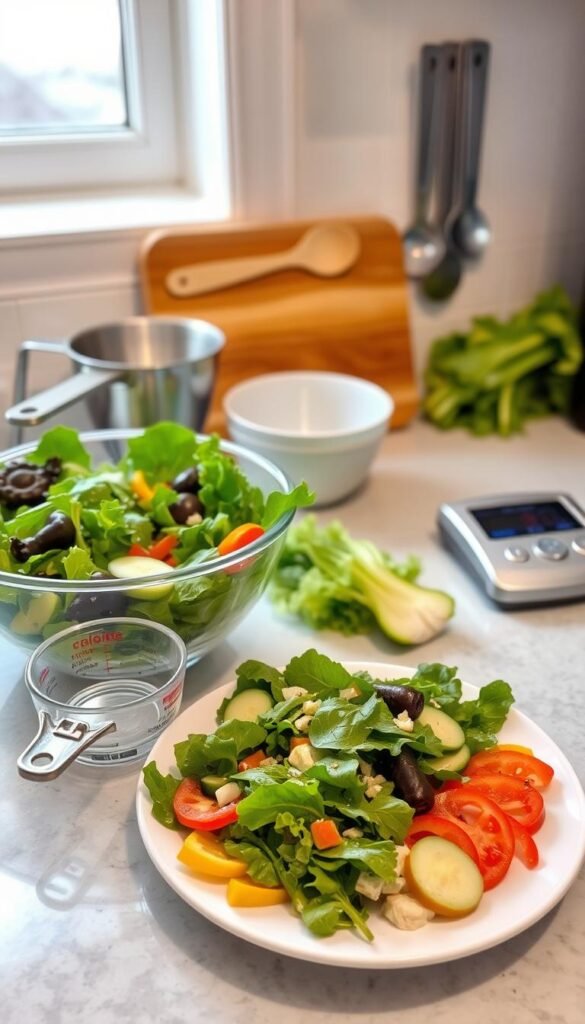
Dial in salad portioning with simple visual cues. Use portion control to hit realistic calorie targets and keep meals balanced. A hand portion guide helps you stay on track even when you eat out or prep at home.
Tip: Keep flavor high with acids and herbs so smaller amounts of oil still taste rich. This supports macros for weight loss without feeling deprived.
Estimating Calories Without a Scale
- Palm of cooked protein: about 3–4 oz.
- Cupped hand of carbs: about 1/2 cup cooked grains or beans.
- Thumb of fats: 1–2 tsp oil or nut butter.
- Two fists of greens: a hearty base for volume.
Use the hand portion guide to estimate macros for weight loss on busy days. Apps like USDA FoodData Central and MyFitnessPal can refine numbers if you want more detail.
Protein, Carb, and Fat Ranges per Serving
- Energy: 350–550 kcal per salad.
- Protein: 20–35 g for fullness and recovery.
- Carbs: 25–45 g, with fiber-rich picks like beans, quinoa, or fruit.
- Fat: 10–20 g from olive oil, avocado, nuts, or seeds.
Keep dressing to 1–2 tbsp. Choose higher-acid, lower-oil blends to meet calorie targets while keeping taste bright.
| Component | Hand Cue | Typical Amount | Macro Focus | Notes for Salad Portioning |
|---|---|---|---|---|
| Greens | Two fists | 2–3 cups | Low kcal, fiber | Add crunch with cabbage or kale to boost fullness without raising calories. |
| Protein | Palm | 3–4 oz cooked | 20–35 g protein | Use chicken breast, tuna, shrimp, tofu, or lentils to hit macros for weight loss. |
| Carbs | Cupped hand | 1/2 cup cooked | 25–45 g carbs | Favor beans or whole grains; adjust based on training days. |
| Fats | Thumb | 1–2 tsp oil | 10–20 g fat | Use extra-virgin olive oil or avocado; measure for precise portion control. |
| Dressing | Measured | 1–2 tbsp | Flavor, fat | Lean on citrus, vinegar, and herbs to keep calories in check. |
When to Add Fruit, Nuts, or Cheese
Add fruit like berries, apple, or citrus when you need brightness and vitamin C. If you include nuts or seeds, keep it to about 1 tbsp; for cheese, aim for 1 oz of reduced-fat feta, goat, or Parmesan.
Balance upgrades by trimming oil or starch in the same bowl. This keeps portion control tight and protects your calorie targets without losing satisfaction.
Flavor Boosters That Don’t Add Many Calories
Turn simple greens into craveable bowls with low-calorie flavor boosters that wake up every bite. Layer brightness, crunch, and aroma so you rely less on oil or cheese and still love your salad.
Citrus Zest and Fresh Herbs
Grate lemon, lime, or orange zest right over the bowl to release fragrant oils without adding weight. Toss with fresh herbs like basil, mint, dill, cilantro, parsley, or tarragon. These fresh herbs add lift and color, turning a basic mix into something lively.
Try a squeeze of citrus juice, then finish with zest for a layered pop. A handful of chopped herbs can replace extra dressing while keeping flavor bold.
Pickled Onions and Quick Pickles
For snap and tang, make pickled onions with vinegar, water, salt, and a pinch of sugar; chill for 30 minutes or overnight. They bring a bright edge that balances rich proteins and grains.
Quick-pickle cucumbers or radishes the same way for crisp bites that stay light. These pickled onions and quick pickles deliver contrast that keeps each forkful interesting.
Spices, Chili Flakes, and Umami
Dust greens with spice blends such as smoked paprika, cumin, coriander, or za’atar. Add chili flakes for gentle heat, plus garlic and onion powders for a savory base. A sprinkle of everything bagel mix is an easy, crunchy hit.
For deeper notes, reach for umami seasoning: a touch of miso or tamari, a few drops of fish sauce, chopped sun-dried tomatoes, or nutritional yeast. These choices boost savoriness so you can use less oil and still feel satisfied.
Gluten-Free, Dairy-Free, and Allergen-Smart Swaps
Build allergen-free salads that stay crisp, bright, and satisfying. These allergy-friendly recipes keep flavor high while helping you avoid common triggers. The ideas below work for busy weeknights and meal prep, and they fit right into gluten-free salads and dairy-free salad swaps with ease.
Crunch Alternatives to Croutons
Skip bread cubes and reach for bold texture. Try roasted chickpeas, crispy lentils, toasted quinoa, or crumbled brown rice cakes. For store-bought crunch in gluten-free salads, use Mary’s Gone Crackers. These swaps keep sodium in check and add fiber that supports allergen-free salads.
- Roasted chickpeas: paprika, garlic, and a pinch of sea salt
- Toasted quinoa: dry-toast in a skillet until nutty
- Crispy lentils: bake cooked lentils until crackly
- Gluten-free crackers: Mary’s Gone Crackers, lightly crushed
Dairy-Free Creaminess with Avocado or Yogurt Alternatives
For dairy-free salad swaps, blend silken tofu with lemon, olive oil, and herbs for a silky dressing. If you avoid soy, mash avocado with lime for a rich base, or choose oat- or coconut-based yogurt from So Delicious or Forager Project. White beans also whip into a smooth, neutral cream that suits allergen-free salads.
- Avocado-lime mash with cilantro and chili flakes
- Silken tofu, lemon, dill, and pepper, blended
- Oat or coconut yogurt with mustard and apple cider vinegar
- White bean purée for soy- or sesame-sensitive eaters
Nut-Free Crunch with Seeds
For nut-free toppings, go with pumpkin, sunflower, or hemp seeds. They add snap, minerals like zinc and magnesium, and heart-healthy fats. Check labels for shared lines and review FALCPA guidance if you manage severe allergies. These simple moves power allergy-friendly recipes without losing texture.
| Swap | Main Benefit | Flavor Pairings | Allergen Notes |
|---|---|---|---|
| Roasted chickpeas | High fiber, extra crunch | Smoked paprika, cumin, lemon | Gluten-free option for croutons |
| Toasted quinoa | Light, crispy texture | Garlic powder, oregano | Works in gluten-free salads |
| Avocado mash | Creaminess without dairy | Lime, cilantro, jalapeño | Ideal for dairy-free salad swaps |
| Oat/coconut yogurt | Tangy, spoonable body | Dijon, apple cider vinegar | Brands: So Delicious, Forager Project |
| White bean purée | Soy-free cream base | Olive oil, garlic, parsley | Great for allergen-free salads |
| Pumpkin & sunflower seeds | Minerals and crunch | Chili, lime, sea salt | Nut-free toppings; check labels |
| Olive oil–lemon dressing | Simple, bright acidity | Black pepper, thyme | Sesame- and soy-free option |
With these allergy-friendly recipes, you can mix and match textures and flavors without missing a beat. Keep portions modest, season well, and enjoy salads that are truly inclusive.
Hydration-Rich Salads to Beat the Heat
When the forecast climbs, reach for hydrating salads that keep you cool and satisfied. These summer salads lean on high-water fruits and crisp veg to deliver flavor with a light touch. Use the ideas below as refreshing salad recipes you can toss together in minutes for truly cooling salads.
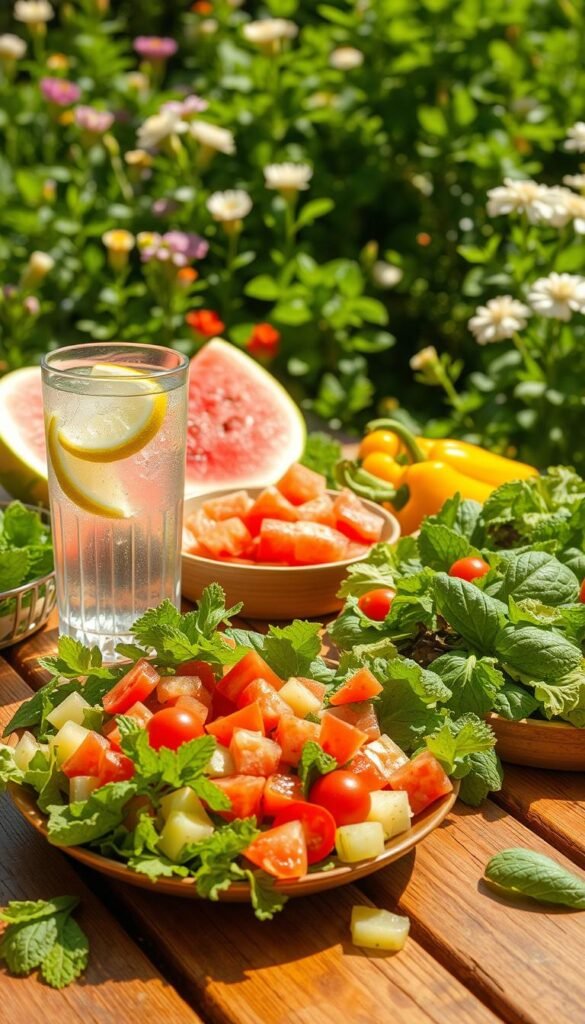
Cucumber, Tomato, and Red Onion Salad
Pair juicy cucumbers and ripe tomatoes with thin-sliced red onion for snap and bite. Dress with red wine vinegar, a teaspoon of extra-virgin olive oil per serving, oregano, and sea salt. These high-water fruits and veg make hydrating salads that fit right into summer salads.
For a protein boost, fold in crumbled feta or cooked chickpeas. The result is one of those refreshing salad recipes that stays bright and crisp, perfect as cooling salads for backyard meals.
Strawberry Spinach with Balsamic
Layer baby spinach with sliced strawberries, then drizzle balsamic vinaigrette. Add sliced almonds or pumpkin seeds, keeping toppings to about one tablespoon to manage calories. Vitamin C from berries helps your body absorb iron from spinach, a perk in many summer salads.
This mix highlights high-water fruits and greens, making it one of the most hydrating salads for warm days. It lands squarely among refreshing salad recipes that feel light yet satisfying.
Citrus Fennel and Herb Salad
Combine orange and grapefruit segments with shaved fennel, fresh mint, and parsley. Finish with a teaspoon of olive oil and a squeeze of lemon. The citrus brings bright acidity and fluid-rich bite, ideal for cooling salads built on high-water fruits.
Serve alongside grilled fish or tofu for balance. Fragrant herbs and crisp fennel make this a standout in hydrating salads and a staple in summer salads when heat hits hard.
Budget-Friendly Shopping Tips for Salad Lovers
Stretch your grocery dollar without losing flavor. Plan two or three rotating bowls each week, shop with a list, and repurpose extras for tomorrow’s lunch. This approach keeps waste low and supports affordable healthy eating while you build budget salads that still taste fresh.
Pro tip: Keep a small pantry kit ready for quick toss-and-serve nights. It makes cheap salad ingredients easy to assemble after a busy day.
Buying Seasonal and Frozen Produce
Choose what’s in season for better flavor and price. Spring greens, summer tomatoes, fall squash, and winter citrus help anchor budget salads with peak taste.
Fill gaps with frozen peas, corn, broccoli, and berries. They’re flash-frozen at ripeness, cut prep time, and support affordable healthy eating when fresh options run high.
Bulk Beans, Whole Grains, and Canned Fish
Stock dry beans, lentils, brown rice, quinoa, and oats from bulk bins for steady savings. Keep low-sodium canned beans and vacuum-packed grains on hand for five-minute bowls built from cheap salad ingredients.
For protein, reach for canned tuna, salmon, or sardines; look for MSC-certified labels from brands like Wild Planet or Bumble Bee. These staples power quick canned fish recipes that pair well with lemon, capers, and crisp greens.
DIY Dressings vs. Store-Bought
Mix your own vinaigrettes to score homemade dressing savings and control salt and sugar. Keep extra-virgin olive oil, balsamic, red wine and apple cider vinegars, Dijon mustard, miso, tahini, garlic, and spices in the pantry.
If you buy bottled, scan labels for simple ingredients and about 70 calories or less per 2 tablespoons. Light options from brands like Primal Kitchen, Annie’s, or Newman’s Own can fit budget salads and support affordable healthy eating with clean flavors.
- Plan a weekly list and stick to it to prevent impulse buys.
- Batch-cook grains and beans on Sunday for fast assembly all week.
- Use leftovers—roast chicken, roasted veg, or citrus segments—to refresh tomorrow’s bowl.
Conclusion
Light & Tasty Salad Recipes for Weight Loss make eating well feel simple and satisfying. Low-calorie density, high fiber, lean proteins, and smart fats work together to keep you full while staying within your targets. Seasonal produce, hydrating cucumbers and citrus, and bright herbs bring color and crunch, turning balanced meals into a habit that fits a healthy lifestyle.
Use the build-a-bowl formula: start with greens and crucifers, add 20–35 g of protein, include smart fats, and finish with high-fiber carbs and herbs. Aim for 350–550 kcal per salad, then adjust for activity and hunger cues. Choose two dressings from the guide and set up meal prep salads by batching greens, cooking proteins, and storing crunchy add-ins separately for the week.
Focus on whole, minimally processed foods, budget-savvy shopping, and allergen-smart swaps to support sustainable weight loss. This approach aligns with the Dietary Guidelines for Americans and research linking fiber-rich, nutrient-dense eating to better metabolic markers. It keeps variety high and waste low, which helps maintain momentum and a healthy lifestyle.
Start now: pick one bowl from the Salad Recipes for Weight Loss section and pair it with a favorite dressing. Rotate seasonal produce to keep flavors fresh, and keep meal prep salads on hand for quick, balanced meals. Small, steady steps today build long-term, sustainable weight loss tomorrow.
FAQ
How do light, tasty salads actually help with weight loss?
Salads built with high-water, high-fiber produce like spinach, cucumbers, and tomatoes offer low calorie density, so you can eat satisfying portions with fewer calories. This approach is consistent with CDC guidance and Barbara Rolls’ Volumetrics research. Add lean protein and smart fats to boost fullness and control hunger.
What’s the best formula to build a balanced weight-loss salad?
Start with 2–4 cups of greens and crucifers, add 20–35 g of lean protein, 1–2 teaspoons of extra-virgin olive oil or another smart fat, and 1/2–1 cup of high-fiber carbs such as beans, lentils, quinoa, or roasted sweet potato. Finish with herbs, citrus, and crunchy veggies for flavor and texture.
Which proteins keep me full without adding too many calories?
Great options include grilled chicken breast, turkey, tuna or salmon packed in water, shrimp, extra-firm tofu, tempeh, edamame, cottage cheese, hard-boiled eggs, or cooked lentils. For reference, about 3 ounces of chicken breast provides roughly 26 grams of protein.
How much dressing should I use to keep calories in check?
Aim for 1–2 tablespoons total. Choose lighter options such as a classic lemon vinaigrette with a 1:3 oil-to-acid ratio, a yogurt-based ranch, or miso-ginger with rice vinegar. A balsamic shallot reduction adds bold flavor with minimal calories.
What are smart fats and why do they matter in salads?
Smart fats—like extra-virgin olive oil, avocado, walnuts, almonds, pumpkin seeds, and tahini—improve flavor and help absorb fat-soluble vitamins A, D, E, and K. Keep portions modest: 1–2 teaspoons of oil, 1 tablespoon of seeds, or about 1 ounce of avocado per serving.
How can I add carbs without spiking calories?
Choose high-fiber carbs that promote satiety and steady energy: black beans, chickpeas, lentils, quinoa, farro, barley, and roasted sweet potato. For example, a cup of cooked chickpeas offers meaningful fiber to help you feel full.
What seasonal produce makes the most flavorful salads?
Spring favors spinach, arugula, asparagus, radishes, and strawberries. Summer shines with tomatoes, cucumbers, peppers, corn, peaches, and blueberries. Fall brings squash, apples, beets, carrots, and kale. Winter features citrus, fennel, red cabbage, Brussels sprouts, and cauliflower. Frozen produce is a strong backup when out of season.
Can you share a few tasty, weight-loss-friendly salad ideas?
Try a Greek chopped salad with grilled chicken and reduced-fat feta; a crunchy rainbow slaw with edamame and citrus vinaigrette; a Southwest chicken and corn salad with black beans and cumin-lime dressing; or an herbed lentil and arugula power bowl with tahini-lemon sauce.
What are some high-protein salad bowls I can assemble fast?
Mix tuna and cannellini beans with lemon and capers over baby kale; serve grilled shrimp over mixed greens with cherry tomatoes and cucumbers; or combine low-fat cottage cheese with tomatoes, cucumbers, dill, and a drizzle of balsamic. These bowls deliver 25–40 grams of protein per serving.
How do I estimate calories and macros without a kitchen scale?
Use hand portions: a palm for protein (about 3–4 ounces), a cupped hand for carbs (about 1/2 cup cooked), a thumb for fats (1–2 teaspoons of oil), and two fists of greens. For tracking, apps like USDA FoodData Central or MyFitnessPal can help you approximate values.
What macro targets should I aim for in a weight-loss salad?
A practical range per serving is about 350–550 calories, 20–35 grams of protein, 25–45 grams of carbs with an emphasis on fiber, and 10–20 grams of fat. Adjust based on your activity level and hunger signals.
When is it smart to add fruit, nuts, or cheese?
Add berries, apples, or citrus for vitamins and natural sweetness. Use 1 tablespoon of nuts or seeds or about 1 ounce of reduced-fat feta, goat cheese, or parmesan for flavor. Balance by trimming oil or starch to stay within your calorie target.
How can I meal prep salads so they stay fresh all week?
Layer mason jars with dressing first, then firm veggies, proteins and grains, and greens on top to keep leaves dry. Refrigerate promptly and store upright. Shake before serving or tip into a bowl.
What are safe storage tips for pre-cooked proteins and grains?
Follow USDA food safety guidance: chill within two hours, store at or below 40°F, and use within 3–4 days. Portion proteins into 4–6 ounces and grains into 1/2–3/4 cup for quick assembly.
How do I keep greens and herbs crisp?
Spin dry thoroughly and store in breathable containers lined with paper towels. Revive wilted greens in ice water. Keep tender herbs like cilantro and parsley stems-down in a jar with water; wrap hardy herbs such as rosemary and thyme in damp towels.
What are flavorful, low-calorie add-ins?
Use lemon or lime zest, fresh herbs like basil, mint, dill, cilantro, and parsley, quick-pickled onions, and spices such as smoked paprika, cumin, coriander, chili flakes, and za’atar. Umami boosters like miso, tamari, sun-dried tomatoes, nutritional yeast, or a splash of fish sauce can help you use less oil and cheese.
How can I make gluten-free or dairy-free swaps without losing taste?
Swap croutons for roasted chickpeas, toasted quinoa, crispy lentils, or gluten-free crackers like Mary’s Gone Crackers. For creaminess, use avocado, tahini, or dairy-free yogurts from So Delicious or Forager Project, or blend silken tofu with lemon and herbs.
What if I’m allergic to nuts or sensitive to soy or sesame?
For nut-free crunch, use pumpkin, sunflower, or hemp seeds. If avoiding soy or sesame, rely on white beans for creamy dressings and olive oil–lemon vinaigrettes without tahini or tamari. Always check labels and follow FALCPA guidance for allergens.
How do salads support steady energy and blood sugar balance?
Fiber from beans, lentils, whole grains, and vegetables slows digestion and moderates post-meal glucose. Pairing fiber with lean protein and healthy fats helps control appetite, reduce overeating, and sustain energy.
What are budget-friendly tips for eating salads often?
Buy in-season produce and supplement with frozen fruits and vegetables. Stock bulk beans, lentils, grains, and canned fish such as tuna, salmon, or sardines—look for MSC-certified options. Make your own dressings with olive oil, vinegars, Dijon mustard, miso, and spices. Plan two to three salads per week and repurpose leftovers to cut waste.
What are some plant-forward or vegan salad ideas?
Try a chickpea shawarma salad with lemon-tahini, a quinoa and kale bowl with roasted broccoli and carrots, or a watermelon, cucumber, and mint mix with lime. Add grilled tofu or edamame for extra protein when needed.
Which hydrations-rich salads help during hot weather?
Go for cucumber, tomato, and red onion with red wine vinegar and oregano; strawberry spinach with balsamic and a sprinkle of seeds; or a citrus-fennel and herb salad with mint and parsley. These are low in calorie density and help with hydration.
How can I keep salads exciting without extra calories?
Rotate seasonal produce, change your herbs, and swap dressings weekly. Use texture contrasts—crunchy radishes, creamy avocado, juicy citrus, and pickled elements. Small tweaks keep flavor high and calories reasonable.