High Protein Lunches: Quick & Nutritious Ideas
Here’s a surprise with big impact: studies in the American Journal of Clinical Nutrition show that spreading protein across meals—about 25–35 grams at lunch—can boost muscle protein synthesis more than loading it at dinner. That means your midday plate is prime time. The 2020–2025 Dietary Guidelines for Americans also highlight protein for strength, satiety, and metabolic health. Put simply, the right noon bite can keep you full, focused, and on track.
This Website contains affiliate links. That means I may earn a small commission if you purchase through my links, at no extra cost to you.
In this U.S.-focused guide, you’ll find high protein lunches that fit real life. We’ll share protein lunch ideas you can shop for at Costco, Trader Joe’s, Whole Foods 365, Kroger, or Walmart. Expect quick healthy lunches built from lean proteins, smart carbs, and healthy fats—plus flavor you’ll crave. You’ll see easy high-protein meals, protein-packed recipes, and lunch meal prep tips that work on busy weekdays.
Whether you reach for chicken, salmon, eggs, tofu, or beans, this playbook turns simple staples into satisfying wins. From power bowls and salads to soups, sandwiches, and grab-and-go picks, every choice is designed to help you hit that 25–35 gram sweet spot without fuss.
Key Takeaways
- Target 25–35 grams of protein at lunch to support muscle protein synthesis and steady energy.
- Build meals with lean protein, smart carbs, and healthy fats for lasting focus and fullness.
- Shop mainstream retailers like Costco, Trader Joe’s, Whole Foods 365, Kroger, and Walmart for easy staples.
- Use power bowls, salads, soups, and sandwiches to create quick healthy lunches without extra steps.
- Mix animal and plant proteins—chicken, seafood, eggs, tofu, tempeh, and legumes—for variety and taste.
- Plan simple lunch meal prep so easy high-protein meals are ready when you are.
Why Protein Matters at Midday
Midday meals shape how you feel for the rest of the day. Choosing foods with strong protein benefits can steady lunch energy, curb cravings, and support clear thinking. That starts with the right mix of amino acids in each bite.
Benefits for energy, focus, and satiety
Protein slows digestion and helps trigger satiety hormones like GLP-1 and PYY, so you feel satisfied longer and avoid a late-afternoon slump. A steady stream of amino acids also supports neurotransmitters that aid focus. Together, these protein benefits translate to smoother lunch energy and fewer snack attacks.
How much protein you need at lunch
A practical target is 25–40 grams of protein per meal, scaled to your body size, training load, and goals. Smaller frames and desk days may land near 25 grams. Larger bodies or active schedules often benefit from 30–40 grams. Hitting that range at lunch helps distribute amino acids across the day for better recovery and appetite control.
- Light day: 25–30 g protein per meal
- Training day: 30–35 g protein per meal
- High-volume day: 35–40 g protein per meal
Complete vs. complementary proteins explained
Complete protein sources deliver all nine essential amino acids in adequate amounts. Think eggs, Greek yogurt, poultry, fish, dairy, and soy. If you prefer plants, pair foods to create a complementary protein pattern that covers the full spectrum.
Classic combinations include beans with rice, lentils with whole-wheat pita, and hummus with quinoa. You do not need every essential in one bite—build across the meal or day to meet your amino acids needs while keeping lunch energy steady.
| Source Type | Examples | Amino Acids Coverage | Typical Protein per Serving | How to Use at Lunch |
|---|---|---|---|---|
| Complete protein | Eggs, chicken breast, salmon, Greek yogurt, tofu | All essential amino acids | 20–30 g (3–4 oz meat/fish), 15–20 g (1 cup yogurt), 15–20 g (1/2 block tofu) | Anchor salads, bowls, and wraps for reliable protein benefits |
| Complementary protein | Black beans + brown rice; lentils + whole-wheat pita; hummus + quinoa | Complete when paired | 25–35 g combined per meal when portions are balanced | Mix grains and legumes to reach protein per meal targets and support satiety hormones |
| Dairy and soy boosts | Cottage cheese, skyr, edamame, tempeh | Rich in essential amino acids | 15–25 g per serving | Add to bowls or sandwiches to round out amino acids and sustain lunch energy |
Build-Your-Own Protein Power Bowls
Think of protein bowls as a flexible system: choose a base, add smart carbs, then finish with bold flavor. Aim for 25–35 g protein, 30–50 g carbs, and a little heart-healthy fat for steady energy. These healthy lunch bowls work for busy weekdays and scale well as meal prep bowls.
Choosing protein bases: chicken, tofu, tuna, eggs, legumes
Start with a lean, satisfying anchor. A grilled chicken bowl with 4 oz chicken breast lands about 26–30 g protein. Prefer plants? A tofu bowl using 1 cup extra-firm tofu reaches around 20 g. A tuna bowl made with one can of light tuna in water offers 20–25 g. Two hard-boiled eggs add 12–14 g, while 1 cup lentils provides about 18 g and chickpeas bring 14–15 g.
Mix and match to keep things fresh across the week. Build single-serving healthy lunch bowls for today, then portion extra proteins to streamline future meal prep bowls.
Smart carb add-ins: quinoa, farro, brown rice, sweet potato
Layer in carbs that deliver fiber and minerals. A quinoa bowl adds about 8 g protein per cooked cup plus iron and magnesium. Farro brings a nutty bite and roughly 6 g protein per cup. Brown rice offers steady fuel with about 5 g protein per cup and key manganese. Roasted sweet potato adds comfort, beta-carotene, and around 4 g fiber per cup.
Keep portions dialed to your needs. Most bowls feel balanced with a half to one cup of grains or roots, depending on activity and hunger.
Flavor boosters: dressings, herbs, acids, and crunchy toppings
Finish strong. Try tahini-lemon, Greek yogurt–herb, or extra-virgin olive oil with red wine vinegar. Brighten with citrus, pickled onions, and fresh herbs like cilantro, basil, or dill. Add crunch with roasted pepitas, toasted almonds, sesame seeds, or crispy chickpeas.
Short on time? Use rotisserie chicken, pre-washed greens, and shortcuts like Trader Joe’s frozen brown rice or Seeds of Change quinoa pouches. With a few staples, you can assemble a chicken bowl, tofu bowl, tuna bowl, or quinoa bowl in minutes—fresh, fast, and truly satisfying.
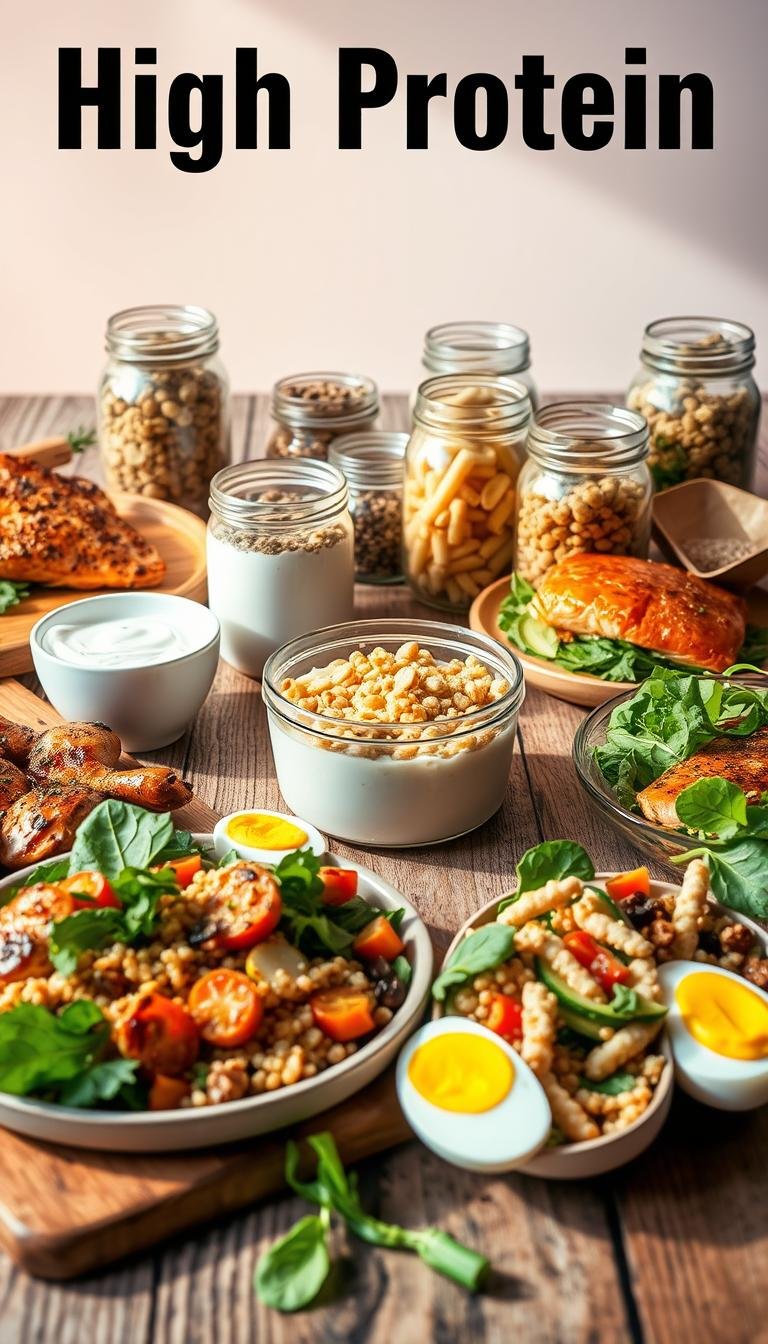
High Protein Lunches
Make midday fuel simple and fast. These quick protein lunches fit a 30-minute meal window and keep hunger in check. Use healthy lunch templates to mix and match flavors without losing balance.
Tip: Aim for clear protein portions and colorful produce so your macro-friendly lunch stays satisfying and easy to track.
Quick assembly ideas for busy weekdays
- Rotisserie chicken, microwaveable quinoa, bagged slaw, and yogurt ranch. Toss and serve warm or cold for a macro-friendly lunch.
- Tuna pouch with avocado, cherry tomatoes, and whole-grain crackers. Add lemon and pepper for a sharp finish.
- Cubed tofu with pre-shredded cabbage and peanut sauce. Sprinkle scallions and sesame for crunch.
- Cottage cheese bowl with tomatoes, cucumbers, olives, and whole-wheat pita. Drizzle olive oil and oregano.
Each combo works as a 30-minute meal and travels well. Keep a small kit of spices, hot sauce, and citrus at your desk for quick upgrades.
Balanced macronutrient templates
Build healthy lunch templates that scale to your day. Start with a base, then layer texture and flavor.
- Pick 1 protein (25–40 g).
- Add 1–2 fiber-rich carbs (30–50 g).
- Choose 1 healthy fat (10–20 g).
- Include 1 produce pair (at least 2 cups raw or 1 cup cooked).
- Finish with acid, herbs, or umami.
This method keeps protein portions clear while leaving room for taste. It also streamlines shopping and prep.
Portioning for different goals
Match your macro-friendly lunch to your target. Use a kitchen scale when you can, or estimate portions with your hand.
| Goal | Calories (Approx.) | Protein Target | Carb Emphasis | Hand Guide | Example Quick Build |
|---|---|---|---|---|---|
| Fat loss | 400–550 kcal | 25–35 g | Moderate | 1 palm protein, 1 cupped hand carbs, 1 thumb fats, 2 fists veggies | Rotisserie chicken, quinoa, slaw, yogurt ranch |
| Performance/Maintenance | 500–750 kcal | 30–45 g | Higher | 1–1.5 palms protein, 1.5–2 cupped hands carbs, 1–1.5 thumbs fats, 2 fists veggies | Tuna, avocado, tomatoes, extra crackers, citrus |
| Muscle gain | 600–850 kcal | 35–50 g | Higher | 1.5–2 palms protein, 2 cupped hands carbs, 1–2 thumbs fats, 2 fists veggies | Tofu, brown rice, peanut sauce, shredded cabbage |
As a quick check, 1 palm of lean protein is about 20–30 g protein, 1 cupped hand of carbs is about 20–30 g, and 1 thumb of fats is about 10–15 g. Use these cues to keep protein portions consistent across quick protein lunches and any 30-minute meal you build from healthy lunch templates.
Grab-and-Go Options from the Grocery Store
Pressed for time? These grocery lunch ideas make it easy to hit your protein goals without cooking. Mix and match ready-to-eat picks with salad kits or whole-grain wraps, and you can walk out with lunch in minutes.
Best deli and rotisserie picks
Start at the hot case with rotisserie chicken. Remove the skin to trim saturated fat, then shred it over greens or tuck it into a tortilla. For cold cuts, choose deli turkey from brands like Applegate or Boar’s Head, and keep an eye on sodium.
Pre-cooked grilled chicken strips save even more time, and Ahi tuna packs or smoked salmon bring a quick hit of omega-3s, often around 1–1.5 grams per serving. Pair any of these with a chopped salad kit or a whole-grain wrap for a fast, balanced meal.
High-protein yogurts, shakes, and cottage cheese cups
For dairy cases, reach for cottage cheese cups such as Good Culture, which land around 14–19 grams of protein per 5 ounces. A high-protein yogurt like Chobani Zero Sugar, Oikos Triple Zero, or Siggi’s typically delivers 15–20 grams, and skyr from Icelandic Provisions is thick, tangy, and filling.
Need a swift sip? A ready-to-drink protein shake like Fairlife Core Power offers about 26–42 grams, while Orgain plant-based options hover near 20 grams. These pair well with fruit or nuts to round out your cart.
Reading labels: protein per serving and added sugar
Smart label reading keeps grab-and-go choices aligned with your goals. Aim for 15–25 grams of protein per item to anchor lunch components, and keep added sugar to 6–9 grams for high-protein yogurt or any protein shake.
For deli items such as deli turkey, try to stay under 600 milligrams of sodium per serving. Scan for short ingredient lists, avoid hydrogenated oils, and verify serving size so your total protein adds up—especially when using rotisserie chicken or smoked salmon across multiple meals.
Lean and Flavorful Poultry Lunches
Poultry keeps midday meals light yet satisfying. These chicken lunch ideas and a simple turkey lunch plan deliver lean protein lunches that pack real flavor. Use grocery staples and quick sauces to make the most of rotisserie chicken recipes and smart meal prep chicken.
Rotisserie chicken wraps and salads
Shred 4 oz rotisserie chicken into a whole-wheat tortilla with avocado, cabbage slaw, and pico de gallo. Add a lime-yogurt drizzle for zip; you’ll net about 26–30 g protein. For a desk-friendly twist, try mixed greens with cucumber, feta, olives, and red wine vinaigrette. Both options are fast rotisserie chicken recipes that hit the mark for lean protein lunches.
Ground turkey lettuce cups
Cook 93% lean turkey with garlic, ginger, and low-sodium tamari. Fold in diced water chestnuts for crunch. Spoon into butter lettuce, then top with shredded carrots and sriracha Greek yogurt. A 4 oz serving of cooked turkey gives roughly 28 g protein, making it a strong turkey lunch. Add a side of brown rice if you want extra carbs without losing that light feel.
Meal-prep chicken breast variations
Batch-bake boneless breasts to 165°F and season in three ways: lemon-pepper with parsley; smoky paprika with cumin; or Italian herbs with a balsamic drizzle. Store in the fridge 3–4 days or freeze 2–3 months. Reheat with a splash of broth to stay tender. This meal prep chicken plan lets you rotate flavors through the week while keeping your lean protein lunches simple and consistent.
Seafood-Packed Lunch Ideas
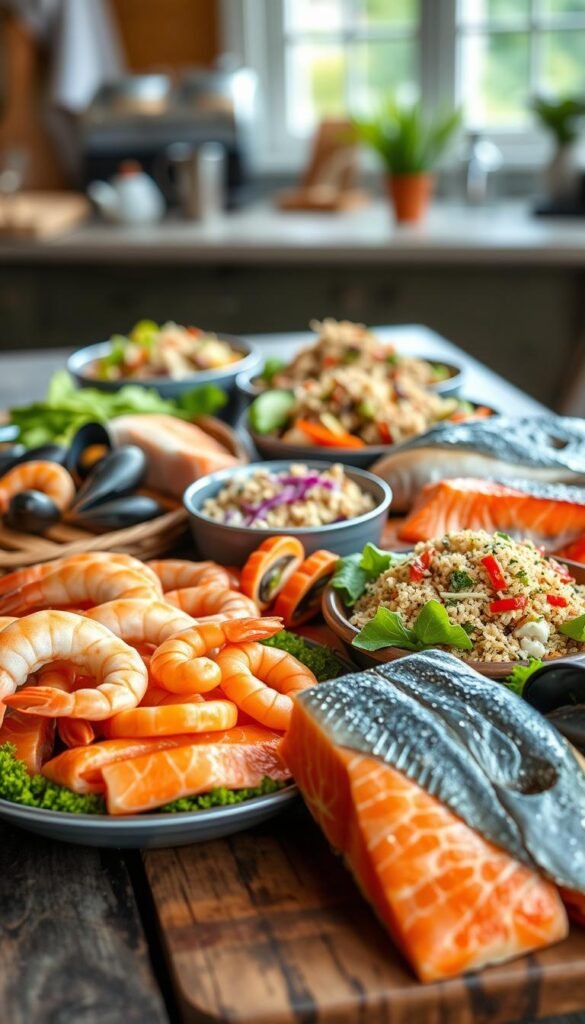
Bring bright flavor and serious seafood protein to the midday table with easy builds that travel well and plate even better. Each idea works for desk meals, picnics, or a quick omega-3 lunch at home.
Tuna and salmon salad upgrades
Swap mayo for Greek yogurt, then stir in Dijon, diced celery, briny capers, dill, and lemon zest. A can of tuna or salmon lands about 20–25 g of protein, and salmon adds EPA and DHA for an omega-3 lunch.
Spoon the mix over toasted Ezekiel bread, into crisp lettuce cups, or next to seed crackers. This upgraded tuna salad makes a tidy salmon lunch template too—same method, different fish, same clean bite.
Shrimp grain bowls with citrus vinaigrette
Build a bright shrimp bowl with farro, a bed of arugula, and juicy grapefruit or orange segments. Add sliced avocado for creaminess and a quick dressing of olive oil, lemon, honey, and mustard.
Eight ounces of cooked shrimp deliver roughly 45–50 g of seafood protein with very little fat. Finish with toasted pepitas or almonds for crunch and a pinch of sea salt.
Canned fish for convenience and omega-3s
Keep a stash of canned sardines, mackerel, and anchovies for on-demand lunches. Bone-in options bring calcium along with marine fats that support an omega-3 lunch.
Choose BPA-NI lined cans when you can, and rinse to lower sodium. For variety, fold canned sardines into warm rice with herbs, or flake them over greens with tomatoes, olives, and a squeeze of lemon.
Vegetarian and Vegan Protein Boosters
A smart vegan protein lunch can be bold, simple, and fast. Aim for variety so each bite delivers plant-based protein with real flavor and crunch. The ideas below fit busy weekdays and pack well for commute or campus.
Tofu, tempeh, and seitan preparation tips
Press extra-firm tofu, then coat with a light dusting of cornstarch and a pinch of salt. Bake or air-fry until the edges turn crisp, then toss with a ginger-soy glaze for easy tofu recipes that reheat well.
For tempeh, use a quick tempeh marinade of soy sauce, maple syrup, rice vinegar, and minced garlic. Sear in a hot pan, finish with sesame oil, and add scallions. Seitan, made from vital wheat gluten, brings about 20–25 grams of protein per 3 ounces and shines in stir-fries with peppers and snap peas.
Bean and lentil salads that satisfy
Build a hearty lentil salad with French lentils, cherry tomatoes, cucumber, red onion, parsley, olive oil, and sherry vinegar. One cup of cooked lentils offers notable plant-based protein and stays firm for meal prep.
Try a chickpea “tuna” mix: mashed chickpeas, tahini, lemon juice, celery, and nori flakes for a light seafood note. A black bean, corn, and avocado bowl with lime and cumin also lands as a satisfying vegetarian high protein option for lunch boxes.
High-protein plant-based products to try
Stock fast staples for a reliable vegan protein lunch. High-protein pastas like Banza chickpea or Barilla Protein+ pair well with tofu noodles or edamame spaghetti, which can reach about 24 grams per 2 ounces dry.
Look for plant yogurts with added protein, such as Siggi’s plant-based cups, and keep vegan deli slices from Tofurky on hand. For convenience, plant-based “chicken” from Beyond or Daring can round out bowls—check sodium and saturated fat to keep your plant-based protein plan balanced.
Egg-Centric Lunches Beyond Breakfast
Put high-protein eggs to work at noon with practical, tasty egg lunch ideas. These dishes travel well, reheat cleanly, and keep you full without slowing you down.
Frittata squares and muffin-tin bakes
For easy frittata meal prep, whisk eggs with cottage cheese for extra protein and moisture. Fold in spinach, roasted peppers, and turkey sausage. Bake in a 9×13 pan or a muffin tin for grab-and-go portions.
One large egg offers about 6–7 grams of protein. Two squares can land around 18–24 grams, depending on add-ins. Pack with berries or a small salad to round out your lunch built on high-protein eggs.
Jammy eggs with grain bowls or greens
Make perfect jammy eggs by boiling for 6.5–7 minutes, then chill and peel. Serve over warm brown rice or massaged kale with sesame oil, tamari, scallions, and chili crisp for a bold, simple bowl.
Add edamame to reach 30-plus grams of protein. This combo turns simple egg lunch ideas into a hearty, balanced meal that holds you through the afternoon.
Egg salad lighten-ups with Greek yogurt
Stir together a healthy egg salad with Greek yogurt, a touch of mayo, Dijon, celery, chives, and lemon. Spoon onto whole-grain toast or tuck into crisp romaine boats for crunch.
Keep it fresh and safe: refrigerate within two hours, and remember hard-cooked eggs last one week. It’s an easy win for frittata meal prep fans and anyone who loves high-protein eggs at lunch.
- Protein pointers: aim for 20–30 g at midday using jammy eggs, edamame, and turkey sausage.
- Storage tips: pack portions in airtight containers; chill quickly after cooking.
- Serving ideas: pair healthy egg salad with veggie sticks; add fruit for a bright finish.
High-Protein Sandwiches and Wraps
Aim for 25–40 grams of protein in every midday bite. Build a protein sandwich with sliced turkey, roast beef, chicken, or salmon salad, and stack on greens for crunch. Choose high-protein bread like Dave’s Killer Bread or Ezekiel, or swap in a low-carb wrap when you want fewer starches.
Try a turkey sandwich with avocado on sprouted grains; 4–6 ounces of turkey can land 24–36 grams of protein. A chicken pita with Greek yogurt Caesar dressing stays creamy without heavy mayo. For seafood fans, a tuna wrap with arugula, tomato, and pickles adds fiber and snap.
Boost the numbers by doubling lean meat, adding cottage cheese or hummus, or slipping in extra egg whites. Toast bread for structure, layer moist fillings in the middle, and wrap tightly to prevent sogginess. Whole-grain tortillas, Mission Carb Balance, or crisp lettuce leaves make an easy low-carb wrap.
Keep produce generous and bold. Arugula, cucumber, red onion, and banana peppers bring bite without bulk. A swipe of Dijon or horseradish lifts flavor on roast beef, while lemon and dill brighten salmon in a chicken pita or mixed-fish mash-up.
| Build | Protein Source | Bread/Wrap | Boosters | Estimated Protein (g) |
|---|---|---|---|---|
| Turkey sandwich with avocado | 4–6 oz sliced turkey | High-protein bread (Dave’s Killer Bread) | Arugula, tomato, mustard | 24–36 |
| Chicken pita Caesar | Grilled chicken breast | Whole-wheat pita | Greek yogurt dressing, romaine, Parmesan | 30–35 |
| Tuna wrap with crunch | Light tuna with Greek yogurt | Low-carb wrap (Mission Carb Balance) | Pickles, red onion, dill | 28–32 |
| Roast beef and horseradish | 4 oz roast beef | Whole-wheat or high-protein bread | Spinach, cucumber, horseradish | 28–30 |
| Salmon salad chicken pita twist | Canned salmon | Chicken pita or whole-wheat pita | Lemon, capers, celery | 30–34 |
Pack smart: keep wet items like tomatoes between protein layers, and add leafy greens near the bread. Slice on a bias for clean edges and tighter layers. With a sturdy high-protein bread or a flexible low-carb wrap, lunch travels well and eats even better.
Salads That Actually Keep You Full
Build protein salads that feel like a meal, not a side. Start with crisp romaine, hearty kale, or peppery arugula. Add color with tomatoes, cucumbers, and bell peppers so every bite earns its place in a high-fiber lunch and supports steady energy.
Protein-forward greens: chicken, chickpeas, edamame
Pick one anchor and measure it. Go with 4–6 ounces of grilled chicken for 25–35 grams of protein, or use a full cup of chickpeas or edamame for 15–20 grams. Toss with greens, then layer in carrots and red cabbage to make filling salads that last through the afternoon.
For speed, use rotisserie chicken from Costco or Whole Foods Market, shelf-stable chickpeas from Goya, or frozen shelled edamame from Trader Joe’s. These swaps keep prep tight and the texture crisp.
Dressings that add protein: tahini, yogurt, cottage cheese
Upgrade the drizzle. A silky tahini dressing whisked with lemon and salt adds about 5 grams of protein in 2 tablespoons. A tangy yogurt dressing—think Greek yogurt ranch or tzatziki—can bring roughly 10 grams in a half cup. Blend cottage cheese with herbs and vinegar for a spoonable topping that’s ultra creamy and protein rich.
Season well. Use kosher salt, fresh lemon juice, or red wine vinegar to brighten flavor so you can keep sugar low while letting the greens shine.
Crunch and fiber for sustained energy
Finish with real crunch that also feeds fullness. Sprinkle almonds or pepitas, add roasted chickpeas, or fold in cooked quinoa or whole-grain croutons. Aim for 8–12 grams of fiber to secure a true high-fiber lunch and make filling salads that satisfy.
Keep portions smart: a small handful of nuts, a quarter cup of seeds, or a half cup of grains rounds out texture without weighing the bowl down.
| Build Component | Examples | Approx. Protein | Fiber Boost | Flavor Notes |
|---|---|---|---|---|
| Protein base | Grilled chicken (4–6 oz), chickpeas (1 cup), edamame (1 cup) | 15–35 g | Up to 12 g with legumes | Savory, hearty, keeps protein salads satisfying |
| Protein dressing | tahini dressing (2 tbsp), yogurt dressing (1/2 cup), cottage cheese blend (1/2 cup) | 5–14 g | Minimal | Creamy, tangy, balanced with lemon or vinegar |
| Crunch + fiber | Almonds, pepitas, roasted chickpeas, quinoa, whole-grain croutons | 2–8 g | 3–10 g | Toasty, crisp, fuels a high-fiber lunch |
| Greens + veg | Romaine, kale, arugula, carrots, tomatoes, cucumbers, red cabbage | 2–5 g | 3–6 g | Fresh, juicy, adds volume to filling salads |
Soups and Stews with Serious Protein
Warm bowls can carry as much protein as a sandwich, with less fuss. A well-built high-protein soup saves time, packs fiber, and reheats like a charm on busy weekdays.
Chicken chili and turkey taco soup
Try chicken chili made with shredded chicken breast, white beans, diced green chiles, cumin, and low-sodium broth. A 1.5-cup serving often lands 30 grams of protein or more, and the texture stays rich without heavy cream.
For a bold twist, simmer turkey taco soup using 93% lean turkey, black beans, corn, tomatoes, and taco spices. Finish each bowl with a spoon of Greek yogurt for extra protein and a cool, tangy lift.
Lentil and bean-based stews
A hearty lentil stew comes together fast with red lentils, onions, garlic, and curry spices. One cooked cup of lentils has roughly 18 grams of protein, and the stew thickens naturally as it simmers.
Craving more fiber? Build a three-bean chili with kidney, pinto, and black beans. Stir in a scoop of quinoa near the end to round out amino acids and turn the pot into a complete, high-protein soup.
Freezer-friendly batch cooking
Make batch cooking work for you: cool soups fully, portion into 1–2 cup containers, label with the date, and freeze flat for tidy freezer meals. Most pots keep well for 2–3 months.
When reheating, bring to 165°F and finish with fresh herbs or a squeeze of lime. Bloom spices in a touch of oil for deeper flavor, and stick with low-sodium broth so the protein shines without excess salt.
| Recipe | Primary Protein | Key Add-Ins | Approx. Protein per Serving | Make-Ahead Notes |
|---|---|---|---|---|
| Chicken Chili | Shredded chicken breast | White beans, green chiles, cumin | 30+ g (1.5 cups) | Freezes 2–3 months; reheat to 165°F |
| Turkey Taco Soup | 93% lean ground turkey | Black beans, corn, tomatoes, taco spices | 25–30 g (1.5 cups) with Greek yogurt | Portion 1–2 cups; freeze flat for quick thaw |
| Lentil Stew | Red or brown lentils | Onion, garlic, curry spices; optional quinoa | 18–25 g (1–1.5 cups) | Cool completely; add fresh herbs after reheating |
These flexible bowls turn into dependable freezer meals, whether you favor chicken chili, turkey taco soup, or a plant-powered lentil stew. Cook once, stash smart, and enjoy powerful lunches all week.
High-Protein Meal Prep Strategies
Turn your weekdays on autopilot with simple planning that keeps meal prep protein front and center. Aim for 30–40 grams per lunch, reduce decision fatigue, and build a routine that fits real life.
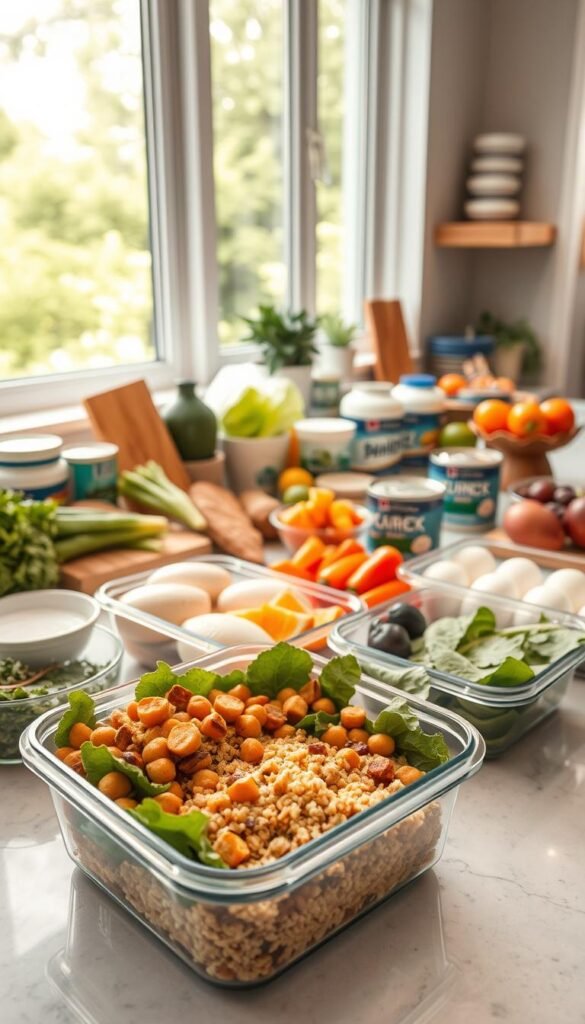
Cook once, eat three ways
Start with batch cooking: roast chicken thighs, press and bake tofu, or sheet-pan salmon. Use one flavor base, then switch accents to keep meals fresh.
- Grain bowl: quinoa, roasted veggies, and a citrus vinaigrette over your protein portions.
- Hearty salad: chopped greens, beans, and herbs with seeds for crunch.
- Warm wrap: whole-wheat tortilla, slaw, and a yogurt sauce.
This method locks in variety while staying consistent with meal prep protein goals.
Portioning and storage for freshness
Divide meals in 3-compartment containers to balance protein, carbs, and greens. Weigh or pre-scoop protein portions so each box meets your target.
- Food storage tips: refrigerate cooked proteins for 3–4 days; freeze extras the same day.
- Keep dressings and salsas separate to avoid soggy textures.
- Label dates and weights so tracking stays easy.
Good habits here protect flavor and make food storage work for you all week.
Time-saving kitchen tools
Lean on smart kitchen gadgets to speed the process and improve results. An instant-read thermometer from ThermoWorks ensures safe doneness without guesswork.
- Sheet pans with silicone mats for hands-off roasting and fast cleanup.
- Instant Pot for beans and shredded chicken in bulk.
- Air fryer for crispy tofu and faster reheats that keep texture.
- FoodSaver vacuum sealer to extend shelf life and maintain quality.
With the right kitchen gadgets, batch cooking becomes quick, consistent, and reliable every time.
Dietary Needs and Preferences
Plan a gluten-free lunch by swapping in corn tortillas, lettuce wraps, rice, quinoa, or certified GF breads like Canyon Bakehouse. Pick tamari instead of soy sauce, and double-check deli meats for gluten. Pair these bases with eggs, tuna, or chickpeas for steady energy you can feel.
For a dairy-free high protein approach, reach for soy yogurt, coconut-based dressings fortified with pea protein, hummus, avocado, and tahini. Build meals around tofu, tempeh, seitan if gluten is not an issue, plus eggs, poultry, seafood, and beans. Keep flavors bright with lemon, herbs, and chili flakes.
A low-carb lunch works best when you anchor it with fatty fish, eggs, chicken thighs, or lower-sodium turkey. Add non-starchy vegetables and drizzle extra-virgin olive oil for fullness. Low-carb wraps, zucchini noodles, and crisp greens make satisfying carriers for bold sauces.
The Mediterranean diet favors extra-virgin olive oil, nuts, legumes, whole grains, and fish rich in omega-3s. For a heart-healthy lunch, limit saturated fat and high-sodium processed meats, and lean on salmon, sardines, lentils, and farro. Season with sumac, oregano, and garlic for depth without extra salt.
Those seeking halal/kosher protein can choose certified poultry and beef, canned fish with clear labels, and vetted plant proteins. Rotate in eggs, tuna, and chickpeas to keep variety high. Reading labels for sourcing and sodium helps each choice fit both values and goals.
Pro tip: Batch-cook a neutral protein—like roasted chicken or baked tofu—then vary sauces to meet any preference in minutes.
| Preference | Go-To Proteins | Smart Carriers | Flavor Boosters |
|---|---|---|---|
| Gluten-Free | Eggs, tuna, chickpeas, chicken | Corn tortillas, lettuce wraps, rice, quinoa, Canyon Bakehouse bread | Tamari, lime, scallions, sesame seeds |
| Dairy-Free High Protein | Tofu, tempeh, poultry, seafood, beans | Greens, grain bowls, baked potatoes, nori sheets | Soy yogurt, coconut dressings with pea protein, tahini, chili oil |
| Low-Carb | Salmon, eggs, chicken thighs, turkey | Low-carb wraps, zucchini noodles, romaine boats | Olive oil, pesto, capers, olives |
| Mediterranean & Heart-Healthy | Sardines, salmon, lentils, grilled chicken | Farro, barley (if not GF), quinoa, leafy greens | Extra-virgin olive oil, lemon, herbs, garlic |
| Halal/Kosher | Certified poultry and beef, canned fish, certified plant proteins | Brown rice, quinoa, veggie medleys | Smoked paprika, cumin, pomegranate molasses |
Mix and match these ideas to fit a busy day. With the right swaps, your gluten-free lunch, dairy-free high protein bowl, low-carb lunch, or Mediterranean diet plate can all land on the same weekly plan. The result is a flavorful, heart-healthy lunch rotation with reliable halal/kosher protein options.
Smart Sides and Snacks to Boost Protein
Round out any noon meal with high-protein snacks that travel well and taste great. These protein sides fit into busy days and make smart lunch add-ons without extra fuss.
Edamame, jerky, cheese sticks, and nuts
Keep an edamame snack on hand for a clean, plant-forward boost. One cup of shelled edamame has about 17 g of protein and pairs with fruit or greens.
Choose low-sodium beef jerky or turkey sticks for quick bites. Look for brands like Chomps or Country Archer with 10–15 g per ounce and under 500 mg sodium.
Part-skim mozzarella cheese sticks offer about 7 g per stick. A small pack of almonds adds 6 g per ounce plus healthy fats to stay satisfied.
Protein-rich dips: hummus, skyr, whipped cottage cheese
Use dips as protein sides to upgrade crunch. Hummus gives about 5 g per 1/4 cup and works with carrots, snap peas, or cucumbers.
Skyr delivers 12–14 g in 1/2 cup with a rich, tangy taste. A whipped cottage cheese dip, blended with herbs and lemon, brings about 14 g in 1/2 cup.
Serve any dip with whole-grain crackers for extra fiber. Skip sweetened cups and flavored yogurts when added sugars run high.
Pairing sides to hit protein targets
Plan lunch add-ons to reach 30–40 g per meal. Match a 20–25 g main with a 10–15 g side for a steady energy curve.
Try a chicken salad wrap at about 25 g with an edamame snack for another 10–12 g. Or pair lentil soup near 18 g with skyr for 12 g to close the gap.
Rotate beef jerky, cheese sticks, and nuts through the week. These high-protein snacks are easy to pack, budget-friendly, and keep portions consistent.
| Item | Typical Serving | Protein (g) | Smart Tip |
|---|---|---|---|
| Edamame (shelled) | 1 cup | ~17 | Sprinkle sea salt and chili flakes for heat. |
| Beef jerky (low-sodium) | 1 oz | 10–15 | Pick sticks under 500 mg sodium per serving. |
| Part-skim mozzarella stick | 1 stick | ~7 | Pair with an apple for a balanced bite. |
| Almonds | 1 oz | ~6 | Pre-portion to avoid mindless snacking. |
| Hummus | 1/4 cup | ~5 | Serve with cucumbers and snap peas. |
| Skyr (plain) | 1/2 cup | 12–14 | Choose plain; add lemon zest or dill. |
| Cottage cheese dip (whipped) | 1/2 cup | ~14 | Blend with herbs; scoop with whole-grain crackers. |
Conclusion
This high protein lunches summary brings it all together: aim for 25–40 grams of protein at midday. Mix poultry, seafood, eggs, dairy, legumes, and soy to cover taste and nutrition. Pair protein with fiber-rich carbs like quinoa, brown rice, or sweet potato, plus healthy fats from olive oil, avocado, or nuts. The result is steady energy, clear focus, and a plate that fits balanced lunch ideas without fuss.
Make healthy lunch planning simple with repeatable tools. Use templates from bowls, salads, soups, and wraps, and lean on grocery shortcuts. Keep rotisserie chicken, canned tuna or salmon, tofu, Greek yogurt, cottage cheese, beans, and frozen edamame on hand. A little protein meal prep—like baking chicken breasts or cooking a pot of lentils—turns weeknights and workdays into easy wins.
Stay flexible. Gluten-free, dairy-free, low-carb, or Mediterranean eating styles work with smart swaps such as brown rice for farro, lactose-free yogurt for dairy, or extra-virgin olive oil and olives for fat. Consistency beats perfection, so plan two or three go-to lunches each week to hit your goals. With balanced lunch ideas and practical protein meal prep, you’ll build a habit that lasts.
Use this high protein lunches summary as a quick checkpoint: choose your protein, add produce, select a smart carb, and finish with flavor and crunch. That’s healthy lunch planning made doable—day after day.
FAQ
How much protein should I aim for at lunch?
Most adults do well with 25–40 grams of protein at lunch. Research in the American Journal of Clinical Nutrition suggests evenly spreading protein across meals supports muscle protein synthesis. Adjust based on your size, activity, and goals.
What are quick high-protein lunches I can assemble in minutes?
Try rotisserie chicken with microwaveable quinoa and bagged slaw, a tuna pouch with avocado and whole-grain crackers, tofu with pre-shredded cabbage and peanut sauce, or a cottage cheese bowl with veggies and whole-wheat pita.
Which proteins are best for power bowls?
Great bases include grilled chicken, extra-firm tofu, canned light tuna, hard-boiled eggs, lentils, and chickpeas. Add smart carbs like quinoa, farro, brown rice, or roasted sweet potato, plus a healthy fat and a zesty dressing.
How do I hit 30 grams of protein without meat?
Combine plant proteins. Pair tofu or tempeh with edamame, lentils, or chickpeas. Use high-protein pastas like Banza, edamame spaghetti, skyr, or whipped cottage cheese. Complementary combos—beans with grains—round out amino acids.
What counts as a complete protein, and do I need it every meal?
Complete proteins have all nine essential amino acids—poultry, fish, eggs, dairy, and soy. Plant eaters can combine foods like beans and whole grains across the day. You don’t need completeness in the same bite.
How can I balance macros for steady energy?
Use a simple template: 1 protein (25–40 g), 1–2 fiber-rich carbs (30–50 g), 1 healthy fat (10–20 g), plenty of produce, and a flavor finisher. This mix supports satiety, blood sugar control, and focus.
What are the best grab-and-go grocery items?
Look for rotisserie chicken, deli turkey from Applegate or Boar’s Head, smoked salmon, cottage cheese cups like Good Culture, high-protein yogurts such as Chobani Zero Sugar, Oikos Triple Zero, or Siggi’s, and shakes like Fairlife Core Power or Orgain.
How do I read labels for protein lunches?
Aim for at least 15–25 g protein per item. Keep added sugar under 6–9 g for yogurts and shakes, and sodium under 600 mg per serving for deli meats. Check serving sizes and ingredients; avoid hydrogenated oils.
Any tips for lean and flavorful poultry lunches?
Use rotisserie chicken in whole-wheat wraps or salads with a Greek yogurt dressing. Try ground turkey lettuce cups with tamari and ginger. Batch-bake chicken breasts with spice blends and reheat with a splash of broth.
How can I upgrade tuna or salmon salad?
Mix canned tuna or salmon with Greek yogurt, Dijon, celery, capers, dill, and lemon zest. Serve on sprouted grain bread like Ezekiel, in lettuce cups, or with seed crackers for crunch and fiber.
What seafood is easy for high-protein lunches?
Shrimp grain bowls are fast—8 oz shrimp delivers about 45–50 g protein. Canned fish like salmon, sardines, and mackerel add omega-3s. Choose BPA-NI cans when possible and rinse to cut sodium.
Best ways to cook tofu, tempeh, or seitan for lunch?
Press tofu, toss with cornstarch, and bake or air-fry for crisp edges. Marinate tempeh with soy sauce, maple, and rice vinegar. Stir-fry seitan with aromatics and finish with sesame oil for savory depth.
How can I make salads that actually keep me full?
Start with protein—chicken, chickpeas, or edamame—then add volume with leafy greens and colorful vegetables. Boost with protein-rich dressings like tahini or Greek yogurt ranch and add crunch from nuts, pepitas, or roasted chickpeas.
What soups and stews pack serious protein?
Try chicken chili with white beans, turkey taco soup topped with Greek yogurt, or lentil and three-bean stews. Batch-cook, portion, and freeze for easy lunches that reheat well.
How do I meal prep high-protein lunches for the week?
Cook once, eat three ways. Batch-cook chicken, tofu, or salmon, then rotate into bowls, salads, and wraps. Store in divided containers, keep dressings separate, and use an instant-read thermometer for safe doneness.
What are good options for gluten-free, dairy-free, or low-carb diets?
Gluten-free: use corn tortillas, rice, quinoa, and GF breads like Canyon Bakehouse. Dairy-free: choose soy yogurt, hummus, avocado, and tahini. Low-carb: lean meats, eggs, seafood, non-starchy veggies, and low-carb wraps like Mission Carb Balance.
How can sides and snacks help me reach my protein target?
Pair a 20–25 g main with a 10–15 g side. Edamame, jerky from Chomps or Country Archer, mozzarella sticks, skyr, whipped cottage cheese, and hummus with veggies all add easy protein and fiber.
What stores make high-protein eating easier?
Costco, Trader Joe’s, Whole Foods 365, Kroger, and Walmart carry staples like rotisserie chicken, pre-cooked grains, canned tuna and salmon, Greek yogurt, cottage cheese, tofu, and frozen edamame for quick assembly lunches.
Is it safe to meal prep eggs, chicken, and seafood?
Yes—follow USDA guidance. Cook chicken to 165°F, chill foods within two hours, refrigerate cooked proteins 3–4 days, and freeze extras for 2–3 months. Hard-cooked eggs keep one week in the fridge.
What simple portion guide can I use without weighing food?
Use the palm–fist–thumb method from Precision Nutrition. One palm of lean protein is about 20–30 g, one cupped hand of carbs is 20–30 g, and one thumb of fats is 10–15 g. Adjust to your goals.