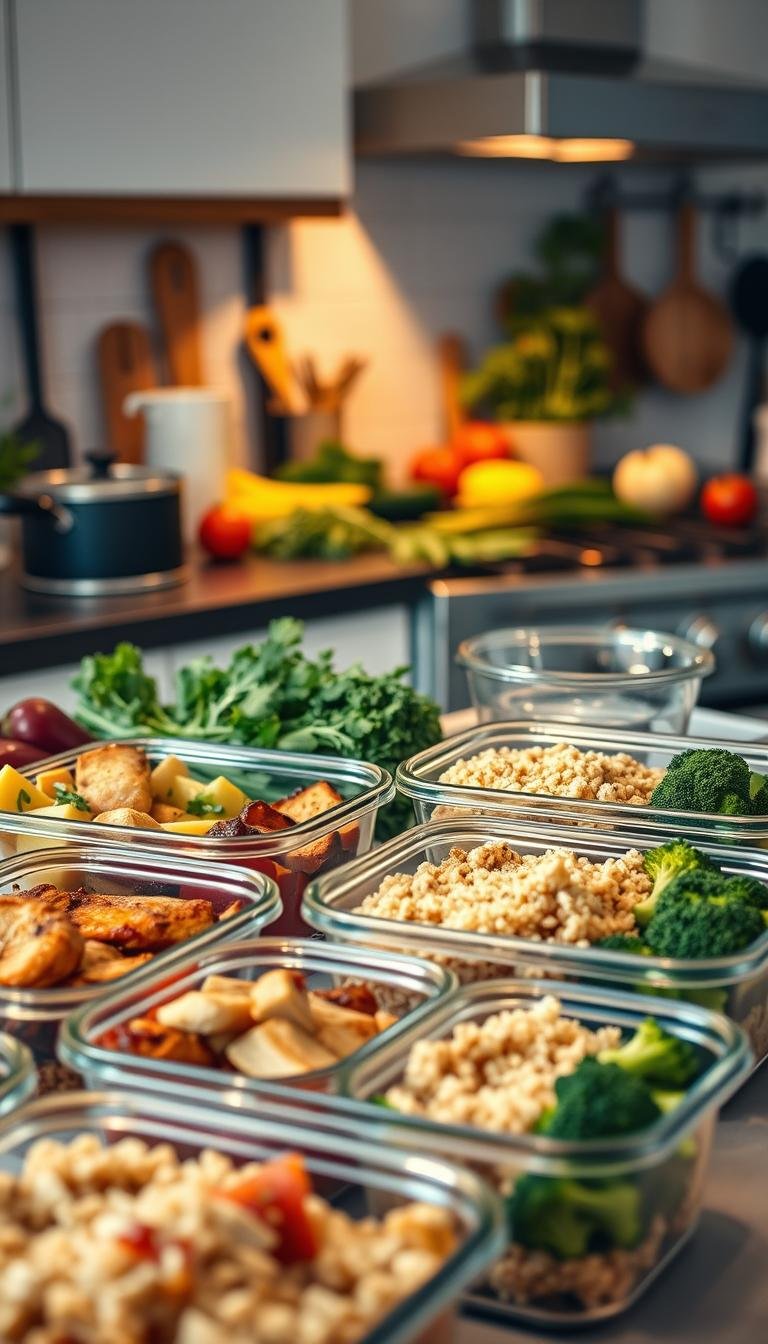
Affordable Meal Prep Ideas for Easy Budget Dinners
Here’s a number that hits home: the Natural Resources Defense Council estimates Americans waste up to 30–40% of the food supply each year. That’s money tossed with the peels. Pair that with the Bureau of Labor Statistics showing food at home as a major expense, and the case for easy meal prep is clear. A little planning can turn stray produce and leftovers into cheap dinner ideas that actually get eaten.
This Website contains affiliate links. That means I may earn a small commission if you purchase through my links, at no extra cost to you.
This guide shares Budget Meal Prep Ideas built for busy weeknight dinners. We lean on meal planning on a budget, make-ahead meals, and frugal cooking that fits real U.S. grocery habits—think Costco or Sam’s Club bulk buys, store brands at Kroger or Walmart, and coupon or rebate apps like Ibotta. Using USDA advice, we center low-cost recipes around staples such as rice, beans, oats, and eggs to save money on food while keeping nutrition steady.
Expect practical steps: pantry stocking, smart shopping, safe storage, batch cooking with flexible bases, one-pot and sheet-pan wins, and high-protein and plant-forward options. You’ll see how to stretch ingredients across several meals, cut spoilage, and keep flavor bold with pantry sauces and spices. The goal is simple—easy meal prep that lowers stress and cost without sacrificing taste.
Start small. Pick two make-ahead meals for the week, build a short list, and buy a few bulk staples you’ll use often. With a plan, batch cooking becomes a habit, not a chore—and your grocery bill starts to drop.
Key Takeaways
- Planning meals reduces impulse buys and food waste, helping you save money on food.
- Build low-cost recipes around bulk staples like rice, beans, oats, and eggs for steady, easy meal prep.
- Use store brands, club stores, and rebate apps to stretch weeknight dinners on a tight budget.
- Batch cooking and make-ahead meals turn one shop into several cheap dinner ideas.
- One-pot and sheet-pan methods cut time, dishes, and energy costs.
- Pantry sauces and spice blends add big flavor to frugal cooking without extra spend.
- A simple plan for two meals a week is enough to start meal planning on a budget that lasts.
Why Meal Prep Saves Money and Time for Busy Weeknights
Busy nights don’t have to mean takeout. A simple weekly meal plan turns guesswork into routine, and a short Sunday prep session sets up budget weeknight dinners with less stress. This approach supports steady choices that make it easy to eat well and stick to a budget.
How planning reduces impulse spending
Planning helps you steer past snacks and limited-time deals that raise the bill. A list based on a weekly meal plan drives impulse buy reduction because every item has a job. You also skip delivery fees and markups by having meals ready when hunger hits.
When you map out dinners, you choose what to cook before you shop. That turns the store into a quick mission and supports save money meal prep with fewer extras in the cart. Clear recipes also cut waste because you purchase only what the plan uses.
The cost benefits of bulk buying and batch cooking
Warehouse clubs like Costco, Sam’s Club, and BJ’s lower the cost per serving on staples. Pair those deals with batch recipes—chili, casseroles, and sheet-pan meals—to unlock real bulk cooking savings. One shopping trip can cover several dinners.
Batching stretches energy and labor across many plates. Cook a family pack of chicken thighs once, then portion and freeze. With good labels, you can rotate meals across the month while staying on a budget and keeping variety on the table.
Time-saving strategies for hectic schedules
Plan 60–90 minutes of Sunday prep for grains, roasted veggies, and a protein. That’s the core of time management cooking, turning weeknights into fast assembly. Set theme nights—pasta, tacos, stir-fry—to narrow choices and speed decisions.
Use tools that work while you do: a Crock-Pot or an Instant Pot. Cook-once-eat-twice methods give you instant leftovers that become new budget weeknight dinners. With a repeatable rhythm, save money meal prep becomes a habit that fits your life.
Pantry Staples to Stock for Affordable Cooking
Build a foundation that stretches every dollar and keeps meals satisfying. Start with budget pantry staples that hit nutrition and value: beans and rice, oats, pasta and grains, canned tomatoes, low-sodium broth, canned tuna or salmon, peanut butter, and frozen vegetables. These shelf-stable ingredients form fast bases for soups, bowls, and casseroles.
Use a cheap pantry list to guide weekly shopping. Store brands from Walmart Great Value, ALDI Simply Nature, and Target Good & Gather often deliver 10–30% savings while tasting similar to national names. Buy in bulk when possible and rotate stock so nothing goes to waste.
Round out your cart with long-lasting produce such as onions, carrots, cabbage, potatoes, sweet potatoes, and winter squash. Pair them with cost-effective oils and spices like canola or vegetable oil for high heat and olive oil for dressings, plus kosher salt, black pepper, garlic powder, onion powder, chili powder, cumin, paprika, and Italian seasoning.
Think beyond basic pasta and grains. Bulgur, barley, and quinoa add texture and fiber, especially when cooked in broth and tossed with canned tomatoes or roasted vegetables. Keep tomato paste tubes, soy sauce, vinegar varieties, Dijon mustard, hot sauce brands like Cholula or Frank’s RedHot, and shelf-stable tahini to unlock bold flavor without extra cost.
| Category | Smart Picks | How They Save | Quick Uses |
|---|---|---|---|
| Beans and Rice | Dried black beans, pinto beans, brown or white rice | Low cost per serving; protein and fiber keep you full | Burrito bowls, soups, skillet meals |
| Pasta and Grains | Store-brand spaghetti, bulgur, barley, quinoa | Bulk bags cut price; versatile base for many cuisines | Pasta salads, grain bowls, one-pot dinners |
| Vegetables | Canned tomatoes, frozen mixed veggies, long-lasting produce | Shelf-stable ingredients reduce waste; steady prices year-round | Chili, stews, roasted sides |
| Proteins | Canned tuna/salmon, peanut butter, lentils | No refrigeration needed; long shelf life | Salads, wraps, quick curries |
| Oils & Spices | Cost-effective oils and spices, soy sauce, vinegars | Small amounts transform meals; long storage | Dressings, marinades, pan sauces |
| Flavor Boosters | Tomato paste tubes, Dijon mustard, hot sauce, tahini | Concentrated flavor; reduces need for pricey add-ons | Stir-fries, dips, grain bowls |
Tip: Keep a running cheap pantry list on your fridge or phone. Refill core items before they run out, and plan two dinners each week around beans and rice to lock in savings without sacrificing taste.
Smart Grocery Shopping Tips on a Tight Budget
Budget grocery shopping works best with a clear plan and simple tools. A short list, a quick scan of sales, and a focus on value help stretch every dollar without losing flavor or quality.
Building a budget-friendly shopping list
Create a weekly plan-driven list grouped by store section: produce, dairy, dry goods, and meat or frozen. Use a budget shopping list template to keep items organized and avoid backtracking.
Check circulars from Kroger, Safeway, Publix, and H‑E‑B. Choose sale proteins and seasonal fruits and vegetables, then plan meals around those first. Estimate per-item costs to confirm your total before checkout.
- Skip pre-cut produce and single-serve snacks; buy whole and portion at home.
- Review clearance bins for near-date dairy or meat to cook or freeze the same day.
- Bring only what you need and stick to the aisles on your list.
Comparing unit prices and seasonal produce
Rely on unit price comparison on shelf tags, not the sticker price. Larger sizes often win, but verify the price per ounce or pound before you commit.
Lean into seasonal fruits and vegetables for lower prices and better taste. Think apples in fall, citrus in winter, asparagus in spring, and corn in summer. Local farmers’ markets can offer strong deals late in the day.
| Item | Sticker Price | Unit Price | Best Buy Insight |
|---|---|---|---|
| Oats, 18 oz vs 42 oz | $3.29 vs $5.49 | $0.18/oz vs $0.13/oz | Verify unit price; big tub usually costs less per ounce. |
| Chicken thighs, family pack | $9.50 total | $1.79/lb | Family packs often beat small trays; freeze extras. |
| Apples (fall) | $1.49/lb | $1.49/lb | In season, quality rises while price drops. |
| Asparagus (spring) | $1.99/bunch | $1.99/bunch | Buy in peak months for best value and taste. |
Using store brands, coupons, and rebate apps
When weighing store brands vs name brands, consider Kirkland Signature, Great Value, and ALDI’s in-house lines; many rate well in independent tests. Try the store brand first for staples like rice, oats, and canned beans.
Clip digital offers in retailer apps and pair them with loyalty discounts. Smart coupon stacking can lower prices further when a sale, store coupon, and manufacturer coupon align.
- Scan receipts with Ibotta and Fetch for cash back on pantry basics; add Rakuten for online orders.
- Combine rebates with weekly sales for double savings on cereal, yogurt, and coffee.
- Track wins in your budget shopping list template to repeat the best deals.
Unit price comparison, a seasonal mindset, and disciplined lists make each trip simpler and cheaper—one cart at a time.
Beginner Meal Prep Basics and Food Safety
Set yourself up for stress-free dinners by pairing smart tools with clear food safety guidelines. A few habits—right containers, fast cooling, and precise reheating temperatures—keep meals tasty and safe all week.
Essential containers and labeling methods
Choose meal prep containers that fit your routine. Glass options like Pyrex and Snapware are freezer-safe and great for reheating. Lightweight BPA-free containers work for snacks and salads, while reusable silicone bags from Stasher and quart-size freezer bags hold soups and marinades.
Label everything with masking tape or dissolvable labels: item, date, and portions. Color-code lids for proteins, grains, and veggies to speed up grab-and-go meals. For longer storage, consider vacuum sealing to reduce air and freezer burn without bulky packaging.
Safe storage times for fridge and freezer
Cool hot food fast using shallow meal prep containers, an ice bath, or by spreading on sheet pans before packing. Keep the fridge at 40°F or below and the freezer at 0°F. Follow USDA fridge times: refrigerate cooked food within two hours, or within one hour if it’s above 90°F.
Plan your calendar by category:
- Cooked meals in the fridge: 3–4 days.
- Soups and stews in the freezer: 2–3 months.
- Cooked meats in the freezer: 2–6 months.
Choose freezer-safe packaging and remove extra air. Vacuum sealing helps keep textures intact and flavors bright during longer freezes.
Reheating for best texture and flavor
Bring leftovers to 165°F for safety. For even results, use microwave tips: cover loosely, stir or rotate halfway, and add a splash of water or broth to revive grains and proteins. Note reheating temperatures on labels if it helps you stay consistent.
To re-crisp roasted veggies or chicken, use a 400°F oven or an air fryer for 5–10 minutes. Portion before chilling so you only heat what you need—avoid reheating the same serving more than once to protect taste and food safety.
| Item | Best Container | Storage Window | Reheat Method |
|---|---|---|---|
| Grain bowls | Glass, BPA-free containers | Fridge 3–4 days | Microwave tips: cover, stir; add broth |
| Soups & stews | Freezer-safe silicone or freezer bags | Freeze 2–3 months | Stovetop to 165°F; stir often |
| Cooked meats | Vacuum sealing or glass | Freeze 2–6 months | Oven or skillet to 165°F; add moisture |
| Roasted veggies | BPA-free containers | Fridge 3–4 days | 400°F oven/air fryer to re-crisp |
Budget Meal Prep Ideas
Stretch every dollar without eating the same dish all week. These Budget Meal Prep Ideas focus on variety, speed, and real flavor so your fridge works like a deli case. With modular meal prep, you can swap bases, add low-cost proteins, and finish with bold sauces for healthy budget dinners that stay exciting.
Think in building blocks and plan for quick mix and match bowls. Keep a few sauces on hand and rotate textures. Use meal prep bowls to keep meals neat and ready to grab.
Mix-and-match bases, proteins, and sauces
Cook affordable bases in bulk: rice, quinoa, couscous, roasted potatoes, or pasta. Add low-cost proteins like beans, eggs, canned tuna, chicken thighs, or ground turkey. Finish with sauces such as yogurt–garlic, sriracha mayo, tahini–lemon, peanut–sesame, or salsa verde.
- For modular meal prep, start with one base per day and rotate proteins to keep mix and match bowls fresh.
- Use bento-style meal prep bowls to separate grains, veggies, and sauce, keeping crunch and color intact.
- Batch-cook vegetables—steam, roast, or grill—to plug into healthy budget dinners all week.
How to repurpose leftovers creatively
Turn extra food into new plates with simple leftover makeovers. Roast chicken becomes chicken fried rice. Chili fills stuffed sweet potatoes. Roasted vegetables fold into frittatas. Cooked grains shift into bright grain salads.
- Slow-cooker pork can transform into tacos, burrito bowls, or BBQ sliders with a quick sauce switch.
- Plan a produce “rescue night” to use stray herbs and veggies in stir-fries, soups, or omelets.
- Keep a small sauce bar to refresh repeats—one spoonful changes the vibe fast.
Portion control for cost and health
Dial in portioning meals to manage budget and nutrition. Use a digital scale or measuring cups for consistency. Standard starting points work well: 1 cup cooked grains, 3–4 oz cooked protein, 1–2 cups vegetables, and 1–2 tablespoons sauce.
- Pre-portion into meal prep bowls so every serving hits the same target and cost stays steady.
- Pack sauces separately to avoid soggy textures and to manage calories by the spoon.
- Label by day and meal to reduce waste and support healthy budget dinners all week.
One-Pot and Sheet-Pan Dinners That Stretch Dollars
Turn weeknights into cheap weeknight dinners with smart one-pot meals and sheet-pan recipes. A heavy pot or Dutch oven recipes keep heat even, so lentil and vegetable stew, pasta e ceci, or chicken thigh and rice pilaf cook low and slow without fuss. You get bold flavor, steady results, and minimal cleanup.
Skillet dinners shine when time is tight. Try jambalaya-style rice with smoked sausage, or a chickpea and spinach sauté finished with lemon. Aromatics like onion, garlic, and celery add depth for pennies, and a splash of canned tomatoes ties everything together.
Sheet-pan recipes roast the main and sides at once. Think chicken thighs with potatoes and carrots, sausage with peppers and onions, or tofu with broccoli and a light peanut glaze. For a plant-forward swap, roast chickpeas and cauliflower, then drizzle with tahini for a hearty plate.
When you need volume, reach for budget-friendly casseroles. Tuna noodle casserole with canned tuna, peas, and egg noodles feeds six to eight. Baked ziti and an enchilada bake with canned beans and tortillas stretch proteins with vegetables and pantry sauce. These batch cooking recipes are easy to portion and reheat.
Keep costs down by buying staples like rice, dried beans, and pasta in bulk. Use spices from brands like McCormick, and stock chicken broth from Swanson for fast flavor. With a short prep window and a single pan, these Dutch oven recipes and skillet dinners make meal prep feel simple.
Tip: Roast at 425°F for crisp edges, or simmer on low for tender grains—both paths keep energy use in check and protect the budget.
Plan once, cook once, and portion for the week. Whether you lean on one-pot meals, budget-friendly casseroles, or a fast roast, you’ll get minimal cleanup and reliable, cheap weeknight dinners that taste like a splurge.
Affordable High-Protein Meal Prep
Stretch your budget without skimping on muscle-building foods. Focus on cheap protein sources that cook well in batches and hold up in the fridge or freezer. With smart methods, high-protein meal prep can taste great and keep costs steady all week.
Beans, lentils, and eggs as protein powerhouses
USDA data shows beans and lentils are among the lowest-cost options per cooked cup. Make a big pot in an Instant Pot or on the stove, then freeze in 1.5-cup portions for quick bowls and soups. Try lentil taco filling, chickpea curry, and black bean bowls for fast meals.
Eggs meal prep is simple and flexible. Hard-boil a dozen for snacks and salads. Bake frittatas or muffin-tin egg bites with leftover vegetables for grab-and-go breakfasts.
Budget chicken and turkey prep methods
Bone-in chicken thighs offer rich flavor at a lower price. Roast trays with a spice rub, or poach and shred for enchiladas, soups, and grain bowls. For lean options, brine in buttermilk, yogurt, or saltwater to keep cuts moist during high-protein meal prep.
Family packs fuel easy ground turkey recipes. Sauté with onions and spices for versatile crumbles that fit pasta, tacos, and stuffed peppers. Portion and freeze so dinners come together in minutes.
Protein add-ins for salads and bowls
Keep fast protein toppers on hand to round out greens and grains. Canned fish like tuna or salmon from brands such as Wild Planet or Chicken of the Sea delivers convenience and value. Cottage cheese, Greek yogurt, edamame, roasted chickpeas, tofu, and tempeh add texture and balance.
Use 3–4 ounce servings to control cost and macros. Rotate nuts or seeds for crunch, and pair with beans and lentils to build meals that stay affordable and satisfying.
Vegetarian and Plant-Forward Budget Meals
Affordable vegetarian recipes shine when you build meals around beans, lentils, and whole grains. Try a red lentil dal with basmati, a mushroom barley soup, or black bean and sweet potato enchiladas. These fiber-rich meals fill you up and keep costs low for easy vegan-friendly dinners.
Lean into plant-based meal prep with a stir-fry of seasonal veggies over rice or farro. Frozen peas, spinach, and mixed stir-fry blends are budget wins and stay nutritious, which helps on meatless Mondays. Boost flavor with miso paste, smoked paprika, nutritional yeast, and lemon zest.
Use tofu on a budget and tempeh for low-cost protein. Press tofu, marinate with soy, garlic, and sesame, then bake or pan-fry until crisp. For creamy curries, stir in a small splash of canned coconut milk and extend with stock to stretch every dollar.
Build bowls that travel well for lunch. Think chickpea shawarma over bulgur, or stir-fried cabbage and carrots on barley. Add quick-pickled onions, herbs, and a yogurt or tahini drizzle to keep your vegan-friendly dinners bright and satisfying.
- Quick wins: vegetable stir-fries over rice; chickpea shawarma bowls; red lentil dal with basmati.
- Budget boosters: farro, barley, and bulgur; frozen seasonal veggies; small amounts of coconut milk plus stock.
- Flavor makers: miso, lemon zest, nutritional yeast, and smoked paprika for big taste in affordable vegetarian recipes.
Keep portions hearty with beans and grains to power weeknights. With smart swaps and a steady rotation of whole grains, these fiber-rich meals make plant-based meal prep simple, tasty, and perfect for meatless Mondays.
Freezer-Friendly Meals for Make-Ahead Convenience
Stocking smart freezer meals turns weeknights into calm, not chaos. With a steady freezer inventory and a few make-ahead dinners, you cut waste, save cash, and keep flavor high. Use tight seals for freezer burn prevention and plan a simple rhythm that fits real life.
Best recipes to freeze and reheat well
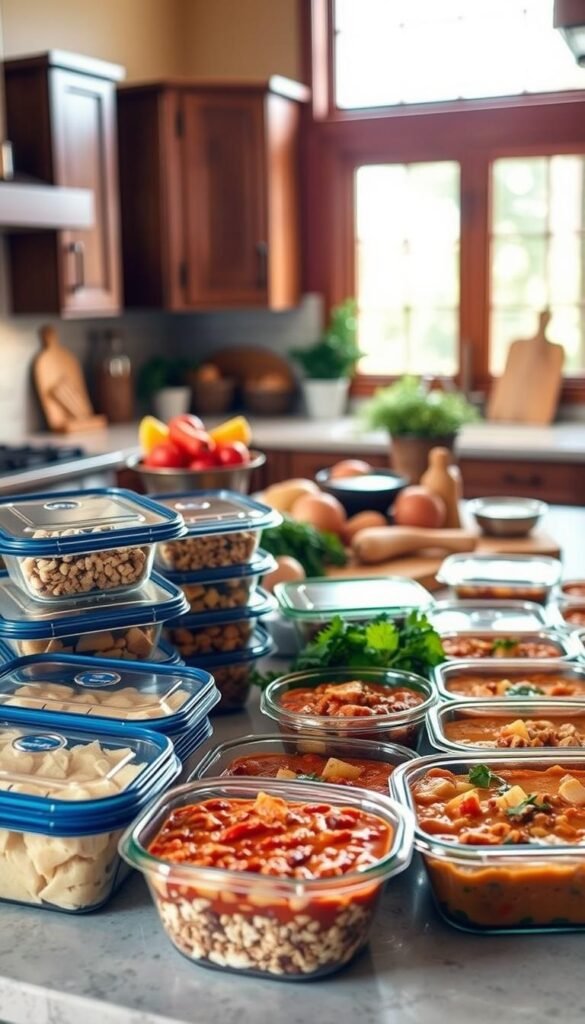
Hearty dishes hold up best. Think lasagna, baked ziti, chili, meatballs in tomato sauce, pulled chicken, stuffed peppers, and breakfast burritos. Soups like minestrone and chicken noodle freeze well; add noodles at reheat to keep them firm. Many curries also shine after freezing.
Skip high-water raw vegetables and mayonnaise-based salads. Their texture suffers. Favor sauces and braises that coat and protect. Opt for double-batch recipes so you can eat one now and freeze one for later.
Freezer labeling, rotation, and thawing tips
Use freezer-safe containers or heavy-duty bags and press out extra air for freezer burn prevention. Label with dish name, cook date, portions, and reheat notes. Freeze items flat for fast chill and tidy stacking.
Keep a visible freezer inventory to track servings and use first-in, first-out. To thaw safely, place food in the refrigerator, or use cold water and change it every 30 minutes. Some casseroles and soups can reheat from frozen; adjust time and stir often.
Batch cooking schedules for a month of dinners
A simple batch cook calendar keeps you on track without long weekends in the kitchen. Aim for 60–90 minute sessions that yield 8–12 servings. Pair each main with quick sides like bagged salad, frozen veg, or rice.
- Week 1: Double-batch recipes for chili and a pot of rice.
- Week 2: Sheet-pan chicken plus a run of frozen breakfast burritos.
- Week 3: Baked pasta and saucy meatballs.
- Week 4: Lentil curry and stuffed peppers.
This mix covers three to four make-ahead dinners per week while keeping your freezer inventory fresh and varied. Rotate flavors, note family hits, and keep building your list of freezer meals that reheat like new.
Meal Prep on a $5 Per Serving (or Less) Plan
Stretch your dollar without losing flavor. This approach uses national average prices from Walmart and ALDI to keep the cost per serving at or under $5. Plan $5 dinners, log a clear price breakdown, and shape a cheap meal plan that fits a tight grocery budget and real-life schedules.
Build a week around frugal recipes that use pantry staples and in-season produce. Include at least one meatless night to pull the average down and make room for affordable family dinners the rest of the week. Track each line item so you can swap in cheaper grains and vegetables when prices spike.
| Dish | Main Ingredients | Store/Brand Examples | Estimated Cost per Serving | Notes for Savings |
|---|---|---|---|---|
| Chickpea Curry with Rice | Canned or dried chickpeas, onions, curry powder, canned tomatoes, white rice | Great Value (Walmart), Simply Nature (ALDI) | $1.25–$1.75 | Use dried beans and bulk rice for a lower cost per serving |
| Baked Chicken Thighs with Potatoes and Carrots | Bone-in skin-on thighs, russet potatoes, carrots, olive oil, spices | Tyson value pack (Walmart), Kirkwood family pack (ALDI) | $2.50–$3.50 | Buy family packs; roast extra veggies for next-day bowls |
| Tuna Noodle Casserole | Canned tuna, egg noodles, frozen peas, cream soup or DIY béchamel | StarKist, Barilla, Great Value frozen peas | $1.75–$2.50 | Choose store brands; make your own sauce to cut costs |
| Black Bean Tacos with Cabbage Slaw | Canned or cooked black beans, corn tortillas, cabbage, lime, spices | Casa Mamita tortillas (ALDI), Great Value beans | $1.25–$2.00 | Bulk-buy tortillas; season beans with pantry spices |
| Red Lentil Soup with Garlic Bread | Red lentils, onions, carrots, broth, garlic, baguette | Simply Nature lentils (ALDI), Marketside bread (Walmart) | $1.50–$2.25 | Cook a double batch and freeze portions |
Keep the grocery budget on track with simple rules. Buy family packs, choose bone-in skin-on cuts, rely on dried beans, and favor in-season produce. Store brands often taste great and deliver a lower cost per serving without fuss.
- Set a cheap meal plan each week with one or two meatless nights.
- Use leftovers for lunch to drop your daily spend.
- When prices rise, add more grains and vegetables, then reduce higher-cost proteins.
Log every price breakdown in a spreadsheet or an app like Mint or YNAB. Record the per-serving total for each recipe, then revisit the list before you shop. Over time, these frugal recipes form a reliable roster of affordable family dinners that stay within $5 dinners, even when the market shifts.
Flavor on a Budget: Sauces, Spice Blends, and Marinades
Big taste does not need a big bill. With a few spice rack essentials and smart swaps, you can turn basic meal prep into craveable dishes. These budget flavor hacks lean on homemade spice blends, cheap marinades, and quick pantry sauces that work any night of the week.
DIY spice blends that beat store-bought
Mix small batches and store in airtight jars to keep costs low and flavor fresh. A taco blend of chili powder, cumin, paprika, garlic, and oregano fits tacos, beans, and eggs. Italian seasoning with oregano, basil, thyme, and rosemary lifts pasta, soups, and bread.
Try a Cajun mix with paprika, cayenne, garlic, onion, and thyme for seafood or rice. For a curry-style mix, use turmeric, coriander, and cumin. These homemade spice blends stretch across meals and protect your budget.
Low-cost marinades to revive leftovers
Build cheap marinades with what you have. Soy sauce, brown sugar, and garlic glaze chicken or mushrooms for pennies. A quick mix of yogurt sauces with lemon, garlic, and cumin keeps meat tender and tofu juicy.
Olive oil, vinegar, Dijon, and herbs double as a marinade and dressing. Lime, cumin, and chili powder brighten pulled pork or jackfruit. Marinate meats for 30 minutes to overnight; tofu and veggies need 15–30 minutes.
To refresh roasted meats, slice and toss with gochujang and honey, a light BBQ-vinegar splash, or peanut and lime. These budget flavor hacks add life to leftovers fast.
Pan sauces and dressings from pantry ingredients
After searing, deglaze with broth or white wine, whisk in Dijon and a knob of butter, and you have dinner-ready pantry sauces. Keep balance in mind: acid, salt, fat, and heat. A miso-sesame drizzle powers grain bowls; tahini, lemon, and garlic coat roasted veg.
Whip up vinaigrette recipes with oil, vinegar, Dijon, and a touch of honey. Stir canned tomatoes, onion, and jalapeño into a quick salsa that tops eggs, rice, or fish. These staples turn plain into polished.
| Flavor Builder | Core Ingredients | Best Uses | Approx. Cost per Serving | Prep Tip |
|---|---|---|---|---|
| DIY Taco Blend | Chili powder, cumin, paprika, garlic, oregano | Ground turkey, black beans, roasted veggies | Under $0.05 | Make 1/4 cup and store in a jar to cut waste |
| Italian Seasoning | Oregano, basil, thyme, rosemary | Pasta sauces, soup, garlic bread | Under $0.04 | Crush herbs between fingers to release oils |
| Cajun Blend | Paprika, cayenne, garlic, onion, thyme | Shrimp, rice bowls, corn | Under $0.06 | Adjust cayenne for heat control |
| Curry-Style Mix | Turmeric, coriander, cumin | Chickpeas, lentils, cauliflower | Under $0.07 | Bloom in oil for deeper flavor |
| Soy-Garlic Marinade | Soy sauce, brown sugar, garlic | Chicken, mushrooms, tofu | About $0.12 | Marinate 30 minutes; pat dry before searing |
| Yogurt-Lemon Marinade | Plain yogurt, lemon, garlic, cumin | Chicken thighs, paneer, veg | About $0.18 | Great for yogurt sauces and grill prep |
| Everyday Vinaigrette | Olive oil, vinegar, Dijon, herbs | Salads, grains, marinade | About $0.10 | Shake in a jar; classic for vinaigrette recipes |
| Quick Pan Sauce | Broth or wine, Dijon, butter | Skillet meats, tofu, veg | About $0.20 | Deglaze hot pan and whisk off heat |
Stock these spice rack essentials, lean on pantry sauces, and rotate homemade spice blends to keep meals fresh. With these budget flavor hacks, every bite tastes like more for less.
Family-Friendly Meal Prep That Kids Will Eat
Turn weeknights into low-stress, kid-friendly meal prep with simple choices, bright colors, and mild flavors. Keep parts separate, let kids pick their favorites, and save extras for fast school night dinners. These tips work for busy families and tight budgets.
Deconstructed meals and customizable bowls
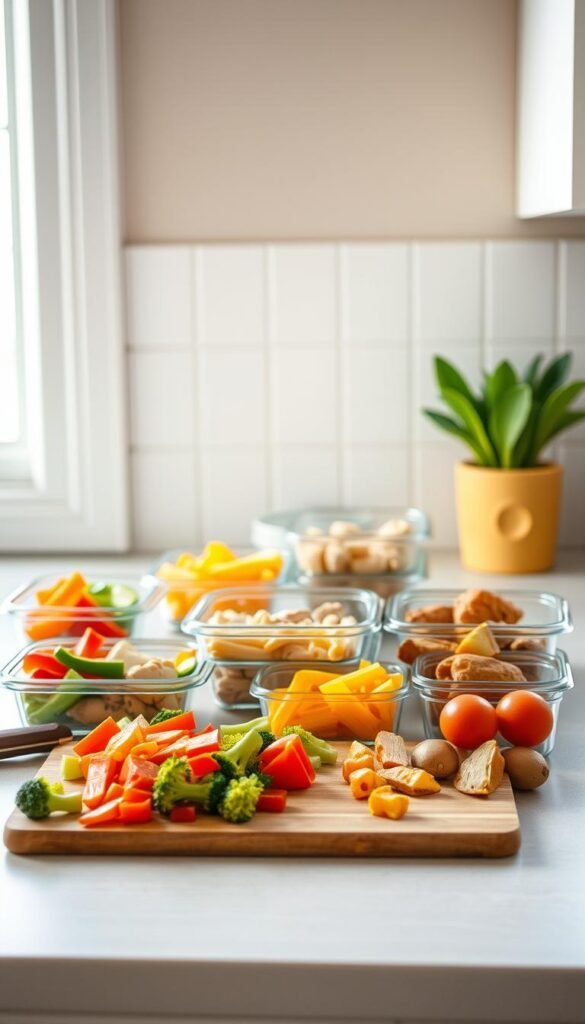
Set up build-your-own bowls to solve picky eater dinners without cooking a second meal. Try taco bowls with rice, black beans, seasoned ground turkey or tofu, shredded cheese, salsa, and avocado. Offer mild items first, then add heat on the side.
Make a pasta bar with marinara and pesto, plus toppings like roasted veggies and grilled chicken. A baked potato bar with broccoli and cheddar, or DIY English muffin pizzas, also wins. Pack components in small containers so school night dinners reheat fast.
Kid-approved veggies and freezer snacks
Serve veggies in simple, tasty ways: roasted carrots with a pinch of cinnamon, sweet corn, cucumber sticks with a ranch-yogurt dip, and sheet-pan broccoli with Parmesan. Keep the seasoning light so flavors stay friendly.
Stock freezer snacks for kids to keep hunger at bay: baked mini meatballs, spinach–cheese muffins, whole-grain waffles, and fruit-studded oatmeal bars. Freeze flat, label, and reheat in minutes for kid-friendly meal prep that actually gets eaten.
Allergy-aware swaps on a budget
Plan for nut-free swaps with sunflower seed butter in sandwiches and sauces. For dairy-free budget meals, use oat milk or lactose-free milk in mac-and-cheese style sauces and casseroles. Choose gluten-free pasta or corn tortillas when needed, and bind baked goods with a flax “egg.”
Read labels for allergens and pick store brands with clear statements; they’re often cheaper than specialty lines. With these tools, picky eater dinners stay safe and affordable while keeping build-your-own bowls and freezer snacks for kids in steady rotation.
Conclusion
Budget Meal Prep Ideas work because they blend cost control with time relief. A weekly meal plan reins in impulse buys, uses bulk staples, and turns one session into several affordable dinners. With make-ahead cooking, you cook once eat twice, sometimes more, and still keep flavors fresh.
A smart pantry and seasonal shopping stretch every dollar. Compare unit prices, choose store brands from retailers like Costco, Target, and Aldi, and stack coupons with rebate apps from Ibotta or Rakuten. Safe storage and careful reheating protect taste and texture, so leftovers feel like a new meal, not a rerun.
Keep meals exciting with one-pot stews, sheet-pan trays, and freezer-friendly batches. Rotate high-protein beans, lentils, eggs, and budget chicken with plant-forward bowls. Add quick sauces, spice rubs, and dressings from pantry items for a low-cost upgrade that fits a busy weeknight.
Mix-and-match bases, proteins, and sauces to fit family meal prep and $5-or-less goals. Use simple portions, kid-friendly sides, and flexible swaps for dietary needs. When you plan ahead and stay modular, you save money and time, enjoy affordable dinners all week, and make-ahead cooking becomes a routine you can keep.
FAQ
How does meal prep actually save money on weeknight dinners?
Planned home cooking cuts impulse buys, delivery fees, and last-minute takeout. Building a weekly menu and shopping list helps you stick to sales at Kroger, Safeway, Publix, or H‑E‑B and avoid end-cap temptations. Using store brands like Kirkland Signature, Great Value, Good & Gather, and ALDI-exclusive lines lowers unit prices without sacrificing quality.
What are the best pantry staples to stock for affordable cooking?
Keep dried beans, lentils, rice, oats, pasta, canned tomatoes, low-sodium broth, canned tuna or salmon, peanut butter, and frozen vegetables. Add long-lasting produce such as onions, carrots, cabbage, potatoes, sweet potatoes, and winter squash. Round it out with olive oil, canola oil, soy sauce, vinegar, hot sauce like Cholula or Frank’s RedHot, Dijon mustard, tomato paste, and spices like cumin, chili powder, paprika, garlic powder, and Italian seasoning.
How do I build a budget-friendly shopping list that I’ll follow?
Start with a weekly plan. Group your list by store section—produce, dairy, dry goods, meat and frozen—to minimize backtracking. Check circulars and apps for Costco, Sam’s Club, BJ’s, ALDI, Walmart, and Target. Estimate per-item costs to confirm your total before checkout, and compare unit prices on shelf tags to pick the best value.
Is bulk buying worth it for small households?
Yes, if you focus on staples and freeze extras. Buy family packs of chicken thighs, 10‑lb rice, and big bags of dried beans. Batch cook chili, casseroles, and sheet-pan meals, then portion and freeze. This spreads labor and energy over more servings, lowering your per-portion price.
What are time-saving meal prep strategies for hectic schedules?
Schedule one 60–90 minute prep block on the weekend. Cook grains, roast proteins and vegetables, and chop produce. Use cook-once-eat-twice methods, rotate theme nights like pasta, tacos, and stir-fry, and lean on an Instant Pot or Crock‑Pot to simplify weeknights. Aim for 8–12 portions to cover several dinners.
Which containers and labels work best for meal prep?
Use microwave- and freezer-safe glass containers with locking lids such as Pyrex or Snapware for reheating, plus BPA-free plastic for light carry. Stash soups and marinades in quart freezer bags or silicone bags like Stasher. Label with the dish, date, and portions using masking tape or dissolvable labels, and color-code lids for proteins, grains, and veggies.
How long can I safely store prepped meals?
Refrigerate within two hours (one hour if above 90°F). Keep the fridge at 40°F or below and the freezer at 0°F. Most cooked meals last 3–4 days in the fridge. Freeze soups and stews for 2–3 months and cooked meats for 2–6 months. Cool hot foods quickly in shallow containers or on sheet pans before packing.
What’s the best way to reheat without drying food out?
Reheat to 165°F. Add a splash of water or broth to grains and proteins and cover loosely in the microwave, stirring halfway. Re-crisp roasted foods in a 400°F oven or air fryer for 5–10 minutes. Portion before storing so you only reheat what you need.
How can I keep variety with affordable mix-and-match meals?
Build bowls with low-cost bases like rice, quinoa, couscous, pasta, or roasted potatoes; add budget proteins such as beans, eggs, canned tuna, chicken thighs, or ground turkey; then finish with sauces like yogurt-garlic, tahini-lemon, peanut-sesame, sriracha mayo, or salsa verde. Rotate spices—taco, Cajun, curry, or Italian—to change the flavor profile.
What are smart ways to repurpose leftovers?
Turn roast chicken into fried rice or enchiladas. Spoon chili over baked sweet potatoes. Fold roasted vegetables into frittatas or grain salads. Shred slow-cooker pork for tacos, burrito bowls, or BBQ sliders. Add quick sauces—gochujang-honey, peanut-lime, or BBQ-vinegar—to refresh flavors.
How do I manage portions for cost and health?
Use a digital scale or measuring cups. A simple template is 1 cup cooked grains, 3–4 oz cooked protein, 1–2 cups vegetables, and 1–2 tablespoons sauce. Bento-style containers help keep textures separate and servings consistent, which controls calories and cost per meal.
Can one-pot and sheet-pan dinners really stretch my grocery budget?
Absolutely. One-pot meals like lentil stew, chicken and rice pilaf, pasta e ceci, or jambalaya-style rice use inexpensive ingredients and less energy. Sheet pans cook everything together—think chicken thighs with potatoes and carrots, sausage with peppers and onions, or tofu with broccoli and peanut glaze—keeping costs low and cleanup easy.
What are affordable high-protein options besides meat?
Dried beans and lentils are protein powerhouses at a low cost. Cook in bulk and freeze in 1.5‑cup portions. Make lentil tacos, chickpea curry, or black bean bowls. Eggs are versatile and budget-friendly—hard-boil for snacks, bake frittatas, or make muffin-tin egg bites. Add edamame, cottage cheese, Greek yogurt, tofu, tempeh, nuts, and seeds to bowls and salads.
How can I prep chicken and turkey on a budget without drying them out?
Choose bone-in chicken thighs or drumsticks and family packs of ground turkey. Roast trays with spice rubs, poach and shred for soups or enchiladas, or sauté turkey with onions and spices for crumbles. Brine or marinate with buttermilk, yogurt, or saltwater to keep lean cuts juicy.
What are tasty, plant-forward meals that won’t break the bank?
Try veggie stir-fries over rice, red lentil dal with basmati, black bean and sweet potato enchiladas, mushroom barley soup, or chickpea shawarma bowls. Use tofu or tempeh, whole grains like bulgur and farro, and hardy vegetables such as cabbage, carrots, squash, and greens. Boost flavor with miso paste, nutritional yeast, smoked paprika, and lemon zest. Frozen vegetables are often cheaper and just as nutritious.
Which dishes are the most freezer-friendly?
Lasagna, baked ziti, chili, meatballs in sauce, pulled chicken, stuffed peppers, breakfast burritos, minestrone, and curries freeze well. Skip high-water raw vegetables and mayo-based salads. Label with name, date, portions, and reheat notes, remove excess air, and freeze flat. Thaw in the fridge, in cold water changed every 30 minutes, or reheat from frozen when appropriate.
Can I really keep dinners to per serving or less?
Yes. Examples include chickpea curry with rice, baked chicken thighs with potatoes and carrots, tuna noodle casserole, black bean tacos with cabbage slaw, and red lentil soup with garlic bread. Hit targets by buying family packs, choosing bone-in cuts, relying on dried beans, picking in-season produce, and using ALDI, Walmart, and Target store brands. Track per-serving costs with apps like YNAB or Mint.
How do I add big flavor on a small budget?
Make DIY spice blends—taco, Italian, Cajun, or curry—to avoid costly packets. Use low-cost marinades like soy-garlic-brown sugar, yogurt-lemon-cumin, olive oil–vinegar–Dijon, or lime‑chili. Build quick pan sauces by deglazing with broth, whisking in Dijon, miso, or tahini, and balancing acid, salt, fat, and heat. A squeeze of lemon or splash of vinegar can transform a dish.
What are kid-friendly meal prep ideas the whole family will eat?
Serve deconstructed bowls so kids can choose—taco bowls, pasta bars, baked potato bars, or English muffin pizzas. Keep vegetables simple: roasted carrots with cinnamon, sheet-pan broccoli with Parmesan, cucumber sticks with ranch yogurt dip, and sweet corn. Prep freezer snacks like mini meatballs, spinach-cheese muffins, whole-grain waffles, and oatmeal bars for quick wins.
How can I make allergy-aware swaps without overspending?
Use sunflower seed butter instead of peanut butter, oat milk or lactose-free milk in sauces, gluten-free pasta or corn tortillas, and flax “eggs” for baking. Read labels for allergens, and choose clear, budget-friendly store brands. Many Kirkland Signature, Great Value, and ALDI items offer affordable options with straightforward ingredient lists.