Delicious Healthy Dessert Recipes for Guilt-Free Indulgence
Here’s a shocker: the average American eats about 17 teaspoons of added sugar a day—far above what the American Heart Association advises for daily limits. That gap is where guilt often creeps in. This guide flips the script with Healthy Dessert Recipes that keep sweetness in check while staying rich in flavor and fun.
This Website contains affiliate links. That means I may earn a small commission if you purchase through my links, at no extra cost to you.
We focus on guilt-free desserts that lean on whole foods, bright spices, and ripe fruit. The Dietary Guidelines for Americans call for nutrient-dense choices, so our low-sugar treats add fiber, protein, and healthy fats to help you feel satisfied. Think clean eating desserts that still taste like a splurge.
Research in Appetite shows mindful eating and portion control can boost satisfaction with smaller servings. That’s good news for better-for-you baking at home. We’ll share easy healthy desserts that use smart swaps, balance macros, and work with gear you already own, like an air fryer or Instant Pot.
From dark chocolate ideas to fruit-forward, vegan, gluten-free, and high-protein picks, these nutritious sweets favor American pantry staples and brands found nationwide. The goal is simple: real-deal flavor, less added sugar, and recipes you’ll actually make.
Key Takeaways
- Cut added sugar while keeping bold flavor with cocoa, cinnamon, citrus, and real fruit.
- Build satiating desserts by pairing fiber, protein, and healthy fats for steady energy.
- Practice mindful portions to enjoy rich taste without overdoing calories.
- Choose low-sugar treats that rely on whole foods and minimal processing.
- Use better-for-you baking swaps and common U.S. pantry staples for simple prep.
- Make easy healthy desserts with tools you own, including an air fryer or Instant Pot.
Why Guilt-Free Desserts Matter for a Balanced Lifestyle
Sweet moments can support wellness when they fit into balanced diet desserts. Aim for flavor-forward bites that respect hunger, honor fullness, and keep energy steady. Small changes make mindful eating desserts feel satisfying, not restrictive.
Understanding cravings and satisfaction
Cravings often spark from dopamine responses to rich tastes. That cravings science suggests we can choose bold flavors—dark chocolate, cinnamon, or citrus zest—to meet the urge with less sugar. When flavor is deep, satiety arrives sooner.
Try pairing a square of 70% dark chocolate with orange slices. The contrast boosts satisfaction and helps keep portions in check. This is how balanced diet desserts work in real life.
The role of portion control and mindful eating
Use portion control sweets to guide intake without stress. Plate a single serving, sit down, and pause between bites. Slow pacing turns mindful eating desserts into a richer experience.
Simple tools help: smaller bowls, pre-portioned jars, and a glass of water nearby. These cues make it easier to notice satiety before reaching for more.
Balancing macros for sustained energy
Choose macro-friendly desserts that mix protein, fiber, and healthy fats. Think Greek yogurt with berries and chia, or cottage cheese blended with cocoa and almonds. This balance supports even blood sugar and steady energy.
Aim for a sweet that lands near 10–20 g protein, 5–10 g fiber, and mostly unsaturated fats. Pair treats with nuts or seeds to extend satiety. With smart swaps and measured portions, portion control sweets fit smoothly into a busy day.
How to Make Desserts Healthier Without Sacrificing Flavor
Great sweets can be better for you and still taste amazing. With smart sugar substitutes, strategic add-ins, and a few test-kitchen tricks, you can build high-fiber sweets and protein desserts that feel indulgent. These shifts also help highlight flavor boosters that make each bite pop.
Smart sugar swaps: dates, maple, and fruit purees
For date-sweetened desserts, blitz Medjool dates with hot water into a smooth paste. You get sweetness plus fiber, potassium, and polyphenols. Use it in brownies, bars, or energy bites.
Choose maple syrup or raw honey when you want complex notes. Use about 25–33% less than white sugar and reduce other liquids slightly. Unsweetened applesauce, ripe banana, or pear puree can soften cakes while cutting added sugar.
These sugar substitutes keep moisture high, so crumb stays tender and flavors linger.
Boosting fiber and protein for fullness
Fold in oats, chia, ground flax, or a pinch of psyllium to build high-fiber sweets that satisfy. Two to three tablespoons of chia can gel a pudding and add omega-3s.
For protein desserts, reach for Greek yogurt, skyr, cottage cheese, or clean whey, casein, or plant protein. If using powders, add a splash more milk or almond milk to avoid dryness and chalkiness.
Leaving skins on apples or pears and briefly cooking fruit can thicken fillings and concentrate natural sugars.
Healthy fats that enhance taste and texture
Use healthy fats in baking to boost mouthfeel and carry flavor. Swap butter 1:1 with mashed avocado in brownies for fudgy texture, or use extra-virgin olive oil in citrus cakes for a moist crumb.
Almond butter, peanut butter, tahini, and full-fat coconut milk add body and help fat-soluble aromas bloom. A little goes a long way when paired with whole grains or nut flours.
Flavor amplifiers: spices, citrus zest, and extracts
Layer flavor boosters to make lighter recipes sing. Bloom cocoa with hot water, and add a pinch of espresso powder to deepen chocolate. Try Ceylon cinnamon, cardamom, or nutmeg for warmth.
Finish batters with fresh citrus zest, pure vanilla extract, or almond extract. Toast nuts before mixing, and sprinkle sea salt flakes on cooled bars to sharpen sweetness and add crunch.
These small steps help sugar substitutes and healthy fats in baking taste rich, balanced, and bakery-worthy.
Healthy Dessert Recipes
Great treats start with small, smart steps. Use healthy baking principles to guide swaps, plan dessert meal prep on Sundays, and keep a pantry list for healthy desserts within reach. That way, weeknight desserts and special occasion healthy sweets both turn out light, tasty, and reliable.
Flavor comes from balance. Focus on texture, gentle sweetness, and a clean finish. Measure by weight, taste as you go, and let batters rest when using whole grains.
Foundational principles for consistently better bakes
- Respect hydration: whole-wheat and oat flours need a short rest so bran fully absorbs liquid.
- Mind leavening: choose aluminum-free baking powder; keep baking soda fresh for steady lift.
- Emulsify well: whisk eggs, dairy, and nut butters until glossy for even crumb and moisture.
- Avoid overmixing gluten-free blends to prevent toughness and tunneling.
- Weigh ingredients for accuracy; a digital scale removes guesswork.
These healthy baking principles make swaps predictable and help dessert meal prep stay stress-free.
Stocking a nutritious dessert pantry
Build a practical pantry list for healthy desserts with brands you can trust.
- Flours: almond and oat flour from Bob’s Red Mill; coconut flour; whole-wheat pastry flour.
- Chocolate: cocoa or cacao; dark chocolate 70–85% from Lindt or Ghirardelli.
- Binders and boosts: chia, flax, and hemp; nut butters like MaraNatha and Justin’s.
- Moisture and creaminess: unsweetened applesauce, canned pumpkin, unsweetened coconut milk, Greek yogurt, cottage cheese.
- Flavor: vanilla and almond extracts, Ceylon cinnamon, cardamom, espresso powder, citrus zest.
- Sweeteners: dates, maple syrup, monk fruit, or allulose; keep frozen berries for quick sauces.
With these on hand, dessert meal prep becomes simple, and weeknight desserts are minutes away.
Easy weeknight treats vs. special-occasion showstoppers
Match the moment to the method. For weeknight desserts, lean on speed and minimal cleanup. For special occasion healthy sweets, invest a bit more time and detail.
- Weeknight: microwave mug cakes, chia puddings, yogurt bark, or air fryer fruit crisps.
- Showstoppers: almond flour lemon bars, protein cheesecake cups, vegan truffles, flourless brownies.
Use dessert meal prep to stay ahead: batch-cook fruit compotes, roast peaches or apples for later, freeze portioned dough balls, and keep silicone molds for single-serve portions. These habits, backed by healthy baking principles and a smart pantry list for healthy desserts, make both weeknight desserts and special occasion healthy sweets feel effortless.
Low-Sugar Chocolate Desserts That Satisfy
Craving chocolate without the sugar crash is possible. These low-sugar chocolate desserts use smart swaps and simple methods, yet keep a rich, deep flavor. Each pick works for busy weeknights and feels special enough for guests, making them ideal diabetic-friendly desserts that still taste indulgent.
Dark chocolate avocado mousse
Blend ripe avocados with Dutch cocoa, a pinch of espresso powder, vanilla, and a tiny splash of maple syrup or allulose. Add a small pinch of salt to sharpen the chocolate notes. Chill until set for a silky avocado chocolate mousse with natural creaminess from heart-healthy fats.
Top with a few raspberries or a dusting of cocoa. The result is bold, smooth, and fits neatly into a lineup of diabetic-friendly desserts for a date-night finish or a quick make-ahead treat.
Cocoa chia pudding with almond milk
Stir 2 tablespoons chia seeds into 1/2 cup unsweetened almond milk with 1 tablespoon cocoa, vanilla, and a light touch of monk fruit or date syrup. Refrigerate overnight for a pudding that thickens on its own. This chia pudding cocoa delivers fiber and a chocolate bite with very little added sugar.
Serve with sliced strawberries or a spoon of plain Greek yogurt. It reads like dessert but works as breakfast, too, proving low-sugar chocolate desserts can be practical and satisfying.
Flourless black bean brownies
Puree rinsed canned black beans with cocoa, eggs or flax eggs, a bit of maple or allulose, espresso powder, baking powder, and a handful of 70% dark chocolate chips. Bake until just set and glossy for fudgy black bean brownies that pack protein and fiber.
Let them cool before slicing for clean edges. Add a dollop of Greek yogurt for extra protein. These squares land squarely in the realm of diabetic-friendly desserts without losing that classic brownie chew.
| Recipe | Key Ingredients | Texture & Flavor | Smart Sweetener | Why It Satisfies |
|---|---|---|---|---|
| Dark Chocolate Avocado Mousse | Avocado, Dutch cocoa, espresso powder, vanilla, salt | Silky, rich, deep cocoa finish | Maple syrup or allulose | Healthy fats boost satiety; classic chocolate taste |
| Cocoa Chia Pudding with Almond Milk | Chia seeds, unsweetened almond milk, cocoa, vanilla | Thick, pudding-like, balanced sweetness | Monk fruit or date syrup | Fiber and omega-3s slow the sugar impact |
| Flourless Black Bean Brownies | Black beans, cocoa, eggs/flax eggs, espresso, dark chips | Fudgy, dense, brownie chew | Maple syrup or allulose | Protein and fiber for a steadier energy curve |
Fruit-Forward Treats Using Natural Sweetness
Turn peak produce into fruit desserts no added sugar that feel special yet light. These ideas lean on natural sweetness, simple methods, and smart toppings to keep flavor bold and portions satisfying.
Baked cinnamon apples with Greek yogurt
For baked apples healthy and cozy, core and slice Honeycrisp or Pink Lady. Toss with Ceylon cinnamon, a pinch of nutmeg, lemon juice, and a tiny splash of maple only if the fruit is very tart. Bake until tender and glossy.
Spoon into bowls and top with 2%–5% Greek yogurt and toasted walnuts. The creamy tang balances the natural sweetness, while the nuts add crunch and omega-3s. It’s warm, fragrant, and perfect after dinner.
Grilled peaches with honey and pistachios
Try a grilled peaches dessert by halving ripe freestone peaches and brushing the cut sides with avocado oil. Grill until the edges char and the flesh caramelizes. Finish with about a teaspoon of honey, chopped pistachios, and a quick mint sprinkle.
Pistachios bring plant protein, color, and gentle salt. The honey accentuates the fruit’s natural sweetness without overpowering it, creating a sun-kissed bite that pairs well with a small scoop of plain yogurt.
Berry compote over protein pancakes
Make a bright berry compote by simmering blueberries, strawberries, or raspberries with lemon zest and a splash of water until syrupy. Add minimal sweetener only if the berries lean sour. The result is vivid, saucy, and packed with flavor.
Pour the compote over protein pancakes blended from cottage cheese, oats, and eggs. You get a high-protein, high-fiber stack with clean, natural sweetness. It works as a dessert or a weekend breakfast and keeps energy steady.
- Why it works: Whole fruit layers flavor, color, and texture without heavy syrups, keeping fruit desserts no added sugar friendly.
- Best picks: Firm apples for baking, freestone peaches for grilling, and mixed berries for a flexible berry compote.
- Quick boosts: Citrus zest, warm spices, toasted nuts, and yogurt deepen taste and improve satisfaction.
No-Bake and Minimal-Prep Desserts
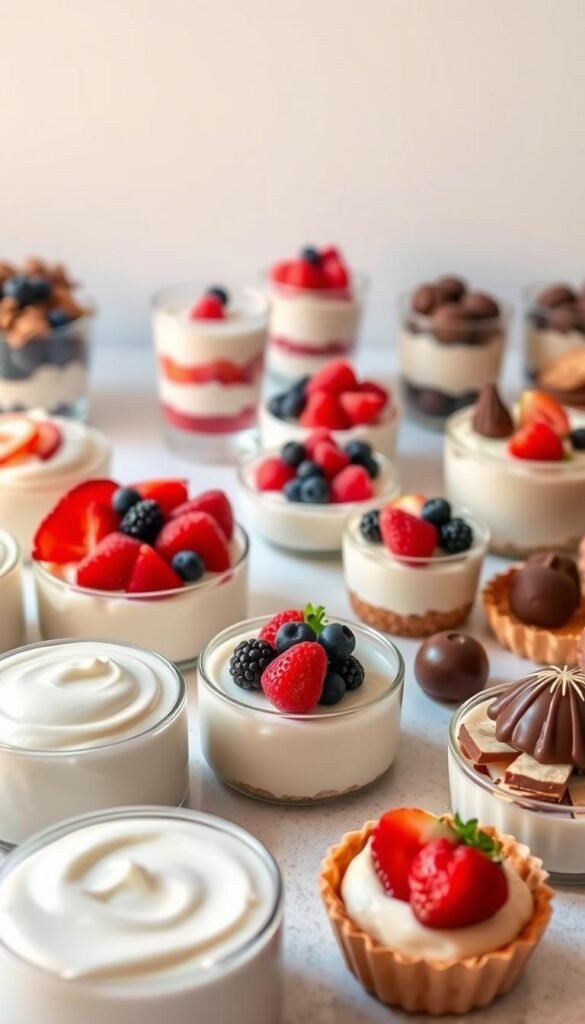
When time is tight, reach for minimal prep sweets that still taste special. These no-bake desserts lean on whole foods, quick methods, and a few clever flavor boosts. Keep a bag of frozen fruit, a tub of Greek yogurt, and a jar of nut butter on hand, and dessert is minutes away.
Frozen banana “nice” cream variations
For a creamy base, blend frozen banana slices with a splash of unsweetened almond milk. Add a pinch of salt and a drop of vanilla to make the banana nice cream taste round and rich. Use a food processor for the silkiest texture.
Try three spins: peanut butter–cocoa, strawberry–vanilla, or mint with cacao nibs. Each one hits the spot without added fuss, perfect for no-bake desserts after dinner.
Yogurt bark with nuts and seeds
Spread thick Greek yogurt on a parchment-lined sheet and swirl in berry puree. Sprinkle chia, pumpkin seeds, and crushed almonds. For a light touch of sweetness, use monk fruit or a drizzle of maple in this yogurt bark recipe.
Freeze until firm, then snap into shards. This cold snack stores well and fits the bill for minimal prep sweets when you want a quick crunch.
Energy bites with oats, nut butter, and cacao
Stir rolled oats with natural peanut or almond butter, ground flaxseed, cacao powder, chopped dates or mini dark chips, and a pinch of salt. Chill the dough, then roll into 1–1.5-ounce balls. These energy bites healthy options keep well in the fridge.
They deliver balanced fuel before or after a workout and satisfy a sweet tooth fast. Pair two bites with iced coffee for a grab-and-go treat.
| Recipe | Main Ingredients | Flavor Tips | Time to Make | Best For |
|---|---|---|---|---|
| Banana Nice Cream | Frozen bananas, almond milk, vanilla, salt | Peanut butter–cocoa; strawberry–vanilla; mint + cacao nibs | 5–7 minutes | Soft-serve fix, no-bake desserts |
| Yogurt Bark | Greek yogurt, berry puree, chia, pumpkin seeds, almonds | Sweeten with monk fruit or maple; add lemon zest | 10 minutes prep + freeze | Crunchy, minimal prep sweets, yogurt bark recipe |
| Energy Bites | Rolled oats, nut butter, flaxseed, cacao, dates or dark chips | Pinch of sea salt; splash of vanilla; coconut flakes | 10–15 minutes | On-the-go snack, energy bites healthy |
High-Protein Desserts for Fitness-Focused Lifestyles
These high-protein desserts deliver rich flavor with a smart macro split, ideal for post-workout sweets and everyday macro-friendly treats. Each bite keeps sugars modest while boosting satiety, thanks to dairy proteins like whey and casein and fiber-rich add-ins.
Tip: Choose vanilla or chocolate protein powders from trusted brands like Optimum Nutrition, Dymatize, or Naked Nutrition to match your taste and texture goals.
Protein cheesecake cups
Blend light cream cheese, plain Greek yogurt, vanilla whey or casein, one egg, vanilla, and a touch of allulose or maple syrup. Press a quick crust of almond flour mixed with melted coconut oil into a muffin tin, fill, and bake until just set.
Each cup lands around 10–15 grams of protein with less sugar than a standard slice of cheesecake. This easy protein cheesecake option travels well for work or the gym and stays creamy without a heavy calorie load.
Cottage cheese blender ice cream
Whirl 2%–4% cottage cheese with frozen mango or berries, vanilla, and a small drizzle of honey or allulose. Freeze for a short chill, then scoop. The slow-digesting casein in cottage cheese supports fullness and recovery.
This cottage cheese ice cream gives a lush texture with less saturated fat than premium pints and pairs well with cacao nibs or sliced almonds for crunch.
Chocolate peanut butter protein mousse
Whip Greek yogurt with unsweetened cocoa, peanut butter powder, a scoop of chocolate whey, and a splash of milk. Finish with vanilla, a pinch of sea salt, and shaved 85% dark chocolate if you like. Balance sweetness to keep added sugars down.
The result is a fluffy protein mousse that hits 20+ grams of protein per serving and satisfies a chocolate craving fast, making it one of the most reliable post-workout sweets.
| Recipe | Main Protein Sources | Typical Protein (per serving) | Sweetener Strategy | Texture & Flavor Notes | Ideal Use |
|---|---|---|---|---|---|
| Protein cheesecake cups | Greek yogurt, light cream cheese, whey/casein | 10–15 g | Allulose or light maple | Creamy, tangy, almond crust crunch | Portable macro-friendly treats |
| Cottage cheese blender ice cream | Cottage cheese (casein) | 12–18 g | Honey or allulose with fruit | Cold, dense, fruity and clean | Light dessert or recovery snack |
| Chocolate peanut butter protein mousse | Greek yogurt, whey, peanut butter powder | 20–25 g | Minimal sweetener; cocoa forward | Fluffy, rich chocolate, salty-sweet | Quick post-workout sweets |
Rotate these high-protein desserts through the week to keep variety high and cravings low. With protein cheesecake, cottage cheese ice cream, and a fast protein mousse, you get flavor, recovery support, and macro-friendly treats without the sugar crash.
Gluten-Free and Grain-Free Sweet Options
These gluten-free desserts lean on smart grain-free baking methods that keep taste front and center. Think bright citrus, warm vanilla, and a crisp edge that gives way to a tender crumb. Each idea below uses everyday ingredients and simple steps for weeknight ease.
Almond flour lemon bars
Press a quick crust of almond flour, melted coconut oil, and a pinch of salt into a lined pan, then bake until lightly golden. Pour on a lemon filling whisked from eggs, lemon juice and zest, a touch of maple or allulose, and a spoon of cornstarch or arrowroot. Bake just until set, chill, and dust with zest. Almond flour desserts add vitamin E and healthy fats while staying squarely in the realm of gluten-free desserts.
Coconut flour chocolate chip cookies
Coconut flour drinks up liquid, so use extra eggs plus moisture from unsweetened applesauce or coconut milk. Fold in dark chocolate chips, vanilla, and monk fruit or maple for sweetness. Rest the dough to hydrate, then bake briefly for soft centers. These coconut flour cookies show how grain-free baking can be tender, rich, and simple.
Flourless peanut butter cookies
Stir natural peanut butter with an egg, a pinch of baking soda, vanilla, and 2–3 tablespoons maple or allulose. Scoop, press with a fork, and finish with sea salt flakes before a quick bake. The result is chewy, fragrant flourless cookies that deliver classic flavor without wheat. If adding oats or mix-ins, confirm they are certified gluten-free under FDA standards.
Tip: For even bakes and clean slices, cool fully before cutting bars or moving cookies. This small pause keeps almond flour desserts neat and the edges crisp.
Dairy-Free and Vegan Dessert Ideas
Skip the dairy and still enjoy satisfying vegan desserts. These dairy-free sweets lean on whole foods and simple methods, turning plant-based treats into everyday favorites without a long ingredient list.
Tip: Check labels for milk solids and butterfat in chocolate, and choose maple or date syrup instead of honey if you keep a strict vegan kitchen.
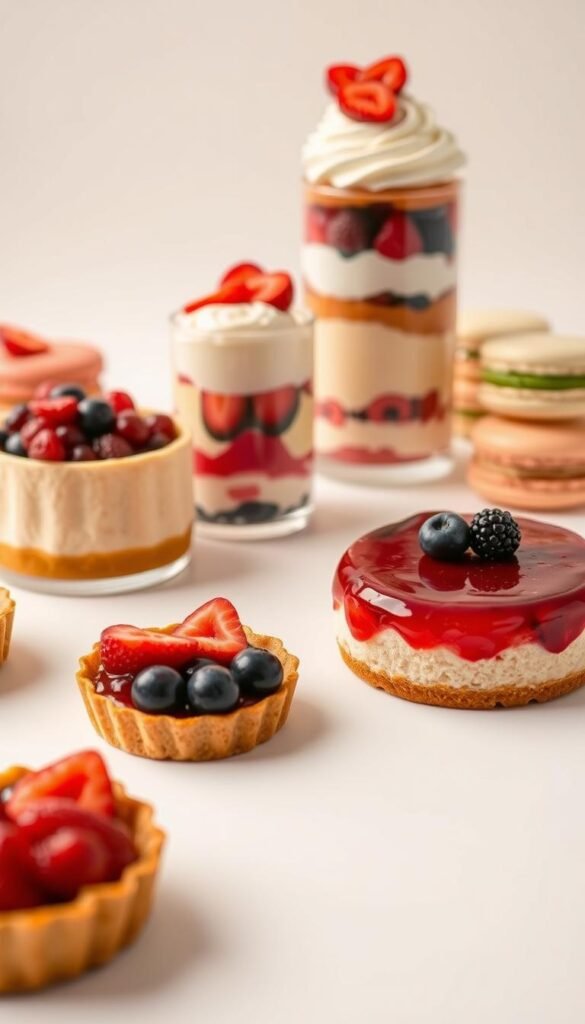
Cashew cream parfaits
Soak raw cashews for 4–6 hours, then blend with water, vanilla, a pinch of salt, and a little maple syrup. This smooth cashew cream brings body and a rich taste from unsaturated fats.
Layer the cream with warm stewed berries and a sprinkle of gluten-free granola. The result is one of those plant-based treats that feels lush yet light, perfect for make-ahead vegan desserts.
Vegan chocolate truffles
In a processor, blend soft dates, cacao powder, almond butter, and a pinch of salt. Roll into balls and dust with cocoa or unsweetened shredded coconut. Add a touch of espresso powder for depth.
These vegan truffles are classic dairy-free sweets that store well in the fridge. Pair them with a shot of cold brew for a small but bold bite.
Coconut chia pudding with mango
Stir chia seeds into light coconut milk with vanilla and lime zest. Let it thicken. Spoon in fresh mango cubes for brightness and natural sweetness.
This coconut chia pudding is cooling, simple, and ideal for breakfast or dessert. It joins cashew cream and vegan truffles as plant-based treats you can prep on Sunday and enjoy all week.
| Recipe | Main Fat Source | Sweetener | Texture Profile | Make-Ahead |
|---|---|---|---|---|
| Cashew Cream Parfaits | Cashews (unsaturated fats) | Maple syrup | Silky, layered, creamy | Up to 3 days refrigerated |
| Vegan Chocolate Truffles | Almond butter | Dates | Fudgy, dense, cocoa-rich | 5–7 days refrigerated |
| Coconut Chia Pudding with Mango | Light coconut milk | Mango, vanilla | Cool, pudding-like, light | Up to 4 days refrigerated |
Air Fryer and Instant Pot Desserts Made Lighter
Sweet tooth, meet smart tools. With a countertop air fryer and an Instant Pot, you can craft air fryer desserts healthy enough for busy weeknights and elegant enough for guests. These methods coax deep flavor, quick caramelization, and tender textures with less sugar and fat, perfect for baked fruit desserts and protein-rich parfaits.
Air fryer apple crisps
Thinly slice crisp apples, then toss with cinnamon and a pinch of cornstarch. Air fry at about 350°F until the edges curl and turn golden. The result is snappy and fragrant, a proof point that air fryer desserts healthy can still taste bold.
Pair the chips with a quick Greek yogurt dip and a touch of maple. Air frying cuts the oil while keeping that craveable crunch, making these a staple among baked fruit desserts.
Instant Pot yogurt for parfaits
For creamy, high-protein bowls, try homemade yogurt Instant Pot style. Use ultra-filtered milk like Fairlife and a live-culture starter, then incubate 8–10 hours for a tangy set. Strain for Greek-style thickness.
Layer your yogurt with berry compote and toasted nuts for balanced Instant Pot desserts that feel indulgent without heavy sugar. This base turns simple toppings into a café-worthy parfait.
Air fryer stuffed pears with walnuts
Halve and core Bosc or Anjou pears. Fill with chopped walnuts, oats, cinnamon, and a light drizzle of honey. Air fry until the fruit yields to a spoon and the nuts toast.
These tender halves showcase the magic of baked fruit desserts in minutes. Serve warm with a spoon of homemade yogurt Instant Pot for creaminess, or enjoy as-is for a cozy, nutty finish.
| Recipe | Key Technique | Time (Approx.) | Why It’s Lighter | Smart Pairing |
|---|---|---|---|---|
| Air Fryer Apple Crisps | 350°F air fry until crisp | 10–15 minutes | Little to no oil; concentrated apple flavor | Greek yogurt dip with cinnamon |
| Instant Pot Yogurt Parfaits | Incubate 8–10 hours; strain for Greek | Hands-off overnight | High protein, controlled sweetness | Berry compote, toasted almonds |
| Air Fryer Stuffed Pears | Halve, fill, air fry to tender | 12–16 minutes | Less added sugar; caramelized fruit | Homemade yogurt Instant Pot or light honey drizzle |
Portion-Controlled Desserts for Calorie Awareness
Small sweets can hit the spot and still fit your goals. With mindful portions, you enjoy flavor without guesswork. Ramekins, silicone molds, and mini tins help standardize calories, which research in behavioral nutrition links to better weight management. Think of these as portion control desserts you can repeat with ease.
These ideas favor single-serve sweets and mini desserts that feel special. Each one leans on whole ingredients and simple steps. They also make space for low-calorie treats when you want something fast.
Single-serve mug cakes
Stir oat flour, unsweetened cocoa, baking powder, milk of choice, a touch of maple syrup or allulose, and vanilla in a microwave-safe mug. Cook for 60–90 seconds. Add whey or pea protein, or an egg white, to boost fullness.
This is one of the best single-serve sweets for mindful portions. Top with a spoon of Greek yogurt or a few raspberries for a lift.
Mini fruit tarts
Press an almond–oat crust into a mini muffin tin and bake until set. Fill with plain yogurt or cashew cream and crown with seasonal fruit like blueberries or sliced kiwi. The result feels like bakery-style mini desserts with less sugar.
Because each cup is pre-sized, these work well as portion control desserts. They travel nicely for parties and still qualify as low-calorie treats when made light.
Chocolate-dipped strawberries
Melt 70–85% dark chocolate and dip ripe strawberries. Set on parchment to firm. One or two pieces satisfy fast, thanks to rich cocoa and natural fruit sweetness.
Keep a small batch in the fridge as single-serve sweets. The built-in mindful portions make it easier to savor without overdoing it.
- Pro tip: Use ramekins, silicone molds, or mini tins to portion batter before baking for consistent results.
- Choose darker chocolate and fresh fruit to keep flavors bold and calories tidy.
- Rotate fillings and toppings to keep low-calorie treats exciting week to week.
Best Sweeteners and When to Use Them
Choose sweeteners that match your recipe and your goals. Think about taste, texture, and glycemic impact. Many bakers mix options to balance flavor and structure with fewer calories.
Stevia, monk fruit, and allulose basics
Stevia and monk fruit are low-calorie sweeteners that taste many times sweeter than sugar. In the kitchen, blends often add erythritol for bulk, which can bring a light cooling feel. If you compare monk fruit vs stevia, both are potent, but some people prefer monk fruit’s cleaner finish.
Allulose works well for allulose baking because it browns, dissolves fast, and offers minimal glycemic impact. It contributes a hint of caramel note and supports moisture. For cookies or muffins, pair allulose for structure with a touch of stevia or monk fruit to reach the right sweetness.
When natural sugars make sense
Natural sweeteners like maple syrup, honey, date syrup, or mashed banana bring flavor and aroma that no extract can match. They also add moisture, so reduce other liquids slightly. Dates supply fiber, which can temper the rise in blood sugar compared with refined sugar.
Use a light hand with these choices. A teaspoon of honey on Greek yogurt or a splash of maple in oatmeal can deliver satisfaction with modest glycemic impact. For sauces or glazes, their complex notes shine with fewer total grams.
Reading labels and avoiding hidden sugars
Scan packages for hidden sugars labels under names like sucrose, dextrose, cane juice, invert sugar, brown rice syrup, and malt syrup. Aim for products with 6–8 grams of added sugar or less per serving when you can.
For home baking, combine allulose for bulk with a pinch of monk fruit or stevia to fine-tune sweetness. This trio uses low-calorie sweeteners wisely while lowering the glycemic impact. It also cuts back on added sugar compared with many natural sweeteners.
Pantry Staples for Healthier Baking and Sweets
A well-planned healthy baking pantry helps you bake treats that feel light yet satisfying. Stock smart, store well, and your desserts will taste fresh any night of the week.
Whole-grain flours and nut flours
Choose oat flour for gentle sweetness and beta-glucan fiber. Whole-wheat pastry flour adds tenderness with more nutrients than all-purpose. Keep almond flour on hand for rich, moist crumb, and remember coconut flour drinks up liquid, so add extra eggs or milk.
Refrigerate nut flours in airtight containers to prevent rancidity. Label dates so blends stay consistent across batches.
Seeds, nuts, and crunchy toppings
For texture and nutrition, reach for chia flax hemp. Chia and flax bring omega-3s and help bind batters. Hemp seeds add protein and a soft crunch that works in bars and quick breads.
Walnuts, almonds, and pistachios lend bite and micronutrients. Toast them briefly to unlock aroma, then scatter over loaves or fold into cookies for contrast.
Unsweetened cocoa, spices, and extracts
Unsweetened cocoa powder or cacao sets up deep flavor. Dutch-processed versions give a smooth, mellow profile that pairs well with ripe fruit or nut butter.
Lean on baking spices like Ceylon cinnamon, cardamom, ginger, and nutmeg for warmth. Use pure vanilla extract for clean notes; a touch of almond extract can lift berry or chocolate bakes.
Pro tip: Keep cocoa powder, spices, and extracts sealed tight and away from heat so their fragrance stays potent from one bake to the next.
Seasonal Healthy Desserts by Produce Availability
Lean into seasonal produce sweets to keep flavor vivid and nutrition high. Rotating seasonal desserts brings better texture, lower costs, and less added sugar. These ideas use simple steps, real ingredients, and bright pantry staples.
Spring: strawberry rhubarb compote
For spring dessert recipes, simmer sliced rhubarb and ripe strawberries with a splash of maple, vanilla, and lemon zest. Rhubarb’s tart bite balances sweet berries, so you can use less sugar. Spoon the compote over skyr or chia pudding for a quick breakfast or light dessert.
This make-ahead topping keeps well and tastes fresh. It also pairs with oatmeal, cottage cheese, or toasted whole-grain waffles.
Summer: watermelon granita
For a heat wave fix, blend seedless watermelon with lime juice and a tiny pinch of salt, then freeze and scrape with a fork. This summer granita is naturally hydrating and low in calories. Add mint for a cool lift.
Serve in chilled glasses after grilling. It’s a star among seasonal desserts because the fruit does the work.
Fall: pumpkin protein bars
Stir pumpkin puree with oat flour, vanilla protein, pumpkin pie spice, and eggs or flax eggs. Add a touch of maple, spread in a pan, and bake until set. These pumpkin protein bars are moist, portable, and rich in beta-carotene.
Cut into squares for lunchboxes or post-workout snacks. A smear of almond butter turns them into a cozy bite.
Winter: citrus yogurt parfaits
Layer thick Greek yogurt with supremed oranges or grapefruit, crushed pistachios, and a drizzle of honey or allulose. These citrus parfaits shine when fresh berries are scarce. The vitamin C and tang brighten short days.
Finish with a hint of vanilla or cinnamon. It’s a clean, crisp option within seasonal produce sweets.
| Season | Hero Produce | Dish | Key Flavor Notes | Smart Tweaks | Nutrition Highlight |
|---|---|---|---|---|---|
| Spring | Strawberries, rhubarb | Strawberry rhubarb compote | Bright, tart, lightly sweet | Use minimal maple; add lemon zest and vanilla | Lower sugar, fiber from fruit |
| Summer | Watermelon, lime, mint | Watermelon granita | Cool, juicy, refreshing | Pinch of salt to enhance sweetness | Hydration, low calorie |
| Fall | Pumpkin puree | Pumpkin protein bars | Warm spice, tender crumb | Oat flour and vanilla protein for structure | Protein, beta-carotene |
| Winter | Oranges, grapefruit | Citrus yogurt parfaits | Tangy, creamy, nutty crunch | Sweeten with honey or allulose | Vitamin C, probiotics |
From bright compote to icy granita, hearty bars to layered parfaits, these seasonal desserts make simple ingredients sing while keeping sugar in check. Rotate them all year for balanced, tasty results.
Conclusion
Healthy Dessert Recipes can be rich, bright, and easy when you build flavor first. Use cocoa, cinnamon, vanilla, and citrus zest to make every bite count, then lean on whole fruit for natural sweetness. Add fiber and protein from oats, chia, Greek yogurt, or cottage cheese to boost fullness. Choose unsaturated fats like olive oil, avocado, and nuts for a silky texture. With smart swaps such as allulose and monk fruit, you get low-sugar desserts that still feel like a treat.
Set yourself up for success with a well-stocked pantry and simple tools. Keep almond flour, rolled oats, nut butters, spices, and quality extracts on hand. Pre-portion bars, brownies, and bark so servings stay right-sized. Use an air fryer for quick crisps or an Instant Pot for yogurt and custards. Match your picks to your goals, whether you want high-protein treats, gluten-free bakes, dairy-free options, or clean eating desserts that fit a busy week.
Follow U.S. guidance by keeping added sugars in check and choosing nutrient-dense ingredients. Mindful portions and balanced sweets help you enjoy a small dessert most days without second-guessing it. Rotate fruit-forward bowls, no-bake bites, and warm comfort classics so variety stays high and effort stays low. The result is guilt-free indulgence that tastes great, supports energy, and fits real American kitchens.
Build your own mix-and-match list: a dark chocolate mousse with avocado, a quick chia pudding, a citrus yogurt parfait, or a berry compote over protein pancakes. With a clear plan, low-sugar desserts become habit, high-protein treats feel satisfying, and clean eating desserts stay simple. Keep flavor bold, portions smart, and the pantry ready—your sweet spot for everyday balance is right here.
FAQ
How much added sugar is okay in a healthy dessert?
The American Heart Association suggests keeping added sugars under about 25 grams per day for women and 36 grams for men. Aim for desserts sweetened with whole fruit, dates, or small amounts of maple syrup, honey, monk fruit, or allulose to stay within those limits.
What makes a dessert “guilt-free” yet satisfying?
Focus on flavor density and satiety. Use dark chocolate, Ceylon cinnamon, citrus zest, espresso powder, and pure vanilla extract. Add fiber, protein, and healthy fats—think chia seeds, oats, Greek yogurt, cottage cheese, almond butter, walnuts, and avocado—to feel full with less sugar.
Which sweetener should I choose: stevia, monk fruit, or allulose?
Allulose browns and bulks like sugar with minimal glycemic impact. Stevia and monk fruit are potent and often blended with erythritol. For baking, many home cooks combine allulose for texture with a touch of monk fruit or stevia for clean sweetness. Adjust to taste and watch for cooling effects in blends.
Can I still enjoy chocolate without spiking my blood sugar?
Yes. Choose 70–85% dark chocolate from brands like Lindt or Ghirardelli, and keep portions modest. Try cocoa chia pudding, black bean brownies, or avocado chocolate mousse for fiber and healthy fats that help moderate glucose.
What are smart sugar swaps for classic recipes?
Use Medjool date paste, mashed ripe banana, unsweetened applesauce, pumpkin puree, maple syrup, or honey. Often 25–33% less sweetener than granulated sugar works due to stronger flavor. Adjust liquids to keep batters balanced.
How do I boost protein in desserts without chalky texture?
Add Greek yogurt, skyr, cottage cheese, or powdered proteins (whey, casein, or plant-based). Blend well and add extra liquid when using protein powder. Protein cheesecake cups, cottage cheese ice cream, and chocolate peanut butter protein mousse are great options.
What are easy high-fiber add-ins that improve texture?
Mix in chia seeds, ground flaxseed, psyllium husk, rolled oats, and fruit skins. Chia at 2–3 tablespoons creates creamy puddings. Oats and flax add body and help you stay full longer.
Which fats are healthiest for baking and why?
Use unsaturated fats like extra-virgin olive oil, avocado, almond butter, tahini, and coconut milk to enhance mouthfeel and carry flavor. Try olive oil in citrus cakes or avocado in brownies for fudgy texture.
How does portion control fit into dessert habits?
Pre-portion treats in ramekins, silicone molds, or mini muffin tins. Use smaller plates and pause between bites. Mindful eating techniques from UCSF research show you can enjoy more with less.
What pantry staples help me bake healthier sweets?
Keep almond flour, oat flour, whole-wheat pastry flour, coconut flour, Dutch-processed cocoa, 70–85% dark chocolate, dates, maple syrup, monk fruit, allulose, chia, flax, hemp seeds, nut butters (MaraNatha, Justin’s), vanilla and almond extracts, and frozen berries on hand.
Are gluten-free desserts hard to get right?
Not with the right techniques. Rest batters so flours hydrate, avoid overmixing, and use aluminum-free baking powder with fresh baking soda. Almond flour lemon bars, coconut flour cookies, and flourless peanut butter cookies are reliable winners. Verify oats are certified gluten-free per FDA standards.
How can I make vegan desserts creamy without dairy?
Blend soaked cashews for cashew cream, use coconut milk, or rely on nut butters and tahini. Vegan chocolate truffles with dates and cacao or coconut chia pudding with mango deliver rich texture without butter or cream.
What quick no-bake desserts work on busy weeknights?
Try banana “nice” cream, yogurt bark with nuts and seeds, or energy bites made with oats, peanut butter, ground flaxseed, cacao, and dates. They store well and take minutes to assemble.
Can the air fryer or Instant Pot make desserts healthier?
Yes. Air fry apple crisps and stuffed pears for caramelization with less fat. Use an Instant Pot to make high-protein yogurt with ultra-filtered milk like Fairlife. Finish with fruit compotes instead of added sugar.
How do I balance macros in a dessert?
Aim for 10–20 grams of protein, 5–10 grams of fiber, and mostly unsaturated fats. Pair sweets with Greek yogurt, nuts, or seeds. This macro balance can reduce blood sugar spikes and keep energy steady.
What are good options for portion-controlled treats?
Make single-serve mug cakes, mini fruit tarts with almond-oat crusts, or chocolate-dipped strawberries. Pre-portioning simplifies calorie awareness and helps with weight management.
Which fruits make the best naturally sweet desserts?
Berries, apples, peaches, pears, mango, and watermelon shine. Try baked cinnamon apples with Greek yogurt, grilled peaches with pistachios, or a berry compote over protein pancakes.
Do spices and extracts really reduce the need for sugar?
Absolutely. Cocoa powder, espresso powder, Ceylon cinnamon, cardamom, nutmeg, pure vanilla, almond extract, citrus zest, and sea salt flakes intensify flavor, letting you cut back on sweeteners.
How should I read labels to avoid hidden sugars?
Scan ingredients for sucrose, dextrose, cane sugar, malt syrup, invert sugar, and brown rice syrup. Choose products with 6–8 grams or less of added sugar per serving when possible, and remember FDA labeling treats allulose differently on Added Sugars.
Any seasonal healthy dessert ideas I can rotate year-round?
Yes. Spring: strawberry rhubarb compote over skyr. Summer: watermelon granita with lime and mint. Fall: pumpkin protein bars with oat flour. Winter: citrus yogurt parfaits with pistachios and a drizzle of honey or allulose.