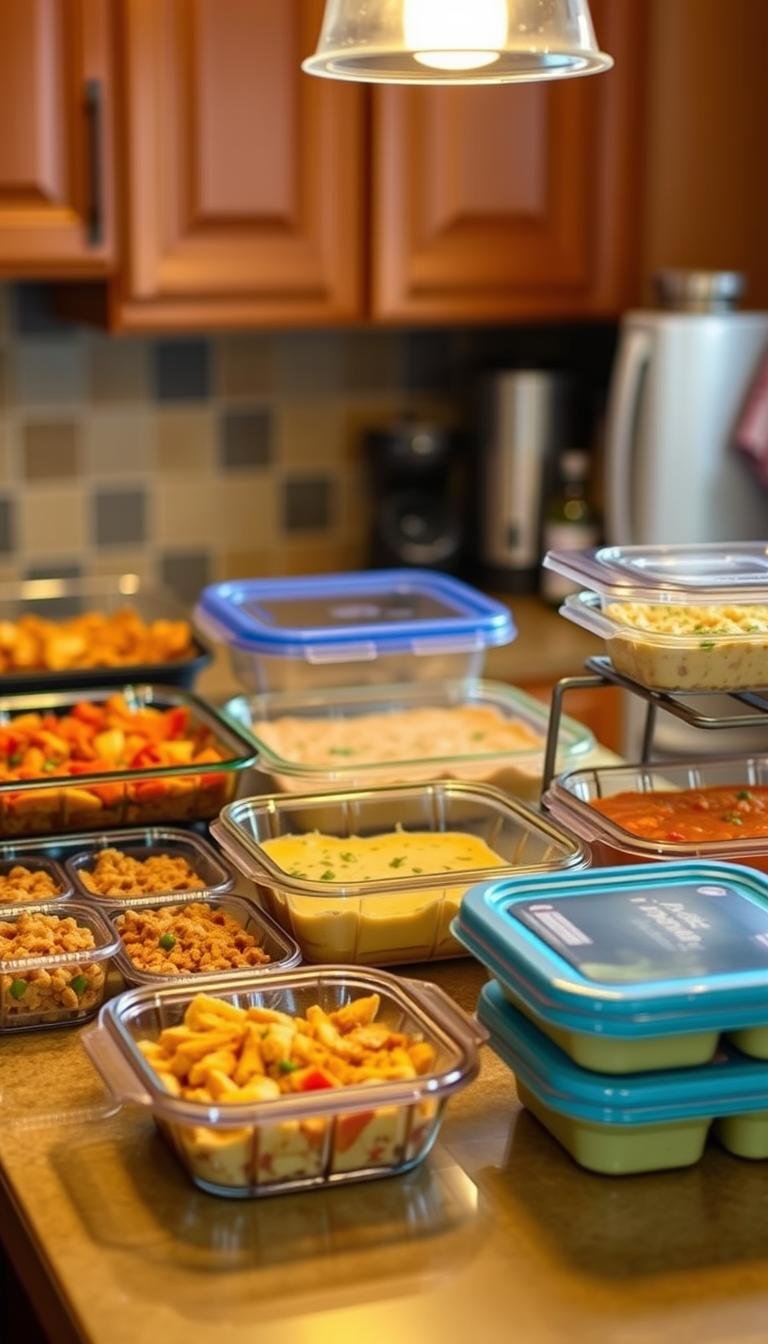
Freezer Friendly Meals: Quick and Convenient Dinner Solutions
Here’s a number that may surprise you: the USDA estimates that U.S. households toss billions of pounds of food each year, much of it from meals we never got around to cooking. Turning to freezer friendly meals can flip that script, saving time and money while keeping dinner on track.
This Website contains affiliate links. That means I may earn a small commission if you purchase through my links, at no extra cost to you.
This freezer cooking guide is built for busy American family meals. It shows how make-ahead dinners and batch cooking turn weeknight dinners into time-saving meals with less stress and fewer last-minute takeout orders. You’ll find easy freezer recipes that fit common tools in U.S. kitchens—sheet pans, slow cookers, and the Instant Pot.
We’ll preview what freezes best, how to label, and how to rotate for quality. You’ll see USDA guidance for safe storage at 0°F (-18°C) or below, plus practical tips informed by the USDA Food Safety and Inspection Service, the Cleveland Clinic’s nutrition advice on freezing, and testing methods popularized by America’s Test Kitchen to keep texture and flavor in top shape.
Expect budget-friendly freezer meals with clear storage timelines, planning checklists, and reheating techniques that taste great. Whether you’re new to meal prep or a seasoned batch cooking fan, this series gives you the steps, tools, and confidence to stock your freezer like a pro.
Key Takeaways
- Cut waste and costs by turning fresh ingredients into freezer friendly meals before they spoil.
- Use make-ahead dinners and batch cooking to simplify weeknight dinners and reduce stress.
- Follow USDA guidance to freeze foods safely at 0°F (-18°C) or below for best quality.
- Choose easy freezer recipes that reheat well and hold texture in common American kitchen gear.
- Rely on clear labels, dates, and rotation to manage a budget-friendly freezer meals plan.
- Learn reheating methods that protect flavor, moisture, and crisp edges.
Why Freezer Cooking Works for Busy Weeknights
Think of a freezer meal routine as smart insurance for hectic evenings. With a few weeknight dinner hacks and steady family meal planning, you save time cooking, protect your budget, and reduce food waste without sacrificing flavor.
Time savings from batch prep
Batch cooking benefits shine when you prep double or triple recipes at once. You chop once, sauté once, and wash once, then stack meals for later. A single weekend push can yield 8–12 dinners that save time cooking all week.
Use mise en place and an assembly-line setup for sauces, proteins, and grains. Label portions by oven, stovetop, or microwave so you grab and go without guesswork. These weeknight dinner hacks keep weeknights calm.
Reduced food waste and grocery costs
Buying in bulk at Costco, Sam’s Club, or ALDI supports budget meal prep while helping reduce food waste. Portion chicken, ground turkey, and vegetables, then freeze according to USDA guidance to extend shelf life.
Freeze surplus cooked rice, quinoa, marinara, and bone broth in flat packs. You’ll use full packages, avoid spoilage, and keep spending steady. The batch cooking benefits stack up when every item finds a purpose.
Stress-free dinner decisions
Pre-labeled meals cut decision fatigue at 5 p.m. A short inventory lets you match cook time and method to your evening. Family meal planning with kid-size and adult portions means fewer last-minute changes.
Over a month, a consistent freezer meal routine curbs impulse takeout and keeps mealtimes steady. You save time cooking, stick to budget meal prep, and reduce food waste while serving reliable, balanced plates.
| Goal | Practical Move | Payoff |
|---|---|---|
| Save time cooking | Batch prep sauces, proteins, and grains in one session | 8–12 dinners ready; minimal weeknight cleanup |
| Reduce food waste | Buy bulk at Costco, Sam’s Club, or ALDI; portion and freeze | Longer shelf life; full use of produce and proteins |
| Budget control | Plan menus and track a freezer inventory | Budget meal prep with fewer impulse purchases |
| Lower stress | Label by cooking method and time window | Fast, clear choices on busy nights |
| Family fit | Pre-portion adult and kid servings | Family meal planning that everyone can follow |
How to Choose Recipes That Freeze Well
Smart recipe selection for freezing starts with moisture, fat, and structure. Aim for saucy meals with sturdy shapes and balanced seasoning. This approach helps avoid freezer fails while guiding you toward the best freezer recipes for busy nights.
Think ahead to thaw day. Plan freezer meal textures that reheat creamy, not watery, and choose freezer-friendly ingredients that keep their bite after a chill and a warm-up.
Best textures and ingredients for freezing
Saucy, stew-like foods that freeze well include chili, braises, meatballs in tomato sauce, baked ziti, enchiladas, and curry. Moisture cushions ice crystals, so proteins like chicken thighs, ground beef, pork shoulder, and beans stay tender.
For starches, undercook pasta, rice, or barley slightly before freezing to prevent mushiness. Fold in high-fat dairy after reheating—heavy cream and full-fat cheese hold better than low-fat options. These choices anchor the best freezer recipes and maintain reliable freezer meal textures.
- Use freezer-friendly ingredients such as onions, carrots, celery, tomatoes, and firm greens like kale.
- Rely on marinades for freezing—olive oil, garlic, lemon, yogurt, and spices—to tenderize chicken and pork as they thaw.
- Balance salt and acid so flavors remain bright after time on ice.
Meals that improve in flavor over time
Chilies, stews, Bolognese, and Indian or Thai curries deepen as aromatics meld. Freezer time lets spices bloom, so your meal tastes richer on reheat. This makes them prime candidates in any recipe selection for freezing.
Pair proteins with marinades for freezing to layer flavor. A yogurt-and-garam masala blend or an olive oil, garlic, and citrus mix makes weeknight cooking both faster and better.
What to avoid for optimal results
Skip high-water produce like cucumbers and lettuce, which turn limp. Fried foods and crispy breaded coatings lose crunch. Delicate fish can dry out; salmon and cod do best cooked fresh or frozen raw with care. These tips help avoid freezer fails.
Hold back low-fat dairy before freezing, as it can split. Add milk, sour cream, or yogurt after reheating. Par-cook potatoes or use them mashed with added fat to keep a creamy texture and support dependable freezer meal textures.
| Category | Foods That Freeze Well | Add After Reheating | Notes for Recipe Selection for Freezing |
|---|---|---|---|
| Proteins | Chicken thighs, ground beef, pork shoulder, beans | Fresh herbs, citrus zest | Moist cuts stay tender; shred meats in sauce for the best freezer recipes. |
| Starches | Undercooked pasta, rice, barley | Grated Parmesan, pesto | Slight undercook prevents mush; toss with sauce before freezing. |
| Sauces | Tomato-based, curry, Bolognese, chili | Heavy cream, yogurt | Blend in high-fat dairy after heating to preserve texture. |
| Vegetables | Carrots, onions, celery, kale, peas | Spinach, scallions | Firm veg hold shape; add delicate greens at the end. |
| Marinades | Olive oil, garlic, lemon, yogurt, spices | Fresh squeeze of lemon | Use marinades for freezing to tenderize chicken and pork as they thaw. |
| Avoid | Cucumbers, lettuce, fried foods, delicate fish | Mayonnaise, low-fat dairy | These items separate or get soggy; choose freezer-friendly ingredients instead. |
Essential Tools and Supplies for Freezer Prep
Smart gear protects flavor, saves space, and speeds weeknight meals. Choose durable freezer containers, match them with clear freezer labels, and use a vacuum sealer or sturdy freezer bags to prevent freezer burn and keep portions tidy. A few space-saving tricks help organize freezer drawers so every dinner is easy to grab.
Containers, bags, and labels that prevent freezer burn
Heavy-duty freezer bags such as Ziploc Freezer Bags reduce ice crystals when you press out air and freeze flat. For soups and casseroles, choose BPA-free meal prep containers like Rubbermaid Brilliance, deli containers, or glass Pyrex with tight lids. Wrap casseroles in aluminum foil, then add a second plastic layer to further prevent freezer burn.
Use freezer labels or painter’s tape with an oil-resistant Sharpie. Note the dish name, cook or reheat method, date, servings, and thawing steps. Clear notes help organize freezer shelves and cut guesswork on busy nights.
Vacuum sealing vs. zipper bags
A vacuum sealer from FoodSaver or Nesco removes air and extends storage time. It shines with raw meats, marinated proteins, and bulk cheese, keeping texture intact. When you need flexibility, zipper freezer bags win for sauces, stews, and smoothies. Try the water-displacement method to push out air if you don’t own a sealer.
Pair vacuum-sealed items with stackable containers to keep shapes uniform. This combo makes it easy to label, stack, and rotate without losing track of what you have.
Space-saving organization tools
Flash-freeze meatballs, waffles, or cut fruit on sheet pans before bagging to stop clumping. Store flat bags upright in magazine holders or file bins to create a “library” of meals. In chest units, use wire racks, clear bins, and a lazy Susan to group sauces, veggies, and proteins. Masking tape dividers create lanes so stackable containers stay put.
Silicone muffin trays are perfect for single portions of pesto, broth, or rice. Pop out the pucks, move them to labeled freezer bags, and organize freezer space by meal type or cooking method.
| Item | Best Use | Why It Helps | Brands/Formats |
|---|---|---|---|
| Freezer bags | Soups, sauces, smoothies | Freeze flat, stackable, low-cost | Ziploc Freezer Bags, gallon/quart sizes |
| Vacuum sealer | Raw meats, marinated proteins, cheese blocks | Removes air to prevent freezer burn and extend freshness | FoodSaver, Nesco; pre-cut or roll bags |
| Meal prep containers | Portioned lunches, stews, casseroles | Rigid, clear, and reusable for easy stacking | Rubbermaid Brilliance, Pyrex glass with lids |
| Freezer labels | Any packaged item | Clear dates and directions to organize freezer stock | Freezer-safe labels, painter’s tape + Sharpie |
| Sheet pans | Flash-freezing portions | Stops clumping and preserves shape before bagging | Aluminum half or quarter sheets |
| Stackable containers | Lasagnas, grains, batch proteins | Stable stacks that maximize vertical space | Glass or BPA-free plastic with tight lids |
| Organization bins | Vertical file for flat bags | Fast access and clean categories | Magazine holders, clear bins, wire racks, lazy Susan |
| Silicone muffin trays | Pesto, broth, rice portions | Pop-out pucks for exact servings | Standard and mini sizes |
Food Safety and Proper Freezer Storage
For reliable freezer food safety, keep a steady freezer temperature 0°F or lower. Follow USDA freezing guidelines to lock in quality and cut risk. Use airtight containers or vacuum-sealed bags to prevent freezer burn, and label each item with the date and contents.
Even though frozen food stays safe, quality fades with time. Track practical storage times to plan meals and avoid waste. Keep an appliance thermometer inside the unit and check it weekly.
| Food | Best-Quality Storage Times | Packing Tips to Prevent Freezer Burn | Notes on Freezer Food Safety |
|---|---|---|---|
| Cooked soups & stews | 2–3 months | Cool fast, fill to 1 inch below rim, expel air | Reheat to safe reheating temperatures of 165°F; simmer fully |
| Casseroles | 2–3 months | Wrap pan in plastic, then foil; label layers | Portion before freezing for quicker safe thawing |
| Cooked poultry & meats | 2–6 months | Double-wrap; press out air in bags | Reheat to 165°F; monitor with an instant-read thermometer |
| Raw roasts & whole poultry | 6–12 months | Keep in original wrap plus a second barrier | Store on lowest shelf for cross-contamination prevention |
| Bacon & sausage | 1–2 months | Freeze flat; use moisture-proof packaging | Cook thoroughly and verify safe reheating temperatures |
Use safe thawing methods only. Thaw in the refrigerator for 24–48 hours, or submerge a sealed bag in cold water, changing the water every 30 minutes. Some dishes cook straight from frozen when directions allow. Skip countertop thawing to curb bacteria growth.
Practice cross-contamination prevention at every step. Keep raw meat away from ready-to-eat foods, sanitize cutting boards, and wash hands well. Mark allergens clearly and use separate utensils for allergens to protect everyone at the table.
Power outage? If the freezer warms above 40°F for over two hours and the outage lasts beyond 48 hours, discard perishable items. Keeping that freezer temperature 0°F and following USDA freezing guidelines gives you safe thawing and safe reheating temperatures every time.
Batch Cooking Strategies for Maximum Efficiency
Streamline your kitchen time with a clear meal prep workflow. Group recipes by method and ingredients so chopping and cooking happen in smart batches. These simple batch cooking tips help you build a calm, repeatable routine that scales from weeknights to big-batch weekends.
Assembly-line prep for multiple meals
Set up stations for proteins, sauces, and packaging. Chop onions, garlic, and celery in bulk, then cook base proteins like ground beef and chicken thighs once to serve several dishes.
Use a checklist so no component gets missed. Build trays in order: protein, veg, sauce, label. This keeps the meal prep workflow moving and boosts accuracy.
- Pre-measure spices and oils in small cups.
- Label bags before filling to prevent smears.
- Stage portion control containers for family meals and single serves.
Using sheet pans, slow cookers, and Instant Pots
Run appliances in parallel to maximize output. Lean on sheet pan prep for roasted vegetables and meatballs. Use a Crock-Pot for hands-off chili and pulled pork as slow cooker freezer meals.
The Instant Pot handles rapid braises and beans for fast Instant Pot freezer meals. Rotate pans and pots on a timer so batches finish in sequence without bottlenecks.
- Roast two pans at once if your oven allows even heat.
- Load the slow cooker overnight; cool and pack in the morning.
- Pressure cook beans while vegetables roast to save time.
Cooling and portioning techniques
Protect flavor and safety with rapid cooling food safety. Spread hot foods on sheet pans, chill soups in an ice bath, or divide into shallow containers. Follow the two-hour window before freezing.
Portion by household needs. Use portion control containers for consistent calories and faster thaw. Freeze sauces and grains separately to preserve texture, then stack flat for tidy storage.
| Workflow Step | Tool/Method | Why It Works | Pro Tip |
|---|---|---|---|
| Bulk Chop | Chef’s knife + cutting board | Speeds assembly across recipes | Group aromatics; store in labeled bowls |
| Protein Base | Skillet + sheet pans | One cook, many meals | Season neutral, finish flavors later |
| Oven Batches | Sheet pan prep | High volume, minimal cleanup | Use parchment to prevent sticking |
| Hands-Off Mains | Slow cooker freezer meals | Low effort, tender results | Degrease before packing for better texture |
| Fast Sides/Beans | Instant Pot freezer meals | Quick, consistent doneness | Natural release for braises; quick release for veg |
| Safe Chill | Rapid cooling food safety | Limits time in danger zone | Shallow pans, ice bath, stir to release heat |
| Portion & Pack | Portion control containers | Even servings, easy tracking | Weigh portions; freeze flat, then file vertically |
Freezer Friendly Meals
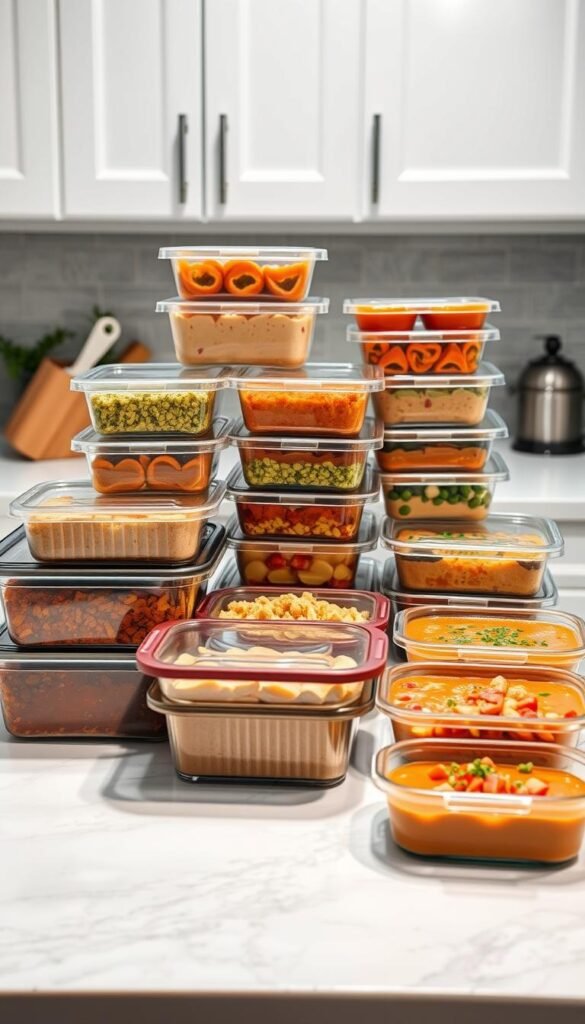
Turn busy nights into simple wins with smart freezer dinner ideas that save time and still taste great. Build a stash of family freezer meals that you can heat and serve without fuss. Choose dishes that hold sauce, keep moisture, and rehats well after thawing.
Family favorites that freeze and reheat beautifully
Beef and bean chili, turkey Bolognese, and chicken enchiladas with salsa verde are reliable picks. Baked ziti with ricotta, chicken tikka masala, pork carnitas, meatballs in marinara, shepherd’s pie, and jambalaya also keep flavor and texture.
- Choose saucy dishes that reheats well and protect proteins from drying out.
- Label spice level so family freezer meals fit everyone’s taste.
- Portion in flat packs for quick thawing and easier stacking.
Make-ahead components vs. complete meals
Mix full entrées with make-ahead components to stay flexible. Shredded chicken, seasoned ground turkey, roasted vegetables, cooked quinoa, and brown rice let you assemble bowls or tacos fast.
- Freeze cooked proteins apart from starches to keep bite and structure.
- Stock marinara, pesto, teriyaki sauce, and chicken stock for instant upgrades.
- Rotate components to refresh your freezer dinner ideas without extra work.
Kid-friendly options and packed-lunch ideas
Keep kid-friendly freezer recipes on hand: mini meatloaves, mac and cheese with peas, pizza pockets on whole-wheat dough, baked chicken tenders, breakfast-for-dinner burritos, and single-serve soup cups. These heat fast and travel well.
Portion into thermos-ready servings for school or office, and include allergen-friendly swaps like gluten-free pasta or dairy-free cheese. Add fruit or veggies and you have lunchbox freezer ideas that make mornings calm.
| Dish or Component | Why It Freezes Well | Serving Tips | Allergen-Friendly Swap |
|---|---|---|---|
| Turkey Bolognese | Tomato sauce protects moisture; reheats well | Toss with pasta or layer on polenta | Use gluten-free pasta |
| Chicken Enchiladas (Salsa Verde) | Sauce-soaked tortillas prevent drying | Bake from thaw; finish with lime and cilantro | Corn tortillas for gluten-free |
| Beef and Bean Chili | Starchy beans hold texture after freezing | Serve over rice or baked potatoes | Dairy-free toppings like avocado instead of sour cream |
| Shredded Chicken (Make-Ahead) | Neutral base for many meals | Use in bowls, tacos, or soups | Low-sodium broth for sensitive diets |
| Roasted Vegetables | Roasting concentrates flavor | Re-crisp under broiler before serving | Olive oil instead of butter |
| Mini Meatloaves | Individual portions thaw quickly | Pair with mashed potatoes or rolls | Gluten-free breadcrumbs |
| Mac and Cheese with Peas | Creamy sauce insulates pasta | Stir in a splash of milk when reheating | Dairy-free cheese and oat milk |
| Breakfast Burritos | Eggs and potatoes hold shape | Wrap in foil; warm in oven for lunch | Corn tortillas for gluten-free |
Proteins That Freeze Best
When planning the best proteins to freeze, aim for cuts and mixes that hold moisture. Dark meat shines, so the chicken thighs freezer method is a smart start. Poached or pressure-cooked shredded chicken stays tender for tacos, soups, and bowls.
Lean grinds do well with light seasoning and aromatics. Follow simple ground meat freezer tips: brown beef, turkey, or chicken with onion and a splash of broth, cool fast, and pack flat for quick thawing. Meatballs set in tomato sauce keep their bite and resist drying.
Pork shoulder is a star for pulled pork freezing. Low and slow cooking melts connective tissue, so carnitas and saucy shredded pork stay juicy after a chill. Beef chuck in stews also keeps a soft, rich texture once reheated.
Beans offer steady protein at a low cost. For best results with cooked beans freeze them in their cooking liquid. Black beans, chickpeas, and pinto beans keep shape and flavor; add a label with salt level so you can season future dishes wisely.
Sausage links and crumbles freeze well after cooling. Pack in sauce or gravy to buffer against ice crystals. For seafood, lean on practical seafood freezing guidance: freeze raw fish at peak freshness or fold cooked fish into chowder, curry, or fish cakes bound with sauce.
Egg dishes work when structure supports them. Breakfast burritos, crustless quiche, and frittata muffins reheat with a soft bite, especially if you add milk or cream. Avoid freezing plain scrambled eggs on their own.
Use a marinated meat freezer plan for quick flavor. Freeze chicken, pork, or beef in a balanced marinade, then thaw in the fridge and cook fresh. Citrus, soy, garlic, and herbs infuse the meat while it rests.
Tip: Cool foods fast, package in thin layers, and remove air to guard against freezer burn and keep flavor locked in.
| Protein | Best Prep for Freezing | Why It Works | Reheat Ideas |
|---|---|---|---|
| Chicken Thighs | Shredded after poaching; or raw in marinade | Higher fat keeps meat moist; marinade adds protection | Tacos, noodle soup, rice bowls |
| Ground Beef/Turkey/Chicken | Brown with onions, cool, pack flat | Aromatics and juices prevent dryness | Skillet pasta, chili, stuffed peppers |
| Pork Shoulder | Slow-cooked, shredded in its juices | Collagen gelatinizes for tender results | Carnitas, sandwiches, grain bowls |
| Beef Chuck | Cubed in stew with broth | Moist heat safeguards texture | Beef stew, pot pie filling |
| Sausage & Meatballs | Cook, cool, freeze in sauce | Sauce buffers against ice crystals | Subs, pasta, polenta |
| Cooked Beans | Freeze in cooking liquid | Liquid protects skins and flavor | Burritos, salads, soups |
| Seafood | Freeze raw at peak; or in chowder/cakes | Delicate flesh protected by sauce or binder | Fish cakes, corn chowder, curry |
| Egg Dishes | Burritos, quiche, frittata with dairy | Dairy stabilizes texture when reheated | Grab-and-go breakfasts, lunch boxes |
| Marinated Meats | Freeze raw in balanced marinade | Flavor infuses during thaw; stays juicy | Sheet-pan dinners, grill, stir-fry |
Use these cues as a guide when choosing the best proteins to freeze. Keep chicken thighs freezer staples on hand, follow ground meat freezer tips, plan pulled pork freezing after slow cooking, rely on cooked beans freeze methods, apply seafood freezing guidance for delicate fillets, and stock a marinated meat freezer kit for fast weeknight meals.
Vegetarian and Vegan Freezer Dinners
Stock your week with flavor-forward staples that warm fast and taste fresh. With smart choices, vegan freezer meals and vegetarian freezer dinners keep their bite, their creaminess, and their color. Plan portions, label clearly, and leave room in containers for expansion.
Pro tip: Freeze sauces and bases flat for quick thawing, then add crisp toppings at reheat to keep texture lively.
Plant-based proteins that hold texture
Green or brown lentils keep shape in stews and pies, so a lentil stew freeze stays hearty, not mushy. Chickpeas and black beans hold up in enchiladas and chili, and tempeh takes on marinades without crumbling.
Use firm or extra-firm tofu for chew. For reliable results, follow practical tofu freezing tips: drain well, freeze, thaw, then press again before cooking. Seitan freezes well in sauce, adding satisfying bite to veggie casseroles and pasta bakes.
Dairy-free creamy sauces that don’t separate
Build rich, dairy-free sauces with coconut milk, cashew cream, tahini, or silken tofu blends. A coconut milk curry resists splitting and reheats silky, while oat milk “barista” styles add body in baked dishes.
Skip high-acid soy milk in the freezer. If a sauce needs help after thawing, whisk in a little cornstarch or arrowroot on the stovetop. Keep portions small for quick warming and a smooth finish in vegetarian freezer dinners.
Veggie-packed casseroles and grain bowls
Layer spinach and mushroom lasagna with almond ricotta, or try sweet potato–black bean enchilada bakes for crowd-pleasing vegan freezer meals. Quinoa gratins and vegetable korma hold flavor and reheat evenly.
Par-cook broccoli, carrots, and squash to tender-crisp so veggie casseroles keep structure. For grain bowl prep, slightly undercook rice, farro, or quinoa and freeze separately from sauces to preserve texture and snap.
Low-Carb and High-Protein Freezer Options
Smart low-carb freezer meals make weeknights easy without losing flavor. Build a mix of high-protein meal prep and keto freezer dinners so you can rotate tastes and textures. Pack flat, label well, and reheat gently for the best bite.
Cauliflower rice and zucchini-based bakes
For a reliable cauliflower rice freeze, cook the rice until just tender, cool fast, and press into thin bags. Reheat in a dry skillet to steam off extra moisture and keep it fluffy.
When making zucchini lasagna or gratins, salt ribbons or spirals, drain, and pat dry. Par-bake the layers so water releases before freezing, then cool and wrap tight for clean slices later.
Lean meats, eggs, and legume strategies
Lean proteins freeze well when portioned. Try turkey meatballs, sliced grilled chicken breast, or ground chicken lettuce-wrap filling packed in flat bags. For seafood, prep salmon cakes bound with egg and almond flour, and keep shrimp in a separate pouch for skillet kits to avoid overcooking.
For eggs, an egg bake freezer plan works: think muffin cups with spinach and feta or a crustless quiche with turkey sausage. Let pans cool fully to reduce condensation before wrapping.
For extra protein and fiber, pair legumes with lean meat. Lentil and turkey chili or a chickpea and chicken tagine freeze smoothly and reheat to a hearty, spoonable texture that suits high-protein meal prep.
Sauces and seasonings that deliver flavor
Bold spice blends for freezer meals hold up well. Use chili powder, garam masala, berbere, or Cajun seasoning to keep flavors vivid after thawing. Stir in chimichurri or a light gochujang mixture at the end, and finish with fresh herbs or lemon zest to brighten keto freezer dinners.
Keep variety by pairing sauces with different bases. A smoky blend lifts cauliflower rice freeze bowls, while a herby drizzle flatters zucchini lasagna and any egg bake freezer tray.
Comfort Classics to Stock in Your Freezer
When you crave cozy dinners without the rush, build a stash of comfort food freezer meals that reheat like a dream. Lean on classic casseroles with rich sauces and sturdy noodles. Add more sauce than you think you need so baked pasta stays moist after reheating.
Beef stew loves the cold. Load it with carrots, potatoes, and onions, then chill fast before freezing. For a crowd, try a lasagna freezer pan layered with ricotta, mozzarella, and extra marinara to counter moisture loss.
Shepherd’s pie also holds up well. Make a hearty filling and top with mashed potatoes freeze ready for the oven. Enrich the potatoes with butter and cream to keep them smooth, then bake until the top browns.
For a quick Sunday supper, prep a chicken pot pie freeze plan: cook the filling and cool completely. Freeze the filling alone to pair with a fresh crust, or par-bake the whole pie and wrap it tight for later. Either way, aim for a bubbling center and 165°F when reheating.
Round out your rotation with baked pasta favorites. Macaroni and cheese turns silky with evaporated milk or a béchamel fortified with extra cheese. Stuffed shells and turkey tetrazzini also freeze well when sauced generously.
Wrap classic casseroles snugly in plastic wrap and foil, label, and freeze unbaked or par-baked. Thaw in the fridge overnight for even heat, then finish in the oven until hot and bubbling. Serve with garlic bread or par-baked rolls from the freezer for an easy side.
Keep portions family-sized or single-serve for flexible nights. A lasagna freezer pan can become two smaller bakes, while individual shepherd’s pies reheat fast for lunches. Mix and match beef stew with a buttered roll, or pair baked pasta with a crisp salad for balance.
With a little planning, these comfort food freezer meals deliver steady wins. From chicken pot pie freeze prep to mashed potatoes freeze tricks, the goal is simple: warm, familiar plates that taste freshly made whenever you need them.
Make-Ahead Breakfasts and Lunches
Streamline mornings and midday breaks with quick heat-and-eat ideas that hold flavor and texture. Mix easy prep with smart storage, and keep a few staples ready for busy days.
Breakfast burritos, sandwiches, and oats
Build hearty freezer breakfast burritos with scrambled eggs, cheddar, and sautéed peppers. Wrap tight in foil, then bag to prevent frost. Reheat in a microwave or air fryer until hot and crisp at the edges.
Assemble freezer sandwiches on English muffins with baked egg rounds, turkey sausage, and cheddar. Chill fully before freezing to keep texture. For oats, let overnight oats freeze in small jars, or bake oatmeal and cut into squares. Steel-cut oatmeal “pucks” set in silicone trays reheat fast and stay creamy.
Soups, stews, and salad proteins for lunch
Portion minestrone, tomato-basil, or chicken noodle (add noodles at reheat) into single-serve containers for easy soup for lunch. Freeze cooked grains—quinoa or farro—in cups for quick bowls.
Plan salad protein prep: grill chicken strips, roast chickpeas, or bake tofu cubes. Freeze flat, then thaw overnight and toss with fresh greens. Add a sauce or vinaigrette at the desk to keep leaves crisp.
Reheating for office and on-the-go meals
Follow simple microwave reheating tips: vent lids, heat in short bursts, stir midway, and let food rest for one minute. This evens out hot spots and protects texture.
Pack thermos lunches by preheating the container with boiling water for two minutes, then loading hot soup or stew. Round out meals with freezer-friendly snacks like banana bread slices and energy bites for steady energy.
Labeling, Dating, and Rotation Tips
Smart systems make a freezer work like a mini pantry. With clear freezer labeling, consistent date labels, and a simple food rotation FIFO routine, you can organize freezer meals that support a reliable meal planning system.
Clear labeling templates and best practices
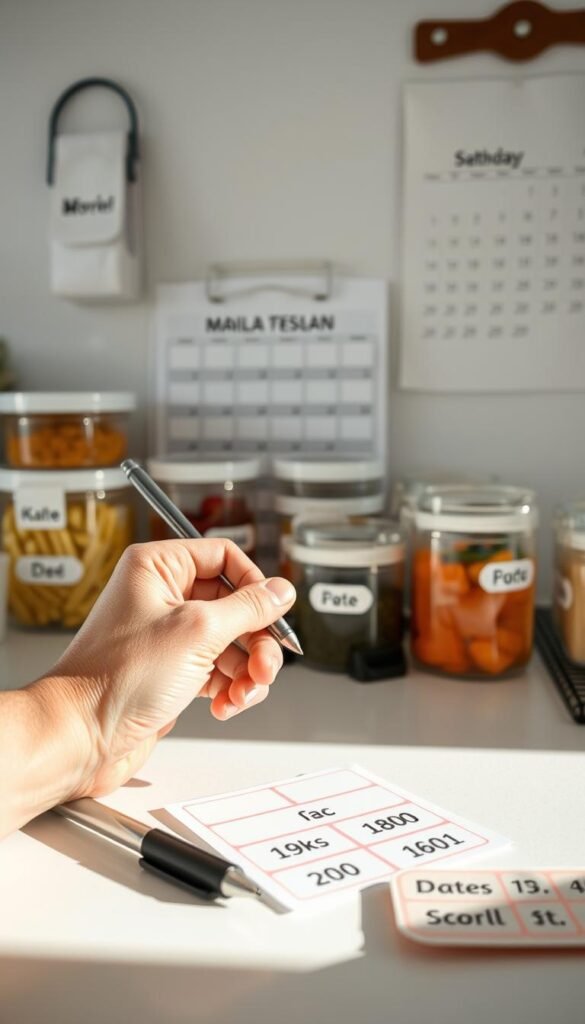
Use a simple label template: Dish | Cook/Thaw Method | Date | Servings | Allergens | Reheat Temp. Write it before filling the bag to avoid smears. Place labels on the top edge so they face you when bins slide out.
Color-code to scan fast: red for raw proteins, blue for cooked meals, green for veggies. Fine-tip Sharpie on freezer tape sticks to bags and hard-sided containers. These quick moves make freezer labeling smooth and accurate and help organize freezer meals without guesswork.
First in, first out (FIFO) system
Set up food rotation FIFO by placing new items behind or under older ones. When stocking, move older meals forward first. Add a weekly “freezer night” to use aging dishes and keep date labels current.
Do a monthly sweep. Check dates, textures, and seals. This rhythm protects quality, trims waste, and keeps your meal planning system on track.
Creating an at-a-glance freezer inventory
Keep a freezer inventory list on a dry-erase board or in Google Sheets. Log count, date, and location like “Bin A, Shelf 2.” Note planned uses next to each item to reduce decision fatigue on busy nights.
For extra clarity, use free apps to make QR codes that link to ingredients and reheating steps. Tape a printed key of storage-time guidelines on the door, and update the freezer inventory list as you grab and restock. This simple flow supports freezer labeling, clean date labels, and a reliable food rotation FIFO schedule within a tight meal planning system.
Reheating Methods for Best Taste and Texture
Match the method to the meal to reheat freezer meals without losing flavor. For bakes and casseroles, think oven vs microwave. The oven at 325–375°F revives lasagna, pot pies, and breaded cutlets. Cover loosely with foil to keep moisture, then uncover at the end to get a crisp texture and prevent soggy meals.
Stovetop reheating shines for soups, stews, and curries. Add a splash of water or stock, simmer low, and stir often so nothing sticks. For single servings, the microwave is fine—use medium power, stir midway, and let the food rest so heat spreads evenly.
Air fryer reheating is ideal for chicken tenders, taquitos, and roasted vegetables. Start around 350°F and check often to keep that crisp texture. If you cook from frozen, add 50–100% more time. When possible, thaw in the fridge overnight to shorten cook time and improve bite.
Use a thermometer to confirm a safe internal temperature 165°F for leftovers and 145°F for fish. Avoid overcooking lean meats; heat just to temp. Finish with fresh herbs, a squeeze of lemon, olive oil, or grated Parmesan. Add sour cream, yogurt, or milk after heating to prevent curdling and to prevent soggy meals in creamy dishes.
Tip: Choose the appliance that preserves texture first, then adjust time and temperature for safety.
| Method | Best For | How To | Texture Goal | Notes |
|---|---|---|---|---|
| Oven | Casseroles, baked pastas, pot pies, breaded items | 325–375°F; cover with foil, then uncover to brown | Crisp top, moist center | Great when weighing oven vs microwave for larger portions |
| Stovetop | Soups, stews, sauces, curries | Add splash of water/stock; simmer gently; stir often | Silky, not scorched | Best for stovetop reheating to prevent soggy meals |
| Microwave | Individual portions, rice bowls, saucy dishes | Medium power; stir halfway; rest before serving | Even heat, minimal drying | Use when you need speed; compare oven vs microwave for texture |
| Air Fryer | Chicken tenders, taquitos, roasted vegetables | Start at 350°F; shake or flip; check frequently | Crisp texture outside | Air fryer reheating helps prevent soggy meals |
| From Frozen vs Thawed | Any prepared meal | Thaw overnight to shorten time; if frozen, add 50–100% more | Even doneness | Always verify safe internal temperature 165°F (145°F for fish) |
Conclusion
Freezer Friendly Meals make dinner easier without giving up taste. With smart freezer meal planning, you can batch a few favorites, label them clearly, and store them well. Choose recipes with freezer-stable textures, pack them in airtight containers, and follow USDA guidance for chilling and reheating. The result is a true weeknight time saver that cuts stress and keeps flavor front and center.
This guide pulled together a simple system: batch prep, essential tools, safe storage, protein picks, plant-based options, and reheating methods that protect texture. Start small with 3–4 dishes, like chili, baked ziti, or a roasted veggie grain bowl. Build a rotating inventory that fits your schedule and budget, and adjust portions so family-friendly freezer cooking works on busy school nights and back-to-back workdays.
As you refine your routine, you’ll see wins across the board. Budget freezer meals reduce waste and grocery costs. Easy meal prep turns Sunday into a plan for the week. Healthy freezer dinners stay ready for soccer practice, late meetings, or last-minute guests. Keep notes on what reheats best, rotate older items first, and enjoy reliable, satisfying meals anytime life speeds up.
In the end, the payoff is simple: faster dinners, fewer decisions, and more time at the table. With a little planning and consistent labeling, you’ll have a freezer that serves your goals—balanced choices, bold flavors, and a routine that lasts.
FAQ
What makes a meal “freezer friendly” for busy weeknights?
Saucy, stew-like dishes hold up best because moisture protects texture. Think chili, Bolognese, chicken tikka masala, enchiladas, baked ziti, and meatballs in marinara. Undercook starches like pasta or rice slightly, and use proteins that reheat well such as chicken thighs, pork shoulder, ground beef, and beans. These choices save time, reduce stress, and keep dinner decisions simple.
How far in advance can I freeze meals and still keep good quality?
At 0°F (-18°C) or below, freezing keeps food safe indefinitely, but quality is best within guidelines. Soups and stews: 2–3 months. Casseroles: 2–3 months. Cooked poultry and meats: 2–6 months. Raw roasts and whole poultry: 6–12 months. Bacon and sausage: 1–2 months. Use airtight packaging and label dates to maintain flavor and texture.
What are the safest ways to thaw frozen meals?
Thaw in the refrigerator for 24–48 hours for the most even results. For speed, use a cold water bath with sealed bags and change the water every 30 minutes. Many dishes can be cooked from frozen; just add 50–100% more time. Avoid countertop thawing. Reheat leftovers to 165°F (74°C) and bring soups and sauces to a full simmer.
Which containers and bags prevent freezer burn the best?
Heavy-duty freezer bags like Ziploc Freezer Bags work well when you press out air and freeze flat. For liquids and casseroles, use BPA-free containers such as Rubbermaid Brilliance or glass Pyrex with tight lids. Wrap casseroles in foil and a second plastic layer. Label with freezer-safe labels or painter’s tape using an oil-resistant Sharpie.
Is vacuum sealing worth it compared to zipper bags?
Vacuum sealers like FoodSaver and Nesco remove air and extend storage time, especially for raw meats, marinated proteins, and cheese. Zipper bags are cost-effective and flexible for sauces and soups. If you don’t have a sealer, submerge the bag in water to push out air before sealing.
How do I batch-cook efficiently without spending all day in the kitchen?
Use assembly-line prep. Chop aromatics in bulk, cook base proteins for multiple recipes, and set up stations for sauces and packaging. Run appliances together: sheet pans for roasted veg and meatballs, a Crock-Pot for chili, and an Instant Pot for beans and braises. Cool quickly, portion smartly, and freeze within 2 hours.
What foods should I avoid freezing?
Skip high-water produce like cucumbers and lettuce, fried foods that lose crispness, delicate cooked fish, and crispy breaded coatings. Egg-heavy emulsions like mayonnaise can separate, and low-fat dairy in sauces often curdles. Add milk, yogurt, or sour cream after reheating instead.
How can I organize my freezer so I actually use what I make?
Label clearly with dish, method, date, servings, allergens, and reheat temp. Freeze bags flat, then file them vertically in bins or magazine holders. Use a FIFO system—new items go behind older ones. Keep a dry-erase board or Google Sheets inventory, and plan a weekly “freezer night” to rotate stock.
What recipes actually taste better after freezing?
Chilies, stews, curries, and sauces like Bolognese improve as flavors meld. Marinade-freezing also shines—chicken or pork frozen in yogurt or olive oil, garlic, and lemon tenderizes while thawing. These options deliver deeper flavor and reliable texture on reheat.
How do I keep pasta, rice, and grains from getting mushy?
Cook them slightly under al dente before freezing. Cool quickly and store separately from sauces if possible. Reheat gently with a splash of stock or water. For casseroles, add a bit more sauce before freezing to counter moisture loss during reheat.
What are budget-friendly ways to stock freezer meals?
Buy in bulk at Costco, Sam’s Club, or ALDI. Portion proteins and produce per USDA guidance, then freeze to extend shelf life. Freeze surplus grains, sauces, and broths to avoid waste. A weekend batch session can yield 8–12 dinners and cut impulse takeout costs all month.
Which proteins freeze and reheat the best?
Chicken thighs, drumsticks, and shredded chicken stay juicy. Ground beef, turkey, and chicken reheat well when cooked with aromatics. Pork shoulder, beef chuck, and meatballs in sauce hold tenderness. Cooked beans freeze great in their cooking liquid. For seafood, freeze chowders or fish cakes rather than delicate cooked fillets.
What are good vegetarian or vegan freezer dinners?
Lentil stews, chickpea curries, tofu stir-fries, and tempeh in marinades keep texture. Use creamy, dairy-free sauces like coconut milk, cashew cream, tahini, or silken tofu blends. Try spinach and mushroom lasagna with almond ricotta, sweet potato and black bean enchiladas, and veggie korma with quinoa.
Do low-carb and high-protein freezer options work well?
Yes. Cauliflower rice freezes well when cooked just tender and reheated in a dry skillet. Zucchini lasagna benefits from salting, draining, and par-baking. Stock turkey meatballs, grilled chicken portions, shrimp stir-fry kits, egg muffin cups, and salmon cakes. Flavor with bold spices like garam masala, Cajun seasoning, or gochujang blends.
How should I cool and portion hot food before freezing?
Cool rapidly to minimize time in the danger zone. Spread on sheet pans, use ice baths for soups, or divide into shallow containers. Refrigerate to chill, then freeze within 2 hours. Portion by family size or single-serve. Weigh portions for consistency and faster thawing.
What are kid-friendly freezer meals and lunch ideas?
Mini meatloaves, mac and cheese with peas, pizza pockets with whole-wheat dough, baked chicken tenders, breakfast burritos, and single-serve soup cups. Pack thermos-ready portions for school or office. Include swaps like gluten-free pasta or dairy-free cheese as needed.
How do I reheat for the best taste and texture?
Match method to meal. Oven at 325–375°F revives casseroles and pot pies. Stovetop is best for soups and curries—add a splash of stock and simmer gently. Microwaves suit single portions; use medium power and stir halfway. Air fryers restore crispness to tenders and taquitos. Finish with fresh herbs, lemon, or olive oil.
What labeling details should go on every freezer meal?
Include dish name, cook or thaw method, date, servings, allergens, and target reheat temperature. Write before filling to avoid smears and place labels on the top edge for easy reading. Color-code categories—red for raw proteins, blue for cooked meals, green for vegetables—to speed selection.
Can I rely on an appliance thermometer and what about power outages?
Keep an appliance thermometer in your freezer to confirm it stays at 0°F (-18°C) or lower. After an outage, discard perishable foods if the freezer has been above 40°F for more than 2 hours. When in doubt, check temperature and quality before consuming.
Which tools help save space in a small freezer?
Freeze bags flat on sheet pans, then file vertically in clear bins. Use wire racks, magazine holders, or file bins to separate categories. Silicone muffin trays help portion pesto, broth, oatmeal, or rice. Lazy Susans and masking tape dividers keep chest freezers tidy and easy to navigate.